
TL;DR:
- Cleanout plugs provide essential access points for plumbing maintenance and emergency repairs.
- Properly placed and accessible cleanouts help prevent costly sewer backups and reduce repair time.
- Most Pittsburgh homes require specific cleanout placement according to local code for safety and compliance.
Most Pittsburgh homeowners have never given their cleanout plugs a second thought, and that’s exactly the problem. These small, unassuming caps sit quietly in your basement, yard, or garage, waiting for the moment your plumbing needs them most. Far from being a “problems only” part, cleanout plugs are a silent protector working around the clock to keep your drainage system accessible and your home protected. Cleanouts must be accessible and are mandated by local code, yet many Pittsburgh homeowners don’t even know where theirs are located, let alone why they matter so much.
Table of Contents
- What is a cleanout plug?
- Why are cleanout plugs important for Pittsburgh homes?
- Where are cleanout plugs required in Pittsburgh plumbing?
- How cleanout plugs help with maintenance and repair
- A plumber’s take: Cleanout plugs are Pittsburgh’s unsung home protectors
- Need help with your home’s cleanout plugs or drain issues?
- Frequently asked questions
Key Takeaways
| Point | Details |
|---|---|
| Cleanout plugs defined | A cleanout plug is a removable cap providing access for sewer and drain maintenance. |
| Required by Pittsburgh code | Local plumbing regulations specify cleanout locations and require easy accessibility in homes. |
| Professional use only | Cleanouts are designed for pro maintenance—not DIY—and help prevent costly blockages. |
| Locate and maintain | Homeowners should know cleanout locations and ensure they’re visible and undamaged. |
| Regular inspections matter | Annual pro checks using cleanouts improve system longevity and reduce emergency risks. |
What is a cleanout plug?
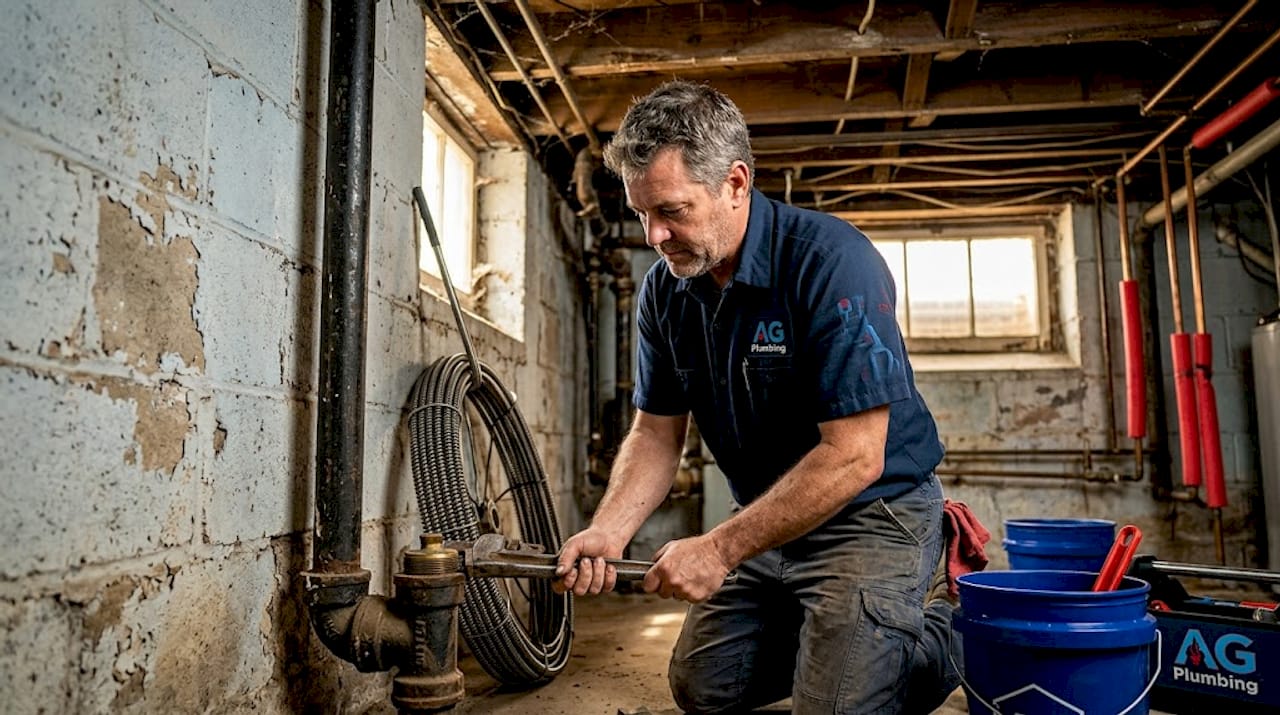
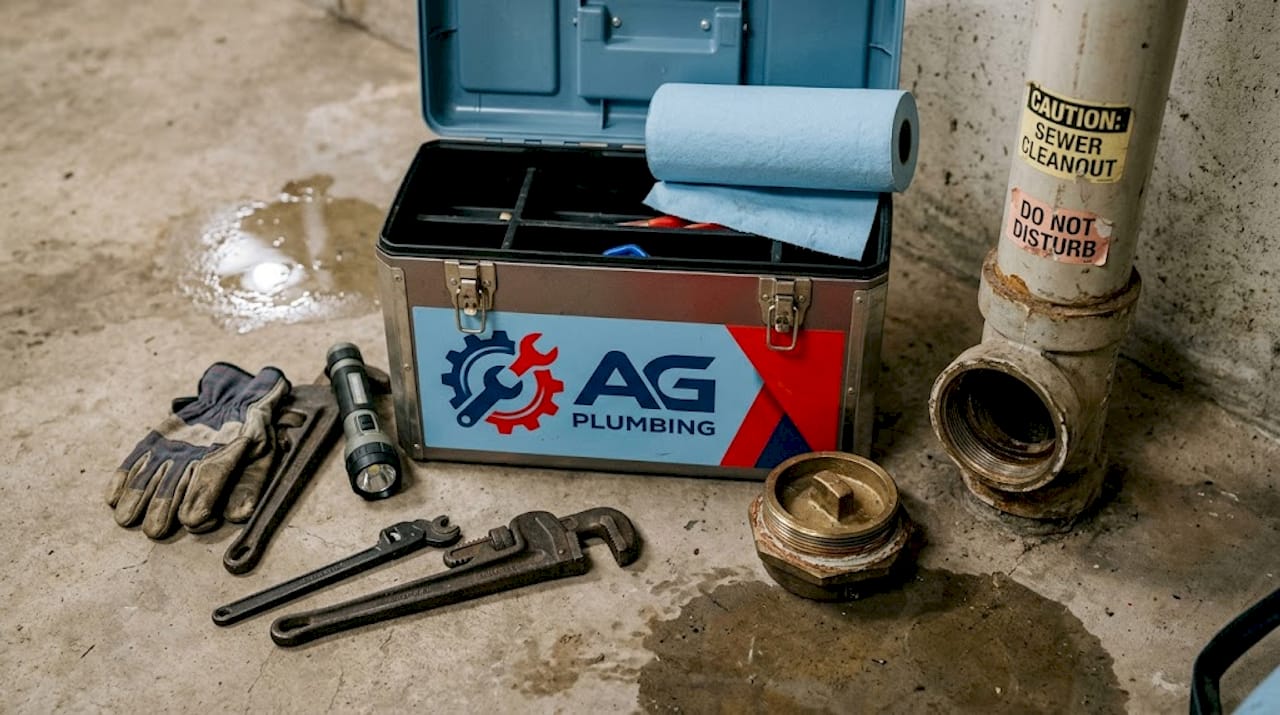
A cleanout plug is a removable cap that seals an opening in your home’s drain or sewer piping. Think of it like a service door built right into your plumbing system. When your pipes need attention, whether that’s clearing a stubborn blockage or inspecting a long run of pipe, the cleanout plug is what gives your plumber direct access without having to tear into your walls, floors, or yard.
Physically, cleanout plugs are usually round and come in a few different materials:
- Brass plugs are the most durable and are common in older Pittsburgh homes
- Plastic (PVC or ABS) plugs are lighter and found in newer construction
- Cast iron plugs appear in very old homes and may require special tools to remove
They are threaded and screw into a fitting called a cleanout tee or cleanout wye, which is installed right in the drainage pipe. Sizes vary from about two inches to four inches in diameter, depending on the pipe they serve.
In a typical Pittsburgh home, you’ll find cleanout plugs in a few predictable spots. The base of vertical drain stacks (the large pipes that carry waste straight down through your home) almost always has one. Long horizontal runs in the basement usually have them spaced out at intervals. You may also find one near the property line, where your home’s sewer lateral connects to the city main.
Pittsburgh plumbing code requires accessible cleanouts, especially at critical points throughout the system. This isn’t arbitrary. The placement rules exist so that no section of your drain system is more than a short distance from an access point, making professional maintenance faster and more effective. Understanding the cleanout benefits for Pittsburgh homeowners goes a long way toward appreciating why these little caps deserve your attention.
Pro Tip: If you’re not sure where your cleanout plugs are, take a walk through your basement and look for capped pipes sticking up from the floor or along the wall near your main drain line. A good place to start is also outside, near the foundation, where the sewer exits the house. Learning to identify sewer cleanouts before an emergency saves you real time and stress when a plumber arrives.
Why are cleanout plugs important for Pittsburgh homes?
After understanding what a cleanout plug is, it’s crucial to see why this small part offers big value. The short answer is that cleanout plugs are the difference between a plumber fixing your problem in an hour and a crew spending a full day digging up your yard. That’s not an exaggeration.
When your drain starts to back up, the cleanout plug is the entry point that lets a professional insert a sewer snake, run a hydrojetter, or thread a camera into the pipe. Without it, accessing the clog means going in through your drain openings (toilets, sinks, floor drains) or physically cutting into the pipe. Both options are slower, messier, and more expensive.
Here’s a quick comparison of what maintenance looks like with and without accessible cleanouts:
| Scenario | Time to access | Average repair cost | Damage to property |
|---|---|---|---|
| Cleanout accessible | 15 to 30 minutes | Lower | Minimal |
| No cleanout, drain access only | 1 to 3 hours | Moderate to high | Some |
| No cleanout, pipe must be cut | Half to full day | Very high | Significant |
The numbers tell the story. Proper maintenance through cleanouts can prevent 75 to 100% of major sewer backups, which is one of the most damaging and expensive problems a Pittsburgh homeowner can face.
Understanding the drain cleaning importance for your overall plumbing health ties directly back to your cleanout plugs. If a plumber can reach your pipes quickly, routine cleaning becomes a simple annual service rather than a crisis response. The drain cleaning benefits are well documented, and clean access points are what make those benefits achievable.
“A single accessible cleanout can mean the difference between a routine service call and a $5,000 emergency repair. For Pittsburgh homeowners, these access points are not optional extras. They are essential infrastructure.”
Key benefits of properly maintained cleanout plugs for Pittsburgh homeowners include:
- Faster blockage clearing with less disruption to your home
- Lower overall repair costs because plumbers can work efficiently
- Early detection of tree root intrusion, pipe corrosion, or buildup
- Reduced sewage backup risk by enabling regular preventive maintenance
- Code compliance, which matters for home sales and insurance purposes
Where are cleanout plugs required in Pittsburgh plumbing?
Knowing their importance, it helps to understand specifically where cleanout plugs are required in your Pittsburgh home. Pittsburgh follows the Allegheny County Health Department’s plumbing regulations, which align closely with International Code Council (ICC) standards, the same framework most of the country uses for modern construction and renovation.
The specific placement rules are designed so that every section of drain pipe can be reached from at least one access point. Here is a numbered breakdown of where cleanouts must be at the base of stacks, at bends greater than 45 degrees, and every 100 feet horizontally:
- At the base of every vertical stack (the main drain pipe running top to bottom through your house)
- At each change in direction greater than 45 degrees in horizontal runs
- Every 100 feet along a horizontal run of drain or sewer pipe
- At the upper end of each horizontal drain where a stack connects
- Near the building drain exit, where your home’s piping meets the municipal sewer or your septic system
Older Pittsburgh homes, especially those built before the mid 20th century, may not fully comply with current standards. If your home was built before modern codes were enforced, it’s worth having a licensed plumber assess your cleanout coverage. Gaps in coverage mean gaps in protection.
You can also review the national code details for a thorough look at IRC 2024 cleanout placement rules, which form the technical backbone of Pittsburgh’s local requirements.
A common mistake homeowners make is covering cleanout plugs with finished walls, storage shelves, or landscaping. This is a code violation and a serious practical problem. Even if a cleanout exists behind drywall, it’s essentially useless in an emergency unless your plumber can reach it quickly.
| What to check | Why it matters | What to do if wrong |
|---|---|---|
| Cleanout at base of stack | Required by code | Add access fitting if missing |
| Cleanout every 100 feet horizontally | Required by code | Schedule inspection and upgrade |
| Cleanout accessible, not buried | Required by code | Remove obstructions |
| Cap in good condition | Prevents leaks and odors | Replace damaged or missing caps |
Following a solid maintenance checklist that includes verifying all cleanout locations is one of the smartest habits a Pittsburgh homeowner can develop.
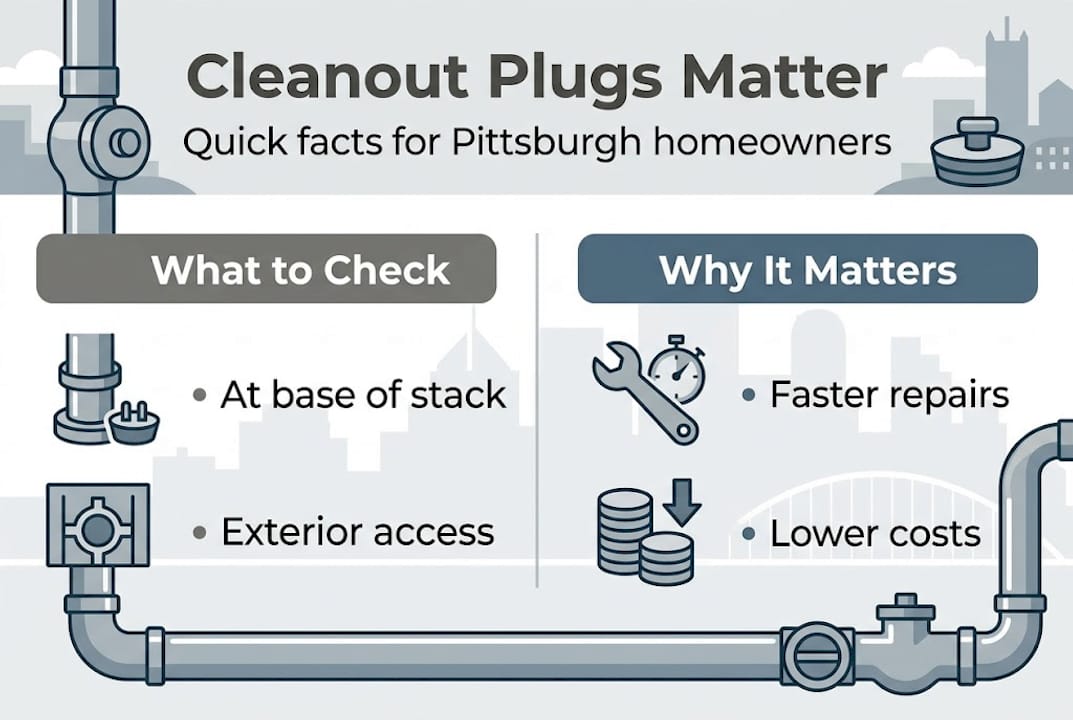
Pro Tip: Pay special attention in your basement, garage, and the outdoor area near your foundation wall. These are the three spots where most cleanouts are found in Pittsburgh homes, and they’re also the spots most likely to get cluttered or blocked over time.
How cleanout plugs help with maintenance and repair
After learning where your cleanouts are, let’s see how they’re actually used in keeping your home safe and functional. The practical role of a cleanout plug goes well beyond just sitting there looking like a cap. It’s the gateway that professional plumbers use to do their most important work.
When a pro arrives at your home for a drain service call, one of the first things they do is locate the nearest cleanout plug. From that access point, they can:
- Insert a sewer snake (also called an auger) to break up or retrieve clogs
- Run a hydrojetter, which uses high pressure water to scour the interior walls of your pipes clean
- Thread a sewer camera through to visually inspect the pipe for damage, tree root intrusion, or buildup
- Confirm slope and flow to make sure your drain system is working as designed
- Measure the extent of a blockage before deciding on the repair approach
Each of these tasks becomes dramatically simpler and less invasive when a cleanout is correctly placed and accessible. Using a plumbing snake through a proper cleanout, for example, allows the auger to travel the full length of the problem pipe, rather than fighting against the sharp angles of a sink trap or toilet.
“Cleanouts are not designed for homeowner cleaning or DIY maintenance. They exist specifically to give licensed plumbers the access they need to service your system safely and effectively.” — IRC 2024 cleanout requirements
This is an important point. Many homeowners see a clog forming and are tempted to unscrew the cleanout cap and try to handle it themselves. This is a bad idea for several reasons. First, there can be significant pressure built up behind the cap if there’s a blockage, meaning sewage can spray or flow out suddenly when the cap is removed. Second, using the wrong tools or technique can damage the threads on the cleanout fitting, making it harder to reseal. Third, working on cleanouts without a license may violate local code and could affect your homeowner’s insurance coverage.
If you’re seeing slow drains, gurgling sounds, or any signs of a growing problem, the right move is to learn when to call a pro for drain cleaning. Annual professional maintenance through your cleanout access points extends the life of your pipes, reduces the chance of a catastrophic backup, and keeps your home compliant with Pittsburgh codes.
A plumber’s take: Cleanout plugs are Pittsburgh’s unsung home protectors
Let us be direct with you. In 30 years of servicing Pittsburgh homes, we’ve seen the same pattern play out dozens of times. A homeowner remodels their basement and boxes in the cleanout to make the space look cleaner. Then, three years later, they’re dealing with a sewage backup and the repair costs them three times what the remodel did.
Cleanout plugs aren’t there to make your basement look industrial. They’re there to save you money, and that function is worth protecting. The how cleanouts save homeowners in Pittsburgh is not a theory. It’s a reality we’ve watched play out on job after job.
Pittsburgh’s code requirements are strict, and they should be. A covered or missing cleanout is an expensive risk masquerading as a tidiness solution. The most successful homeowners we work with schedule annual pro inspections, not just emergency calls when something goes wrong. They show us every cleanout access point when we arrive, which saves them time, labor costs, and the anxiety of not knowing what’s happening inside their pipes.
Pro Tip: Before any major plumbing repair or renovation, walk your plumber through every cleanout location you know about. This simple step reduces diagnostic time and keeps your repair costs lower.
Need help with your home’s cleanout plugs or drain issues?
If reading this has you wondering whether your cleanout plugs are in the right places, in good condition, or even accessible at all, that’s a completely normal reaction. Most Pittsburgh homeowners find out their cleanouts are an issue only when something goes wrong, and by then the cost is always higher.
At AG Heating, Cooling & Plumbing, we’ve spent 30 years helping Pittsburgh homeowners understand, locate, and maintain their plumbing systems the right way. Our team offers professional drain cleaning services, full plumbing repair services, and annual maintenance inspections that include a full cleanout assessment. We ensure everything meets Allegheny County code, giving you real peace of mind. Reach out today for a no obligation inspection and find out exactly where you stand.
Frequently asked questions
Can I remove a cleanout plug myself to clear a clog?
It’s not recommended because opening cleanouts can release pressurized sewage and may violate code. Always call a licensed plumber to handle cleanout access safely.
How do I find the cleanout plugs in my home?
Look for capped pipes near the base of stacks, in your basement, garage, or yard. Cleanouts are required at the base of stacks and every 100 feet horizontally, so those are your best starting points.
Why must cleanout plugs be accessible and not concealed?
Cleanouts need to be easy to reach so plumbers can respond quickly to emergencies and perform routine maintenance. Codes prioritize accessibility for exactly this reason.
What happens if my cleanout plug is missing or damaged?
Missing or damaged cleanouts can lead to leaks, sewer odors, code violations, and much higher repair bills. Proper cleanouts prevent backups and are required by code, so replace them as soon as possible.
Do all homes in Pittsburgh have the same cleanout requirements?
Most homes must follow the same placement and accessibility rules set by Allegheny County Health Department code, though older homes may have different existing setups. A licensed plumber can assess what upgrades your home may need.
Recommended
- How cleanouts in plumbing save 67% of Pittsburgh homeowners – AG-Plumbing
- Cost-saving plumbing tips for Pittsburgh homeowners – AG-Plumbing
- Install plumbing fixtures: Pittsburgh homeowner guide – AG-Plumbing
- Spot Plumbing Problems Early: Key Signs for Pittsburgh – AG-Plumbing
