
TL;DR:
- Backflow testing verifies that backflow prevention devices effectively protect drinking water from contamination.
- It must be performed annually by licensed technicians to ensure devices are working correctly and compliant with regulations.
Backflow testing is the mandatory procedure that verifies backflow prevention devices are working correctly to protect your drinking water from contamination. For property owners and managers in Pittsburgh, the role of backflow testing goes beyond a checkbox on a compliance form. It is the only reliable way to confirm that devices like Reduced Pressure Principle assemblies (RPZ) and Double Check Valve Assemblies (DCVA) are physically capable of stopping contaminated water from flowing backward into clean supply lines. Without regular testing, a device can look intact while failing silently inside.
What is backflow and why does it matter for your property?
Backflow is the reversal of water flow in a plumbing system. Instead of clean water moving from the municipal supply into your building, pressure changes can force water to travel in the opposite direction, pulling contaminants into the potable water supply.
Two conditions cause backflow. Backsiphonage happens when a sudden drop in supply pressure creates a vacuum effect, common during firefighting operations or water main breaks. Backpressure occurs when a connected system operates at higher pressure than the supply line, typical in boiler systems, fire sprinkler setups, and commercial irrigation.
The health consequences of backflow are not theoretical. The 1933 Chicago dysentery outbreak produced over 1,400 reported cases of illness traced directly to backflow contamination in a hotel’s plumbing system. That single incident reshaped how American water authorities approached cross-connection control.
“A backflow prevention device is only as reliable as its last verified test. Installation alone does not confirm protection.”
Common sources of backflow risk on Pittsburgh properties include:
- Irrigation systems connected to the potable supply
- Boilers and hydronic heating systems
- Fire suppression sprinkler systems
- Commercial dishwashers and food service equipment
- Swimming pools or decorative water features
Understanding the impact of backflow on water quality makes clear why prevention devices alone are not enough. Those devices must be tested.
What is the role of backflow testing in plumbing compliance?
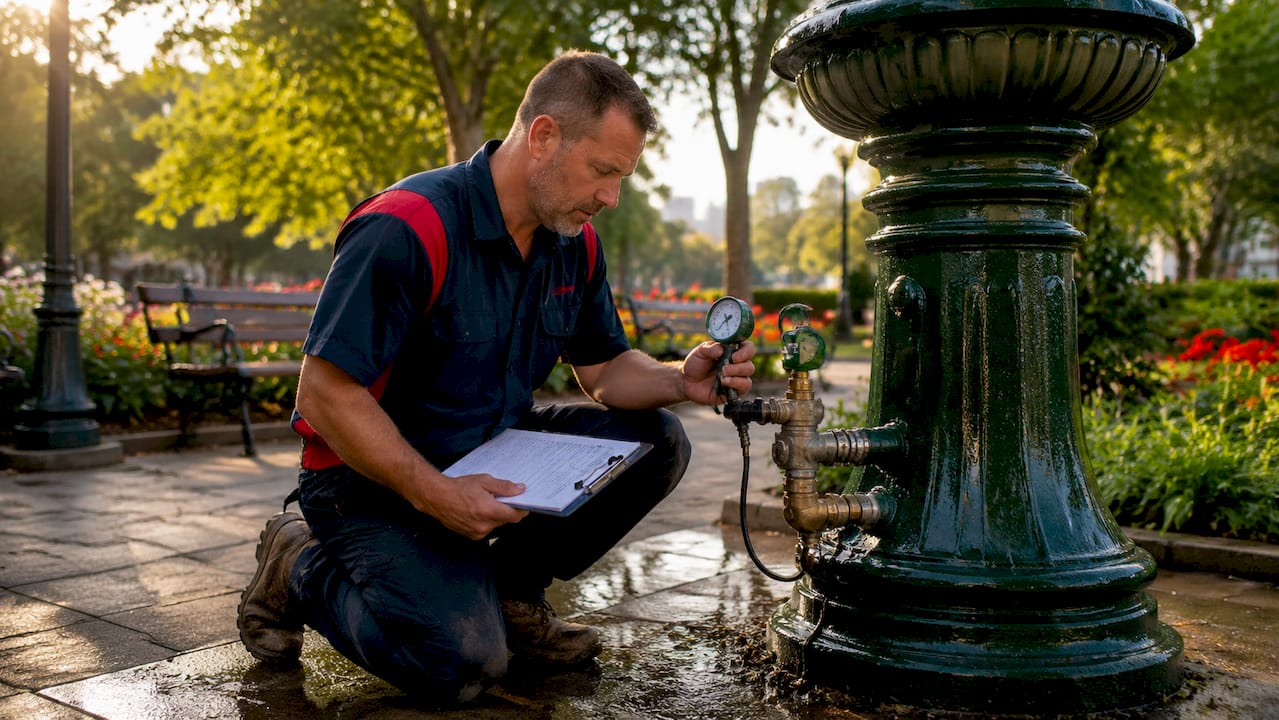
Backflow testing verifies that the mechanical components inside a prevention assembly are functioning within required pressure tolerances. A licensed cross-connection control technician connects calibrated test gauges to the device’s test cocks and measures how each internal valve responds under controlled pressure conditions.
The testing process follows a defined sequence:
- Shut down the downstream system to isolate the backflow assembly.
- Connect differential pressure gauges to the test cocks on the device.
- Open and close test cocks in a specific order to measure each check valve’s differential pressure reading.
- Record results against the manufacturer’s minimum acceptable thresholds.
- Document the outcome on an official test report form.
Backflow assemblies must be tested at three mandatory points: upon initial installation, after any repair or relocation, and at least once every year. Missing any of these intervals puts your property in violation of plumbing codes and water authority requirements.
| Testing trigger | When it applies |
|---|---|
| Initial installation | Before the device enters service |
| Post-repair or relocation | After any work is performed on the assembly |
| Annual inspection | Every 12 months, regardless of device condition |
| After a failed test | Immediately following any non-passing result |
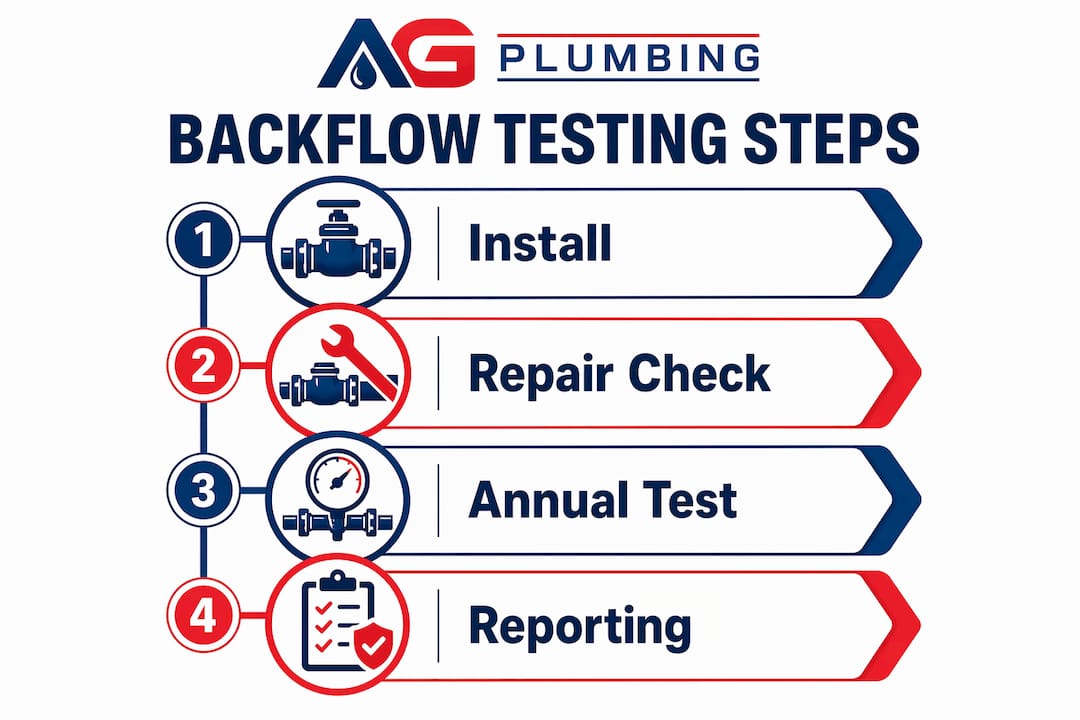
Certified testers submit reports to the local water authority within 30 business days of completing a test. When a device fails, that report must reach the authority within 48 hours to avoid escalating penalties. Consequences for non-compliance include fines and water service termination.
Pro Tip: Schedule your annual backflow test in early spring, before irrigation systems activate. This timing catches any winter-related damage before the highest-risk season for backsiphonage begins.
What types of backflow prevention devices does your property need?
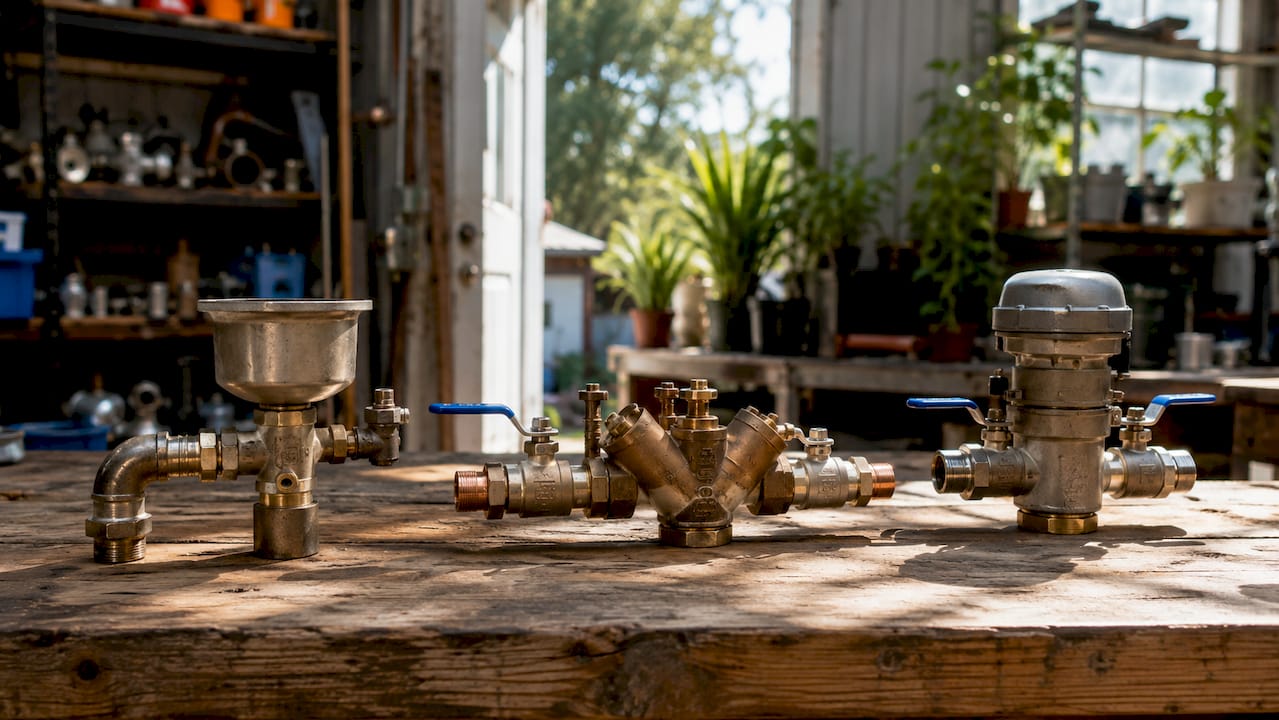
The device your property requires depends on the hazard level of your water connections. Water authorities classify cross-connections as either low-hazard or high-hazard, and that classification determines which assembly is legally acceptable.
| Device type | Hazard level | Typical application |
|---|---|---|
| Air gap | Highest protection | Boiler feed, chemical mixing |
| Reduced Pressure Principle (RPZ) | High hazard | Irrigation, fire suppression, boilers |
| Double Check Valve Assembly (DCVA) | Low to moderate hazard | Residential irrigation, commercial buildings |
| Pressure Vacuum Breaker (PVB) | Low hazard | Simple irrigation lines |
Hazard classification can change when a property’s water use changes. A building that adds a chemical injection system, a new boiler, or a commercial kitchen may need to upgrade from a DCVA to an RPZ. Property managers who do not reassess their device classification after facility changes risk operating with inadequate protection.
Several points property owners frequently misunderstand:
- Installing a device is not the same as testing it. These are two separate legal requirements.
- A device that passed last year’s test may fail this year due to mineral buildup or debris accumulation.
- Backflow preventers degrade over time from mineral deposits, debris, and hydraulic pressure fluctuations, even when they appear undamaged externally.
- Water authorities do not perform testing on your behalf. You are responsible for hiring a certified tester.
Conduct a self-survey of your property at least once a year. Walk each mechanical room and irrigation zone and note any new connections to the potable water supply. Report changes to your certified tester before the annual inspection so the correct device is in place.
What are the real benefits and risks of regular backflow testing?
Regular backflow testing catches small mechanical failures before they become contamination events. Minor debris or mineral buildup is the most common cause of test failures, and routine flushing combined with annual testing prevents those failures from going undetected. Catching a worn check valve during a scheduled test costs far less than responding to a contamination incident.
The liability exposure for untested devices is direct and significant. Property owners are legally liable for contamination caused by unmaintained or untested backflow assemblies, even when the device was originally installed by a previous owner. That liability does not transfer with the sale of a building unless specific contractual protections are in place.
Cost is the most common reason property owners delay testing. That reasoning reverses under scrutiny. Emergency plumbing repairs, regulatory fines, and potential legal claims from affected parties far exceed the cost of an annual test. Bundling backflow testing with other seasonal maintenance, such as boiler servicing or irrigation startup, reduces scheduling overhead and often lowers the total service cost.
Pro Tip: Keep a physical and digital copy of every test report. Water authorities can request records going back several years, and missing documentation is treated the same as a missed test.
Strong record-keeping also protects you during property transactions. A complete testing history demonstrates responsible maintenance and removes a common point of negotiation during commercial real estate due diligence. Pair your backflow records with your plumbing inspection history to build a complete maintenance file for your property.
A passed test does not guarantee the device will function for the full year. Prompt repair of any failed device is critical. A device that fails mid-year due to a sudden pressure event needs immediate attention, not a wait until the next scheduled inspection.
Key Takeaways
Annual backflow testing is the only legally accepted method to confirm that your prevention devices are protecting Pittsburgh’s potable water supply from contamination.
| Point | Details |
|---|---|
| Testing is legally mandatory | Assemblies must be tested at installation, after repair, and every year without exception. |
| Certified testers are required | Only licensed cross-connection control technicians can perform and submit official test reports. |
| Hazard level drives device selection | High-hazard connections require RPZ assemblies; low-hazard connections may qualify for a DCVA. |
| Liability stays with the owner | Untested devices leave property owners legally exposed, regardless of who installed the device. |
| Bundle tests with seasonal maintenance | Combining backflow testing with boiler or irrigation service reduces cost and simplifies scheduling. |
Why Pittsburgh property owners cannot afford to treat testing as optional
After 30 years of watching how property owners respond to backflow requirements, the pattern is consistent. Owners who treat testing as a bureaucratic obligation do the minimum and move on. Owners who understand what the test actually confirms treat it the same way they treat fire safety inspections. The difference shows up when something goes wrong.
The 1933 Chicago outbreak is not a historical curiosity. It is a documented proof point that backflow contamination at scale is possible, and that the only thing standing between your tenants and that outcome is a functioning, tested prevention assembly. Pittsburgh’s water authority takes this seriously. You should too.
What I find most telling is how often property owners confuse device installation with ongoing protection. Understanding these as distinct processes is the shift that changes behavior. A device installed five years ago and never tested since is not protecting anyone. It is a mechanical component that may or may not work, and you have no way of knowing which without a test.
Backflow testers serve a role beyond the technical. They function as public health educators, helping property owners see annual testing as routine building maintenance rather than a regulatory burden. The best ones I have worked with explain what they found, why it matters, and what to watch for before the next inspection. That relationship is worth building and maintaining.
My advice to Pittsburgh property managers is straightforward. Schedule your test, keep your records, and reassess your device classification whenever your building’s water use changes. Treat it like your HVAC service contract. It is not optional, and the cost of skipping it is never worth it.
— Maayan
Certified backflow testing services in Pittsburgh
Ag-plumbing has served Pittsburgh property owners for 30 years with certified plumbing services that meet current 2026 regulatory requirements. Our licensed technicians handle the full backflow testing process, from connecting gauges and recording results to submitting reports to the water authority on time. When a device fails, we coordinate repairs immediately to keep your property in compliance and your water supply protected.
Property owners who work with Ag-plumbing get more than a test report. They get a maintenance partner who tracks their testing schedule, flags device classification issues before they become violations, and connects backflow compliance to broader plumbing repair needs across the property. Contact Ag-plumbing to schedule your annual backflow test and keep your Pittsburgh property fully compliant.
FAQ
What is backflow testing and why is it required?
Backflow testing is the process of verifying that a backflow prevention assembly is mechanically capable of stopping contaminated water from flowing backward into the potable supply. Plumbing codes and water authorities require it at installation, after repairs, and annually to protect public health.
How often does backflow testing need to happen in Pittsburgh?
Backflow assemblies must be tested at least once every year, plus at installation and after any repair or relocation. Missing the annual test puts your property in violation and can result in fines or water service termination.
Who is allowed to perform backflow testing?
Only licensed cross-connection control technicians are authorized to test backflow assemblies and submit official reports to the water authority. Public utilities do not provide this service directly to property owners.
What happens if a backflow device fails its test?
A failed test must be reported to the water authority, often within 48 hours, and the device must be repaired or replaced promptly. Ignoring a failed test report can escalate to fines and water service shutoff.
Does installing a backflow preventer mean I do not need testing?
No. Installation and testing are two separate legal requirements. A newly installed device must still be tested before entering service, and annual testing is required regardless of how recently the device was installed or replaced.
Recommended
- The Role of Water Shutoffs for Pittsburgh Homeowners – AG-Plumbing
- Why Test for Lead Pipes: A Pittsburgh Homeowner’s Guide – AG-Plumbing
- Why sewer backup occurs: causes, risks & prevention – AG-Plumbing
- Preventative Plumbing Tips to Protect Your Pittsburgh Home – AG-Plumbing
