
TL;DR:
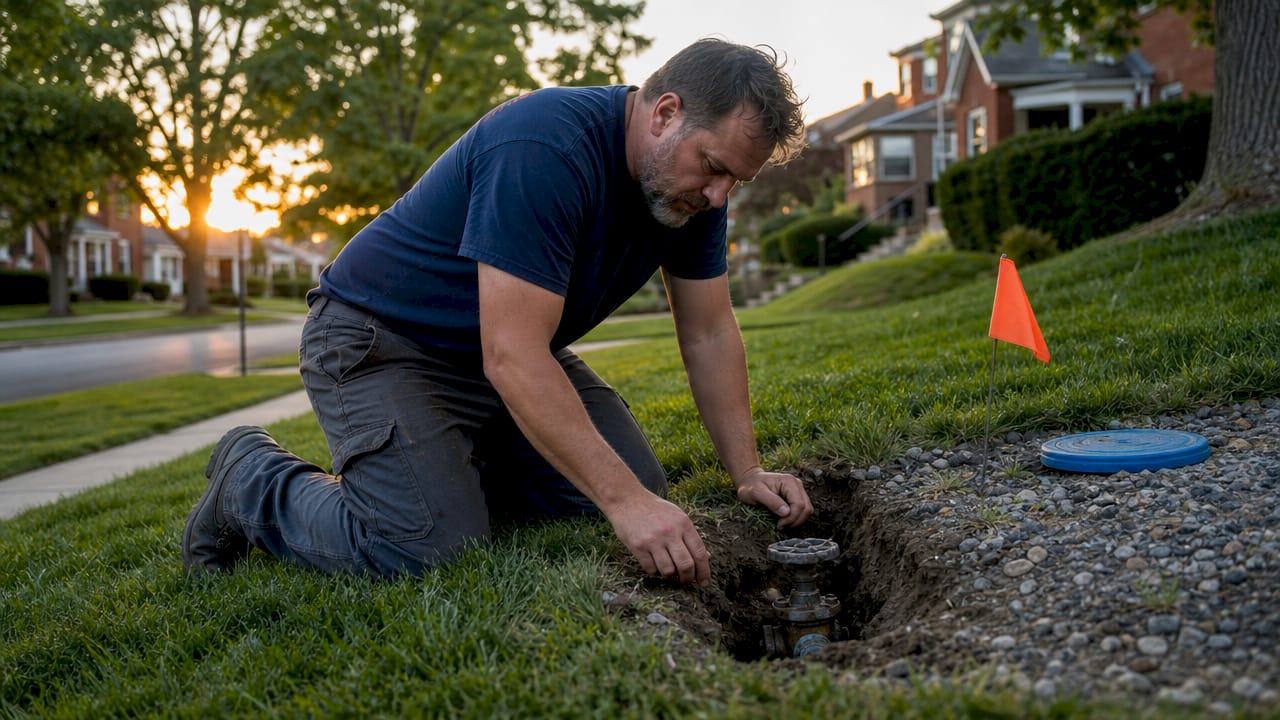
- A water main is a large pipe owned by the municipality that supplies treated water to neighborhoods. Homeowners are responsible for the smaller service line from the property line to their home, which can leak or fail. Repairing mains and service lines requires licensed professionals, proper permits, and strict safety procedures to prevent hazards.
A water main is defined as a large-diameter pipe that carries treated water from municipal treatment plants to homes, businesses, and fire hydrants across a city. Distribution mains typically range from 6 to 16 inches in diameter, with 8-inch and 12-inch pipes being the most common in residential neighborhoods like those across Pittsburgh. This pipe network forms the backbone of every municipal water supply system. Understanding what a water main is, who owns it, and how it works saves Pittsburgh homeowners from costly surprises when something goes wrong.
What is a water main vs. a service line?
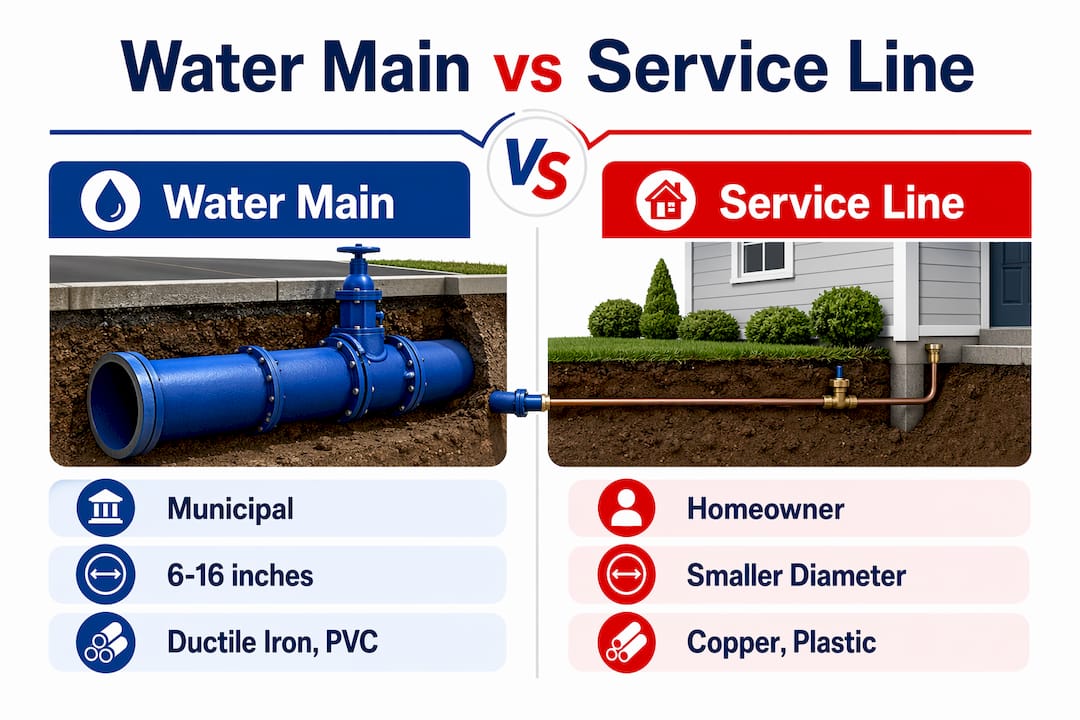
A water main and a service line are two different pipes with two different owners. Knowing the difference is the single most important thing a Pittsburgh homeowner can learn about their water supply.
Municipal utilities own and maintain the water main and the connection up to the property line or curb stop. Everything from that point to your home is your responsibility. That boundary is where utility bills end and homeowner repair costs begin.
The service line is the smaller pipe running from the property line or water meter to your building. Residential service lines are typically 3/4 to 2 inches in diameter, compared to the 6-to-16-inch mains in the street. The size difference matters because service lines carry far less pressure and volume than the main distribution pipe.
Property owners often assume utilities cover service lines, but ownership usually stops at the property line or curb stop. That assumption leads to delayed repairs and unexpected bills. Knowing exactly where your responsibility starts is the first step toward protecting your property.
| Pipe type | Owner | Typical diameter | Material |
|---|---|---|---|
| Water main | Municipal utility | 6–16 inches | Ductile iron, PVC, concrete |
| Service line | Homeowner | 3/4–2 inches | Copper, PVC, polyethylene |
| Interior plumbing | Homeowner | 1/2–1 inch | Copper, PEX, CPVC |
Pro Tip: Locate your curb stop before you need it. This small valve near the sidewalk is the physical boundary between utility and homeowner responsibility in most Pittsburgh neighborhoods.
How does a water main work within the water supply system?
A water main delivers water under pressure through a branching distribution network that feeds every building in a neighborhood. The system works like a tree: large transmission mains carry water from treatment plants, smaller distribution mains branch off into residential streets, and service lines connect individual properties to those mains.
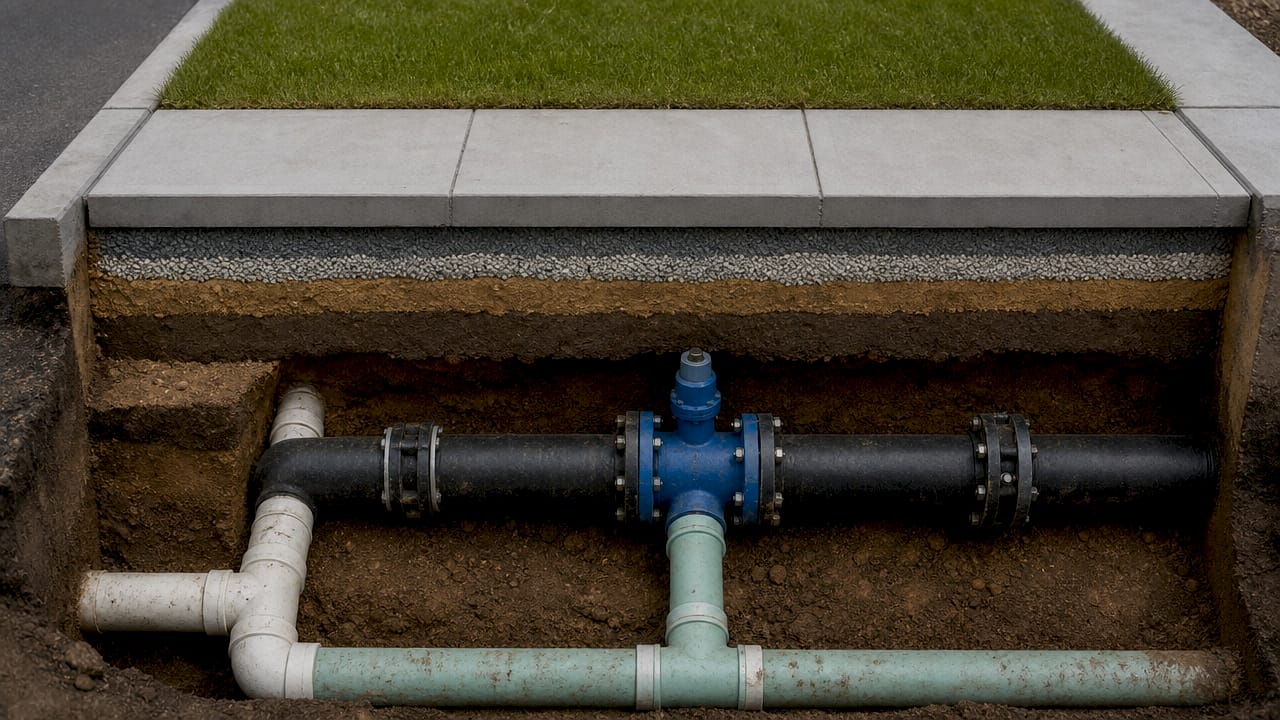
Water supply system components include the water meter, shutoff valves, pressure regulators, and the full chain of pipes from mains to fixtures. Each component has a specific job. The meter tracks your consumption and can reveal leaks. The pressure regulator protects your interior pipes from the higher pressure in the street main.
The functions of a water main go beyond simple delivery. The distribution network also feeds fire hydrants, which is why main diameter and pressure are regulated by municipal codes. A drop in main pressure affects both household flow and fire suppression capacity.
Key components in the chain from water main to your faucet:
- Water main: the large street-level pipe owned and pressurized by the utility
- Curb stop: a shutoff valve at the property line, controlled by the utility
- Water meter: measures flow and flags unusual usage patterns
- Main shutoff valve: the main shutoff valve lets you isolate your home’s entire water supply in an emergency
- Pressure regulator: reduces street pressure to a safe level for interior pipes
- Branch lines: smaller pipes distributing water to individual fixtures
Understanding how water pressure works helps you tell the difference between a municipal main problem and an issue inside your own plumbing.
What materials are water mains made of?
Water mains are built from five primary materials, each chosen based on soil conditions, pressure requirements, and installation era. The material determines how long a pipe lasts and how it fails.
Common water main materials include ductile iron, steel, PVC, polyethylene, and concrete. Ductile iron replaced cast iron in most American cities starting in the 1970s because it handles ground movement better. PVC and polyethylene are now standard for new residential distribution mains due to their corrosion resistance and lower installation cost.
Typical water main lifespan ranges from 50 to over 100 years, depending on material and environmental conditions. Pittsburgh’s clay-heavy soils and freeze-thaw cycles accelerate corrosion and joint stress, shortening the practical life of older iron mains. That is why many Pittsburgh neighborhoods still have aging cast iron infrastructure that requires frequent repair.
| Material | Typical lifespan | Corrosion resistance | Common use |
|---|---|---|---|
| Ductile iron | 100+ years | Moderate (needs lining) | Transmission and distribution mains |
| Steel | 50–80 years | Low without coating | Large transmission mains |
| PVC | 50–100 years | High | Residential distribution mains |
| Polyethylene (HDPE) | 50–100 years | Very high | Trenchless replacements |
| Concrete | 50–70 years | Moderate | Large-diameter transmission mains |
Ground movement, soil chemistry, and water pH all affect how quickly a pipe degrades. A pipe that lasts 100 years in dry, stable soil may fail in 40 years under Pittsburgh’s acidic clay conditions.
What does the water main repair process involve?
The water main repair process follows a strict sequence of steps, and every one of them requires a licensed professional. Skipping any step creates safety risks and legal liability.
Professional water main repair includes isolating the affected segment, excavating or using trenchless technology, patching or replacing the pipe, and pressure testing before restoring service. Pressure testing is not optional. Restoring service without it risks pushing a weakened pipe to failure under full operating pressure.
The repair steps in order:
- Isolate the segment: The utility or licensed contractor closes shutoff valves on both sides of the break to stop water flow.
- Locate and expose the pipe: Ground-penetrating radar or as-built drawings identify the exact pipe location before any digging begins.
- Excavate or access trenchlessly: Traditional open-cut excavation or trenchless pipe bursting methods like CIPP lining are chosen based on pipe material, break severity, and site conditions.
- Repair or replace: The damaged section is patched with a repair clamp, or a full pipe section is replaced to AWWA C900 (PVC) or C151 (ductile iron) standards.
- Pressure test: The repaired segment is pressurized and monitored to confirm the fix holds before backfilling.
- Restore service and inspect: Water is restored, and the site is inspected for proper compaction and surface restoration.
Trenches deeper than 5 feet trigger OSHA requirements under 29 CFR 1926.652, requiring sloping, shoring, or trench boxes. Most water main repairs in Pittsburgh reach that depth. That alone makes DIY work both illegal and dangerous.
DIY water main repairs are strongly discouraged due to strict municipal permitting requirements and federal safety regulations. An unlicensed repair can void your homeowner’s insurance and result in fines from the city.
Pro Tip: Before any excavation near your property, call Pennsylvania 811 (PA One Call) to have underground utilities marked. This is required by law and prevents accidental damage to gas, electric, and telecom lines.
How do you recognize water main or service line problems?
Service line failures are the most common water issue Pittsburgh homeowners face, and they are frequently mistaken for indoor plumbing problems. Catching them early prevents foundation damage and mold.
Symptoms like reduced pressure, discolored water, or wet spots in the yard indicate failing service lines or water main problems. Each symptom points to a different part of the system. Discolored water suggests corrosion inside an aging pipe. A wet yard spot with no recent rain points directly to a service line leak underground.
Signs that point to a water main or service line issue:
- Sudden drop in water pressure throughout the entire house, not just one fixture
- Discolored or rusty water coming from multiple taps at once
- Wet or soggy patches in the yard that appear without rain or irrigation
- Higher-than-normal water bills with no change in usage habits
- Street flooding or sinkholes near the curb, which signal a main break in the street
If the water meter shows flow with all faucets closed, a leak exists between the meter and the home. This is the fastest and most reliable way to confirm a service line leak. Turn off every fixture, check the meter dial, wait 10 minutes, and check again. Any movement means water is escaping somewhere underground.
Homeowners should know the location and operation of their main shutoff valve to quickly isolate the water supply in an emergency. In Pittsburgh homes, the shutoff valve is typically located in the basement near the front foundation wall. Finding it before a crisis saves thousands of dollars in water damage.
Key Takeaways
A water main is the municipal pipe delivering pressurized water to your neighborhood, and your service line, running from the property line to your home, is your financial responsibility to repair.
| Point | Details |
|---|---|
| Water main definition | A large-diameter pipe (6–16 inches) owned by the municipal utility, delivering treated water to neighborhoods. |
| Ownership boundary | The utility owns up to the property line; homeowners own the service line from that point to the building. |
| Repair process | Isolation, excavation or trenchless access, pipe repair, and mandatory pressure testing are all required steps. |
| Warning signs | Wet yard spots, low pressure, discolored water, and meter movement with closed faucets all signal a leak. |
| Material and lifespan | Water mains last 50–100+ years depending on material; Pittsburgh’s soil conditions can shorten that range significantly. |
What 30 years of Pittsburgh plumbing work taught me about water mains
Most homeowners I talk to have no idea where their property line is, let alone where the curb stop sits. That gap in knowledge is the single most expensive mistake I see in Pittsburgh. When a service line fails at 2 a.m. in january, the homeowner who knows where their shutoff valve is saves their basement. The one who doesn’t is calling a restoration company by morning.
The ownership boundary question comes up constantly. People call the Pittsburgh Water and Sewer Authority expecting them to fix a wet yard, and they’re shocked when the utility marks the curb stop and walks away. That’s not negligence. That’s how the system is designed. Knowing that boundary before a problem occurs changes everything about how you respond.
Proactive communication with your utility matters more than most homeowners realize. Request a copy of your service line material records. Pittsburgh has a significant number of older properties with lead service lines, and the city has active replacement programs. You may qualify for assistance you don’t know about.
For the repair itself, always get a licensed contractor who knows local Pittsburgh codes and has pulled permits in Allegheny County before. A repair done without permits creates title problems when you sell. I’ve seen it delay closings and kill deals. The Pittsburgh water main replacement process has specific local requirements that a general contractor from outside the area may not know.
— Maayan
Ag-plumbing serves Pittsburgh water main and service line needs
Ag-plumbing has served Pittsburgh homeowners and property managers for 30 years, handling everything from service line inspections to full water main replacements in compliance with Allegheny County and city codes.
When you notice wet spots in your yard, a spike in your water bill, or pressure that just doesn’t feel right, Ag-plumbing’s licensed team diagnoses the source fast. The team knows Pittsburgh’s soil conditions, aging infrastructure, and permit requirements. For inspections, emergency repairs, or planned replacements, contact Ag-plumbing’s Pittsburgh plumbing services to get a licensed professional on site quickly.
FAQ
What is a water main in simple terms?
A water main is a large underground pipe owned by the municipal utility that carries treated water from treatment plants to homes, businesses, and fire hydrants in a neighborhood.
Who is responsible for repairing a water main?
The municipal utility is responsible for the water main up to the property line or curb stop. The homeowner is responsible for the service line from that point to the building.
How do I know if my service line is leaking?
Turn off all faucets and fixtures, then check your water meter. If the dial moves within 10 minutes, water is escaping between the meter and your home, which indicates a service line leak.
Can I repair a water main or service line myself?
DIY repairs are strongly discouraged. Trenches deeper than 5 feet require OSHA compliance under 29 CFR 1926.652, and municipal permits are required for any work on the service line or main connection.
How long does a water main last?
Water main lifespan ranges from 50 to over 100 years depending on the pipe material and local soil conditions. Pittsburgh’s clay soils and freeze-thaw cycles can reduce the practical life of older iron mains significantly.
Recommended
- Water Main Replacement for Pittsburgh Homeowners: 2026 Guide – AG-Plumbing
- How to clean water lines: Pittsburgh homeowner guide – AG-Plumbing
- Water Heaters: What Every Pittsburgh Homeowner Must Know – AG-Plumbing
- Why Prevent Water Leaks: A Pittsburgh Homeowner’s Guide – AG-Plumbing
