
TL;DR:
- Tankless water heaters heat water on demand without a storage tank and save energy by eliminating standby heat loss. They are suitable for small spaces, provide continuous hot water, and typically last longer than traditional tanks but may struggle with high simultaneous demand and require professional installation. Regular maintenance, especially descaling, is essential for optimal performance and longevity.
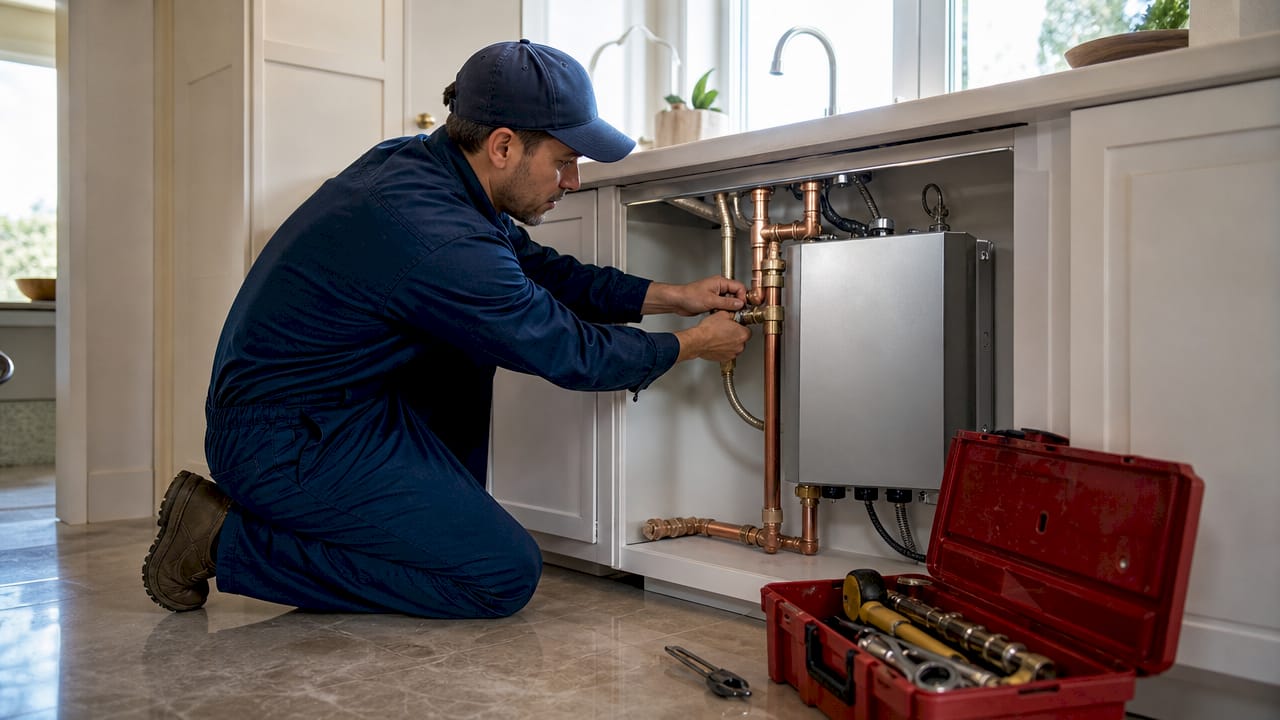
A tankless water heater is defined as a device that heats water on demand as it flows through the unit, using gas burners or electric heating elements, with no storage tank required. The industry also calls these units on-demand or instantaneous water heaters, and the distinction matters because it sets realistic expectations about how they perform. Traditional storage tank heaters keep 40–60 gallons hot around the clock. Tankless units skip that entirely. For Pittsburgh homeowners and renters weighing an upgrade, understanding the mechanics, benefits, and real limitations of tankless water heating is the fastest path to a smart decision.
What is a tankless water heater and how does it work?
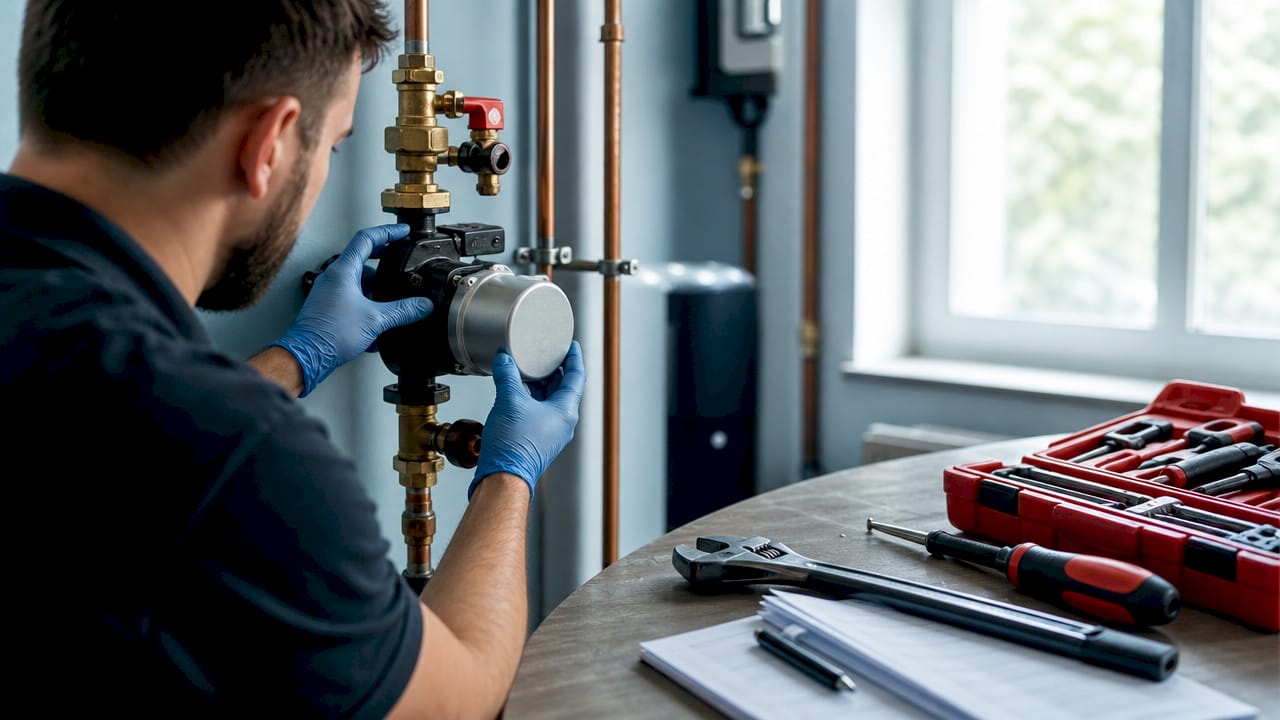
A tankless water heater activates the moment you open a hot water fixture. A flow sensor detects water movement and signals the unit to fire up its gas burner or electric heating element. Water passes through a copper heat exchanger, heats to your set temperature, and travels directly to your tap.
The process happens fast, but not instantly at the faucet. Hot water still has to travel through your pipes. A fixture 30 feet from the unit will have a short wait before hot water arrives. That delay is a physics problem, not a product flaw.
- Flow sensor: Detects when a fixture opens and triggers the heating cycle
- Heat exchanger: Typically copper, transfers heat from the burner or element to the water
- Modulating burner or element: Adjusts output to match the flow rate and target temperature
- Venting system (gas units): Exhausts combustion gases safely outside the home
Pro Tip: Add a recirculation pump to your tankless system. It keeps a small loop of hot water near your fixtures, cutting wait times to near zero without wasting water down the drain.
Hot water delivery delays at distant fixtures are one of the most common surprises for new owners. A recirculation pump solves this cleanly and costs far less than moving the unit.
What are the benefits of tankless water heaters vs. traditional tanks?
The single biggest advantage of a tankless unit is eliminating standby heat loss. Traditional storage tanks keep 40–60 gallons hot at all times, burning fuel or electricity even when nobody is home. Tankless units only run when you need hot water.
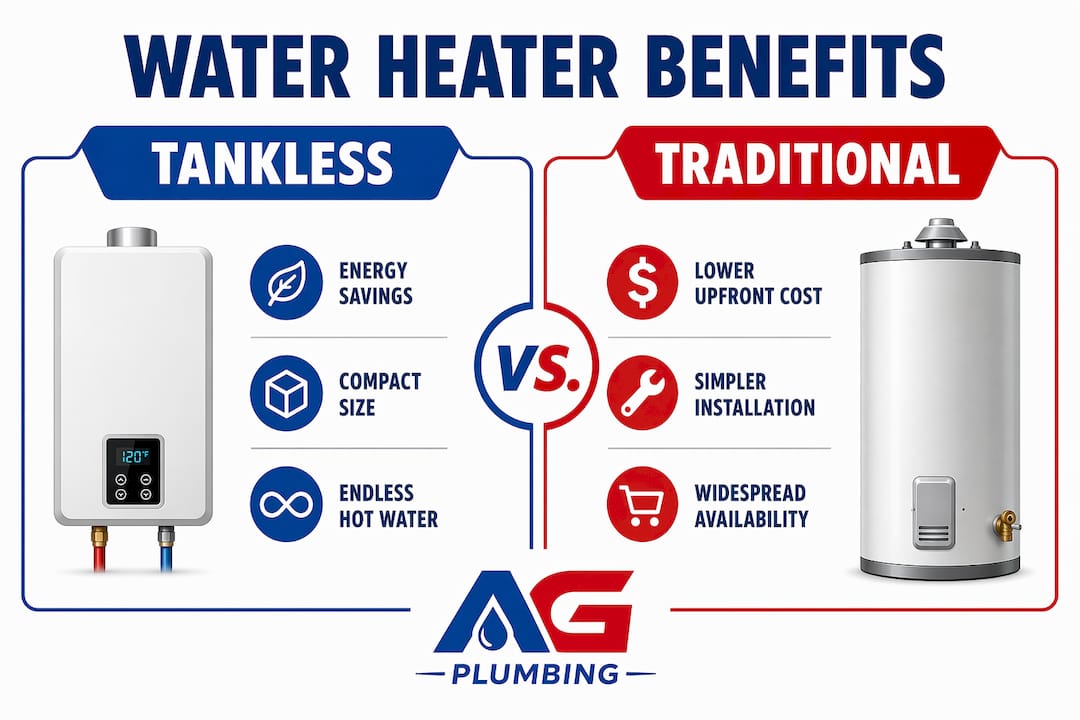
The U.S. Department of Energy reports that tankless water heaters save 8%–34% in energy compared to storage tank models, depending on household usage. Higher-use households see savings toward the lower end of that range, while lower-use households capture the most benefit.
Here are the core advantages that make tankless units worth serious consideration:
- No standby heat loss. The unit sits idle until you need it. You pay only for the hot water you actually use.
- Continuous hot water supply. Within the unit’s flow rate capacity, hot water does not run out the way a 50-gallon tank does mid-shower.
- Space savings. Most units mount on a wall and measure roughly the size of a carry-on suitcase. That frees up the floor space a traditional tank occupies.
- Longer service life. Tankless units typically outlast storage tanks by several years when properly maintained.
- Suitable for tight spaces. Apartments, condos, and older Pittsburgh row homes with limited utility closets benefit from the compact footprint.
For homeowners focused on water heater efficiency in Pennsylvania, the energy savings alone often justify the switch over a full ownership period.
What are the limitations of tankless water heaters?
The “endless hot water” claim is real but qualified. A single unit has a maximum flow rate, measured in gallons per minute. Run two showers, a dishwasher, and a washing machine at the same time, and a single unit may not keep up. The result is a drop in water temperature, not a complete shutoff, but it is noticeable.
Other practical limitations include:
- Higher upfront cost. Purchase price and installation for a tankless unit typically exceed those of a comparable storage tank system.
- Installation complexity. Gas units require proper venting, adequate gas line capacity, and sometimes a gas line upgrade. Electric units may need a panel upgrade to handle the load.
- Scale buildup. Copper heat exchangers are vulnerable to mineral deposits in hard water areas. Without regular descaling, performance drops and the unit can shut down.
- Cold water sandwich effect. When you use hot water briefly, stop, then start again, a small burst of cold water can appear between the two draws. This is a known quirk of tankless systems.
- Renter limitations. Renters typically cannot authorize the gas line or electrical work a tankless installation requires. This is a landlord decision in most cases.
Pro Tip: Before buying, check your home’s water hardness. Pittsburgh’s water supply is moderately hard. A whole-home water softener or a dedicated descaling schedule protects your heat exchanger and extends the unit’s life.
Higher upfront costs mean the financial case depends on how long you stay in the home and how much hot water your household uses. Short-term renters rarely recoup the investment.
How to choose the right tankless water heater for your home
Sizing is the most critical step, and it is where most homeowners go wrong. Matching the unit to your actual simultaneous hot water demand prevents cold water surprises and wasted money on an oversized unit.
Start by listing every fixture you might run at the same time. A shower uses roughly 2 gallons per minute. A dishwasher uses about 1.5 gallons per minute. Add those flows together and match them to a unit rated for that combined output at your local groundwater temperature.
| Feature | Gas tankless | Electric tankless |
|---|---|---|
| Heating capacity | Higher flow rates, faster recovery | Lower flow rates, best for smaller homes |
| Installation complexity | Requires venting and gas line check | Requires electrical panel capacity check |
| Operating cost | Generally lower in most U.S. regions | Varies by local electricity rates |
| Best for | Whole-home use, larger households | Point-of-use, apartments, smaller homes |
| Upfront cost | Higher | Moderate |
Gas units heat water faster and handle higher simultaneous demand, but the installation is more involved. Electric units are simpler to install and work well for point-of-use applications, such as a unit mounted under a bathroom sink to serve a single fixture.
Point-of-use tankless units installed near a single fixture cut water waste from long pipe runs and deliver hot water faster at that specific tap. They work well as supplements to a whole-home unit in large houses.
Professional sizing by a licensed plumber is not optional for whole-home installations. An undersized unit creates performance problems. An oversized unit wastes money on equipment you do not need.
What maintenance does a tankless water heater need?
Tankless units need less maintenance than storage tanks overall, but they are not maintenance-free. Scale buildup inside the heat exchanger is the leading cause of reduced efficiency and unexpected shutdowns in hard water areas.
A solid maintenance routine covers these tasks:
- Annual descaling. Flush the heat exchanger with a food-grade descaling solution once a year, or more often in hard water areas. This keeps the copper passages clear and heat transfer efficient.
- Inlet filter cleaning. Most units have a small screen filter on the cold water inlet. Clean it every six months to prevent flow restrictions.
- Venting inspection (gas units). Check the exhaust vent for blockages, corrosion, or loose connections annually.
- Error code monitoring. Modern tankless units display error codes when something is wrong. Learn what your unit’s codes mean before a problem becomes urgent.
- Professional inspection. Schedule a full water heater maintenance check every two to three years with a licensed plumber.
Homeowners who follow a consistent schedule avoid the most common water heater issues Pittsburgh homeowners face, including heat exchanger failures and venting problems that shorten unit life.
Key Takeaways
A tankless water heater saves energy by eliminating standby heat loss, but proper sizing, professional installation, and annual descaling are required to get that performance in practice.
| Point | Details |
|---|---|
| On-demand heating | Tankless units heat water only when a fixture runs, cutting standby energy waste. |
| Energy savings potential | The U.S. Department of Energy cites 8%–34% energy savings over storage tank heaters. |
| Sizing is critical | Match the unit’s flow rate to your household’s simultaneous hot water demand before buying. |
| Maintenance matters | Annual descaling prevents scale buildup in copper heat exchangers and extends unit life. |
| Installation requires a pro | Gas units need venting and gas line checks; electric units may require a panel upgrade. |
What I’ve learned after years of tankless installs
The biggest mistake I see homeowners make is buying a tankless unit based on marketing claims without sizing it for their actual household. A family of four with two bathrooms and a dishwasher running simultaneously needs a unit rated for that combined load, not the smallest model that fits the budget.
The second mistake is skipping the recirculation pump. Homeowners complain about waiting 45 seconds for hot water at a distant bathroom. That wait is not a defect in the unit. It is a pipe length problem, and a recirculation pump fixes it for a fraction of the cost of moving the heater.
Realistic expectations matter here. “Instant hot water” means the unit heats water the moment flow starts. It does not mean hot water teleports to your faucet. Pipe length still determines delivery time. Once you understand that distinction, you stop being disappointed and start planning the installation correctly.
My honest recommendation for Pittsburgh homeowners: if you use a lot of hot water and plan to stay in the home for seven or more years, a properly sized gas tankless unit pays for itself. If you are renting or planning to move within a few years, the upfront cost and installation complexity rarely make financial sense.
— Maayan
Ag-plumbing’s tankless water heater services in Pittsburgh
Ag-plumbing has served Pittsburgh, PA homeowners for 30 years, and tankless water heater installation is one of the most requested services the team handles. Getting the sizing, venting, and gas or electrical connections right on the first visit is what separates a unit that performs for 20 years from one that causes problems in year two.
Whether you are replacing an aging storage tank or installing a tankless unit in a new space, Ag-plumbing’s licensed plumbers handle the full job, from load calculations to final testing. The team also offers professional installation guidance that prioritizes safety and long-term performance. Contact Ag-plumbing’s Pittsburgh team to schedule a consultation and get the right unit sized for your home.
FAQ
What is the difference between tankless and traditional water heaters?
A traditional water heater stores and continuously heats 40–60 gallons of water, while a tankless unit heats water only when a fixture runs. The tankless approach eliminates standby heat loss, which is the primary source of wasted energy in storage tank systems.
How long does a tankless water heater last?
Tankless water heaters typically outlast storage tank heaters by several years when maintained properly. Annual descaling and periodic professional inspections are the key factors in reaching maximum service life.
Can a single tankless unit serve a whole house?
Yes, if it is correctly sized for the home’s simultaneous hot water demand. A unit with insufficient flow rate will struggle when multiple fixtures run at once, so accurate sizing by a licensed plumber is required before purchase.
Are tankless water heaters worth it for renters?
Generally no. Tankless installation requires gas line or electrical panel work that most renters cannot authorize. The higher upfront cost also rarely pays back within a typical rental period.
Do tankless water heaters work in cold climates like Pittsburgh?
Yes, but groundwater temperature affects performance. Colder incoming water requires more energy to reach the target output temperature, which can reduce effective flow rate. A licensed plumber can account for Pittsburgh’s groundwater temperatures when sizing your unit.
Recommended
- Service water heaters: efficiency guide for PA homes – AG-Plumbing
- Water Heaters: What Every Pittsburgh Homeowner Must Know – AG-Plumbing
- Common Water Heater Issues Pittsburgh Homeowners Face – AG-Plumbing
- How to Troubleshoot Water Heater Problems at Home – AG-Plumbing
