
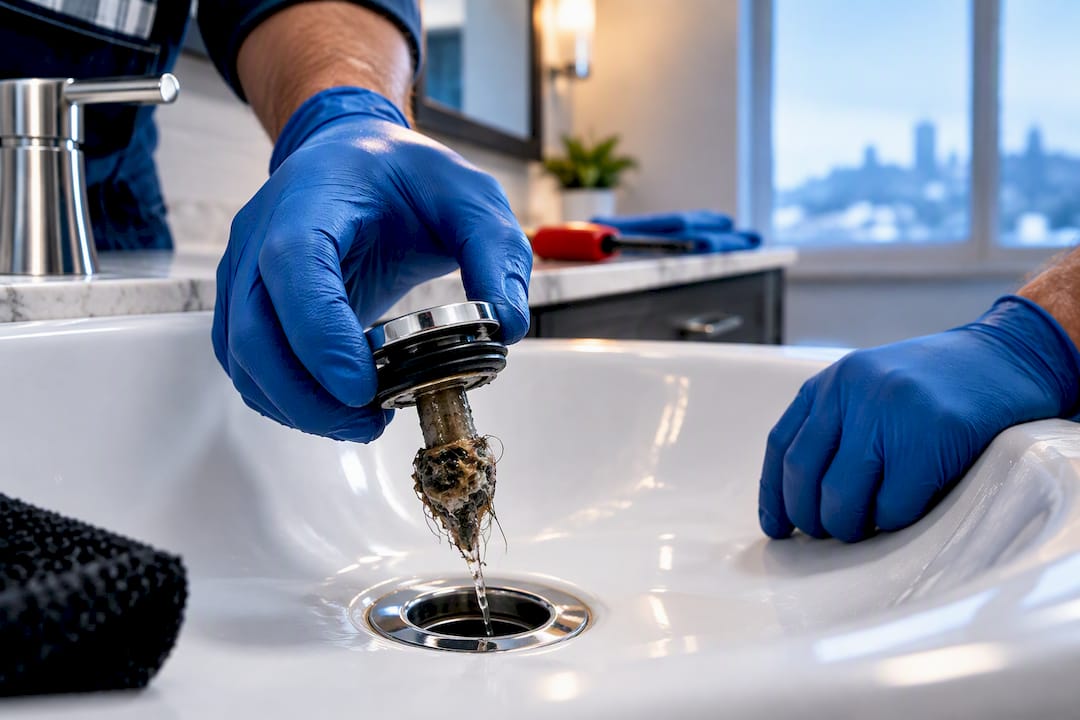
Start with mechanical methods: a cup plunger or a plastic hair snake clears most bathroom sink clogs without risk. If that fails, remove and clean the P-trap before reaching for any chemical cleaner. Never mix bleach with vinegar or other cleaners, and skip boiling water on PVC pipes. Call a plumber if several fixtures back up at once, you smell sewage, or you spot leaks or pipe damage.
TL;DR:
- Mechanical methods like plunging and snaking are effective first steps for most bathroom sink clogs, avoiding chemical risks.
- Clearing and cleaning the P-trap often resolves blockages caused by hair, soap, or sludge in the trap or stopper assembly.
- Chemical cleaners pose safety risks and should only be used as a last resort after mechanical approaches, with precautions against mixing products.
- Recurrent clogs indicate deeper issues such as pipe buildup or damage, requiring professional camera inspection and hydro-jetting.
- Signs of a main line or sewer problem include multiple fixtures backing up and persistent odors, making professional intervention necessary.
Table of Contents
- Three-step checklist to try right now
- What’s actually causing your bathroom sink to back up
- Step-by-step methods to clear the clog
- Safety rules you can’t skip around chemicals
- When it’s time to call a plumber
- Habits that keep your drain from clogging again
- Why this guide reflects real plumbing practice
- Where DIY should stop and a professional should start
- Get it fixed for good with AG Plumbing
- Sources
- FAQ
Three-step checklist to try right now
Before you buy anything, try this sequence. It follows the order plumbing professionals recommend: mechanical tools first, chemicals only as a last resort.
- Plunge it. Block the overflow hole with a wet rag, fit a cup plunger over the drain, and pump firmly for several minutes.
- Snake it. Pull the stopper or feed a plastic hair snake into the drain to hook hair and soap scum, usually a 10 to 20 minute job.
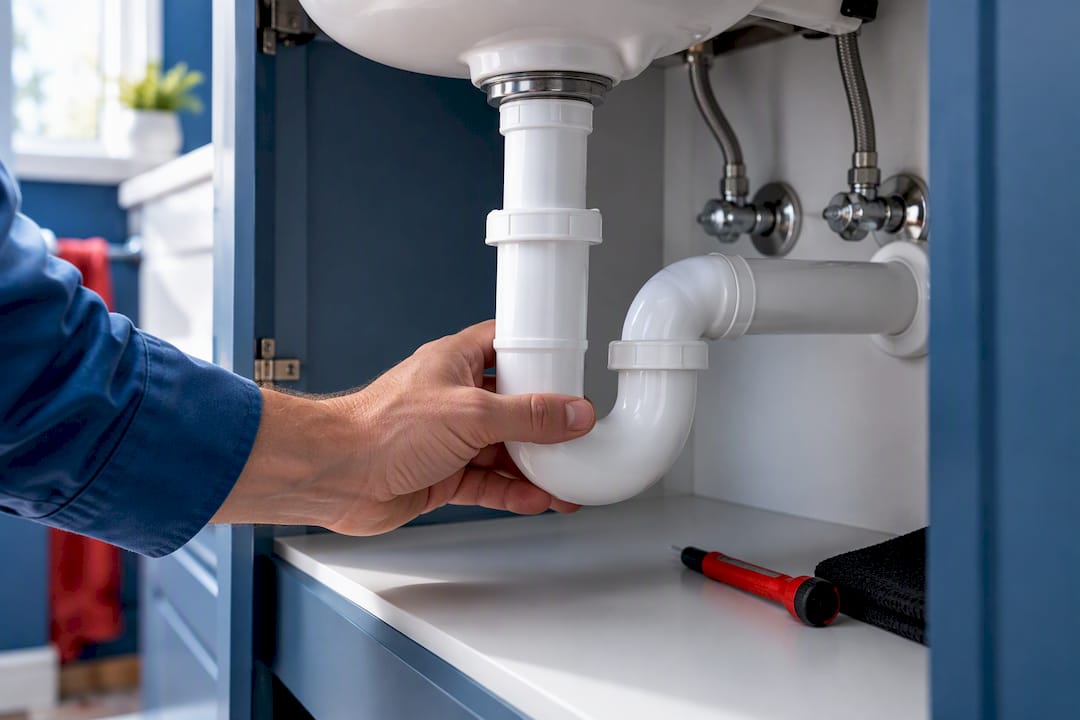
- Clean the P-trap. Set a bucket underneath, unscrew the slip nuts by hand, and clear out any trapped sludge before reassembling.
Most hair and soap clogs resolve at step two or three. If you notice a leak, heavy corrosion on the trap, or a sewage smell at any point, stop and treat it as a sign to call a plumber rather than push further.
Pro Tip: Run the hot tap for a minute after each step. A faster, stronger swirl down the drain tells you the clog is loosening even before it disappears completely.
What’s actually causing your bathroom sink to back up
Not every clog behaves the same way, and the symptoms usually point to the cause before you take anything apart.
- Hair and soap scum produce a slow drain with gurgling, and you’ll often see hair wrapped around the stopper when you pull it.
- Mineral buildup narrows pipes gradually over years, so drainage worsens slowly rather than stopping all at once.
- A foreign object (a bottle cap, a toy, dental floss) causes a sudden, total blockage with no warning slowdown.
- A main line or sewer issue shows up as multiple fixtures backing up together, not just the bathroom sink.
Run a quick isolation test: if only the bathroom sink is slow and the tub or toilet drain fine, the clog is almost certainly local, in the trap or the pop-up assembly. If several fixtures act up at once, the problem sits deeper in the line and mechanical work at the sink won’t fix it.
Check your pipe material before applying heat. PVC piping softens at high temperatures, so water at water-heater temperature works, but boiling water risks warping the plastic. Older metal piping tolerates heat better, but you likely won’t know which you have without a quick look under the sink.
Step-by-step methods to clear the clog
Work through these in order. Each one escalates in effort, and most bathroom sink clogs never make it past step three.
- Plunge correctly. Seal the overflow hole with a wet rag or tape so the plunger builds real pressure, then set a flat-bottomed cup plunger flush over the drain and push down slowly before pulling up sharply. Repeat in sets of 10 and check the drain speed between sets.
- Use a plastic hair snake. Feed it down past the stopper, rotate gently when you feel resistance, and withdraw slowly once you snag hair or debris. Avoid forcing it deeper if it won’t move: plastic snakes can snap and leave fragments behind, which turns a simple clog into a harder one.
- Remove and clean the P-trap. Slide a bucket under the curved pipe, loosen the slip nuts by hand, and pull the trap free to dump out trapped hair and sludge. Place the bucket before you loosen anything, since the trap holds standing water that will spill the moment it’s disconnected. Reassemble hand-tight, then give the nuts a quarter turn with a wrench and run water to check for leaks.
- Try hot water for grease and soap film. Boil a kettle only if you have metal pipes; for PVC, use water straight from the tap on its hottest setting instead. Pour it down in three or four rounds, letting each drain fully before the next.
- Try baking soda and vinegar for a light clog. Clear any standing water, pour baking soda down the drain, follow with vinegar, and cap the drain for about 15 minutes before flushing with hot water. This loosens minor soap film and odor but won’t clear a dense hair mass, so treat it as a light-duty option, not a fix for a fully blocked drain.
- Use an enzymatic cleaner for maintenance. Enzymatic cleaners are gentler and safer for septic systems, but they work slowly and suit upkeep more than fast removal of an existing hair clog. Pour it in before bed and let it sit overnight, then repeat weekly if you’re using it as routine maintenance.
- Reach for a commercial cleaner only as a last resort. If you go this route, use gloves, eye protection, and open a window for ventilation. Caustic and oxidizing formulas can pit or corrode aging metal pipes with repeated use, so EPA Safer Choice-labeled products are the lower-risk pick when one is available.
Statistic callout: Plunging alone often fails to clear all the residual debris, while a snake physically extracts hair and sludge, cutting the odds the clog comes right back.
Pro Tip: If you’re using a snake made specifically for tight bathroom drains, a purpose-built plumbing snake handles the tight bend under a sink better than a general-purpose one.
Safety rules you can’t skip around chemicals
Chemical drain cleaners cause more harm than most people expect, and the biggest danger isn’t the product itself, it’s mixing products together.
- Never combine bleach with vinegar, ammonia, or another acidic cleaner. U.S. Poison Control has documented that this combination produces toxic chlorine or chloramine gas, and OSHA recorded a fatality tied to mixing bleach with another cleaner during drain work.
- Wear gloves and eye protection any time you handle a commercial cleaner, and open a window or turn on a fan.
- Keep kids and pets out of the bathroom while chemicals are in use or sitting in the drain.
- Skip boiling water on PVC pipe. Use water at water-heater temperature instead.
If you smell a strong chemical odor, feel your throat tighten, or start coughing after using a drain cleaner, leave the room immediately and ventilate the space.
If symptoms appear, call Poison Control at 1-800-222-1222 or seek emergency care right away.
When it’s time to call a plumber
Some signs mean the clog is bigger than a sink issue, and pushing further yourself risks turning a $0 fix into a repair bill.
- Multiple fixtures (tub, toilet, other sinks) are backing up around the same time.
- The clog keeps coming back within days or weeks of clearing it.
- You notice a sewage smell coming from the drain or nearby fixtures.
- You see a leak, a crack, or visible corrosion on the trap or supply lines.
- You’ve plunged, snaked, and cleaned the P-trap and the sink still won’t drain.
A plumber typically starts with a camera inspection to see what’s actually happening inside the line, then moves to a motorized snake for tougher blockages or hydro-jetting for grease and scale buildup that a snake can’t fully clear. If a section of pipe is damaged, sewer repair may follow. Before a visit, clear the cabinet under the sink for access and mention what you’ve already tried, since that saves diagnostic time. Watch for signs your drains need professional attention if the pattern keeps repeating.
Habits that keep your drain from clogging again
A few minutes a week does more than any cleaner.
- Clean the sink strainer weekly to catch hair before it reaches the trap.
- Wipe loose hair into the trash instead of rinsing it down the sink.
- Flush the drain with hot water once a month to keep soap film from building up.
- Use an enzymatic treatment occasionally for maintenance, not as a fix for an active clog.
- Choose a strainer that actually fits your drain opening, and add a hair-capture insert if hair is a recurring problem.
Pro Tip: A cheap mesh strainer costs less than a bottle of drain cleaner and prevents most of the clogs that cleaner is meant to fix.
If you’re doing all of this and the sink still slows down every few weeks, that’s a sign the issue sits deeper than routine upkeep can reach. Our guide on preventing clogged sinks covers more of these habits in detail, and our checklist for recurring clogs is worth a look before you decide it’s time to call someone.
Why this guide reflects real plumbing practice
This mechanical-first, safety-first sequence mirrors how licensed plumbers actually approach a bathroom sink clog on a service call.
- A plumbing company has served a local area with trap removals, snaking jobs, and drain cleaning similar to those covered in this guide.
- The company’s technicians are licensed and certified, and the company holds BBB accreditation.
- The company’s process favors mechanical clearing before chemical treatment, especially where pipe condition is unknown.
Where DIY should stop and a professional should start
Most bathroom sink clogs are hair and soap scum, and a plunger, a plastic snake, and a clean P-trap solve the large majority of them without spending a dollar. I’d rather see someone spend 20 minutes clearing a trap than reach straight for a bottle of caustic cleaner that can eat away at older pipes.
Where I draw the line is repeat clogs. If the same drain backs up every month, that’s not a DIY problem anymore, it’s a diagnostic one, and a camera inspection will save more money than another bottle of cleaner ever will.
— Maayan
Get it fixed for good with AG Plumbing
If you’ve worked through the plunger, the snake, and the P-trap and the bathroom sink still won’t drain, or the same clog keeps returning, that’s usually a sign of buildup or damage further down the line than a homeowner can safely reach. A plumbing service provider offers camera inspections, motorized snaking, and hydro-jetting to address buildup or damage further down the line.
- Recurring clogs: we find the actual cause instead of clearing the symptom again.
- Multiple fixtures affected: this usually points to a main line issue that needs a camera, not a plunger.
- Visible leaks or damage: we handle plumbing repair so a small leak doesn’t turn into a bigger one.
Book a visit through Ag-plumbing and we’ll take it from wherever your DIY attempt left off.
Sources
- UMC article on drain-cleaning safety and methods
- How to Unclog a Sink Drain: 5 Methods That Work | BobVila
- How to choose and use a drain cleaner | Consumer Reports
- OSHA accident detail on chemical exposure during drain cleaning
FAQ
What is the best thing to unclog a bathroom sink?
A cup plunger or a plastic hair snake clears most bathroom sink clogs, since plumbing professionals recommend mechanical methods first because they remove hair and soap debris without chemical risk. If those don’t work, removing and cleaning the P-trap resolves most of what’s left.
Why is my bathroom sink clogged but pipes are clear?
The blockage is often sitting in the P-trap or the pop-up stopper assembly rather than the main line, especially if only that one sink is slow to drain. Pulling the stopper to check for tangled hair, or removing the trap to inspect for sludge, usually finds it.
How do you unblock a badly blocked bathroom sink?
Start with a cup plunger with the overflow sealed, then move to a plastic hair snake if plunging doesn’t clear it. If the sink is still blocked, remove the P-trap to check for a deeper obstruction, and call a plumber if the clog persists or multiple fixtures are affected.
Do baking soda and vinegar actually work to unclog drains?
Baking soda and vinegar can loosen minor soap film and light odor-causing buildup, but the reaction isn’t strong enough to clear a dense hair clog. It works best as a light maintenance step rather than a fix for a fully blocked bathroom sink.
Recommended
- How to Unclog Your Toilet: Simple DIY Solutions That Work
- How to Prevent Clogged Sinks: A Homeowner’s Guide
- Homeowners: Quick Checklist to Stop Recurring Drain Clogs
- What is a plumbing snake? Clear tough clogs fast
