
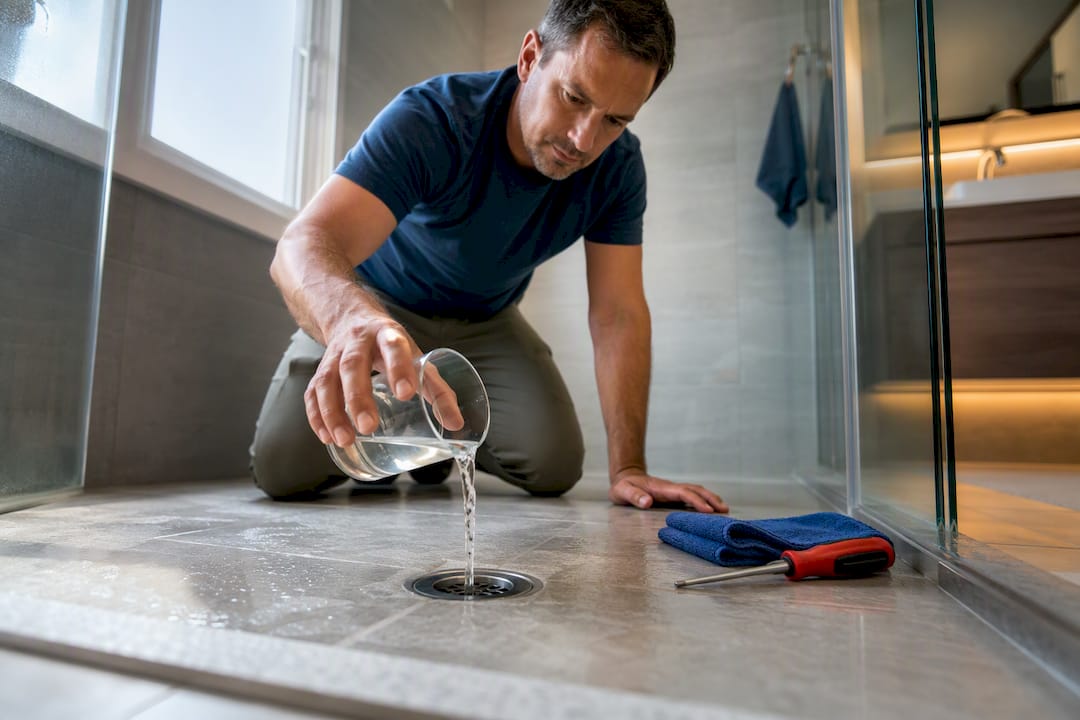
Refill the trap with water and clear out any visible hair or slime first; that fixes most cases within minutes. If the smell comes back within a day or two, spreads to other fixtures, or shows up with gurgling or slow drainage, the cause is likely deeper in the system and a licensed plumber should take a look.
TL;DR:
- Mechanical removal of hair, soap scum, and slime from the drain often resolves most odor issues without the need for chemicals.
- Refilling the P-trap with water and checking for gurgling or slow drainage can identify if the source is a dry trap or venting problem rather than buildup.
- Using enzyme-based cleaners after physically cleaning the drain helps break down organic biofilm, but repeated chemical treatments are usually ineffective.
- Mixing bleach with acids or ammonia poses serious hazards, and following EPA label instructions is crucial for safe cleaning practices.
- Persistent odors, spreading to multiple fixtures or accompanied by gurgling or leaks, require a professional plumber’s inspection to uncover leaks, venting issues, or sewer line problems.
Table of Contents
- Where is the smell actually coming from?
- The DIY cleaning steps that fix most smelly drains
- What EPA product labels say about mixing drain cleaners
- When the smell means it is time to call a plumber
- Keeping the drain from smelling again
- A plumber’s-eye view of a smelly shower drain
- What the internet gets wrong about drain smells
- When to bring in AG Plumbing for a lasting fix
- Where these safety guidelines come from
- Sources
- FAQ
Where is the smell actually coming from?
Before reaching for a cleaner, spend two minutes figuring out where the odor starts. A smell that shows up only during or right after a shower usually points to buildup in the drain itself. A constant smell, even when the water has not run in hours, often means the P-trap has dried out or sewer gas is finding a path into the room.
Run through this checklist:
- Notice whether the odor is tied to water use or present all the time.
- Pour a cup of water into the drain to refill the trap, then check back in an hour.
- Watch for gurgling, slow draining, or odors at nearby fixtures like the toilet or floor drain.
- Lift the grate and look for hair, soap scum, or a dark slime coating the walls of the drain.
Odor can travel farther than people expect. A smell that seems to come from the shower sometimes originates at a nearby toilet, an unused floor drain, or a loose connection further down the line. If refilling the trap and cleaning the visible grate area does not change anything, treat the shower as one possible source among several rather than the confirmed cause.
The DIY cleaning steps that fix most smelly drains
Most shower drain odors come from biofilm, a slimy buildup of hair, soap residue, and skin oils that coats the inside of the drain and trap. Mechanical removal solves this faster and more reliably than any cleaner, so start there.
Gather a few basic tools first: rubber gloves, a flashlight, a plastic drain key or a bent wire hook, a small bucket, and an enzyme-based drain cleaner.
- Remove the drain cover and use the hook or drain key to pull out hair and slime by hand. This single step resolves the smell in many cases.
- Flush the drain with hot water for 30 to 60 seconds to loosen any residue left behind.
- If the smell lingers, apply an enzyme-based cleaner following the label’s dosing instructions and let it sit, typically 24 to 72 hours, so the enzymes can break down organic buildup.
- Recheck the drain after that window. If the odor is gone, keep up with routine mechanical cleaning. If it is not, do not repeat the treatment right away.
Pro Tip: Baking soda followed by white vinegar can help loosen light residue before an enzyme treatment, but it is not a substitute for physically removing hair and slime.
Avoid reaching for a stronger or different chemical cleaner the moment the first attempt fails. Repeating caustic treatments back to back rarely fixes a problem that mechanical cleaning did not solve, and it raises the odds of a bad chemical reaction if products get mixed. If one full enzyme cycle does not clear the smell, that is a signal to look deeper, not to pour in more product.
What EPA product labels say about mixing drain cleaners
Household bleach and drain-cleaning products are not interchangeable, and mixing them is one of the more dangerous habits in a bathroom cabinet. EPA product labeling for bleach includes specific hazard statements, storage and disposal instructions, and directions to flush drains before and after use, because the product is not automatically safe to combine with whatever else is already in the pipe.
- Never combine bleach with vinegar, other acids, ammonia, or additional drain cleaners.
- Follow the label’s directions for dilution, ventilation, and disposal exactly as written.
- When in doubt, choose an enzyme-based cleaner instead of a chemical one.
- If you smell strong irritant fumes, leave the area, ventilate the space, and seek medical guidance for any exposure.
Bleach mixed with acids or ammonia can release hazardous gases, according to EPA label guidance on chemical compatibility, which is why the label itself, not a home recipe, should decide what goes down a drain. Some bleach products also carry specific dilution and rinsing instructions for disinfecting bathroom surfaces, another reminder that these products are formulated for a particular use, not general-purpose plumbing repair.
When the smell means it is time to call a plumber
A few signs point past DIY territory and toward a professional inspection:
- The odor returns within a day or two of a thorough cleaning.
- More than one fixture in the home smells the same way.
- You hear gurgling or notice slow drainage in the shower or elsewhere.
- Water backs up or you spot a visible leak near the drain or wall.
A licensed plumber checks things a homeowner usually cannot from the outside: whether the trap still holds a proper seal, whether pipes are leaking, whether the venting system is siphoning water out of traps, and whether the sewer connection itself is the source. When the cause is not obvious visually, a camera inspection can locate it without guesswork.
Pouring chemical cleaner after chemical cleaner into a drain that keeps smelling does not fix a leak or a venting problem. It just delays finding it, and delay tends to make the eventual repair bigger.
Keeping the drain from smelling again
A little routine maintenance keeps most of this from coming back:
- Install a hair catcher over the drain and empty it after every shower.
- Do a mechanical cleaning and hot-water flush about once a month.
- Use an enzyme treatment every few weeks to keep biofilm from building back up.
- Run water in drains you rarely use, like a basement floor drain, so their traps stay full.
Pro Tip: Set a phone reminder for a monthly drain check. It takes less time than dealing with a smell that has had a month to build.
A plumber’s-eye view of a smelly shower drain
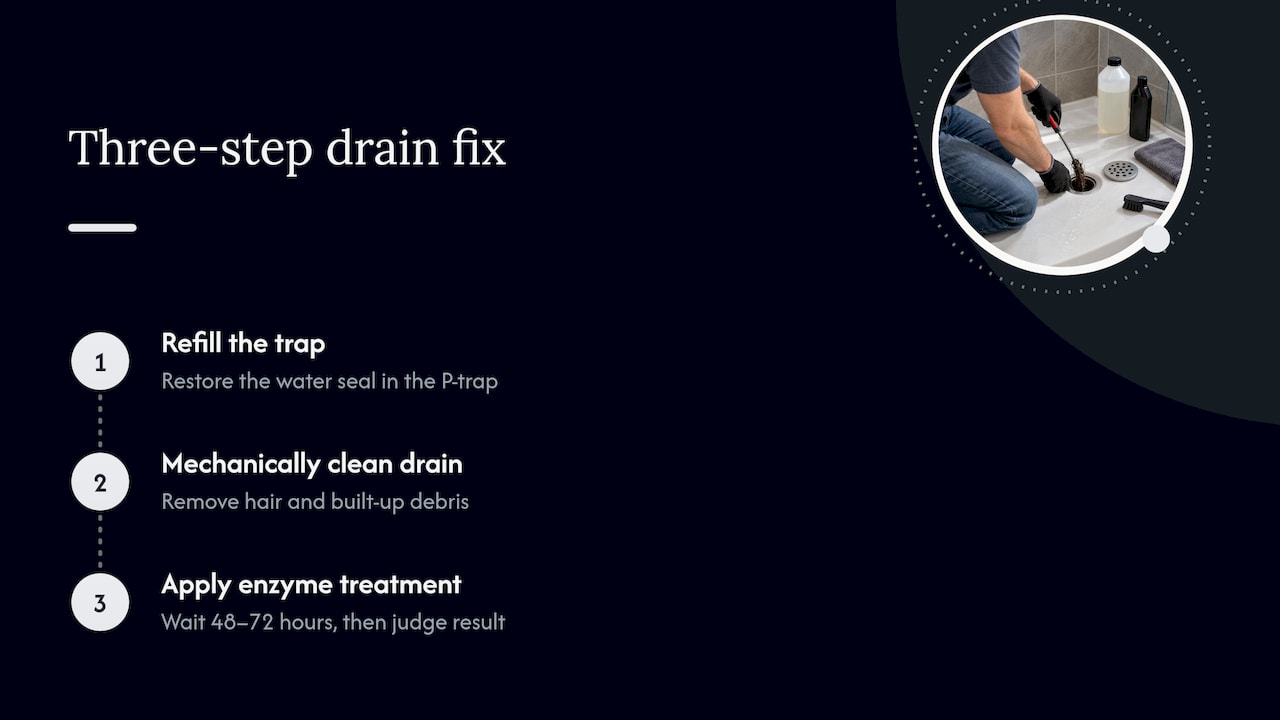
Most homeowners can resolve this without a service call by following three steps in order: refill the trap, mechanically clean the drain, then apply an enzyme treatment and wait 48 to 72 hours before judging the result. Skipping straight to a chemical cleaner, or repeating one, tends to mask problems instead of solving them.
Experienced plumbing professionals see the same pattern often: homeowners who tried several products before calling. If that describes your situation, tell the plumber exactly what you used. Some chemical residues change how a trap or line should be safely opened.
What the internet gets wrong about drain smells
Most advice on this topic treats every smelly drain the same way: pour something in, wait, repeat if needed. That approach ignores the order that actually matters. Mechanical removal of hair and biofilm solves more cases than any cleaner, because a chemical product cannot dissolve a physical clump of hair sitting under the grate nearly as well as pulling it out by hand.
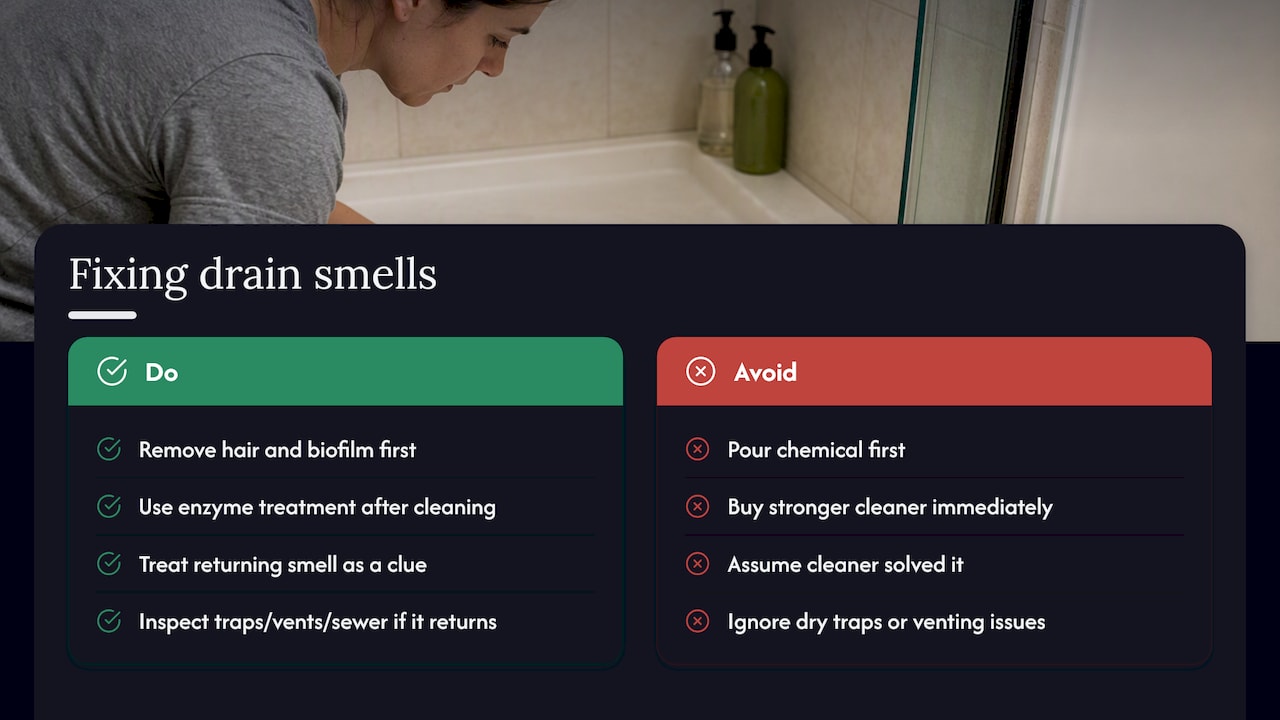
The bigger blind spot is timing. People treat a smell that comes back after a week as proof the first product was too weak, so they buy a stronger one. In practice, a smell that returns quickly after a proper mechanical clean and enzyme treatment usually means the source is not in the trap at all. It is a dry trap somewhere else, a venting issue, or a sewer-line problem, and no amount of cleaner poured into the shower will touch that.
If you take one thing from this: clean before you pour anything, and treat a returning smell as a diagnostic clue rather than a reason to try a different bottle.
— Maayan
When to bring in AG Plumbing for a lasting fix
If the smell keeps coming back, spreads to more than one fixture, or you suspect a sewer or venting issue, it is worth having it looked at rather than cycling through more products. Professional plumbing services handle exactly these situations for homeowners and businesses in the local area.

Before your visit, jot down what you have already tried:
- The cleaning steps and any chemicals you used, in order.
- How long the smell took to return after each attempt.
- Photos of the drain area, if you have them, especially anything unusual.
From there, our team can recommend the right fix, whether that is a straightforward drain cleaning service, hydro jetting for heavier buildup, or a closer look at sewer repair if the line itself is the problem. Reach out to schedule a visit.
Where these safety guidelines come from
The chemical-safety guidance above comes directly from EPA-registered product labels, including labeling for bleach-based disinfectants and their hazard and compatibility warnings. Check a product’s own label before using or combining it with anything else.
FAQ
Why does my shower drain smell like rotten eggs?
A rotten-egg or sulfur-like smell usually means sewer gas is escaping through a dry P-trap or built-up biofilm in the drain. Refilling the trap with water and clearing out hair and slime resolves most cases quickly.
Why does my shower drain smell like body odor?
That smell typically comes from biofilm, a mix of skin oils, soap residue, and hair that coats the drain and trap walls over time. Mechanical cleaning followed by an enzyme treatment usually clears it within a few days.
Why does my drain smell bad even though there is no blockage?
A drain does not need to be clogged to smell, since a dry trap or a venting problem can let sewer gas in even with water flowing freely. If cleaning does not help, the source may be elsewhere in the system, which is worth a professional look.
Why would my shower drain smell like sewer?
A sewer-like smell often points to a dry trap, a failing seal, or in some cases a venting or sewer-line issue rather than the drain itself. If the smell returns after cleaning or shows up with gurgling in the pipes, it is time to call a licensed plumber.
Recommended
- Skip Caustic Cleaners: Fix a Laundry Drain Clog Fast, Homeowners
- Three Week Plan to End Bathroom Drain Flies for Pittsburgh Homeowners
- Step by step drain cleaning guide for PA homeowners
- Homeowners: Quick Checklist to Stop Recurring Drain Clogs
