
TL;DR:
- Outdoor plumbing requires more than just shutting off the exterior faucet to prevent freezing damage, as trapped water can cause pipes to burst. Proper winterization involves closing interior valves first, fully draining lines, insulating exposed pipes, and regular maintenance checks to catch problems early. Using materials like MDPE pipe and frost-proof sillcocks significantly enhances system durability in cold climates.
If you live somewhere winters are brutal, your outdoor plumbing is always one hard freeze away from a very expensive problem. Water damage and freezing claims average over $11,000 per incident, making them more costly than fire or theft claims. Most homeowners assume shutting off the outdoor faucet handles it. It does not. Real outdoor plumbing tips go deeper than that one step, and this article walks you through everything that actually protects your system once the temperatures drop.
Table of Contents
- Key takeaways
- 1. Outdoor plumbing tips: know where you are vulnerable
- 2. Essential maintenance tasks before the first freeze
- 3. Common outdoor plumbing problems and how to handle them
- 4. Best materials for cold-climate outdoor plumbing
- 5. Landscape plumbing considerations you should not overlook
- 6. Building a yearly outdoor plumbing maintenance plan
- What I have learned from 30 years of outdoor plumbing in Pittsburgh
- Protect your outdoor plumbing with Ag-plumbing
- FAQ
Key takeaways
| Point | Details |
|---|---|
| Shutoff alone is not enough | Closing only the exterior faucet leaves trapped water that can freeze and burst pipes. |
| Use the correct winterization sequence | Shut the interior isolation valve first, then open the outdoor faucet to fully drain the line. |
| Material choice matters in cold climates | MDPE pipe outperforms PVC in freeze-prone regions because it flexes instead of cracks. |
| Catch problems early | Pressure drops, wet spots, and pooling water are warning signs before a full emergency develops. |
| Schedule beats reaction | A yearly maintenance plan costs far less than a single emergency repair call in January. |
1. Outdoor plumbing tips: know where you are vulnerable
Before you can protect your system, you need to understand exactly which parts are at risk. Cold climate homeowners face a specific set of threats that mild-weather residents simply do not deal with.
When water freezes, it expands. That expansion creates pressure inside pipes that can crack even thick metal fittings. The damage is not always immediate or visible. A pipe can crack in December and not show a leak until March when water pressure resumes and pushes through the fracture.
The outdoor components most likely to suffer are:
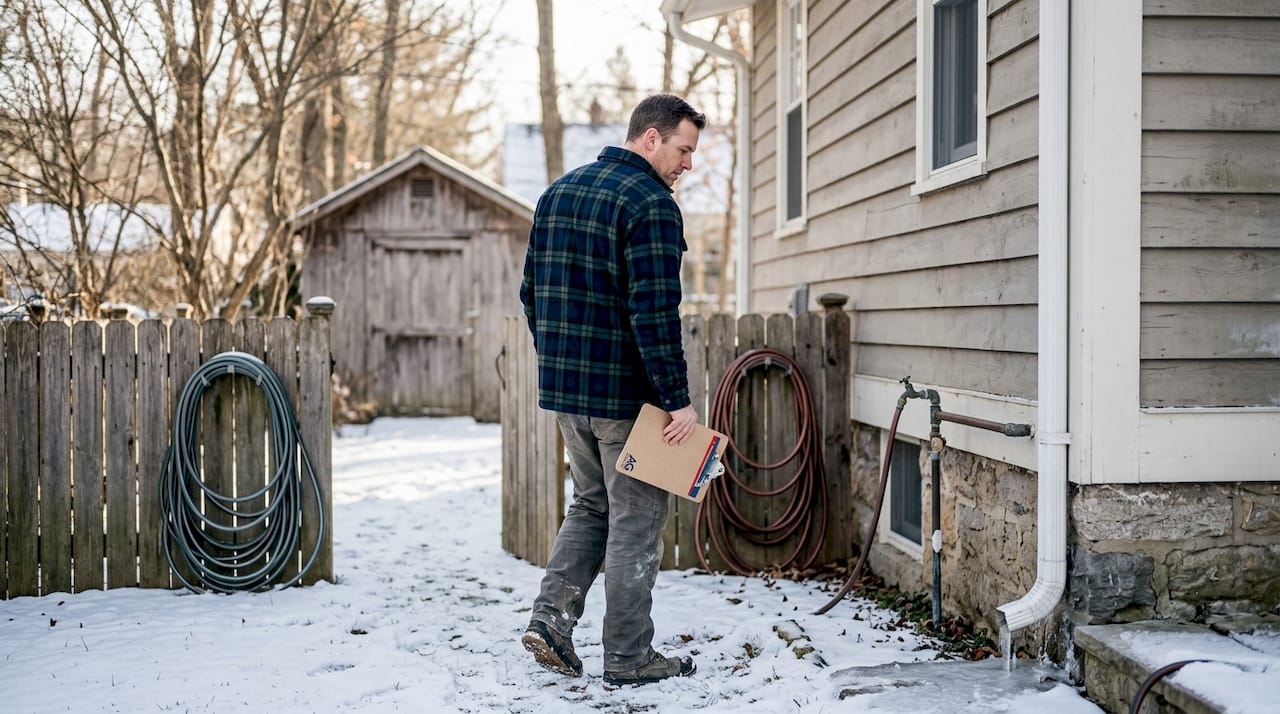
- Hose bibs and sillcocks: These stick out from exterior walls and are fully exposed to cold air.
- Irrigation lines and valve boxes: Shallow underground lines can freeze in a hard frost.
- Supply lines for outdoor kitchens or showers: These carry pressure year-round if not properly shut down.
- Exposed pipe segments along exterior walls or in unheated garages.
Soil movement is another factor most homeowners do not consider. Freeze-thaw cycles shift soil, which puts stress on underground fittings and joints. Over several winters, this loosens connections and creates slow leaks that often go unnoticed until spring.
Pro Tip: Walk your property in late October and note every place water connects to an outdoor fixture. That list becomes your winterization checklist.
2. Essential maintenance tasks before the first freeze
Getting ahead of winter is the single best thing you can do for your outdoor plumbing. Here is the sequence that actually works.
- Shut the interior isolation valve first. This is the step most homeowners skip. Proper winterization requires shutting the interior valve before opening the outdoor faucet to drain. Doing it the other way leaves water sitting in the line.
- Open the outdoor faucet to drain completely. Leave it open until no more water drips out. This takes the trapped water out of the equation.
- Install a vacuum breaker if you do not have one. Vacuum breakers prevent backflow that can pull contaminated water back into your supply line.
- Insulate exposed pipes. Foam pipe insulation from any hardware store costs a few dollars per foot and takes 20 minutes to install. Focus on pipes along north-facing exterior walls and in unheated spaces.
- Disconnect and store all garden hoses. A hose left connected traps water against the bib, defeating the purpose of shutting off the supply.
- Blow out irrigation lines or use a drain kit. Any water left in irrigation tubing will freeze and split the lines.
- Clear gutters and downspouts. Blocked drainage causes ice dams that put water pressure against exterior walls where pipes run.
- Check water pressure. Residential water pressure should stay between 40 and 80 psi. Above 80 psi stresses fittings year-round and makes freeze damage worse.
Pro Tip: If your home has an irrigation system connected to potable water, backflow preventers are required by code in most U.S. jurisdictions. Check yours before winterizing.
For a full step-by-step guide specific to Pittsburgh-area homes, the Pittsburgh winterization workflow from Ag-plumbing covers the complete process in detail.
3. Common outdoor plumbing problems and how to handle them
Even well-prepared systems develop issues. Knowing what to look for and how to respond quickly can save you thousands.
The most reliable early warning signs of outdoor plumbing trouble are:
- A sudden, unexplained drop in water pressure anywhere in the house
- Wet patches in the yard during dry weather
- Water stains on exterior walls or foundation
- Higher-than-normal water bills without a change in usage
- Frost or ice forming on the outside of a pipe that should be drained
If you find a frozen pipe that has not yet burst, shut off the water supply immediately and apply gentle heat with a hair dryer, working from the faucet end toward the frozen section. Never use an open flame. If the pipe has already cracked, turn off the supply and get a rubber patch clamp on it as a temporary fix while you arrange repairs.
Outdoor kitchen plumbing is a category worth calling out. Burst pipe repairs inside finished outdoor kitchen walls run $800 to $1,500 because contractors have to open finished surfaces to reach the damage. That cost alone makes a $15 pipe insulation wrap an obvious investment.
The key rule on professional help: if you see active water flowing, if you cannot locate the source of a pressure drop, or if a pipe is buried underground, call a plumber. Temporary fixes on outdoor supply lines that run underground are not reliable long-term solutions. Ag-plumbing’s emergency plumbing guide walks through which situations homeowners can manage and which require immediate professional response.
4. Best materials for cold-climate outdoor plumbing
If you are replacing any outdoor plumbing components, material selection makes a significant difference in how well your system holds up over multiple winters.
| Material | Cold Climate Performance | Best Use |
|---|---|---|
| MDPE pipe | Excellent. Flexes through freeze-thaw cycles without cracking. | Underground supply lines in USDA zones 6 and colder |
| PVC pipe | Poor in hard freezes. Brittle below 32°F and cracks under pressure. | Indoor only or warm climates |
| Copper pipe | Good with proper insulation. Conducts cold rapidly without protection. | Above-ground runs with foam insulation |
| PEX tubing | Very good. Flexible and burst-resistant, though needs UV protection. | Short outdoor runs and connections |
MDPE pipe outperforms PVC in freeze-prone regions because it absorbs the stress of soil movement and temperature swings without cracking. If your outdoor supply lines were installed with PVC more than a decade ago, replacing them with MDPE before they fail is one of the highest-value upgrades you can make.
For faucets, frost-proof sillcocks are worth every dollar. These valves shut off water 8 to 12 inches inside the wall where temperatures stay above freezing. Standard bibs shut off right at the exterior wall, which is exactly where the cold is worst.
Pro Tip: If you are adding an outdoor kitchen, shower, or water feature, run a dedicated underground supply line rather than tapping an existing hose bib. Dedicated lines allow independent shutoff and are far easier to winterize correctly.
5. Landscape plumbing considerations you should not overlook
Your outdoor drainage system connects directly to the health of your plumbing. Landscape plumbing considerations are a real part of best outdoor plumbing practices that most maintenance guides skip entirely.
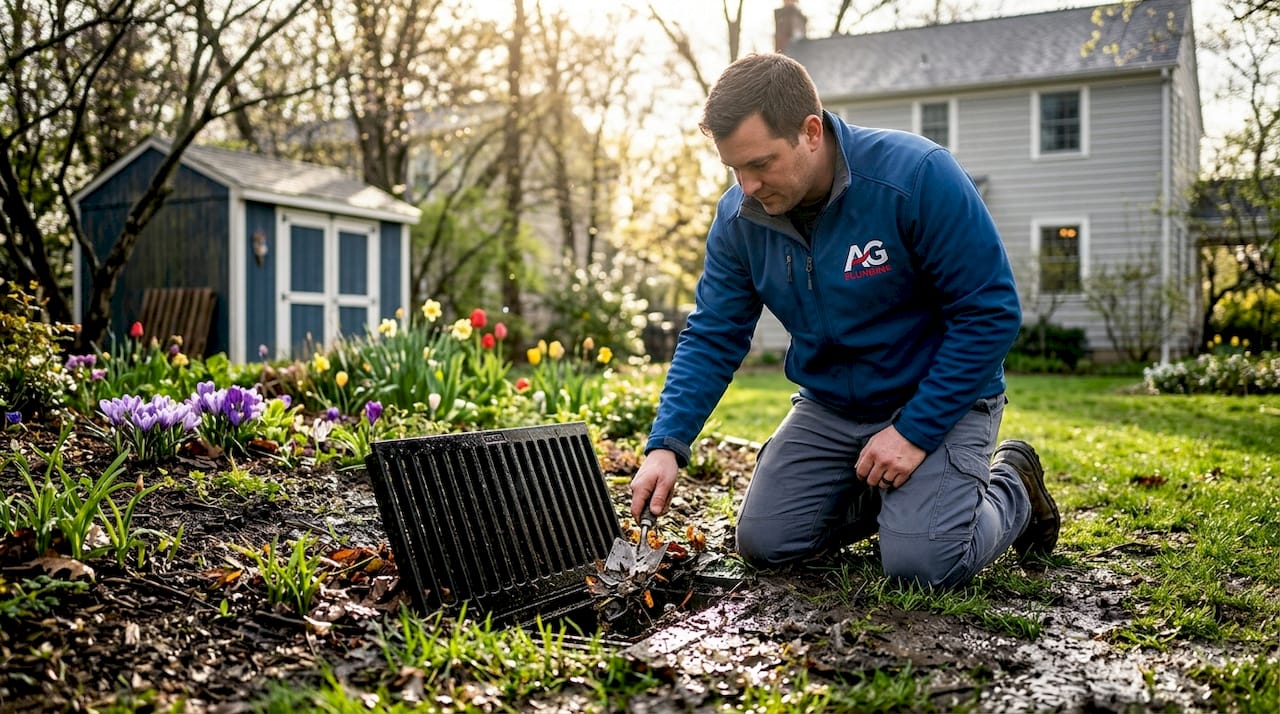
Grading matters. If the ground around your foundation slopes toward the house, melting snow and rain water push toward exterior walls where pipes often run. Over time, that moisture accelerates freeze-thaw stress on buried fittings. Regrading low spots so water flows away from the structure is a one-time project with lasting benefits.
French drains and area drains collect surface water before it can pool near outdoor plumbing components. If you have a valve box or irrigation manifold that sits in a low area of the yard, adding a simple perforated drain line around it keeps standing water from freezing around the components.
Downspout extensions are underrated outdoor drainage tips that nobody talks about. When a downspout empties right next to the foundation, that concentrated water flow goes straight toward buried supply lines. A $10 plastic extension that carries water three feet farther into the yard genuinely reduces the freeze-thaw cycle stress on nearby pipes.
6. Building a yearly outdoor plumbing maintenance plan
A plan beats improvisation every time. Here is a simple yearly structure that keeps outdoor plumbing solutions working season after season.
- September: Pre-winter inspection. Walk the property, check for dripping bibs, test water pressure, inspect visible pipe insulation for wear.
- October: Full winterization. Execute the shutoff sequence, disconnect hoses, blow out irrigation, insulate exposed pipes, clear gutters.
- November through February: Monthly visual check. Look for ice formation on exterior walls, check the area around outdoor kitchen or shower connections, listen for unusual pressure sounds inside.
- March: Spring reactivation inspection. Freeze-thaw damage often shows up as leaks in spring when water pressure resumes. Turn on outdoor supply lines slowly and watch every connection point for drips.
- April: Summer prep and upgrades. Address anything found during spring inspection. Schedule any material upgrades or new installs before summer use begins.
Document what you find each season in a simple notes app or a paper folder kept with your home maintenance records. Knowing that a specific bib dripped in spring 2025 tells a plumber exactly what to look at first in 2026, which saves diagnostic time and money. This approach is the core of preventive plumbing maintenance that separates homeowners who pay small bills from those who pay large emergency ones.
Budget $100 to $300 per year for materials like pipe insulation, hose bib covers, and replacement vacuum breakers. Set aside a separate emergency fund of $500 to $1,000 for unexpected repairs. That reserve turns a potential crisis into a routine service call.
What I have learned from 30 years of outdoor plumbing in Pittsburgh
I have seen the same scenario hundreds of times. A homeowner turns the outdoor faucet handle to “off” in November, figures the job is done, and calls us in February with a flooded basement or a cracked irrigation manifold. Shutting the exterior faucet alone leaves water trapped in the line where it will freeze when temperatures drop hard enough.
The investment in frost-proof sillcocks and MDPE supply lines pays back within two to three winters. The math is not complicated. One burst pipe repair costs more than most homeowners spend on five years of preventive upgrades.
What surprises homeowners most is that winter damage often hides until spring. A pipe cracks in January, stays frozen and sealed, then starts pouring water the first week of April when pressure comes back. By the time you see it, the water has been sitting there quietly for weeks. That is exactly why the spring reactivation inspection is not optional. It is the step that catches expensive problems early enough to repair them cheaply.
Schedule plumbing maintenance like you schedule an oil change. Reactive calls in the middle of a freeze cost more, take longer to get on the calendar, and often require more extensive repairs than the same job done before winter arrives.
— Maayan
Protect your outdoor plumbing with Ag-plumbing
Ag-plumbing has served Pittsburgh homeowners for 30 years, and outdoor plumbing in cold climates is work we know deeply. Whether you need a frost-proof hose bib installed before the first freeze, a burst pipe repaired after a hard winter, or a full seasonal inspection to catch problems before they grow, our team handles it all. We serve Pittsburgh and the surrounding areas with the kind of thorough, no-guesswork service that keeps outdoor systems running year after year. Visit our Pittsburgh plumbing services page to learn more, or go directly to our plumbing repair services page to schedule an appointment. Do not wait until January to find out what October maintenance would have prevented.
FAQ
What is the most common outdoor plumbing mistake in winter?
Closing only the exterior faucet handle without shutting the interior isolation valve. This leaves water trapped in the line where it can freeze and burst the pipe.
How do I know if my outdoor pipe froze but did not burst?
Turn on the supply slowly and check for a sudden pressure drop or no water flow at all at that fixture. Visible frost on the pipe exterior is another sign. Apply gentle heat with a hair dryer before opening the supply fully.
When should I call a plumber instead of fixing it myself?
Call a professional when the break is underground, inside a finished wall, or when you cannot identify where the pressure loss is coming from. Burst pipes in outdoor kitchen walls cost $800 to $1,500 to repair and require skilled access work.
What water pressure is safe for outdoor plumbing?
Keep residential water pressure between 40 and 80 psi. Pressure above 80 psi violates plumbing code standards and puts extra stress on outdoor fittings that are already under cold-weather strain.
Does my irrigation system need a backflow preventer?
Yes. Backflow preventers are required by code in most U.S. jurisdictions for irrigation systems connected to potable water. They stop contaminated water from being drawn back into the drinking water supply.
Recommended
- Smart Plumbing Tips Every Pittsburgh Homeowner Needs – AG-Plumbing
- Winterize your Pittsburgh plumbing: a step-by-step workflow – AG-Plumbing
- Cost-saving plumbing tips for Pittsburgh homeowners – AG-Plumbing
- Essential plumbing safety tips for Pittsburgh homeowners – AG-Plumbing
