
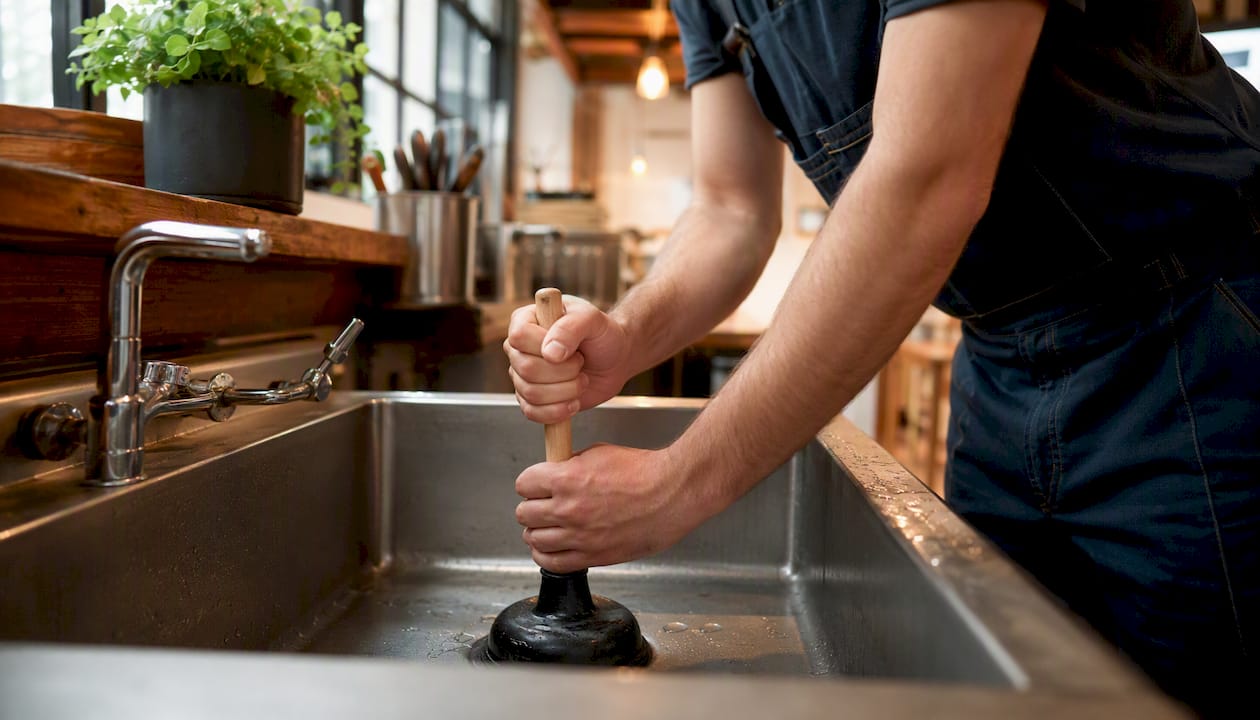
For a clogged drain, start with a plunger before anything else. For a running toilet, check the flapper. For a minor leak under the sink, shut off the supply valve and dry the area. Those three moves resolve the majority of common household plumbing calls without spending a dollar. Call a licensed plumber immediately if you see active flooding, smell gas near a water heater or appliance, notice sewage backing up into a tub or floor drain, or spot a burst pipe. Those are not wait-and-see situations.
Quick triage for the three most common problems:
- Clogged drain: plunger first, then clean the P-trap
- Running toilet: lift the tank lid and check the flapper or float arm
- Minor leak: close the shutoff valve under the fixture, then assess
Key Takeaways
For most common plumbing problems, a plunger, a flapper replacement, or a shutoff valve is all you need — but license verification and a written bid are non-negotiable before hiring anyone for anything bigger.
| Point | Details |
|---|---|
| DIY triage first | Try plunger, flapper check, or shutoff valve before calling a pro. |
| Know your red flags | Flooding, gas smell, or sewer backup requires an immediate licensed plumber. |
| Understand the pricing range | Plumber billing runs $45–$200/hr nationally; always get three written bids. |
| Verify before you hire | Confirm license, insurance, warranty, and references before signing anything. |
| Ag-plumbing for Pittsburgh | Licensed, insured, 30-year local team — book a repair visit or request a quote online. |
Table of Contents
- Safe DIY plumbing fixes you can try right now
- What the 135° rule means for your drains
- When to stop DIY and call a licensed plumber
- How plumbers charge: rates, flat fees, and what moves the price
- Five steps to hire a reliable plumber
- How to prepare before the plumber arrives
- Is it rude not to tip a plumber?
- Maintenance habits that prevent most plumbing calls
- What experienced plumbers wish homeowners knew
- Ag-plumbing serves Pittsburgh homeowners who want it done right
- Sources
- FAQ
Safe DIY plumbing fixes you can try right now
1. Clogged sink or shower drain
Skip the chemical drain cleaners. They corrode older pipes and rarely dissolve the hair-and-grease plugs that cause most clogs. Instead, use a cup plunger with a firm seal over the drain and pump 10–15 times. If that fails, put a bucket under the P-trap (the curved pipe beneath the sink), unscrew the slip-nut fittings by hand, and pull the trap free. Most clogs sit right there. Rinse the trap, reinstall it, and test. For recurring drain blockages, the problem is usually deeper in the line.
2. Minor leak under a fixture
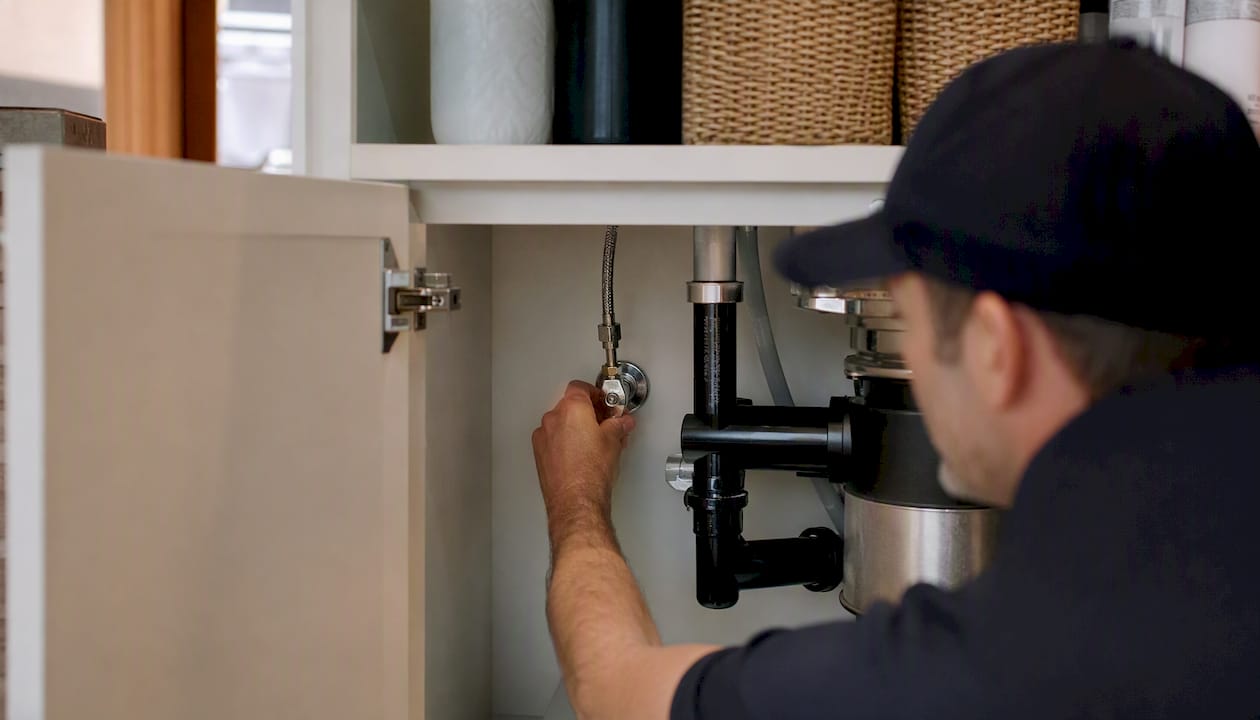
Turn off the shutoff valve directly below the sink or toilet. If you cannot find one, use the main shutoff for the house. Dry the area completely, then look for the source: supply line connection, shutoff valve packing nut, or drain basket. A rubber washer or a wrap of plumber’s tape on a threaded fitting fixes most supply-line drips. Anything involving the drain body or a corroded valve needs a pro.
3. Running toilet
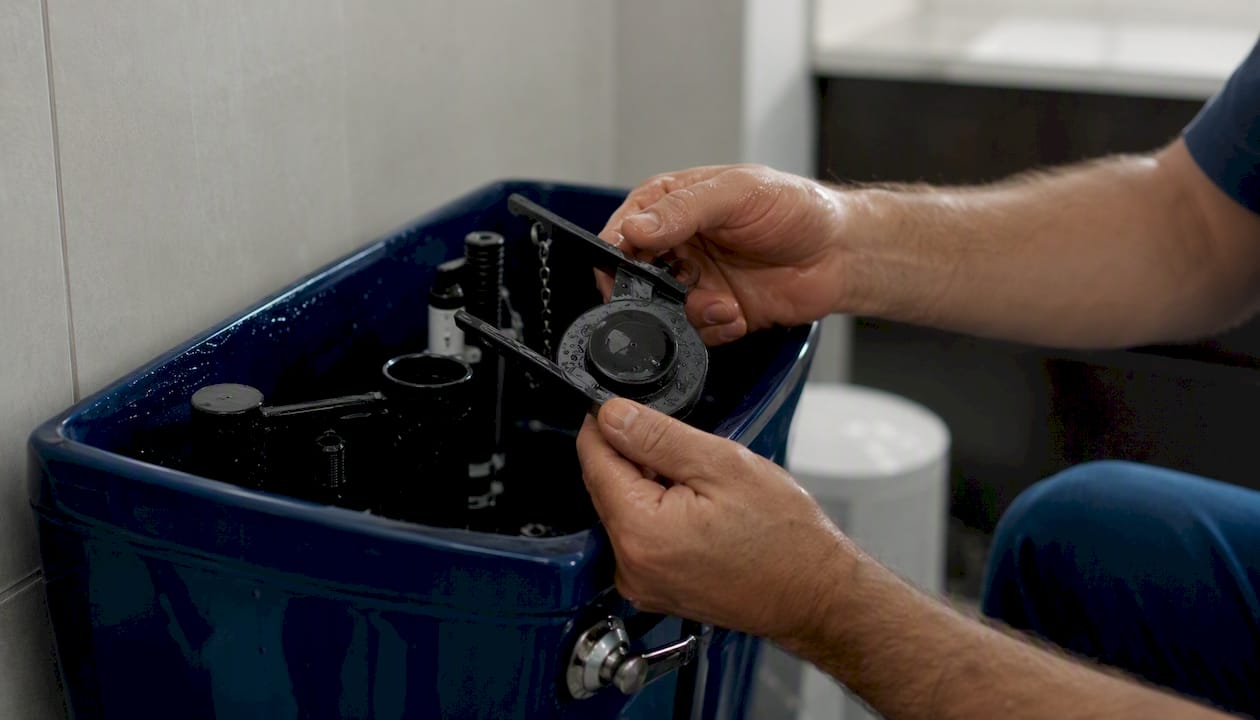
Lift the tank lid. If the flapper (the rubber seal at the bottom of the tank) looks warped or does not seat flat, replace it. Flappers cost under $10 at any hardware store and swap out in five minutes. If the water level is too high and spilling into the overflow tube, bend the float arm down slightly or adjust the float clip on a newer fill valve.
4. Low hot water
For a gas water heater, check that the pilot light is lit and the thermostat dial is set between 120°F and 140°F. For an electric unit, a tripped breaker is the most common culprit — reset it at the panel. If the problem persists, sediment buildup in the tank is likely. Troubleshooting water heater problems early prevents a full replacement.
Pro Tip: Before touching any plumbing near your water heater, confirm the gas valve is in the “pilot” position, not “on.” Relighting a pilot while gas has been accumulating is a real hazard.
Plumbing safety tips for Pittsburgh homeowners cover additional electrical and gas precautions worth bookmarking.
What the 135° rule means for your drains
Every time a drain pipe changes horizontal direction, that turn counts against a running total. The 135° rule states that the aggregate horizontal direction change in a single drain run cannot exceed 135 degrees before the code requires a vent or a cleanout. One 90° elbow plus one 45° elbow equals 135° — right at the limit. Three 45° elbows hit the same ceiling.
Why does this matter to you? Because remodels frequently push past this limit without anyone noticing until clogs start repeating in the same spot. Trade sources confirm that sharp bends trap grease and debris, and that long-sweep fittings or two 45° elbows in place of a single 90° elbow move waste far more reliably.
Key points homeowners should know:
- A 90° + 45° combination hits the 135° ceiling exactly; adding any more direction change requires a cleanout or vent
- Short 90° elbows are the worst offenders; long-sweep 90s or two 45s perform better
- Recurring clogs after a remodel are often a 135° violation in disguise
- A permanent fix usually means re-routing the drain or adding a cleanout, rather than repeated snaking
If a plumber keeps clearing the same line every few months, ask them to check the aggregate bend angle before the next service call.
When to stop DIY and call a licensed plumber
Some problems look manageable and are not. Spotting plumbing problems early is the difference between a $200 repair and a $5,000 one.
Call immediately (within the hour):
- Active flooding or a burst pipe
- Gas odor near a water heater or appliance
- Sewage backing up into tubs, sinks, or floor drains
Same day:
- Water heater failure (no hot water at all)
- Leak you cannot isolate with a shutoff valve
- Visible mold or water staining that appeared suddenly
Within 48–72 hours:
- Slow drains that do not clear with a plunger
- Toilet that runs constantly despite flapper replacement
- Low water pressure throughout the house
Emergency checklist before the plumber arrives:
- Shut off the main water supply valve (usually near the meter or where the line enters the house)
- Turn off the water heater to prevent dry-fire damage
- Isolate electrical panels near flooded areas
- Photograph all damage for your insurance claim
How plumbers charge: rates, flat fees, and what moves the price
National plumber billing in 2026 commonly runs $45–$200 per hour, with many homeowners landing near $90/hr for standard residential work. Flat fees for routine services typically fall in the $100–$400 range depending on location and scope.
| Service | Typical Range | Notes |
|---|---|---|
| Standard hourly rate | $45–$200/hr | Varies by region and technician level |
| Service/call-out fee | $50–$100 | Often applied toward the job total |
| Drain cleaning (simple) | $100–$400 | Flat fee; more for hydro jetting |
| Leak repair | $100–$400 | Depends on access and materials |
| After-hours/emergency | 1.5–2× standard rate | Nights, weekends, holidays |
PayScale’s 2026 data puts average plumber base pay at $28.40/hr. The gap between that figure and what you pay covers overhead, insurance, tools, a service vehicle, and profit margin — not padding.
What pushes your bill higher:
- After-hours or weekend calls
- Jobs requiring permit pulls
- Older homes with non-standard pipe materials
- Limited access (crawl spaces, finished walls)
- Parts sourced same-day at retail markup
Five steps to hire a reliable plumber
The state hiring guidance for plumbing contractors lays out a five-step workflow that holds up regardless of where you live.
- Create a clear scope. Write down exactly what you want done, what materials you prefer, and your budget ceiling. Vague requests produce vague bids.
- Collect at least three written bids. Phone estimates are not bids. Ask each contractor to itemize labor, materials, and any permit fees separately.
- Verify license and insurance. Most states publish a license lookup online. Ask to see the certificate of insurance directly — general liability and workers’ comp both matter. Questions to ask before hiring include warranty terms, references, and hours of service.
- Compare bids on equal terms. Check that each bid covers the same scope. Ask about warranty on both labor and parts.
- Sign a written agreement before work starts. The contract should list scope, materials, timeline, payment schedule, and what happens if unexpected issues arise.
Red flags to walk away from:
- No license number offered when asked
- Accepts cash only
- Demands more than 10–15% upfront before work begins
- Cannot provide a written bid
For Pittsburgh-area homeowners, local hiring tips cover region-specific vetting steps worth reviewing before you book.
How to prepare before the plumber arrives
A little prep cuts time on site, which cuts your bill.
- Take photos of the problem area, any visible damage, and the fixture or appliance involved
- Write down when the problem started and what you already tried
- Have the model number of any appliance (water heater, dishwasher) ready
- Clear the workspace: move cleaning supplies, valuables, and anything under the sink
- Know where your main water shutoff is before the appointment
- If the job involves a remodel, have rough-in measurements and fixture specs ready
Pro Tip: Photograph your existing fixtures and finishes before the plumber starts. If a tile or trim piece needs to come off for access, that photo is your reference for matching materials and supports any warranty claim later.
Is it rude not to tip a plumber?
No. Tipping is not standard practice for licensed plumbing contractors performing contracted work. Plumbers set their rates to cover their labor and overhead — a tip is not built into the expectation the way it is in a restaurant.
That said, a small tip for genuinely exceptional service — a technician who stayed two hours past closing to stop a flood, or who diagnosed a problem three others missed — is always welcome. $20–$50 is a reasonable gesture in those cases. For independent owner-operators, the bar for tipping is slightly lower than for a large company’s crew.
Practical alternatives that cost nothing:
- A five-star Google review with specific detail
- A referral to a neighbor or family member
- A written thank-you note for the company file
Maintenance habits that prevent most plumbing calls
Prevention is cheaper than repair, and most of it takes under an hour a year.
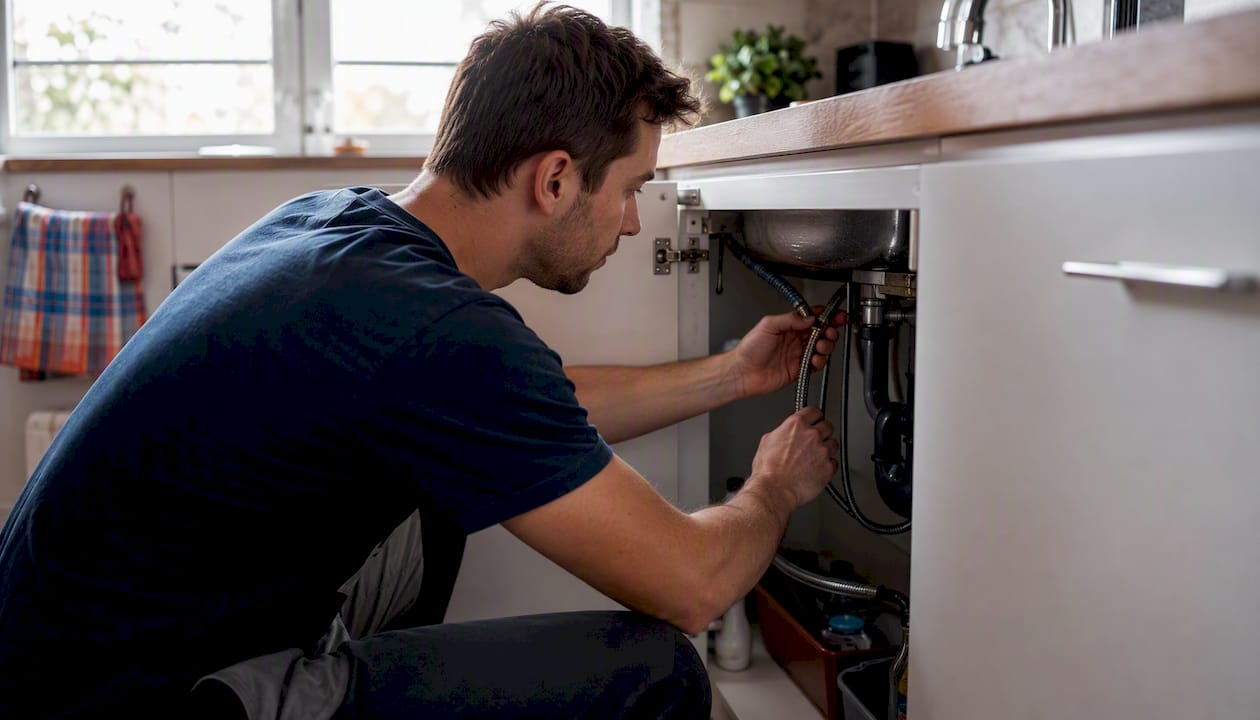
Run hot water down kitchen drains for 30 seconds after washing dishes to push grease past the trap. Never pour cooking fat down any drain — it solidifies in the pipe, not in the sewer. Check the supply lines under sinks and behind toilets every six months for bulging, corrosion, or moisture. Braided stainless lines fail less often than plastic, and replacing them proactively costs about $15 per fixture.
Flush your water heater tank annually to clear sediment, especially if you have hard water. A plumbing inspection in Pennsylvania can catch slow leaks, corroded fittings, and pressure issues before they become emergencies. Test your main shutoff valve once a year — turn it fully off and back on — so it does not seize when you actually need it.
What experienced plumbers wish homeowners knew
Most service calls take longer than they should because the homeowner cannot describe when the problem started, what changed recently, or where the main shutoff is. That is not a criticism. It is just the reality of how most people interact with their plumbing — until something goes wrong.
The single most underrated piece of advice for anyone planning a bathroom or kitchen remodel: map your drain runs before the walls close. Knowing the aggregate direction change in each line, and where your vents tie in, can prevent a code violation that costs thousands to fix after drywall is up. Plumbing upgrades during a remodel are almost always cheaper when planned before demolition than corrected after.
One more thing most homeowners skip: ask the plumber to walk you through what they found and why they fixed it the way they did. A good technician will explain it in plain language. That knowledge stays with the house.
Ag-plumbing serves Pittsburgh homeowners who want it done right
Thirty years of Pittsburgh plumbing work means Ag-plumbing has seen every version of the problems described in this article. The team handles drain cleaning, leak repair, sewer repair, water heater service, and full residential plumbing repair for homeowners and businesses across Pittsburgh and the surrounding areas. Every job comes with licensed technicians, full insurance coverage, and a written estimate before work begins.
If you have read this far and the problem is beyond a plunger and a flapper, the next step is straightforward. Book a service visit or request a quote and get a licensed plumber on-site, not another search result.
Sources
- F627-044-000 Hiring A Plumbing Contractor? Hire Smart!
- What Is The 135 Rule For Plumbing?
- What Is the 135 Rule in Plumbing? – IPP Solutions | Pipe Rehabilitation Equipments
- What Is The 135 Rule For Plumbing?
- Plumber Cost per Hour in 2026: Average Rates and What Affects Pricing
- Plumber Hourly Pay in 2026 | PayScale
- Questions to Ask a Plumber Before You Hire Them | Farm Bureau Financial Services
FAQ
What is the 135° rule in plumbing?
The 135° rule limits the total horizontal direction change in a single drain run to 135 degrees before a vent or cleanout is required. One 90° elbow plus one 45° elbow hits that limit exactly.
What should you know before calling a plumber?
Have photos of the problem, a description of when it started, any model numbers for affected appliances, and the location of your main shutoff valve. That information alone can cut diagnostic time and reduce your bill.
How much should a plumber charge per hour?
National rates in 2026 run $45–$200 per hour, with many residential jobs landing near $90/hr. After-hours and emergency calls typically run 1.5–2 times the standard rate.
Is it rude not to tip a plumber?
No. Tipping is not standard for licensed plumbing contractors doing contracted work. A detailed online review or a referral to a neighbor is the most valuable form of appreciation for most plumbing businesses.
Recommended
- Essential plumbing safety tips for Pittsburgh homeowners – AG-Plumbing
- Cost-saving plumbing tips for Pittsburgh homeowners – AG-Plumbing
- Emergency Plumbing Guide: Quick Solutions for Homeowners – AG-Plumbing
- Common Plumbing Repair Issues and How to Fix Them – AG-Plumbing
