
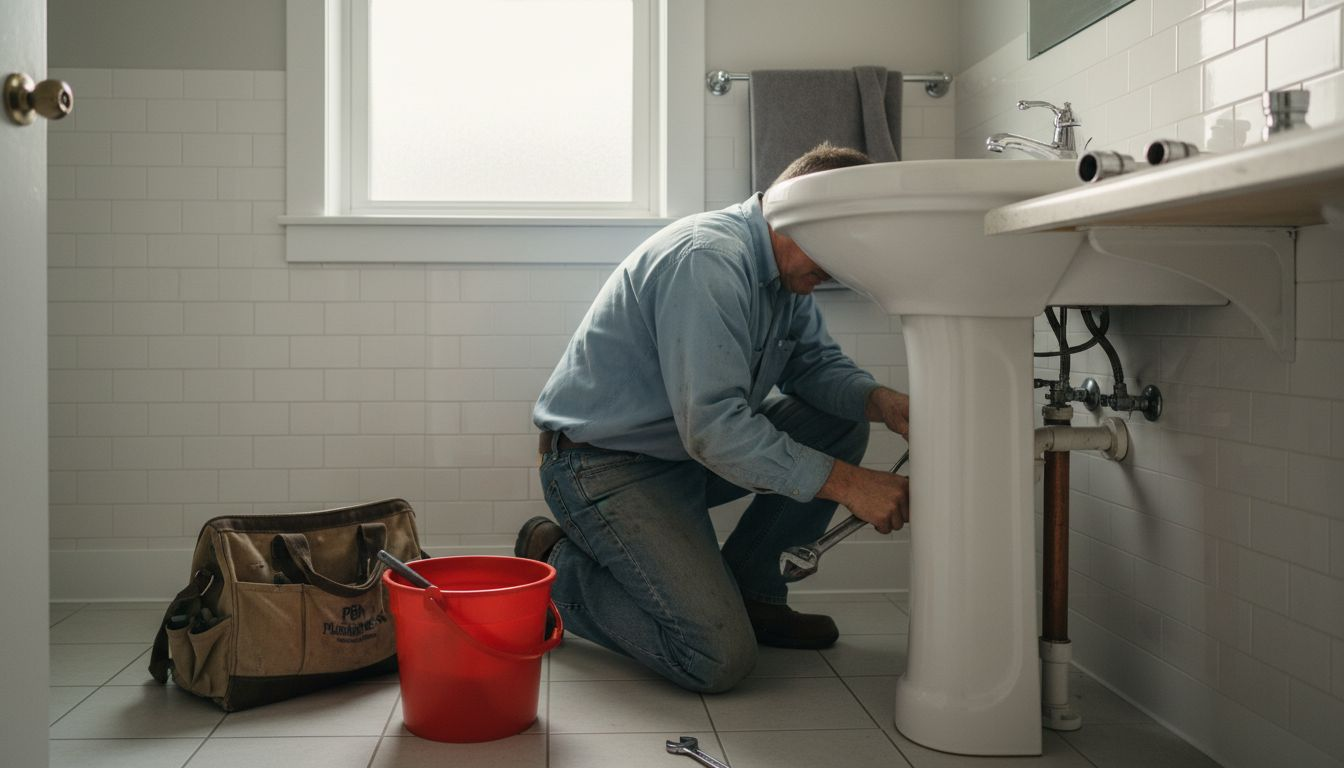
The average American homeowner uses approximately 82 gallons of water daily, with bathrooms accounting for the majority of this consumption. Understanding how your bathroom plumbing functions and maintaining it properly can dramatically reduce water waste, lower utility bills, and enhance overall home comfort. This guide helps Pittsburgh homeowners navigate the essential roles of bathroom plumbing and provides actionable maintenance strategies to protect your investment.
Table of Contents
- Understanding The Essential Functions Of Bathroom Plumbing
- The Impact Of Proper Maintenance On Water Bills And Home Integrity
- Local Regulations And Standards Shaping Bathroom Plumbing In Pittsburgh
- Upgrading Bathroom Plumbing: Benefits And Practical Tips For Pittsburgh Homeowners
- Enhance Your Bathroom Plumbing With Expert Pittsburgh Services
Key takeaways
| Point | Details |
|---|---|
| Daily water dependency | Bathroom plumbing enables essential daily water use, directly impacting comfort and hygiene for every household member. |
| Cost-saving maintenance | Regular plumbing maintenance reduces water waste by up to 10%, translating to significant utility bill savings annually. |
| Local code compliance | Pennsylvania IPC adoption and Allegheny County enforcement ensure bathroom plumbing meets rigorous safety and efficiency standards. |
| Smart upgrade benefits | Low-flow fixtures and modern technologies cut water consumption while boosting home value and environmental sustainability. |
| Professional inspection value | Annual plumbing inspections catch problems early, preventing expensive emergency repairs and ensuring regulatory compliance. |
Understanding the essential functions of bathroom plumbing
Your bathroom plumbing serves as the backbone of daily hygiene and comfort. It delivers clean water to sinks, toilets, showers, and tubs while safely removing wastewater through drainage and venting systems. Without properly functioning plumbing, basic activities like showering, washing hands, and using toilets become impossible.
The supply system brings fresh water under pressure to each fixture through a network of pipes and valves. This pressurized water allows you to turn on faucets and flush toilets effortlessly. Meanwhile, the drainage system relies on gravity and careful slope design to move wastewater away from your home, preventing backups and maintaining sanitation.
Plumbing also includes essential components that protect your home from sewer gases and maintain proper water flow. Traps under sinks and toilets create water seals that block harmful gases from entering living spaces. Vent pipes allow air into the drainage system, preventing suction that could empty traps and enabling smooth wastewater flow.
Understanding what plumbing truly involves helps homeowners recognize when systems need attention. Basic plumbing terminology every homeowner should know includes:
- Supply lines carrying pressurized water to fixtures
- Drains removing wastewater through gravity-driven pipes
- Traps creating water seals to block sewer gases
- Vents allowing air circulation for proper drainage
- Shut-off valves enabling emergency water flow control
The EPA reports that 82 gallons of daily water use per person underscores how heavily we depend on functional bathroom plumbing. This consumption makes maintenance and efficiency improvements critical priorities for every Pittsburgh household.
The impact of proper maintenance on water bills and home integrity
Neglected plumbing problems silently drain your wallet and threaten your home’s structural integrity. A single leaking toilet can waste hundreds of gallons monthly, while dripping faucets add unnecessary costs to every utility bill. These seemingly minor issues compound over time, creating financial burdens that proper maintenance easily prevents.
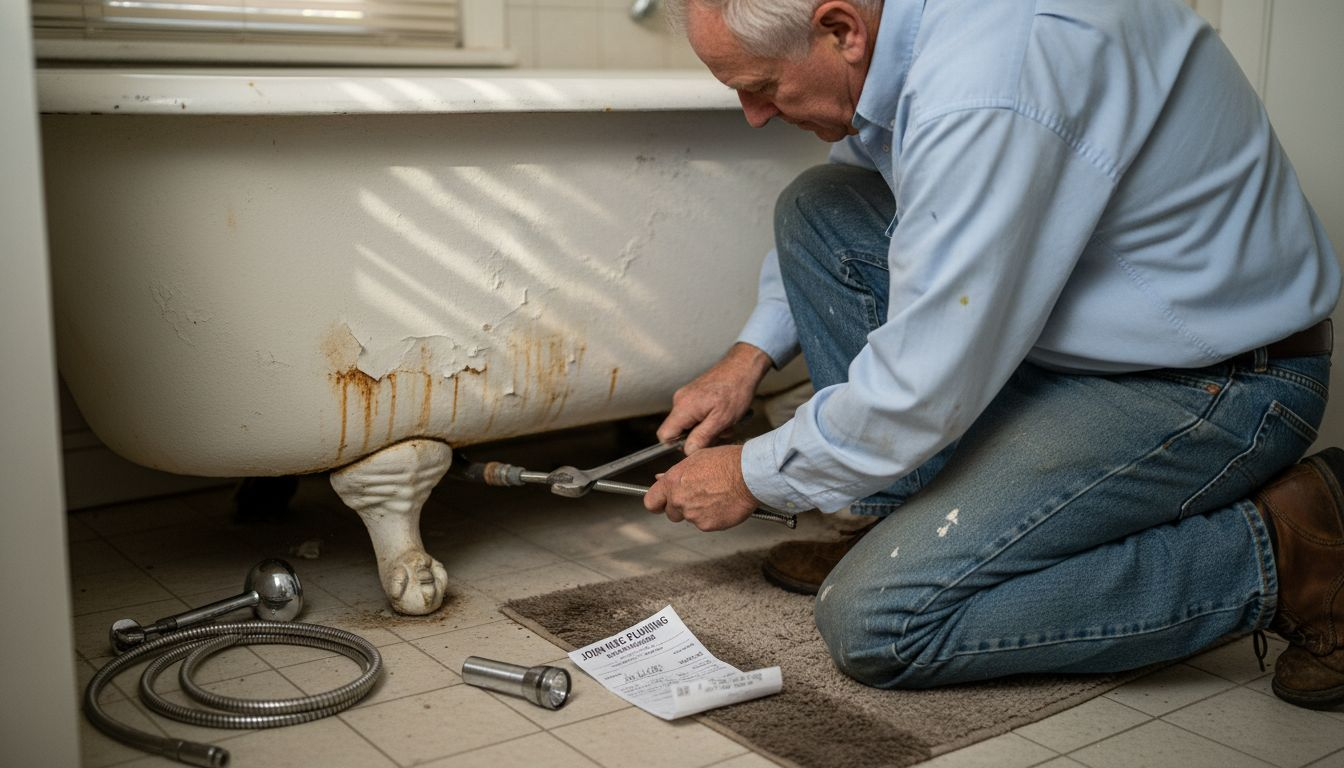
Routine inspections help you spot problems before they escalate into emergencies. Check faucet aerators for mineral buildup, inspect toilet flappers for wear, and examine exposed pipe joints for moisture. Testing your toilet for silent leaks is simple: add food coloring to the tank and wait 15 minutes without flushing; if color appears in the bowl, you have a leak requiring immediate attention.
Replacing worn components represents one of the most cost-effective maintenance strategies available to homeowners. Faucet washers, toilet flappers, and supply line hoses deteriorate over time and need periodic replacement. These inexpensive parts prevent leaks that could otherwise damage flooring, subflooring, and even ceiling materials in rooms below.
Pro Tip: Schedule annual professional plumbing inspections to identify hidden problems like corroded pipes, improper venting, or water pressure issues that could lead to catastrophic failures.
Fixing leaks saves homeowners 10% on water bills according to EPA research, making maintenance an investment that pays for itself quickly. Small actions today prevent expensive emergencies tomorrow. Common plumbing repair issues become manageable when caught early through consistent monitoring.
Beyond financial savings, maintenance protects your home from water damage that compromises structural elements and creates conditions for mold growth. Water intrusion from plumbing failures ruins drywall, damages framing, and creates health hazards requiring costly remediation. Professional inspections throughout Pennsylvania provide peace of mind by confirming your plumbing operates safely and efficiently.
Simple maintenance tasks every homeowner can perform include:
- Testing toilets monthly for silent leaks using food coloring
- Cleaning faucet aerators quarterly to maintain proper flow
- Inspecting supply lines annually for bulges or corrosion
- Checking caulking around tubs and showers for gaps
- Monitoring water pressure and temperature consistency
Local regulations and standards shaping bathroom plumbing in Pittsburgh
Pennsylvania adopts the International Plumbing Code (IPC), establishing comprehensive standards for bathroom plumbing installations and repairs. These regulations govern everything from fixture placement to venting requirements, ensuring systems operate safely and efficiently. Compliance protects homeowners from health hazards and prevents costly code violations during home sales or renovations.
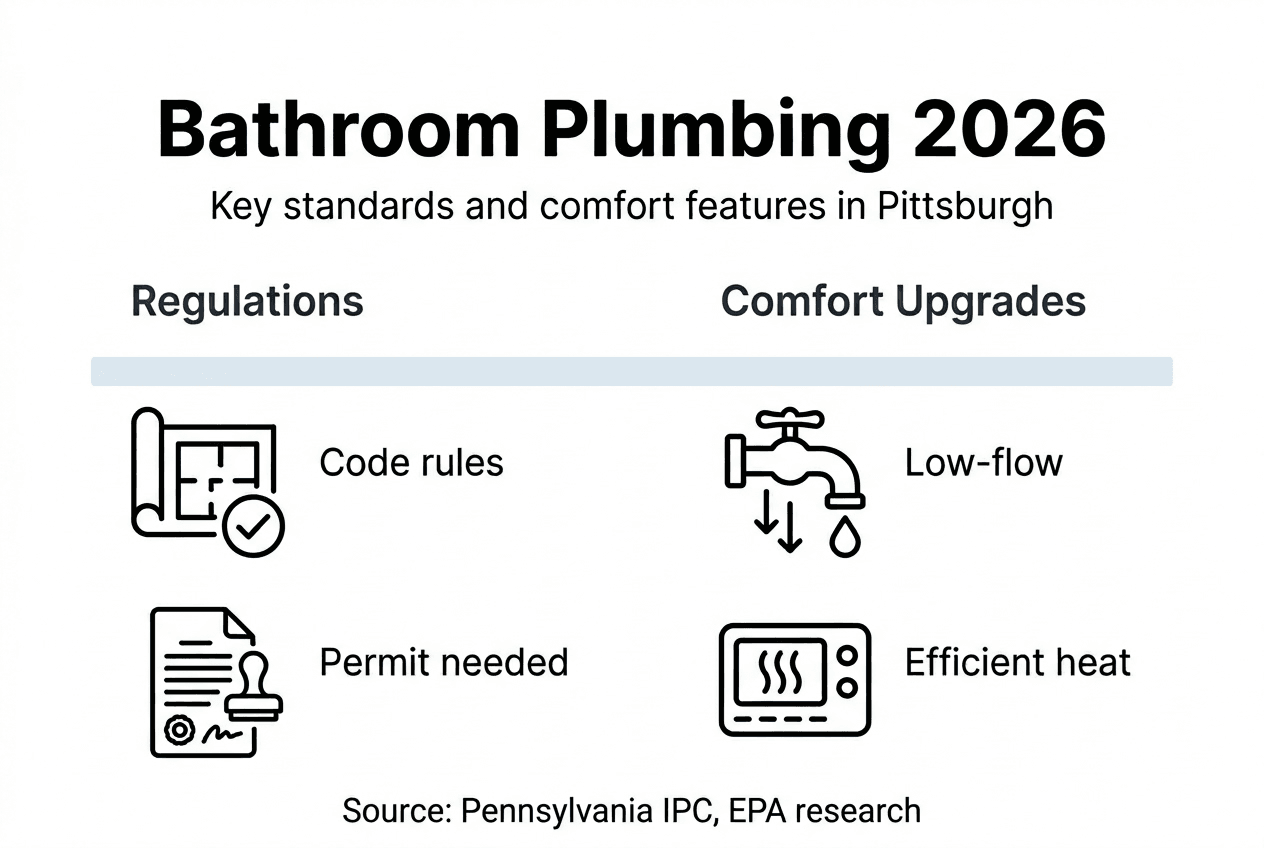
The Allegheny County Health Department holds sole authority to enforce plumbing code requirements within its jurisdiction. This local oversight ensures Pittsburgh homes meet stringent safety standards for water supply, drainage, and venting. When planning bathroom remodels or repairs, understanding these regulations helps you work effectively with contractors and inspectors.
Code requirements address critical safety elements that protect your family and community. Proper venting prevents dangerous sewer gas accumulation, while mandated trap configurations maintain sanitary barriers. Water supply regulations ensure adequate pressure and prevent cross-connections that could contaminate drinking water.
| Code Aspect | Requirement | Enforcing Authority |
|---|---|---|
| Fixture venting | Individual or common vents per IPC standards | Allegheny County Health Dept. |
| Drainage slope | Minimum 1/4 inch per foot for proper flow | Allegheny County Health Dept. |
| Water supply | Backflow prevention and pressure regulation | Allegheny County Health Dept. |
| Trap requirements | P-traps on all fixtures with water seals | Allegheny County Health Dept. |
Understanding these standards helps homeowners make informed decisions about repairs and upgrades. Plumbing’s role in health becomes clear when you recognize how codes prevent disease transmission and protect water quality. Working with professional plumbers in Pittsburgh ensures your projects meet all regulatory requirements from the start.
Permit requirements vary based on project scope, but most bathroom plumbing work requires professional installation and inspection. This oversight protects homeowners from substandard work that could create safety hazards or complicate future property transactions. Licensed plumbers understand local codes and handle permitting processes efficiently.
Upgrading bathroom plumbing: benefits and practical tips for Pittsburgh homeowners
Modern plumbing fixtures offer dramatic improvements in water efficiency without sacrificing performance or comfort. Low-flow toilets, showerheads, and faucets use advanced engineering to deliver satisfying water pressure while consuming significantly less water than older models. These upgrades reduce environmental impact and lower utility bills substantially over their lifespan.
Installing low-flow fixtures conserves water and often meets EPA WaterSense requirements, ensuring reliable performance and savings. Upgrading from a standard 3.5 gallon-per-flush toilet to a 1.28 gallon model saves thousands of gallons annually. Similarly, WaterSense showerheads reduce consumption from 2.5 to 2.0 gallons per minute without compromising spray quality.
Pro Tip: Choose EPA WaterSense-labeled products for guaranteed performance and water savings backed by independent testing and certification.
Bathroom plumbing upgrades also enhance home value and appeal to environmentally conscious buyers. Updated fixtures signal that a home has been well-maintained and incorporates modern efficiency standards. The combination of lower operating costs and improved aesthetics makes these investments attractive during resale.
| Fixture Type | Water Savings | Additional Benefits |
|---|---|---|
| Low-flow toilet | Up to 16,000 gallons/year | Reduced sewer charges, improved flush technology |
| WaterSense showerhead | 2,700+ gallons/year | Consistent pressure, modern designs |
| Low-flow faucet aerator | 700+ gallons/year | Easy installation, minimal cost |
Maximizing remodeling investment through plumbing upgrades requires strategic planning and quality product selection. Consider these upgrade priorities:
- Replace toilets over 15 years old with WaterSense models
- Install thermostatic mixing valves for consistent shower temperatures
- Upgrade to pressure-balanced shower valves for safety
- Add shut-off valves on individual fixtures for easier maintenance
- Consider tankless water heaters for endless hot water and efficiency
Energy-efficient water heaters complement fixture upgrades by reducing the energy required to heat water. Tankless models provide hot water on demand without maintaining a constantly heated storage tank. When paired with low-flow fixtures, these systems deliver maximum efficiency and comfort.
Essential plumbing services for homeowners include professional installation of modern fixtures and systems. Licensed plumbers ensure upgrades meet code requirements and function optimally. Their expertise prevents common installation mistakes that could compromise performance or create leaks.
Timing upgrades strategically maximizes value and minimizes disruption. Combining plumbing improvements with bathroom remodels reduces overall costs by addressing multiple needs simultaneously. Planning ahead allows you to research products, compare prices, and schedule work during convenient periods.
Enhance your bathroom plumbing with expert Pittsburgh services
Maintaining efficient bathroom plumbing requires expertise and tools that most homeowners lack. Professional plumbers bring decades of experience solving complex problems and implementing modern solutions tailored to Pittsburgh homes. Their knowledge of local codes and building practices ensures every repair and upgrade meets stringent safety standards.
Partnering with trusted local specialists protects your investment and provides peace of mind. Expert service catches potential problems during routine inspections, preventing emergencies that disrupt daily life and damage your home. Professional plumbers also offer warranties on their work, guaranteeing repairs and installations function properly long term.
Plumbing repair services in Pittsburgh address everything from minor leaks to complete system overhauls. Whether you need fixture replacement, pipe repair, or comprehensive remodeling upgrades, experienced professionals deliver reliable results. Schedule inspections to catch issues early and maximize savings on water bills while maintaining optimal comfort.
Discover how professional heating, cooling, and plumbing services can transform your bathroom into an efficient, comfortable space. Contact local experts today to discuss your maintenance needs and upgrade options tailored to your home and budget.
FAQ
What are the common signs of bathroom plumbing issues?
Dripping faucets, slow-draining sinks, running toilets, and musty odors indicate plumbing problems requiring attention. Water stains on ceilings or walls below bathrooms suggest hidden leaks that need immediate professional inspection. Troubleshooting these issues promptly prevents minor problems from becoming expensive emergencies.
How often should bathroom plumbing be inspected in Pittsburgh homes?
Annual professional inspections detect leaks, corrosion, and code compliance issues before they cause significant damage. Regular checks save hundreds in water waste and repair costs while ensuring your plumbing operates safely. Professional inspections throughout Pennsylvania provide comprehensive assessments of your entire plumbing system.
What plumbing upgrades offer the best return on investment for bathroom remodels?
Low-flow fixtures, quality supply lines, and pressure-balanced valves improve efficiency, safety, and appeal to buyers. Upgrades aligned with Pennsylvania codes ensure long-term functionality and pass inspections during home sales. Strategic plumbing improvements enhance comfort while reducing operating costs.
Can I perform bathroom plumbing maintenance myself or do I need a professional?
Simple tasks like cleaning aerators, checking for leaks, and replacing flappers suit DIY approaches. Complex repairs, fixture installations, and code-related work require licensed professionals to ensure safety and compliance. Professional expertise prevents mistakes that could create bigger problems and void warranties.
How do Pittsburgh water quality and pressure affect bathroom plumbing choices?
Local water hardness influences fixture selection and maintenance frequency due to mineral buildup potential. Pressure regulators protect plumbing from damage caused by excessive municipal water pressure. Understanding your specific water conditions helps you choose appropriate fixtures and maintenance schedules for optimal performance and longevity.
Recommended
- Maximize your remodeling investment with plumbing upgrades – AG-Plumbing
- Role of Plumbing in Health – Safeguarding Pittsburgh Homes – AG-Plumbing
- What do professional plumbers do in Pittsburgh? 2026 – AG-Plumbing
- Top 7 Plumbing Services in 2026 for Homeowners in Pittsburgh, PA – AG-Plumbing
