

TL;DR:
- Most sewer problems show subtle signs like slow drains, foul odors, or lush patches, before a major failure occurs. Detecting these early indicators and scheduling professional inspections can prevent costly repairs and invasive repairs. Regular awareness of yard changes, gurgling sounds, and multiple drain issues helps homeowners address sewer line failures promptly.
Most sewer line problems don’t announce themselves with a dramatic flood. They whisper. A drain that takes a few extra seconds to clear, a faint smell near the basement floor, a patch of grass that’s suspiciously green. Knowing the sewer line warning signs before things get serious is the difference between a manageable repair and a replacement costing up to $5,323. This guide breaks down exactly what to watch for, so you can act early and avoid the kind of bill that ruins a month.
Table of Contents
- Key takeaways
- 1. Multiple slow drains happening at the same time
- 2. Gurgling and bubbling sounds from drains or toilets
- 3. Persistent sewage odors inside the house or in the yard
- 4. Unusually lush or soggy patches in your yard
- 5. Frequent or repeated toilet clogs and backups
- My honest take after 30 years of sewer calls
- Get ahead of sewer problems before they become emergencies
- FAQ
Key takeaways
| Point | Details |
|---|---|
| Multiple drains slow down together | When several fixtures drain slowly at once, the main sewer line is likely the cause. |
| Odors signal pipe damage | Persistent sewage smells inside or outside point to cracked pipes or failing joints needing inspection. |
| Yard changes reveal underground leaks | Soggy patches or unusually green grass along your sewer route often mean wastewater is escaping. |
| Recurring clogs aren’t normal | If your toilet or drains back up repeatedly, chemical cleaners won’t fix an underlying pipe problem. |
| Early action saves money | Catching sewer line problems before failure keeps repair costs far lower than full replacement. |
1. Multiple slow drains happening at the same time
A single slow drain in your bathroom sink? That’s probably a hair clog. But when your toilet drains slowly, your tub takes forever to empty, and your kitchen sink backs up all in the same week, you’re looking at a very different problem. Multiple fixtures slowing or backing up simultaneously is one of the clearest sewer line repair indicators available to homeowners without any special equipment.
The main sewer line is the single pipe that carries waste from every fixture in your home out to the municipal system or septic tank. When something restricts that pipe, whether it’s tree root intrusion, a sagging section, grease buildup, or a partial collapse, every fixture upstream of that blockage starts to show symptoms together.
Here’s a simple test you can run yourself:
- Run water in your bathroom sink for 30 seconds, then check if the toilet water level rises or bubbles.
- Flush the toilet and see if water backs up into the tub or shower.
- Run the washing machine and watch whether the floor drain in the utility room overflows.
Any cross-fixture reaction you observe points toward the main line rather than a local clog.
Pro Tip: If flushing the toilet causes your shower drain to gurgle or rise, stop using water and call a plumber. That cross-fixture behavior means there’s nowhere left for wastewater to go.
2. Gurgling and bubbling sounds from drains or toilets
Sound is one of the most underrated clogged sewer signs. A healthy plumbing system moves water silently. When you hear gurgling, hollow gulping, or a low bubbling from your drain after water runs, your pipes are telling you something specific: air is trapped where it shouldn’t be.
This happens when a partial blockage forces water to work around it. The water displaces air as it squeezes past, and that air escapes back through the nearest drain opening. You’ll typically hear it:
- After flushing a toilet, especially from a nearby floor drain
- When the washing machine drains and the kitchen sink gurgles
- Several seconds after the sink empties, from a drain one room away
These sounds can also indicate a venting problem rather than a blockage. Your plumbing system relies on vent pipes to let air in as water flows out. When those vents get clogged with debris or nesting material, the system creates negative pressure and starts pulling air from the water in your traps, which produces that same gurgling sound.
Pro Tip: Gurgling from a single drain is often a vent issue. Gurgling from multiple drains after one fixture runs is more likely a main line restriction. The pattern matters more than the sound itself.
3. Persistent sewage odors inside the house or in the yard
A properly functioning sewer system is completely sealed. You should never smell it. So when a sewage odor shows up in your basement, near a floor drain, or drifting up through a bathroom, it’s worth taking seriously. Sewage odor near drains or in the yard often signals leaking joints or cracked pipes that need professional evaluation.
There are a few different causes, and where you smell it helps narrow things down:
- Dried out P-traps: The curved pipe under every drain holds a small amount of water that blocks sewer gas. If a floor drain or guest bathroom sink goes unused for weeks, that water evaporates and gas comes straight up. Pour a cup of water down the drain and the smell should stop within minutes.
- Cracked sewer pipe: If the smell persists regardless of trap condition, a crack or separation in the line may be venting gas into your crawlspace, basement, or yard.
- Cleanout caps: Check outdoor cleanout access points. A missing or cracked cap lets gas escape freely.
The health angle here is real. Sewer gas contains hydrogen sulfide, which at low concentrations causes headaches and nausea, and at higher concentrations is genuinely dangerous. Don’t dismiss a recurring odor as a seasonal quirk.
If you smell sewage consistently over multiple days and can’t trace it to a dry trap, treat it as a residential sewer line warning and schedule an inspection. Don’t wait for visible backup to confirm a problem that your nose already detected.
4. Unusually lush or soggy patches in your yard
Your yard can be one of the most reliable indicators of underground sewer trouble, and most homeowners walk right past the signs. Wastewater is rich in nutrients. When it leaks into surrounding soil, bright saturated grass patches develop along the sewer line route because the ground is essentially being fertilized from below.
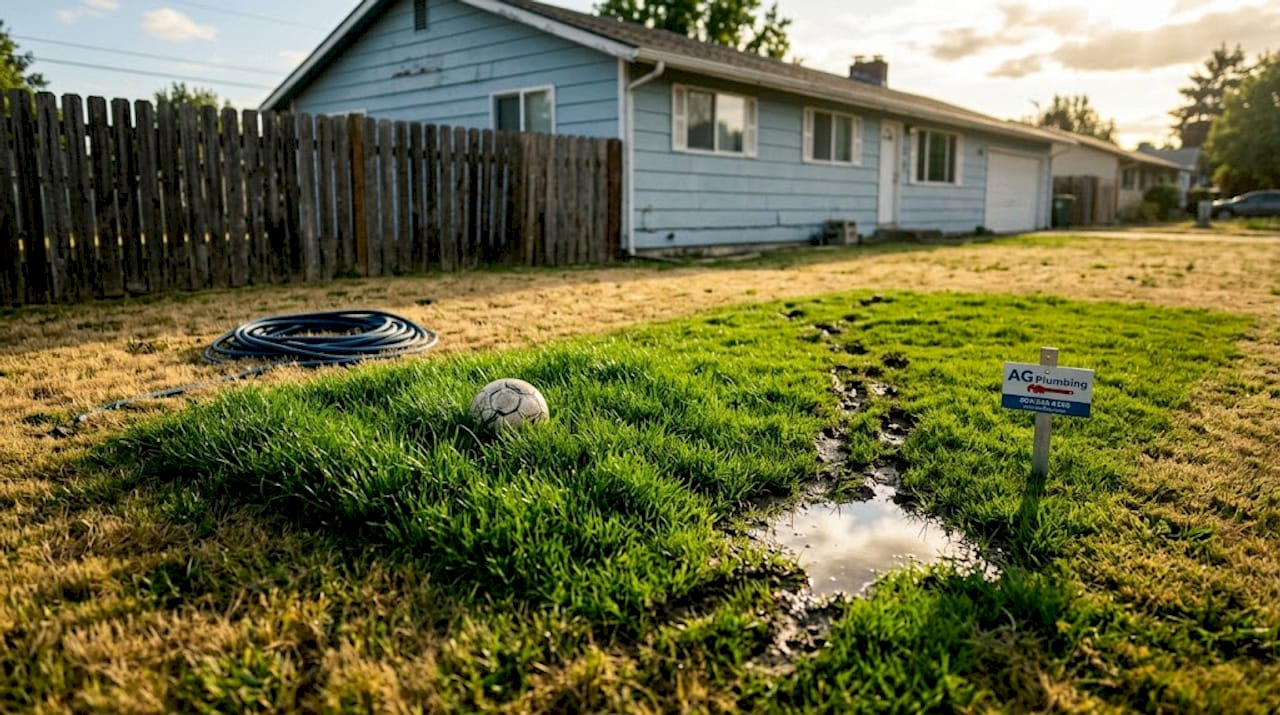
Here’s a comparison that helps put the symptoms in context:
| Yard condition | Likely cause |
|---|---|
| Bright green strip of grass | Underground sewer leak fertilizing soil |
| Soggy ground with no recent rain | Wastewater saturating soil from broken pipe |
| Sunken depression or soft spot | Soil erosion from prolonged underground leak |
| Unusual vegetation growth near clean-out | Root intrusion accessing nutrients in line |
Beyond the cosmetic issue, a leaking sewer pipe can undermine the soil structure beneath your yard, your driveway, and even your foundation. Prolonged leaks create voids as soil washes away with the water, which is how small depressions can eventually become sinkholes.
To connect these signs to your plumbing, locate your sewer line route. In most homes it runs in a fairly straight path from the house toward the street or toward the backyard if you’re on septic. If the lush patch, soggy area, or depression lines up with that route, you have a strong reason to get a camera inspection done.
5. Frequent or repeated toilet clogs and backups
Every toilet clogs occasionally. A one-time blockage that clears with a plunger is not a sewer line problem. But if you’re plunging the same toilet every two or three weeks, or if more than one toilet in the house backs up around the same time, that pattern is a clear sign of sewer line problems beyond the fixture itself.
Frequent toilet backups suggest main sewer pipe issues, not localized clogs. The toilet may seem like the source because it’s the largest drain opening in your home, but it’s acting as the pressure release valve for a system that’s restricted further down the line.
A few things to know before reaching for chemical drain cleaners:
- Chemical cleaners are designed for smaller organic clogs in branch lines. They don’t address root intrusion, pipe displacement, or mineral buildup in a main sewer line.
- Repeated use of harsh chemicals can degrade older clay or cast iron pipes, making a manageable problem worse.
- If the clog returns within days of clearing, the blockage isn’t fully removed or the pipe itself is compromised.
The right diagnostic tool here is a video camera inspection. A professional feeds a flexible camera through the line to identify exactly what’s causing the restriction, whether it’s roots, grease, a crushed pipe, or a misaligned joint. You stop guessing and start solving.
Pro Tip: Before calling for an emergency visit, note how often the clog recurs and which fixtures are affected. That information helps the plumber identify the likely location and cause before they even open the cleanout.
My honest take after 30 years of sewer calls
I’ve seen a lot of homeowners wait too long on sewer problems, and it almost always comes down to the same misconception: they assume a serious problem has to look serious. A slow drain feels like a minor inconvenience. A faint smell seems like maybe the dog tracked something in.
The reality is that sewer failures follow predictable patterns. The line doesn’t go from fine to flooded overnight. There’s a window, sometimes weeks, sometimes months, where the signs are present and the repair is relatively straightforward. Miss that window and you’re dealing with sewage backup in your basement, landscape excavation, and a bill that didn’t need to be that large.
What I tell every homeowner is this: the symptoms in this article don’t require any tools or expertise to spot. You already walk past your drains, flush your toilets, and look at your yard every day. You just need to know what you’re looking at. One slow drain is nothing. Three slow drains at once is a call to make. That distinction is the whole game.
The other thing worth saying plainly is that early detection is not a luxury for people who are obsessive about their homes. It’s just math. A targeted repair on a partially blocked line costs a fraction of what full replacement costs after a backup causes water damage.
— Maayan
Get ahead of sewer problems before they become emergencies
If any of the signs in this article sound familiar, the smartest next step is a professional inspection before the situation gets worse.

Ag-plumbing has served Pittsburgh homeowners for 30 years with exactly this kind of diagnostic work. A sewer camera inspection gives you a clear picture of what’s happening inside the line without guesswork or unnecessary digging. Where the situation allows, trenchless repair methods let us fix the problem through small access points, protecting your lawn and driveway. You can also review our plumbing repair services to understand your full range of options. Don’t schedule this after a backup forces your hand. Schedule it while you still have options.
FAQ
What are the first sewer line warning signs to look for?
The earliest signs are multiple drains slowing down at the same time and gurgling sounds coming from toilets or drains after water runs elsewhere in the house. A single slow drain is usually a local clog, but cross-fixture symptoms point to the main line.
Can sewage odors inside the house mean a cracked pipe?
Yes. Persistent sewage smells that don’t go away after running water down unused drains often indicate a cracked or separated pipe venting sewer gas into the home. This warrants a professional inspection.
How much does a sewer line repair typically cost?
Sewer repairs average $2,600, while full replacements range from $1,388 to $5,323 before any landscaping restoration. Catching problems early keeps you in the repair range rather than the replacement range.
Is a video inspection necessary for sewer diagnosis?
For anything beyond a one-time clog, yes. A video camera inspection is the only way to accurately identify whether the problem is roots, a collapsed section, a misaligned joint, or buildup. Guessing leads to incomplete fixes.
Why does my yard have a soggy wet patch if it hasn’t rained?
A wet patch that doesn’t dry out along your sewer line route likely means wastewater is escaping from a cracked or separated pipe underground. The same leak can cause unusually green grass as the nutrient-rich water feeds the soil above the break.
Recommended
- Clear Sewer Line Blockages: 2026 Homeowner’s Guide – AG-Plumbing
- Smart Plumbing Tips Every Pittsburgh Homeowner Needs – AG-Plumbing
- How Sewer Repair Can Prevent Major Plumbing Problems – AG-Plumbing
- How to Identify When Plumbing Repair Is Necessary – AG-Plumbing
