
TL;DR:
- Regular water heater maintenance in Pittsburgh involves flushing sediment, testing safety valves, inspecting the anode rod, and checking thermostat settings to extend tank life. Hard water demands more frequent flushing and timely repairs to prevent corrosion, leaks, and efficiency loss. Homeowners should seek professional help for gas-related tasks and when safety issues like continuous valve drips arise.
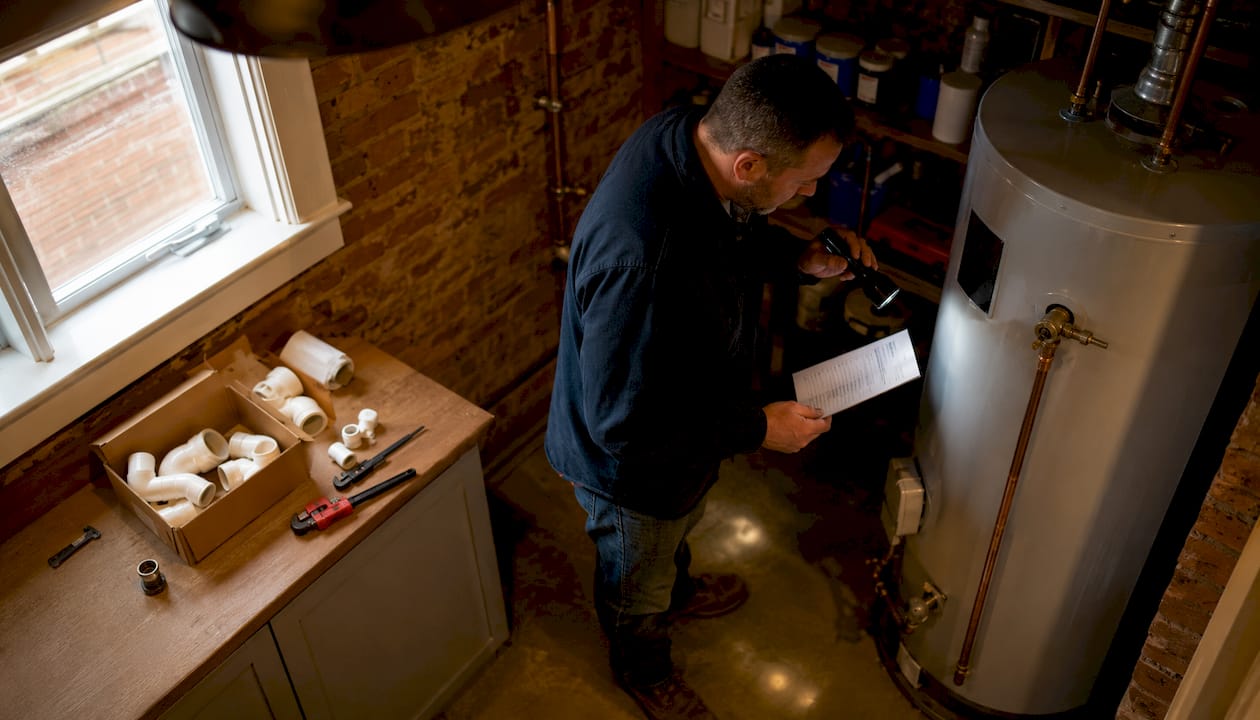
A water heater maintenance checklist is a structured set of annual tasks that protects your unit from sediment buildup, valve failure, and premature corrosion. Pittsburgh homeowners face a specific challenge: the region’s moderately hard water accelerates mineral deposits inside tanks, cutting efficiency and shortening lifespan faster than the national average. Annual maintenance takes roughly 45–60 minutes and extends your tank’s life by 3–5 years. Skipping it can cost you 10–20% in energy efficiency losses and push you toward an early replacement that runs well into the thousands of dollars.
1. What does a water heater maintenance checklist include?
A complete water heater service checklist covers six core tasks: flushing sediment, testing the Temperature and Pressure Relief (T&P) valve, inspecting the anode rod, checking the burner or heating elements, setting the thermostat correctly, and scanning for leaks. Each task targets a specific failure point. Together, they form the standard water heater maintenance workflow that professional plumbers follow on every service call.
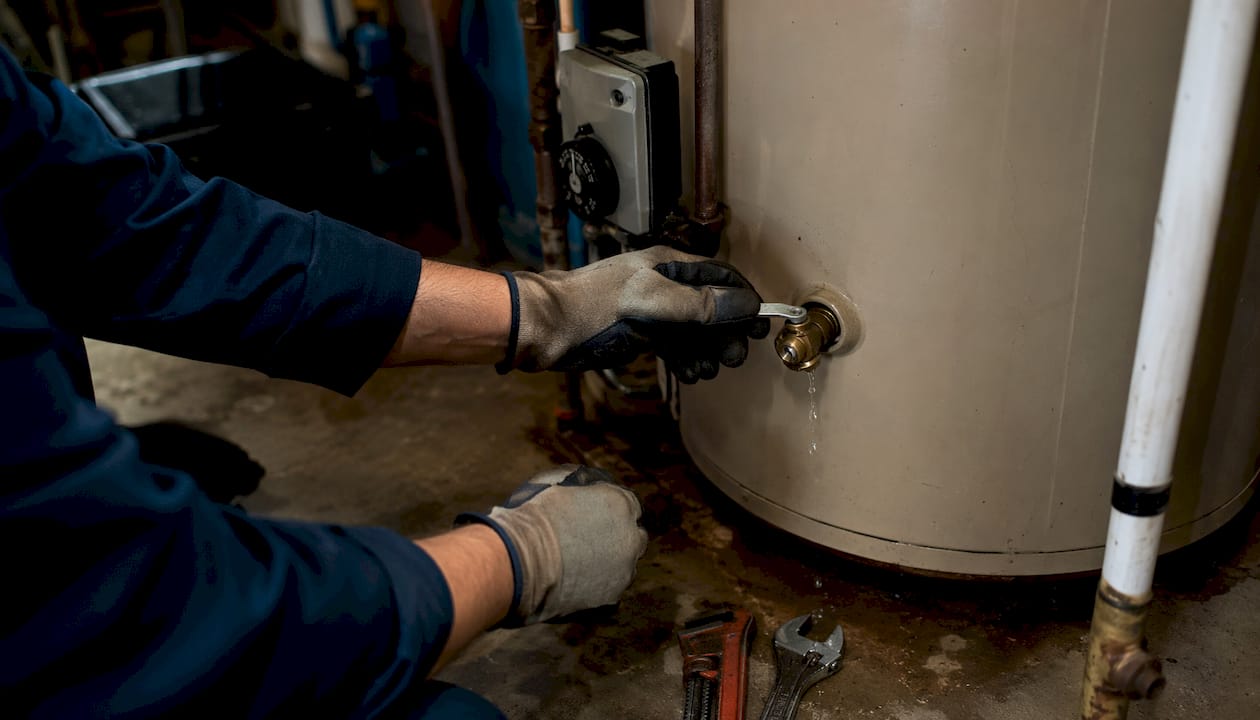
The T&P valve is the most critical safety component on any tank. Test it every six months by lifting the lever briefly and confirming water flows out, then stops cleanly when released. A valve that sticks, drips, or fails to release is a replacement job, not a DIY fix.
The anode rod is the unsung hero of tank longevity. It is a metal rod, usually magnesium or aluminum, that corrodes in place of your tank’s steel lining. Inspect it every 2–3 years and replace it when it has corroded down to the wire core. Skipping this step is the single most common reason tanks rust out before their time.
2. Annual flushing: how to clear sediment from your tank
Sediment flushing is the most time-sensitive task on any water heater upkeep checklist. Minerals from Pittsburgh’s water supply settle at the tank bottom and form a hardened layer that forces your heater to work harder and heat less effectively. The process takes about 20 minutes and requires a garden hose, a bucket, and a flathead screwdriver.
Turn off the cold water supply and connect a hose to the drain valve at the tank’s base. Run the hose to a floor drain or outside, then open the valve and let the tank drain completely. Flush cold water through briefly to stir up remaining sediment, then drain again until the water runs clear.
Pro Tip: If your tank has not been flushed in several years, one flush may not be enough. Compacted sediment sometimes requires a second flush spaced two to four weeks after the first to fully clear the debris.
3. How to test the T&P valve safely
The Temperature and Pressure Relief valve prevents your tank from building dangerous pressure. A failed T&P valve is the primary cause of catastrophic tank failures. Testing it is simple but must be done carefully.
Place a bucket under the discharge pipe before you lift the lever. Lift it for three seconds, let it snap back, and confirm the flow stops. If water continues to drip after release, the valve seat is worn and the valve needs replacement. Never cap or plug a leaking T&P valve. That is a serious safety hazard.
Pro Tip: Keep the area around the discharge pipe clear at all times. If the valve ever opens on its own during normal operation, that signals excessive pressure in the system. Call a licensed plumber immediately.
4. Inspecting and replacing the anode rod
The anode rod material matters more than most homeowners realize. Magnesium rods corrode faster but offer stronger protection in softer water. Aluminum rods last longer but are slightly less reactive. Pittsburgh’s water chemistry sits in a moderate range, making either material a reasonable choice, though magnesium is the more common recommendation from local plumbers.
To inspect the rod, shut off the cold water supply and relieve pressure by opening a hot tap. Locate the hex head on top of the tank (sometimes under a plastic cap) and use a 1 1/16-inch socket wrench to unscrew it. If the rod is less than half an inch thick or coated in calcium, replace it. A new anode rod costs $20–$50 and adds years to your tank’s life.
5. How does maintenance differ for gas vs. electric water heaters?
Gas and electric water heaters share most checklist tasks, but the safety steps diverge significantly. Getting this distinction right keeps your home safe.
For gas water heaters:
- Inspect the burner flame annually. A steady blue flame with a small yellow tip is normal. An orange or yellow flame signals incomplete combustion and requires a technician.
- Check venting and flue pipes for blockages, corrosion, or disconnected joints. Blocked venting is the leading cause of carbon monoxide buildup.
- Know the location of your gas shutoff valve before starting any inspection.
- Never attempt burner or gas line repairs yourself. Call a licensed professional.
For electric water heaters:
- Switch off the breaker before touching any internal components.
- Inspect the heating elements for scale buildup or corrosion. A multimeter test confirms whether an element is still functional.
- Check the thermostat settings on both the upper and lower elements.
Pro Tip: Gas units require vigilance for venting and burner safety. Professionals should handle any task involving gas connections or suspected leaks. Do not troubleshoot a gas smell yourself.
6. How often should Pittsburgh homeowners perform these tasks?
Frequency matters as much as the tasks themselves. Pittsburgh’s water hardness sits in a moderate range, which means standard annual maintenance covers most households. However, homes with older pipes or higher usage patterns benefit from more frequent attention.
| Task | Standard frequency | Hard water frequency |
|---|---|---|
| Sediment flush | Once per year | Every 6 months |
| T&P valve test | Every 6 months | Every 6 months |
| Anode rod inspection | Every 2–3 years | Every 2 years |
| Full professional service | Once per year | Once per year |
| Thermostat check | Once per year | Once per year |
The 6-month flush schedule for hard water areas is not optional. Mineral deposits compound quickly in warmer months when usage spikes. Waiting a full year in a hard water home means the sediment layer can reach a thickness that requires multiple flushes to clear.
7. What warning signs mean your water heater needs attention now?
Some problems cannot wait for the annual checklist. These symptoms signal that your heater needs immediate inspection.
- Rusty or discolored hot water. This points to internal tank corrosion, often caused by a depleted anode rod. A water damage inspection can confirm whether the surrounding area has already been affected.
- Popping or rumbling noises. Popping sounds indicate severe sediment buildup creating steam pockets beneath the hardened layer. Left alone, this accelerates corrosion and can crack the tank lining.
- Water pooling at the tank base. Any standing water around the unit signals a leak, either from the tank itself or from a fitting. A leaking tank rarely recovers and usually requires full replacement.
- T&P valve dripping continuously. This means the valve is either failing or the system pressure is too high.
- Longer heating times or inconsistent hot water. Sediment insulates the heating element or burner from the water, forcing longer run cycles and higher energy bills.
“Popping and rumbling noises from your water heater are not just annoying. They are a direct warning that sediment has compacted enough to trap steam pockets. At that stage, efficiency has already dropped and corrosion is accelerating. Flush the tank immediately and inspect the anode rod before the damage compounds.”
8. Key steps for tankless water heater maintenance
Tankless water heaters require a different maintenance approach than traditional tanks. They do not store water, so sediment flushing works differently. The main threat is lime scale buildup inside the heat exchanger.
- Descale annually. Connect a submersible pump, two hoses, and a bucket of food-grade white vinegar or a commercial descaling solution to the service ports. Circulate the solution through the unit for 45–60 minutes to dissolve mineral deposits in the heat exchanger.
- Clean the inlet water filter screen. Unscrew the cold water inlet and remove the small mesh screen. Rinse it under running water and reinstall. A clogged screen reduces flow and triggers error codes.
- Clean the air intake filter. Most tankless units have an air filter near the combustion chamber. Remove it, rinse or brush it clean, and reinstall every six months.
- Check the venting. Inspect the exhaust and intake pipes for obstructions, bird nests, or corrosion. Blocked venting on a gas tankless unit creates the same carbon monoxide risk as a traditional gas heater.
- Review the manufacturer’s manual. Tankless units vary significantly by brand and model. The manual specifies service intervals and any model-specific steps that override general guidance.
For Pittsburgh homeowners with tankless units, the Pittsburgh homeowner guide from Ag-plumbing covers local water quality considerations that affect descaling frequency.
9. Set the thermostat to the right temperature
Thermostat setting is one of the most overlooked items on a regular heater inspection. The correct setting is 120°F for most households. That temperature kills harmful bacteria, delivers comfortable hot water, and avoids the accelerated mineral buildup that occurs at higher settings.
Settings above 140°F increase scald risk, especially for children and older adults. They also push mineral precipitation rates higher, meaning sediment accumulates faster and the anode rod depletes sooner. Check the thermostat dial on your tank annually and adjust if needed. On electric units, the thermostat is behind the access panel and requires a flathead screwdriver to adjust.
Key Takeaways
A consistent water heater maintenance workflow, performed annually, is the most cost-effective way to extend tank life and avoid emergency repairs in Pittsburgh homes.
| Point | Details |
|---|---|
| Annual checklist saves money | Maintenance takes 45–60 minutes and extends tank lifespan by 3–5 years. |
| Flush frequency depends on water hardness | Pittsburgh homes with hard water should flush every 6 months, not just annually. |
| Anode rod inspection is non-negotiable | Inspect every 2–3 years; a depleted rod leads directly to internal tank corrosion. |
| T&P valve testing is a safety task | Test every 6 months; a stuck or dripping valve requires immediate replacement. |
| Tankless units need descaling, not flushing | Circulate vinegar or a descaling solution annually through the heat exchanger. |
What I’ve learned after years of Pittsburgh water heater calls
After seeing hundreds of water heater failures across Pittsburgh, the pattern is almost always the same. Homeowners skip the anode rod inspection because it is invisible and out of mind. By the time rust shows up in the hot water, the tank lining has been corroding for years. The anode rod costs $30 to replace. A new tank costs $800 to $1,500 installed. That math should make the decision obvious.
The second mistake I see constantly is ignoring popping noises. Homeowners assume it is normal. It is not. That sound means sediment has hardened enough to trap steam, and the tank is working against itself on every heating cycle. A flush at that stage can still save the unit, but waiting another season often means the damage is permanent.
One thing I want Pittsburgh homeowners to understand: the water heater maintenance tasks in this checklist are genuinely manageable as DIY work, with two firm exceptions. Gas connections and a continuously tripping T&P valve both require a licensed plumber. Do not improvise on either. The cost of a service call is a fraction of what a gas incident or a burst tank costs in damage and repairs.
Annual maintenance is not just about the heater. It is about protecting the floors, walls, and structure around it. A slow tank leak left undetected for months causes water damage that far exceeds the cost of the heater itself.
— Maayan
Ag-plumbing’s water heater services in Pittsburgh
Ag-plumbing has served Pittsburgh homeowners for 30 years, handling everything from annual water heater checkups to full tank replacements and tankless unit installations. The team knows Pittsburgh’s water conditions and builds every service visit around the specific demands of local homes.
Scheduling an annual professional inspection through Ag-plumbing’s heating and plumbing services takes the guesswork out of water heater upkeep. The team checks every item on the service checklist, identifies issues before they become failures, and handles gas and electrical components safely. For homeowners who want professional backup on any plumbing repair in Pittsburgh, Ag-plumbing is available for same-day consultations across the Pittsburgh area.
FAQ
How often should I flush my water heater in Pittsburgh?
Flush your tank once per year under standard conditions. If your home has hard water or you have not flushed in several years, flush every six months to prevent sediment compaction.
What temperature should I set my water heater to?
Set the thermostat to 120°F. This temperature balances safety, efficiency, and bacterial control while slowing mineral buildup inside the tank.
How do I know if my anode rod needs replacing?
Inspect the anode rod every 2–3 years. Replace it when it has corroded to less than half an inch in diameter or is heavily coated in calcium deposits.
What does a popping noise from my water heater mean?
Popping or rumbling sounds signal severe sediment buildup creating steam pockets at the tank bottom. Flush the tank immediately and inspect the anode rod to prevent further damage.
When should I call a plumber instead of doing it myself?
Call a licensed plumber for any gas connection work, a continuously dripping T&P valve, visible tank leaks, or any task on a gas unit that involves the burner or venting system.
Recommended
- How to Maintain a Water Heater: Pittsburgh Guide – AG-Plumbing
- Seasonal Plumbing Checklist for Pittsburgh Homeowners – AG-Plumbing
- Water Heaters: What Every Pittsburgh Homeowner Must Know – AG-Plumbing
- Common Water Heater Issues Pittsburgh Homeowners Face – AG-Plumbing
