
TL;DR:
- Water pressure drops when the force pushing water through pipes is insufficient to serve fixtures properly. Most problems originate from internal plumbing issues, such as failing pressure-reducing valves, corroded pipes, or leaks, not from municipal supply. Accurate diagnosis with a pressure gauge and regular maintenance can prevent costly repairs and restore consistent water flow.
Water pressure drops when the force pushing water through your pipes falls below the level needed to serve your fixtures properly. Normal residential pressure runs between 45–80 PSI; anything below 40 PSI signals a whole-house supply problem. The causes range from a failing pressure-reducing valve (PRV) inside your home to corroded pipes, hidden leaks, or shifts in your municipal water supply. Knowing why water pressure drops gives you a clear starting point for fixing it without calling a plumber for every symptom.
Why does water pressure drop throughout the whole house?
Most sudden pressure issues stem from internal plumbing problems, not from the city’s water main. That distinction matters because it changes where you look first.
Failing pressure-reducing valve
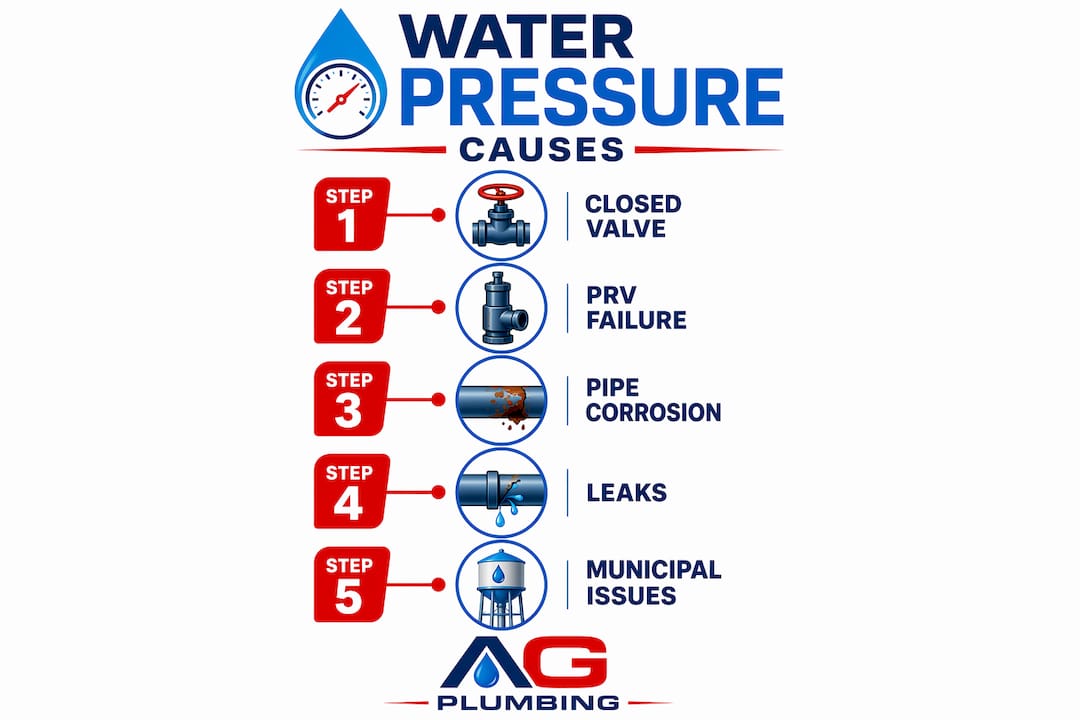
The PRV is a bell-shaped fitting on your main supply line, usually near where water enters the home. It keeps incoming pressure at a safe, usable level. PRVs last 7–15 years and are factory-set to deliver 50–60 PSI. When a PRV starts to fail, pressure drops gradually across every fixture in the house. Many homeowners blame the city for months before a plumber finds a worn PRV diaphragm.
Partially closed main shutoff or meter valve
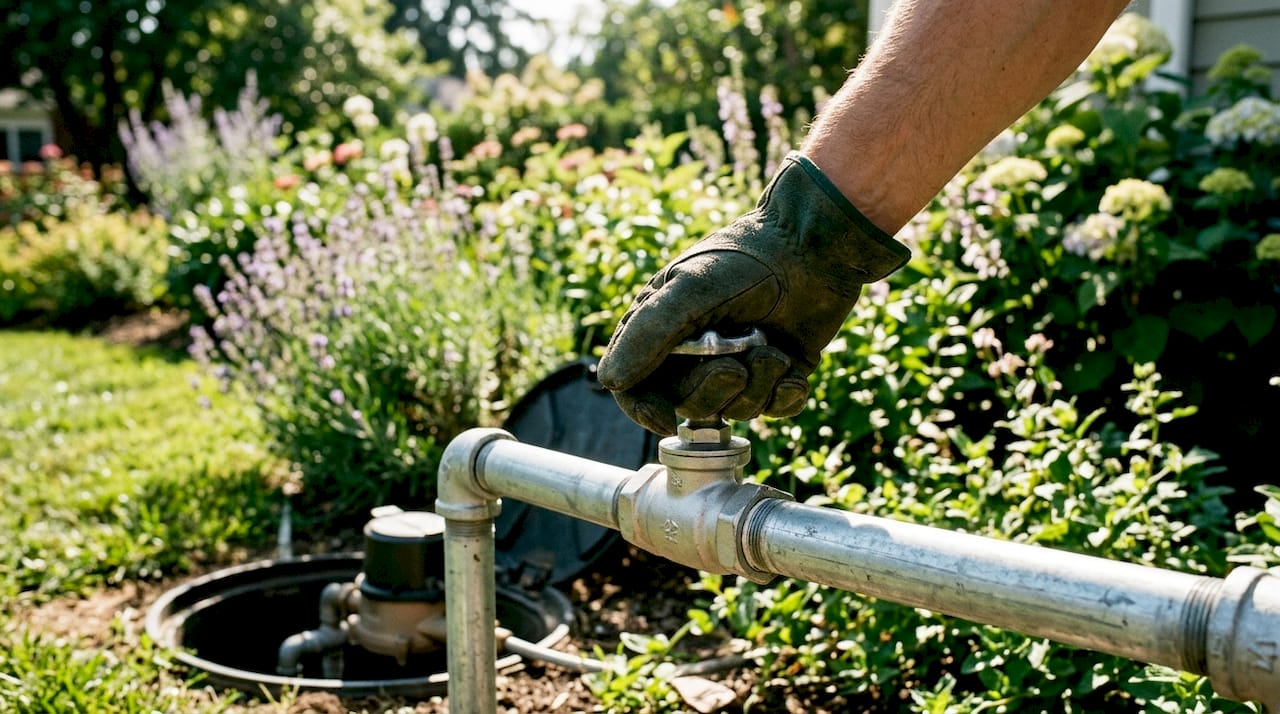
A main shutoff or meter valve that is only three-quarters open cuts flow to the entire home. Partially closed valves are one of the most overlooked causes of whole-house pressure loss. This often happens after a repair when a plumber or homeowner forgets to reopen the valve fully. Check both the valve at the meter and the main shutoff inside the home before assuming a deeper problem.
Corroded galvanized steel pipes
Older homes built before the 1970s frequently have galvanized steel supply pipes. These pipes corrode from the inside out over decades, and scale buildup can shrink the effective bore from a full inch down to 3/8 of an inch. The result is chronic low pressure that mimics a municipal supply problem. Replacing galvanized pipes with copper or PEX is the only permanent fix, and trenchless methods make that job far less disruptive than it used to be.
Underground supply line leaks and municipal factors
A leak in the underground line between the street meter and your home bleeds pressure before water ever reaches your fixtures. Municipal utilities also reduce pressure during peak demand periods or scheduled maintenance, which causes temporary drops across entire neighborhoods. If your neighbors report the same issue at the same time, the city is the likely culprit. If only your home is affected, the problem is almost certainly on your side of the meter.
Pro Tip: Call your local water utility before scheduling a plumber. Ask whether there are any active pressure adjustments or maintenance events in your area. This one call can save you a service fee.
Why water pressure drops at one fixture but not others
Localized pressure loss points to a fixture-level problem, not a supply issue. Distinguishing system-wide from fixture-specific causes cuts your troubleshooting time significantly.
The most common fixture-level causes are:
-
Clogged aerator or showerhead. Mineral deposits from hard water collect in the small screen at the tip of a faucet or inside a showerhead. The restriction feels like low pressure but is actually reduced flow. Soaking the aerator in vinegar and scrubbing gently with a soft brush clears most buildup in under 30 minutes.
-
Partially closed angle stop. Every fixture has a small shutoff valve (called an angle stop) under the sink or behind the toilet. If that valve is not fully open, the fixture will run weak even when the rest of the house is fine. Turn it counterclockwise until it stops.
-
Kinked flexible supply line. The braided hose connecting the angle stop to the faucet can kink if it was installed at a sharp angle. A kinked line cuts flow dramatically. Straighten or replace it.
-
Worn fixture cartridge or valve. Inside a faucet, a cartridge controls the mix and volume of water. A worn or cracked cartridge restricts flow even when the valve is fully open. Cartridge replacement is a straightforward repair for most faucets.
Pro Tip: Test whether your pressure problem is localized by turning on two or three other faucets in the house. If they all run strong while one fixture runs weak, the issue is at that fixture, not in your supply line.
For homeowners tackling a bathroom or kitchen refresh alongside plumbing fixes, this single-contractor guide for kitchens and bathrooms covers how to coordinate trades so plumbing and finish work happen in the right order.
How do you diagnose and measure water pressure accurately?
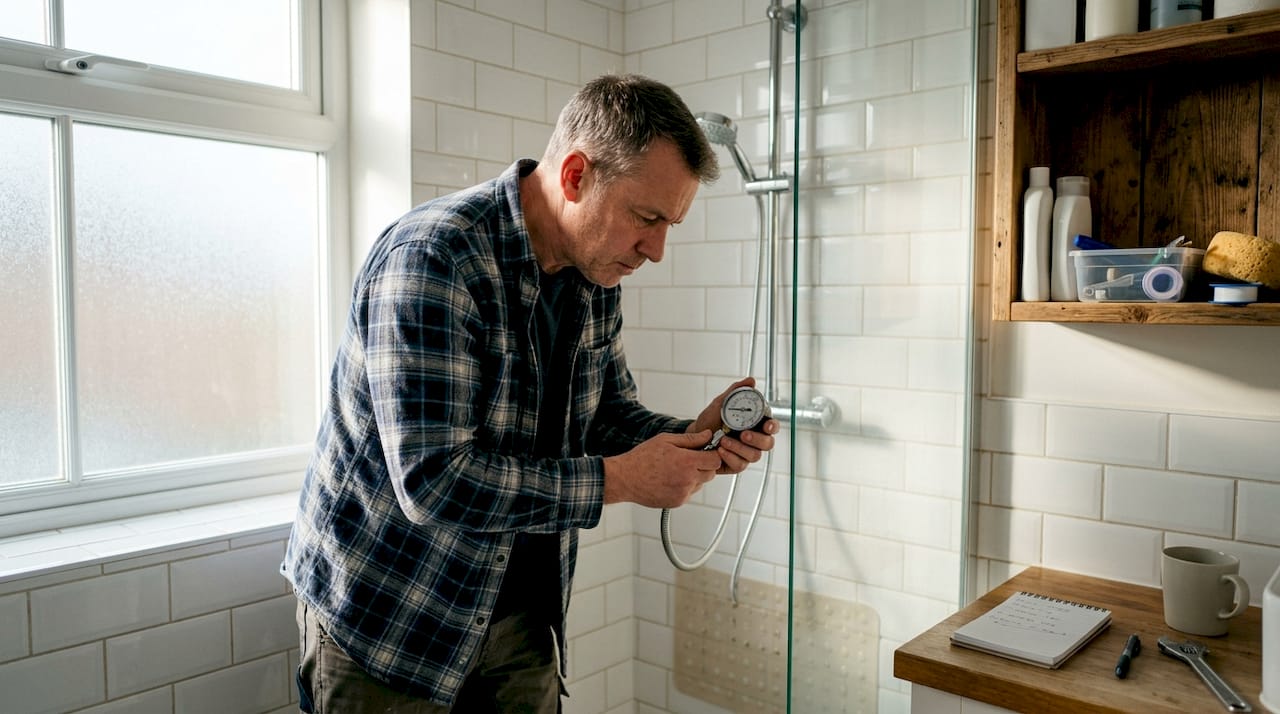
Accurate measurement is the fastest way to stop guessing. A pressure gauge costs $15–$40 and threads onto any standard outdoor hose bib. That is the definitive tool for identifying whole-house pressure problems.
Here is how to run a complete pressure check:
- Attach the gauge to an outdoor hose bib. Turn the bib fully on with no other fixtures running. Read the PSI. A reading below 40 PSI confirms a whole-house supply problem upstream of all fixtures.
- Check the water meter’s low-flow indicator. Turn off every fixture and appliance in the home. Look at the meter for a small triangle or dial labeled “low flow.” A spinning low-flow indicator with everything off means water is moving somewhere it should not, pointing to an active underground leak.
- Distinguish pressure from flow. Pressure is the force behind the water; flow is the volume delivered per minute. A clogged aerator reduces flow without reducing pressure. A failing PRV reduces pressure at the source. Treating a flow problem as a pressure problem leads to the wrong repair.
- Test multiple locations. Measure at the hose bib, then at an indoor faucet. A big difference between the two readings suggests a restriction inside the home, such as a partially closed valve or corroded pipe section.
| Symptom | Likely cause | First step |
|---|---|---|
| Weak pressure at all fixtures | PRV failure, closed valve, or supply leak | Gauge reading at hose bib |
| Weak pressure at one fixture | Clogged aerator, kinked line, or worn cartridge | Inspect and clean the fixture |
| Pressure fine but flow is low | Mineral buildup in pipes or fixture | Clean or replace aerator |
| Spinning meter with fixtures off | Active underground leak | Call a plumber for leak detection |
For a full step-by-step diagnostic order, Ag-plumbing’s homeowner pressure check guide walks through each stage from the meter to the fixture.
How to prevent water pressure problems before they start
Proactive maintenance eliminates the most common causes of low pressure before they become expensive repairs. Routine valve and PRV inspections combined with regular aerator cleaning prevent the majority of pressure complaints.
- Inspect and test your PRV every two years. A PRV older than 10 years should be tested with a gauge and replaced if the reading drifts outside the 50–60 PSI factory range. Replacement costs far less than diagnosing months of mystery pressure loss.
- Clean aerators and showerheads twice a year. Hard water areas accumulate mineral deposits quickly. A twice-yearly vinegar soak keeps flow consistent and extends fixture life.
- Check for leaks early. Small drips at joints and fittings waste water and signal pipe stress. Catching a leak at the fitting stage prevents the underground supply line failure that costs thousands to repair. Ag-plumbing’s guide on fixing leaks early explains the cost difference clearly.
- Plan for pipe replacement in older homes. If your home has galvanized steel supply pipes, budget for pipe replacement before pressure loss becomes severe. Modern copper and PEX pipes do not corrode internally and maintain full bore diameter for decades.
- Contact your water utility annually. Ask about planned pressure changes, infrastructure upgrades, or seasonal demand patterns in your area. This context helps you separate municipal causes from internal ones.
Pro Tip: Add a plumbing maintenance checklist to your annual home inspection routine. Ag-plumbing’s maintenance checklist covers valves, PRV, aerators, and pipe condition in one pass.
Key Takeaways
Water pressure drops because of identifiable, fixable causes: failing PRVs, closed valves, corroded pipes, hidden leaks, or municipal supply changes require different solutions, so accurate diagnosis always comes first.
| Point | Details |
|---|---|
| Normal pressure range | Residential pressure should stay between 45–80 PSI; below 40 PSI means a supply problem. |
| PRV lifespan matters | PRVs fail gradually over 7–15 years and should be tested every two years after the 10-year mark. |
| Fixture vs. whole-house | A single weak fixture points to a clog or worn cartridge; all fixtures running weak points to the supply side. |
| Meter test for leaks | A spinning low-flow indicator with all fixtures off confirms an active underground leak. |
| Prevention cuts costs | Cleaning aerators twice a year and inspecting valves regularly prevents the most common pressure complaints. |
What I’ve learned after years of pressure calls
By Maayan
The call I hear most often goes like this: “My pressure has been getting worse for months and I thought it was the city.” Nine times out of ten, it is a PRV that has been quietly failing since before the homeowner noticed anything wrong. The city gets blamed because the symptom feels external. The water just arrives weaker. But the city’s pressure at the meter is usually fine.
The second thing I have noticed is how often homeowners confuse pressure with flow. They describe “low pressure” when what they actually have is a clogged aerator cutting volume. These are different problems with different fixes. Buying a $20 pressure gauge and spending five minutes at the hose bib would resolve that confusion immediately. Most people never do it.
Older Pittsburgh homes with galvanized pipes present the trickiest cases. The pipe looks fine from the outside. The pressure loss is gradual enough that homeowners adapt to it over years. By the time someone calls, the effective bore is sometimes less than half its original diameter. At that point, cleaning and adjusting valves will not help. The pipes need to go.
My honest advice: start with the gauge, check the meter, and look at your PRV age before assuming anything. Most pressure problems have a clear mechanical cause that a methodical check will surface in under an hour.
— Maayan
Ag-plumbing’s pressure diagnostics for Pittsburgh homeowners
Low water pressure has a cause. Finding it quickly is what Ag-plumbing does best.

With 30 years of experience serving Pittsburgh, PA and the surrounding areas, Ag-plumbing’s licensed plumbers diagnose pressure problems at the source, whether that is a worn PRV, a hidden underground leak, corroded galvanized pipes, or a valve that was never fully reopened after a repair. The team handles PRV replacement, professional leak detection, and full pipe replacement using modern materials. For homeowners ready to stop guessing and get a definitive answer, Ag-plumbing’s plumbing repair services cover every cause of low pressure from the meter to the fixture.
FAQ
What is the normal water pressure for a home?
Normal residential water pressure runs between 45–80 PSI. Readings below 40 PSI indicate a whole-house supply problem that requires diagnosis at the meter or PRV.
How do I know if my PRV is failing?
A PRV that is failing causes gradual pressure loss across all fixtures. Test with a pressure gauge at the hose bib; if the reading falls outside 50–60 PSI and the PRV is older than 10 years, replacement is the likely fix.
Can a clogged showerhead cause low water pressure?
A clogged showerhead reduces flow, not pressure. Soaking it in vinegar and scrubbing with a soft brush restores full flow at that fixture without affecting the rest of the system.
How do I check for a hidden water leak?
Turn off every fixture and appliance in the home, then check the water meter’s low-flow indicator. A spinning indicator confirms water is moving through the system, pointing to an active underground leak.
Why does my water pressure drop only in the morning?
Morning pressure drops often reflect peak municipal demand when many households draw water simultaneously. If the drop is brief and affects neighbors too, the cause is external. If it is isolated to your home, check your PRV and main valve.
Recommended
- Why Check Water Pressure: A Homeowner’s Guide – AG-Plumbing
- Why Water Leaks Matter: A Homeowner’s Guide – AG-Plumbing
- Why Prevent Water Leaks: A Pittsburgh Homeowner’s Guide – AG-Plumbing
- Emergency Plumbing Guide: Quick Solutions for Homeowners – AG-Plumbing
