
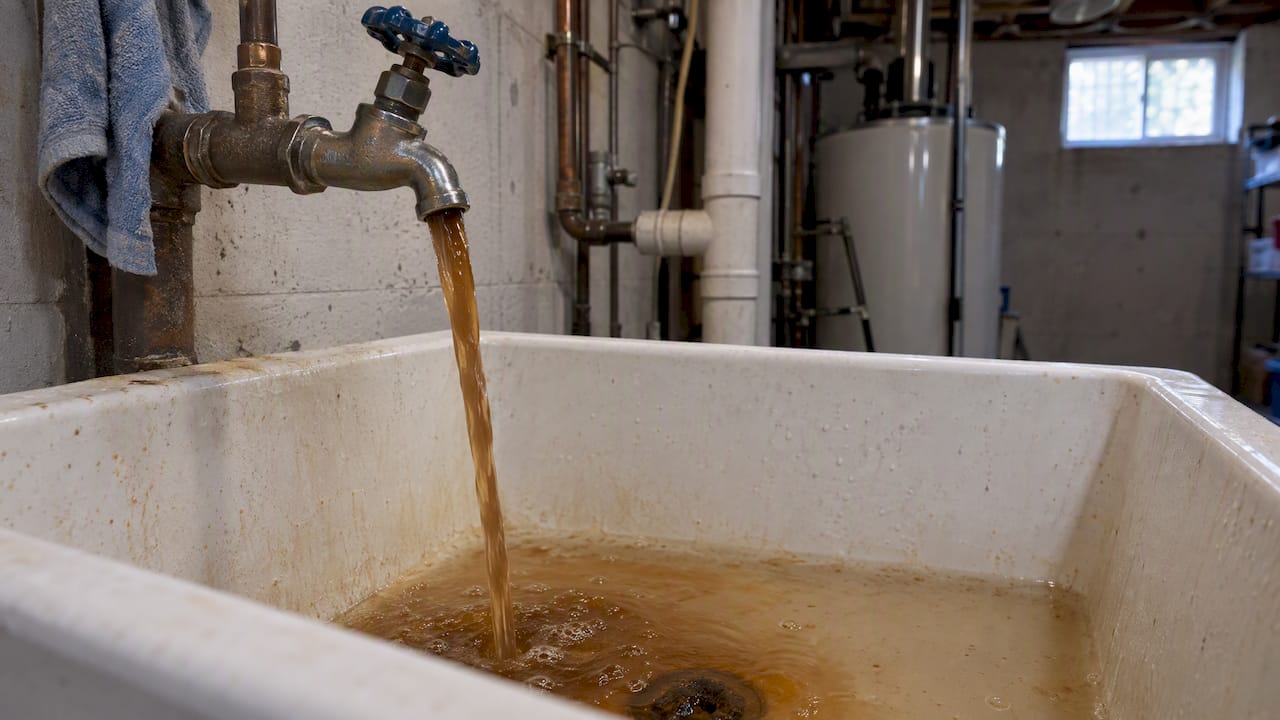
Brown water from the tap is usually iron or manganese sediment stirred loose, and it is not something you should drink. Skip hot water until the cold runs clear, then run a cold tap at your lowest fixture for a few minutes. If it stays discolored, contact your water utility right away.
TL;DR:
- Compare cold and hot water at fixtures, including an outdoor spigot and toilet; clear outdoor water with a brown indoor tap suggests a localized problem.
- Flush the lowest cold tap for 2 to 5 minutes, then the highest; run it longer only if your utility advises it.
- Keep hot water, laundry, and the dishwasher off until cold water runs clear at two or three fixtures; heater sediment can discolor hot taps.
- Widespread discoloration across hot and cold taps often follows utility work and clears within hours; hot only or recurring symptoms point to home plumbing.
- Get water tested if discoloration persists or tastes metallic, especially when older pipes may contain lead; boiling does not remove metals.
Table of Contents
- What to Do in the Next 10 to 60 Minutes
- What Causes Brown Tap Water
- Is Brown Water Safe, and When Should You Worry
- Is the Problem Your House or the Whole Neighborhood
- How to Flush Your Lines and When to Call a Pro
- When a Plumber Needs to Get Involved
- What This Really Comes Down To
- How We Can Help With Persistent Brown Water
- FAQ
- Sources
What to Do in the Next 10 to 60 Minutes
Start with the fixture closest to where your water line enters the house, usually a basement sink or outdoor spigot, and work from there.
- Run the lowest cold tap in your home for 3 to 5 minutes and watch whether the water clears.
- Skip hot water, laundry, and the dishwasher until the cold water runs clear.
- Check a few other fixtures, including toilets and any outside spigot, to see how widespread the discoloration is.
- Save a sample in a clear jar and snap a photo with the time noted.
- Report the issue to your water utility and follow any advisory they issue; call a plumber if the problem doesn’t clear or keeps coming back.
Pro Tip: Photograph the water next to a white background, like a sink or paper towel, so the color shows clearly if you need to share it with your utility or a plumber.
What Causes Brown Tap Water
Most brown water traces back to iron or manganese that was sitting quietly in pipe scale until something stirred it up. Iron and manganese can exist dissolved in water or as loose particles, and once they’re exposed to air they oxidize and turn rusty brown or black, a reaction the EPA’s secondary drinking water standards treat as a nuisance issue rather than a direct health limit.
Common triggers include:
- Water-main breaks, hydrant flushing, or nearby construction that shake up sediment in the distribution system.
- Sudden pressure changes from firefighting activity or utility maintenance work.
- Corroded service lines or aging interior pipes shedding rust into your own plumbing.
- Sediment buildup inside a water heater tank that gets disturbed and pushed into the hot water line.
- For homes on private wells, naturally occurring iron or manganese in the groundwater itself.
Knowing which of these applies to your situation is the fastest way to figure out whether you need to wait it out, call your utility, or call a plumber.
Is Brown Water Safe, and When Should You Worry
Iron and manganese are regulated under the EPA’s secondary drinking water standards, which set guidance levels of 0.3 mg/L for iron and 0.05 mg/L for manganese because of how they affect color and taste, not because they pose an acute health threat at those levels. Even so, avoid drinking water that looks visibly brown or rusty until you know what’s causing it.
Showering with discolored water is generally considered fine, since skin doesn’t absorb these minerals the way ingestion does, according to CDC guidance on lead exposure, though you should still avoid swallowing it.
A few situations call for extra caution:
- Children and pregnant or nursing people should avoid ingesting discolored water, since there’s no recognized safe blood lead level for children.
- Boiling does not remove metals like iron, lead, or manganese, so don’t treat a rolling boil as a fix.
- Always follow any official boil-water, do-not-drink, or do-not-use advisory issued for your area.
- If discoloration is persistent, paired with a metallic taste, or your home has older pipes that might contain lead, get your water tested.
If you’re unsure whether your home has lead service lines, that’s worth checking before you assume the discoloration is only cosmetic.
Is the Problem Your House or the Whole Neighborhood
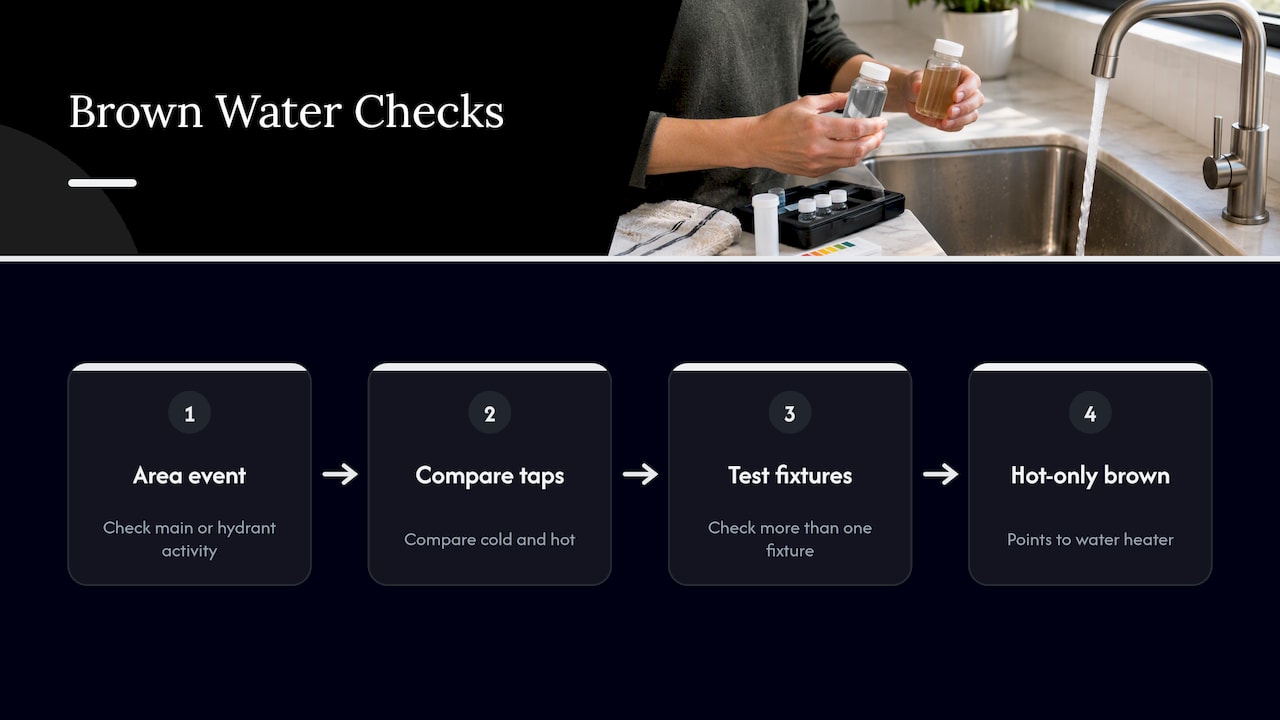
A quick comparison across fixtures tells you most of what you need to know. Check both cold and hot water at more than one tap, and don’t skip the outdoor spigot or a toilet tank.
- Sudden, widespread brown water affecting cold and hot taps across the house usually points to a mains disturbance, hydrant flushing, or nearby construction.
- Discoloration limited to one fixture, or only showing up in hot water, usually points to something inside your own plumbing, like a water heater stirring up sediment.
- An outdoor spigot or toilet running clear while an indoor faucet runs brown suggests the issue is isolated to that line or fixture.
- Events tied to utility work typically clear within a few hours; discoloration that returns over days or weeks points to a recurring in-home problem, often pipe corrosion.
If it looks area-wide, your utility already may be aware. If it’s isolated to your house, that’s a plumbing issue to track down.
How to Flush Your Lines and When to Call a Pro
Flushing clears sediment, but the order and timing matter. Municipal guidance from the City of Portland recommends running the lowest cold tap in your home first, since sediment settles low in the system.
- Open the lowest cold tap in the house and let it run for 2 to 5 minutes, up to 10 if your utility advises it.
- Move to the highest cold tap and repeat, then check a couple of points in between.
- Leave hot water alone until every cold tap runs clear. According to SFPUC guidance on discolored water, sediment that reaches a water heater tank can keep hot water discolored even after cold water clears.
- Skip laundry and the dishwasher until you’ve confirmed clear water at two or three fixtures.
- Keep your saved sample, photo, and timestamp in case you need to report the event or show a technician.
Don’t attempt a full water heater drain yourself unless you know your model’s exact steps. For cleaning out water lines safely, or when hot water alone stays brown, it’s worth having a professional handle the tank.
When a Plumber Needs to Get Involved
If your water utility confirms the mains are clear but your faucets still run brown, especially hot water only, that points to something inside the house, not the street. Rust flakes, staining on fixtures, or recurring discoloration after flushing are the signals we look for before recommending a fix.
We typically start with a camera inspection of the service line, then decide between clearing scale and sediment or, in more corroded cases, targeted repiping. A quick call before you assume the problem will fix itself on its own usually saves a repeat visit later.
— Maayan
What This Really Comes Down To
Most advice about brown water focuses heavily on causes, iron, manganese, mains breaks, and not enough on sequencing: what to check first, and in what order, so you don’t waste a day second-guessing yourself. The honest priority is simple. Rule out an area-wide event before you worry about your own pipes, because calling a plumber for a hydrant flush three streets over wastes everyone’s time.
The bigger blind spot is hot water. Homeowners flush their cold taps, see clear water, and assume the problem is solved, while the water heater keeps feeding brown water into every hot tap in the house. That’s the detail that gets skipped most often, and it’s usually the reason discoloration seems to “come back” after people think they’ve fixed it.
If there’s one thing worth doing differently, it’s this: don’t just check if the water looks clear. Check it at more than one fixture, cold and hot, before you decide the problem is over.
How We Can Help With Persistent Brown Water
When brown water keeps coming back after you’ve ruled out a utility event, the cause is almost always inside your own plumbing, and that’s where we come in. Our team has extensive experience with pipe and water-quality issues, and we start every visit with a straightforward diagnosis before recommending anything.

Depending on what we find, a service visit might involve:
- A camera inspection of your service line to pinpoint where sediment or corrosion is building up.
- Hydro jetting to clear scale and buildup without damaging older pipes.
- Water heater service when sediment in the tank is the source of hot-water discoloration.
- Plumbing repiping when corrosion inside the lines themselves is the root cause.
Every visit comes with a clear explanation of what we found and a transparent estimate before any work starts. If your water has stayed brown longer than it should, reach out to our team and we’ll help you figure out what’s going on.
This article is general information, not a substitute for advice from a qualified doctor. Consult a qualified healthcare professional about your own circumstances before acting on anything here.
FAQ
Is brown water from the tap safe to drink?
No, you should avoid drinking water that looks visibly brown or rusty, even though it’s usually caused by iron or manganese sediment that EPA guidance treats as a nuisance issue rather than an acute health hazard. Wait until it runs clear, and follow any advisory your utility issues.
How to fix brown water coming from a tap?
Run your lowest cold tap for a few minutes to flush sediment, then check a few other fixtures to see if it clears. If cold water stays discolored or only your hot water is affected, the issue is likely inside your home’s plumbing or water heater, and a plumber can pinpoint the source.
Is it okay to shower if my water is brown?
Generally yes, since skin doesn’t absorb the minerals causing the discoloration the way swallowing water does, according to CDC guidance. Just avoid swallowing the water and follow any local advisory in place.
How long does it take for brown water to go away?
Discoloration from a mains disturbance or hydrant flushing often clears within a few hours once your utility finishes the work. If it persists for days or keeps returning, especially in hot water only, the cause is more likely inside your home’s plumbing and worth having checked.
Sources
- Drinking Water Regulations and Contaminants | US EPA
- Preventing lead exposure from drinking water | CDC
- What to do during a discolored water event | City of Portland
- Dirty and Discolored Water (facts) | SFPUC
Recommended
- Practical Plumber Advice Every Homeowner Should Know
- Smart Plumbing Tips Every Pittsburgh Homeowner Needs
- How to clean water lines: Pittsburgh homeowner guide
- Water Filtration Installation Guide for US Homeowners 2026
