
TL;DR:
- Most pipe corrosion occurs internally, often going unnoticed for years until significant damage occurs. Regular water testing, inspections, and proper material choices can efficiently prevent costly pipe failures. Professional evaluations are crucial when signs like water discoloration, low pressure, or recurring leaks appear, especially in older homes.
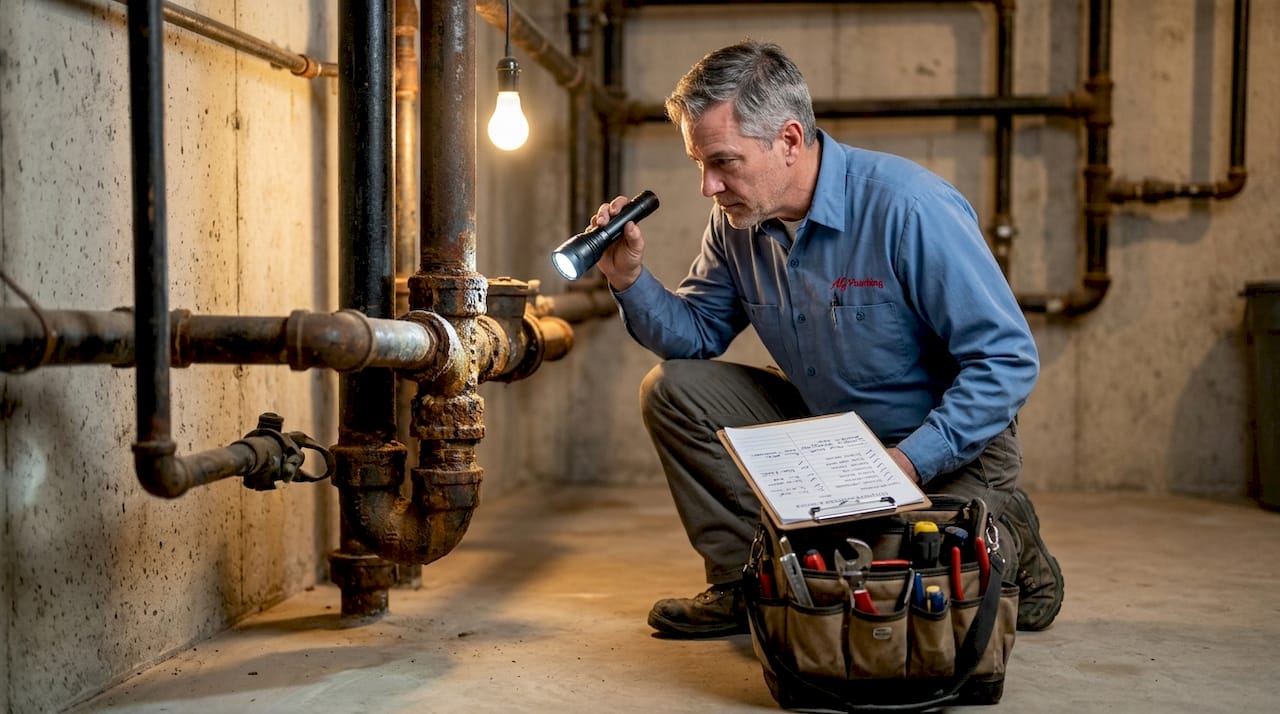
Most homeowners picture pipe corrosion as visible rust on old metal. The reality is far more dangerous. Pipe corrosion is a chemical or electrochemical process that breaks down pipe material from the inside out, often for years before you spot a single warning sign. Internal corrosion accounts for about 60% of pipeline incidents related to corrosion, which means the biggest threat is the one you cannot see. Understanding what is pipe corrosion, why it happens, and how to stop it is the most practical thing you can do to protect your home’s plumbing system.
Table of Contents
- Key Takeaways
- What is pipe corrosion: causes and how it starts
- Types of pipe corrosion common in home plumbing
- Signs and effects of pipe corrosion
- Effective prevention strategies for pipe corrosion
- When to call a professional for pipe corrosion
- My honest take on how homeowners handle pipe corrosion
- Protect your Pittsburgh home with Ag-plumbing
- FAQ
Key Takeaways
| Point | Details |
|---|---|
| Corrosion is often hidden | Most pipe corrosion starts internally, where you cannot see it, making early detection critical. |
| Water chemistry drives damage | pH, dissolved oxygen, and chloride levels in your water directly determine how fast pipes corrode. |
| Multiple corrosion types exist | Pitting, galvanic, and uniform corrosion each cause different damage and require different fixes. |
| Prevention beats replacement | Balanced water chemistry, correct materials, and routine inspections cost far less than emergency repiping. |
| Professional inspection matters | A licensed plumber can spot early-stage corrosion before it becomes a costly structural failure. |
What is pipe corrosion: causes and how it starts
Pipe corrosion is the gradual degradation of pipe material caused by chemical reactions between the pipe and its surrounding environment, usually water. When metal pipes contact water carrying dissolved oxygen, acids, salts, or other reactive substances, electrons transfer between the pipe surface and the water. That electron transfer is what breaks down the metal over time.
Several factors accelerate this process inside your home’s plumbing:
- Water pH: Water pH, alkalinity, and dissolved oxygen are among the strongest drivers of corrosion rate. Acidic water below pH 6.5 aggressively attacks metal surfaces.
- Dissolved oxygen: Higher oxygen content in water speeds up the oxidation reaction that corrodes metal pipe walls.
- Chlorides and salts: Chloride ions break down protective films that naturally form on pipe surfaces, exposing fresh metal to attack.
- Dissimilar metals: When copper and galvanized steel connect without proper insulation, a galvanic cell forms. Galvanic corrosion develops when two dissimilar metals electrically connect in water, causing accelerated corrosion of the less noble metal.
- Microbial activity: Certain bacteria accelerate corrosion from inside the pipe. Microbiologically influenced corrosion causes up to 50% of corrosion failures in water systems, making it one of the most underestimated pipe corrosion causes.
- High water velocity: Fast-moving water physically strips away protective deposits, exposing bare metal.
Environmental factors matter too. Pipes installed in highly acidic soil or near electrical grounding systems face additional corrosion pressure from outside the pipe wall.
Pro Tip: Test your home’s water quality once a year. A basic water test kit reveals pH and chloride levels that might be quietly accelerating corrosion inside your pipes before any symptoms appear.
Types of pipe corrosion common in home plumbing
Not all pipe corrosion looks or behaves the same way. Knowing the specific type affecting your system helps you choose the right repair approach and prevents the wrong fix from making things worse.
| Corrosion type | How it looks | Primary cause | Risk level |
|---|---|---|---|
| Uniform corrosion | Even, widespread thinning of pipe metal | Low pH water, dissolved oxygen | Moderate |
| Pitting corrosion | Small deep holes in pipe wall | Chlorides, stagnant water | High |
| Crevice corrosion | Damage at joints, fittings, or under deposits | Trapped water, lack of oxygen flow | High |
| Galvanic corrosion | Concentrated damage at metal connection points | Dissimilar metal contact in water | High |
| Erosion corrosion | Grooved or scalloped inner pipe surface | High water velocity, turbulence | Moderate |
| Stress corrosion cracking | Fine cracks in pipe walls | Combined mechanical stress and chemical attack | Very high |
Pitting corrosion creates small deep holes that are more dangerous than uniform corrosion because the pipe wall can perforate at one specific point while the surrounding metal looks almost intact. Homeowners often miss pitting entirely until a leak appears without warning.
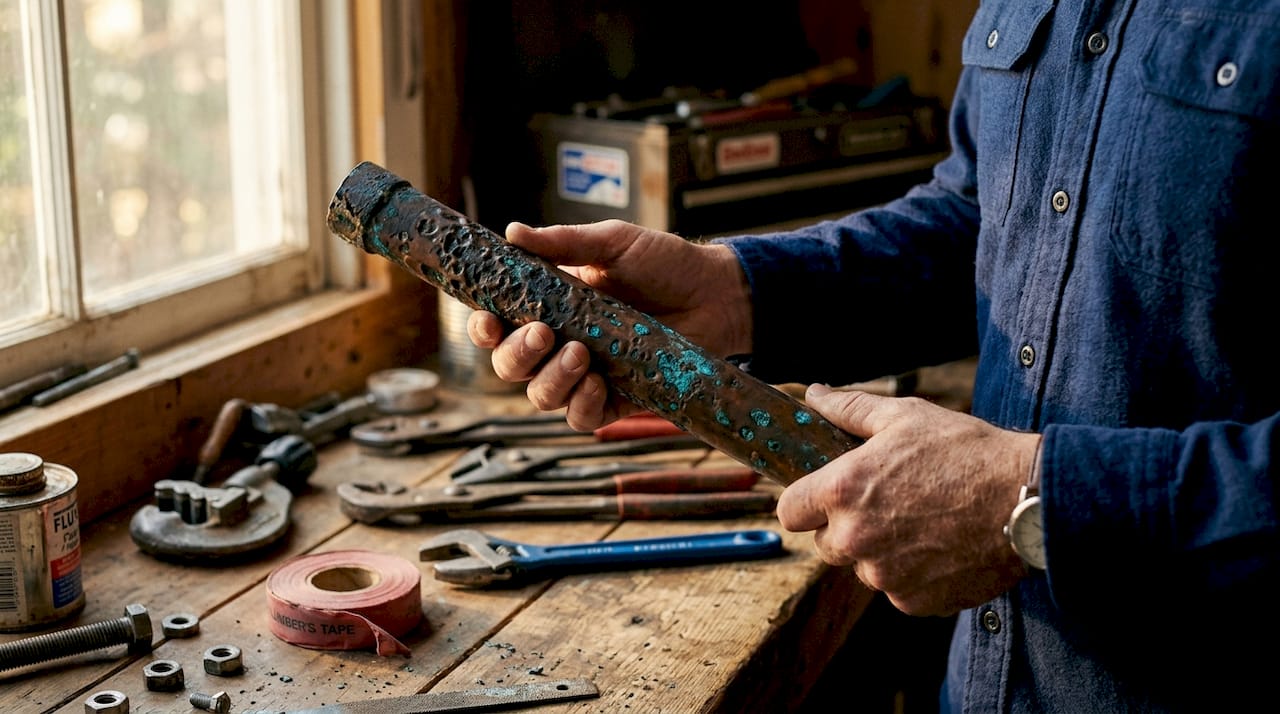
Galvanic corrosion is especially common in older Pittsburgh homes where plumbing repairs mixed copper fittings with the original galvanized steel pipes. Zinc layers on galvanized steel provide sacrificial protection for a time, but once they degrade, the underlying steel corrodes rapidly at the point of metal contact.
Stress corrosion cracking is the least common but most severe. It happens when pipes under physical stress, from poor installation, soil movement, or water hammer, meet a corrosive environment at the same time. The cracks that form can be nearly invisible right up until the pipe fails completely.
Understanding which plumbing materials resist which types of corrosion makes a real difference when you are upgrading or repairing a section of your plumbing system.
Signs and effects of pipe corrosion
The effects of pipe corrosion show up in two ways: what you can see directly on your pipes, and what you experience through changes in your water or plumbing performance. Knowing both categories helps you catch problems before they become expensive.
Common warning signs include:
- Rust stains on sinks, tubs, or around pipe connections
- Discolored water that runs red, brown, or yellow, particularly after water sits in pipes overnight
- Metallic or bitter taste in tap water
- Low water pressure in specific fixtures, which points to internal buildup narrowing the pipe
- Visible flaking, scaling, or greenish deposits on pipe exteriors
- Unexplained spikes in your water bill, often caused by slow leaks from corroded spots
- Damp patches on walls, ceilings, or under sinks with no obvious plumbing fixture nearby
Red water and reduced flow inside pipes are direct consequences of corrosion products building up on interior pipe walls. That buildup, called tuberculation, acts like plaque in an artery. It restricts water movement and harbors further corrosion.
Health concerns are real and often overlooked. Corroded lead or old galvanized pipes can leach metals into drinking water. Children and pregnant women face the highest risk from even low levels of lead or copper contamination. If your home was built before 1986 and has original plumbing, knowing when plumbing repair is necessary is not a luxury. It is a health decision.
The financial impact compounds quickly. A small corroded section left unaddressed does not stay small. It weakens the surrounding pipe, invites more corrosion at the damaged site, and eventually forces an emergency repair that costs several times more than early intervention would have.
Effective prevention strategies for pipe corrosion
Preventing pipe corrosion is less about any single fix and more about a consistent, layered approach to water quality and plumbing maintenance. Here is a practical sequence you can follow:
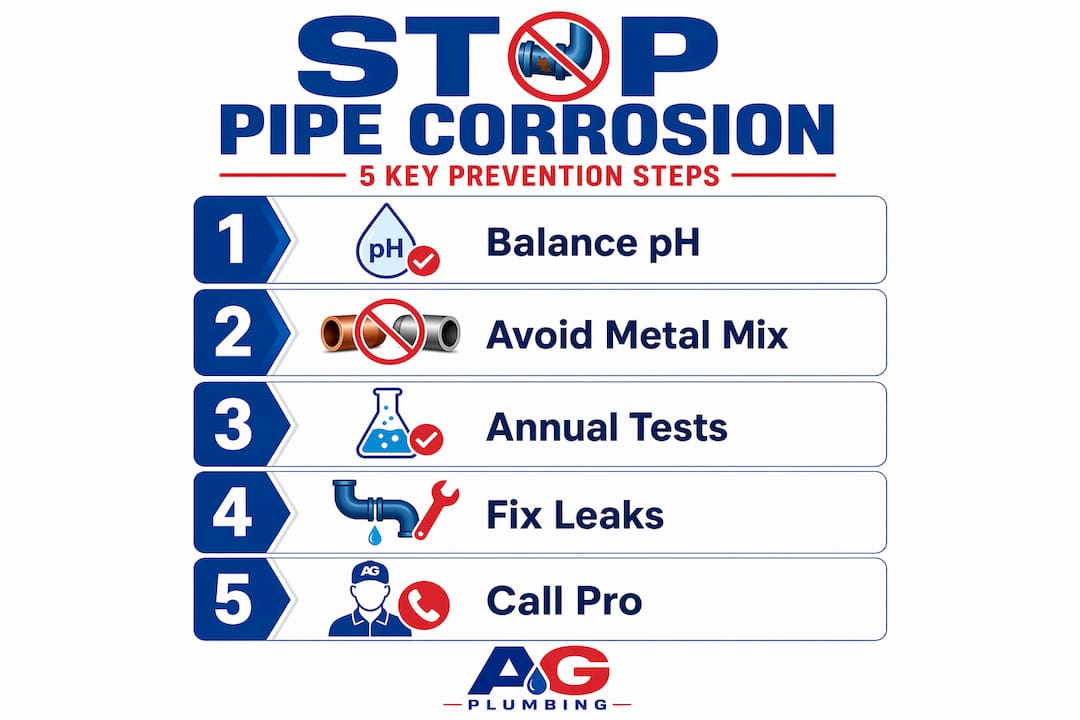
- Test and adjust your water chemistry. Maintaining water pH between 6.5 and 8.5 supports the formation of protective mineral films inside pipes. If your water tests outside that range, a pH-neutralizing filter or water treatment system brings it back in line.
- Isolate dissimilar metals. Any place where copper pipe connects to galvanized or iron fittings needs a dielectric union. Electrical insulation between dissimilar metals prevents the galvanic current that accelerates metal breakdown.
- Upgrade high-risk pipe sections. Older galvanized steel pipes in particular have a finite lifespan. Replacing them with copper, CPVC, or PEX tubing removes the corrosion risk entirely in those sections.
- Use corrosion inhibitors. For properties with consistently aggressive water chemistry, water treatment specialists can add phosphate-based inhibitors that coat pipe interiors and slow chemical attack.
- Flush stagnant lines. Pipes that sit unused, in vacation homes, seasonal properties, or rarely used guest bathrooms, accumulate dissolved oxygen and become breeding grounds for microbiologically influenced corrosion. Regular flushing helps.
- Schedule annual plumbing inspections. A professional can use camera inspection tools to see inside pipes and catch early-stage corrosion that no surface check would reveal.
You can find a broader set of preventative plumbing tips tailored to Pittsburgh-area homes on Ag-plumbing’s resource hub.
Pro Tip: Ask your inspector to check under all slab-on-grade areas if your home was built in the 1970s or earlier. Pipes buried under concrete slabs are prone to external corrosion from soil chemistry and nearly impossible to inspect without specialized equipment.
When to call a professional for pipe corrosion
Catching corrosion early is the goal, but there comes a point where DIY fixes stop being a reasonable option. Knowing that line saves you from expensive mistakes.
Consider professional intervention when you observe any of the following:
- Multiple fixtures showing low water pressure simultaneously
- Recurring pipe leaks in the same general area
- Water discoloration that does not clear within 30 seconds of running the tap
- Visible pinhole leaks or wet spots in walls without an obvious cause
- A plumbing system older than 40 years with no documented replacement history
Once a professional confirms corrosion, the two most common pipe corrosion solutions are pipe relining and pipe replacement. Pipe relining inserts a resin-coated liner inside the existing pipe that hardens into a smooth, corrosion-resistant inner wall. It costs less than full replacement and works well in pipes that are structurally sound but experiencing surface corrosion or buildup.
Full pipe replacement is necessary when the pipe wall is too thin or too cracked to hold a liner safely. This is the right call for severely pitted pipes, stress-cracked sections, or lead and galvanized systems past their design life. For temporary situations while waiting for professional service, fast fixes for urgent leaks can contain the damage short-term, but they are not a substitute for a permanent repair.
Pipe corrosion inspection methods used by professionals today include video camera scoping, ultrasonic thickness testing, and electromagnetic scanning. These tools see what no surface inspection can, which is exactly why trying to assess corrosion severity yourself often leads to underestimating the problem.
My honest take on how homeowners handle pipe corrosion
I have been in enough crawl spaces and mechanical rooms to say this plainly: most homeowners who find out they have a corrosion problem already had it for five years or more before the first visible symptom showed up.
In my experience, the two mistakes I see most often are waiting for a visible leak before calling anyone, and assuming a DIY patch on one corroded joint solved the larger problem. Neither approach accounts for the fact that corrosion rarely stops at one spot. When conditions favor corrosion in one section of a pipe, the same water chemistry is working on every other section in that system at the same time.
What I have learned is that the homeowners who spend the least money on plumbing over time are the ones who treat inspections like they treat oil changes. They are not glamorous. You do not see the damage they prevent. But the cost difference between catching corrosion at year two versus year seven is not small. I have seen repiping jobs that cost ten times what an inspection and targeted repair would have cost two years earlier.
My advice: do not wait for red water or a spike in your water bill. By then, the corrosion has been winning for a long time. A single annual inspection from a qualified plumber, paired with a basic water quality test, is the most cost-effective pipe corrosion protection strategy available to any homeowner.
— Maayan
Protect your Pittsburgh home with Ag-plumbing
Pipe corrosion rarely announces itself until the damage is already expensive. At Ag-plumbing, we have spent 30 years helping Pittsburgh homeowners catch corrosion problems before they become plumbing emergencies.
Our team offers full-system plumbing inspections and repair services, from video camera scoping and water quality assessment to targeted repairs and full repiping when it is needed. We work with the latest pipe corrosion inspection methods and know exactly what corroded pipes look like in Pittsburgh’s aging housing stock. If you have seen any of the warning signs covered in this article, or if your system is more than 30 years old with no inspection history, reach out to our team at ag-plumbing.com. Early action now protects both your pipes and your budget.
FAQ
What is pipe corrosion in simple terms?
Pipe corrosion is the chemical breakdown of pipe material caused by reactions between the pipe and water or soil. It weakens pipes from the inside out and can lead to leaks, water contamination, and pipe failure over time.
What causes pipe corrosion in home plumbing?
The main pipe corrosion causes are acidic or unbalanced water chemistry, dissolved oxygen, chlorides, dissimilar metal connections, and microbial activity inside pipes. Microbiologically influenced corrosion alone accounts for up to 50% of corrosion failures in water systems.
What are the most common signs of pipe corrosion?
The most common signs of pipe corrosion include rust-colored water, metallic taste, low water pressure, visible rust or green deposits on pipe surfaces, and recurring leaks. Discoloration and flow reduction often appear before a full pipe failure.
How do you prevent pipe corrosion?
You can prevent pipe corrosion by maintaining water pH between 6.5 and 8.5, installing dielectric unions where dissimilar metals connect, using corrosion-resistant pipe materials, and scheduling annual plumbing inspections. Consistent water testing is the most cost-effective first step.
When should I replace corroded pipes instead of repairing them?
Pipe replacement is necessary when corrosion has thinned the pipe wall below safe levels, when pitting or cracking is widespread, or when the system uses lead or galvanized steel pipe older than 40 years. A professional inspection with ultrasonic thickness testing gives you a definitive answer.
Recommended
- Pipe sweating explained: causes, solutions, and Pittsburgh tips – AG-Plumbing
- Understanding the Sewer Repair Process From Start to Finish – AG-Plumbing
- Pipe relining: Smart, cost-saving fix for Pittsburgh pipes – AG-Plumbing
- How to Identify When Plumbing Repair Is Necessary – AG-Plumbing
