

Many homeowners confuse plumbing schematics with complicated blueprints, but these diagrams serve a distinct, practical role. A plumbing schematic shows your system’s layout and function through standardized symbols, empowering you to manage maintenance and communicate clearly with plumbers. Understanding these diagrams can reduce repair downtime by up to 30%, saving time and money. This guide breaks down everything you need to know about reading, using, and benefiting from plumbing schematics in your Pennsylvania property.
Table of Contents
- Definition and Purpose of Plumbing Schematics
- Key Symbols and Components in Plumbing Schematics
- How to Read and Interpret Plumbing Schematics
- Common Misconceptions About Plumbing Schematics
- Comparison of Plumbing Schematics vs. Plumbing Blueprints
- Practical Applications for Homeowners and Property Managers
- Legal and Code Considerations in Pennsylvania
- Enhance Your Plumbing Maintenance with Expert Help
Key Takeaways
| Point | Details |
|---|---|
| Clear Definition | Schematics diagram water supply, drainage, fixtures, and flow paths using standardized symbols. |
| Symbol Standards | Common symbols represent pipes, valves, fixtures, and flow directions per plumbing codes. |
| Schematic vs Blueprint | Schematics show function and flow; blueprints show exact building dimensions and construction specs. |
| Maintenance Benefits | Understanding schematics speeds repairs by 30% and improves plumber communication by 40%. |
| Pennsylvania Compliance | PA adopts Uniform Plumbing Code standards, ensuring schematic consistency and code conformity. |
Definition and Purpose of Plumbing Schematics
A plumbing schematic is a detailed diagram that shows the water supply lines, drainage pipes, fixtures, valves, and flow paths within a plumbing system using standardized symbols and notations. These functional diagrams serve as roadmaps for maintaining, troubleshooting, and improving your plumbing system. Unlike construction blueprints that show exact building dimensions, schematics prioritize how water flows through your property and how components connect.
The components shown in a typical plumbing schematic include:
- Cold and hot water supply lines with directional arrows
- Drainage and waste pipes showing gravity flow paths
- Valves for shutoff and flow control at key locations
- Fixtures like sinks, toilets, showers, and water heaters
- Vents ensuring proper drainage and preventing siphoning
- Traps that block sewer gases from entering living spaces
Standardized symbols ensure consistent interpretation across the industry. This uniformity means a licensed plumber in Pittsburgh reads the same schematic symbols as one in Philadelphia, reducing confusion and errors. The primary purpose of plumbing schematics is guiding maintenance decisions, troubleshooting system issues, and planning improvements without requiring complex construction knowledge.
Understanding what plumbing is and why it matters helps you see how schematics translate system complexity into readable formats. These diagrams give you the power to spot potential problems before they escalate and communicate precisely with professionals about your plumbing needs.
Pro Tip: Keep a copy of your property’s plumbing schematic in an easily accessible location, like a home maintenance binder or digital folder, so you can reference it during emergencies or when planning renovations.
Key Symbols and Components in Plumbing Schematics
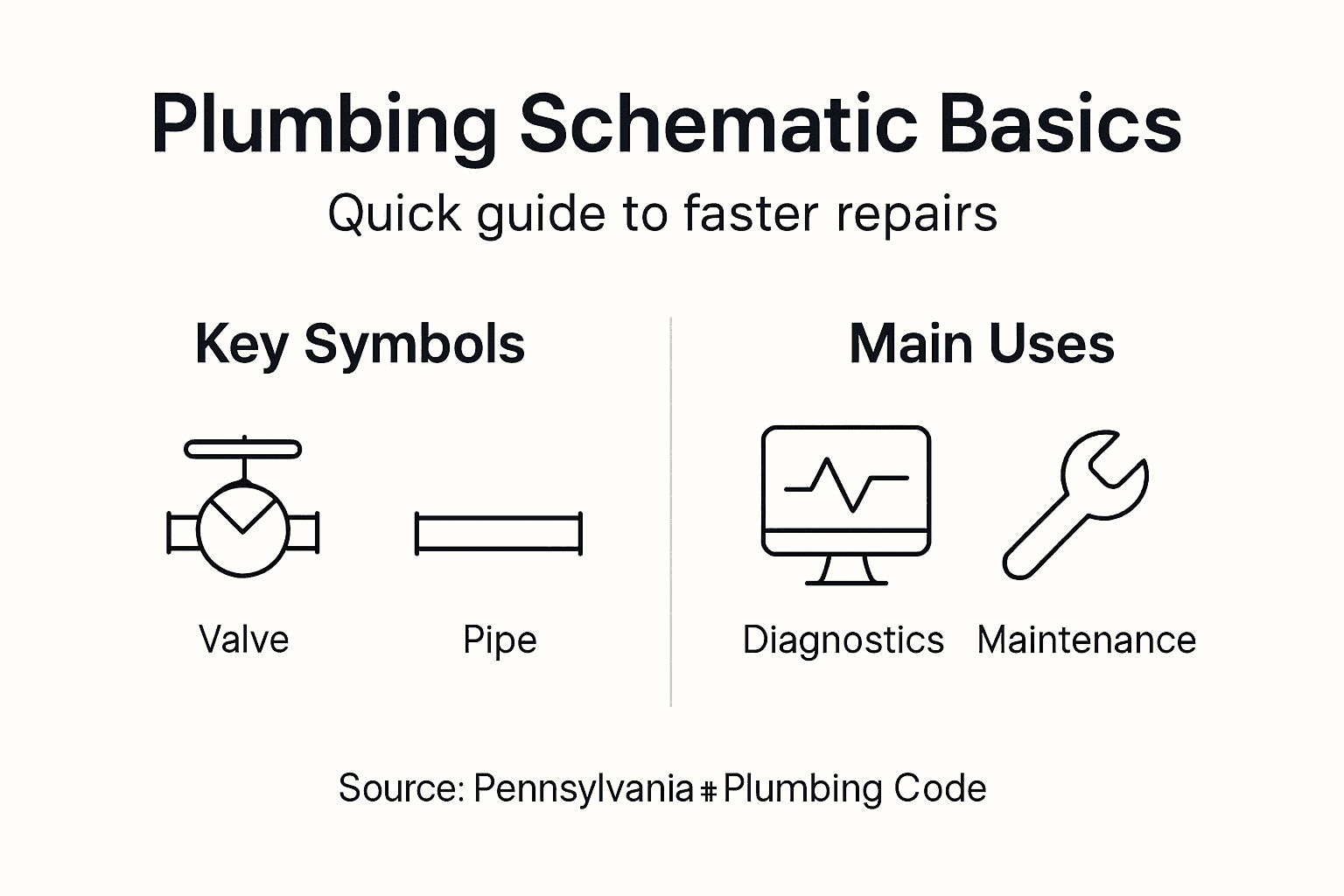
Plumbing schematics use standardized symbols for pipes, valves, fixtures, and flow directions following plumbing codes like the Uniform Plumbing Code. Learning these symbols transforms confusing diagrams into clear system maps. Common symbols you’ll encounter include different line styles for cold water, hot water, and drainage pipes, each with distinct visual markers.
The most frequently used symbols represent:
- Water supply lines shown as solid or dashed lines with directional arrows
- Drainage pipes typically drawn thicker with sloped lines indicating gravity flow
- Vent pipes extending upward to roof terminations
- P-traps and S-traps appearing as curved U shapes under fixtures
- Gate valves, ball valves, and check valves with unique geometric markers
- Fixtures like toilets, sinks, tubs, and water heaters with recognizable shapes
Flow direction indicators are critical for understanding how water and waste move through your system. Arrows show supply water pressure pushing toward fixtures, while drainage flows follow gravity downward and outward. In Pennsylvania properties, these symbols follow strict code standards ensuring consistency across professional schematics.
Symbols may look abstract at first, but they follow logical patterns once you understand the underlying plumbing principles covered in plumbing basics for homeowners. A plumbing schematic symbols guide provides visual references for common notation.
Pro Tip: Always cross-reference symbols with the legend provided on your schematic or in plumbing codebooks to ensure accuracy, especially when dealing with specialized fixtures or custom installations.
How to Read and Interpret Plumbing Schematics
Reading a plumbing schematic requires understanding key symbols such as those representing pipe types, valves, fixtures, and flow direction standardized by codes like UPC and IPC. A systematic approach makes interpretation straightforward, even for homeowners without technical training. Following these steps transforms complex diagrams into usable information.
- Orient yourself to the overall layout and identify main flow paths. Start by locating the water supply entry point and main drainage exit.
- Identify and catalog major symbols and their connections. Note where fixtures connect to supply and drainage lines.
- Trace water supply paths from source to each fixture. Follow arrows showing pressure-driven flow through the system.
- Map drainage paths following gravity flow downward. Track how waste moves from fixtures through traps to main drains.
- Use the schematic legend or code references to verify unfamiliar symbols. When uncertain, consult standard plumbing notation guides.
Schematics prioritize function over exact physical layout. A toilet shown next to a sink on the schematic might sit across the bathroom in reality, but the diagram clarifies how they connect within the plumbing system. This functional emphasis helps you understand system operation rather than precise component placement.

The flow paths reveal your system’s logic. Supply water enters under pressure, branches to fixtures, and returns as waste through gravity-driven drainage. Vents prevent vacuum formation that would slow drainage. Understanding this flow helps you anticipate where problems might occur and how changes affect the entire system.
Learning plumbing basics provides context for interpreting schematics effectively. A basic plumbing schematic reading course offers structured training for deeper understanding.
Pro Tip: When in doubt, ask your plumber for the schematic legend and verify symbol meanings before attempting any DIY troubleshooting or modifications.
Common Misconceptions About Plumbing Schematics
Homeowners often hold incorrect assumptions about plumbing schematics that limit their usefulness. Clearing up these misunderstandings helps you leverage schematics effectively for property maintenance and decision-making.
A common misconception is that plumbing schematics are the same as construction blueprints; schematics instead focus on function and flow rather than scale or precise placement. Blueprints show exact dimensions and building specifications needed for construction, while schematics emphasize system connectivity and operation. This functional focus makes schematics ideal for troubleshooting but less useful for physical construction tasks.
Another frequent mistake is believing homeowners don’t need schematics for routine maintenance. Proper understanding can reduce repair costs by up to 25%. When you understand your system’s layout, you can identify issues earlier, describe problems accurately to plumbers, and make informed decisions about repairs versus replacements.
Many assume plumbing symbols are intuitive and self-explanatory. In reality, most symbols require learning as defined by plumbing codes. A line that looks like a simple pipe might represent cold water, hot water, or drainage depending on notation standards. Without proper education on common misconceptions about plumbing schematics, you risk misinterpreting critical system information.
Key misconceptions include:
- Thinking schematics show exact pipe locations and dimensions
- Believing only professionals benefit from reading schematics
- Assuming all schematic symbols are universally obvious
- Expecting schematics to include every minor component detail
Recognizing these false impressions encourages proper schematic use. These diagrams provide valuable functional information that empowers better property management when understood correctly.
Comparison of Plumbing Schematics vs. Plumbing Blueprints
Plumbing schematics focus on system function and flow with simplified spatial layout, while blueprints include exact physical layout, scale, and construction details. Understanding this distinction helps you choose the right document for specific tasks and avoid confusion when working with plumbing professionals.
| Aspect | Plumbing Schematics | Plumbing Blueprints |
|---|---|---|
| Primary Focus | System function, flow paths, connectivity | Exact dimensions, physical placement, construction specs |
| Scale Accuracy | Not to scale; emphasizes relationships | Precise scale drawings with measurements |
| Detail Level | Functional components and connections | Construction materials, structural elements, specifications |
| Primary Users | Service technicians, maintenance staff, property managers | Contractors, builders, architects, engineers |
| Best For | Troubleshooting, repairs, system understanding | Construction, renovations, permit applications |
| Complexity | Simplified for functional clarity | Detailed for construction accuracy |
Schematics streamline maintenance and troubleshooting by showing how water flows and components interact without overwhelming detail. When your basement floods, you need to know which valve shuts off water to that area, not the exact pipe diameter or wall penetration specifications. Schematics provide this practical information quickly.
Blueprints serve construction and renovation projects requiring precise measurements and code compliance documentation. When adding a bathroom, contractors need exact pipe routes, fixture locations, and structural considerations that blueprints provide. These detailed plans guide physical work and permit approvals.
Understanding differences between schematics and blueprints prevents requesting the wrong document. Ask plumbers for schematics when you want system understanding. Request blueprints from contractors when planning construction projects. Each document type excels in its intended role.
Practical Applications for Homeowners and Property Managers
Plumbing schematics help homeowners and property managers identify system components, facilitate maintenance, troubleshoot issues, and plan upgrades. This knowledge translates directly into cost savings and improved property management. Real-world applications demonstrate why schematic literacy matters for Pennsylvania homeowners.
Using schematics can reduce plumbing downtime by up to 30%, speeding repairs and saving costs. When you can quickly locate shutoff valves, identify affected fixtures, and describe system layout to plumbers, repairs proceed faster. This efficiency minimizes water damage and reduces emergency service premiums.
Communication efficiency with plumbers improves by up to 40% when schematics are used. Instead of vague descriptions like “the pipe under the kitchen is leaking,” you can specify “the hot water supply line between the water heater and kitchen sink shows reduced pressure.” This precision helps plumbers diagnose problems before arriving, bringing the right tools and parts on the first visit.
Practical ways to use plumbing schematics include:
- Locating main water shutoff valves during emergencies to prevent flooding
- Identifying which fixtures share drain lines when experiencing slow drainage
- Planning bathroom or kitchen renovations that integrate with existing plumbing
- Explaining system issues accurately when calling plumbing services in Pittsburgh
- Verifying that plumbing repair services address root causes, not just symptoms
- Understanding how sewer repair benefits prevent cascade failures
Property managers especially benefit from schematic knowledge when coordinating repairs across multiple units. Understanding common supply lines and shared drainage helps prioritize maintenance and communicate effectively with tenants about service interruptions. Schematics for maintenance and troubleshooting provide systematic approaches to property care.
Legal and Code Considerations in Pennsylvania
Pennsylvania adopts the Uniform Plumbing Code, standardizing plumbing schematic symbols and design requirements. This regulatory framework ensures consistency across the state and protects homeowners through standardized safety requirements. Understanding these code considerations helps you verify compliance and work effectively with licensed professionals.
PA state plumbing regulations follow UPC standards, creating uniformity in how schematics are drawn and interpreted. This standardization means symbols on Pittsburgh schematics match those in Philadelphia, Erie, or Harrisburg. When hiring plumbers or reviewing renovation plans, you can trust that properly licensed professionals follow these established conventions.
Compliance with codes ensures safety, functionality, and legal conformity in all plumbing work. Code-compliant schematics incorporate required venting, proper trap installations, and adequate pipe sizing for your system’s demands. These standards prevent common problems like sewer gas infiltration, slow drainage, and pressure imbalances that compromise system performance.
Standard symbols and annotations required by code simplify schematic reading and ensure uniformity. When you learn UPC symbols once, that knowledge applies to any code-compliant schematic you encounter. This consistency saves time and reduces misinterpretation risks when working with different plumbing professionals or reviewing multiple properties.
Understanding Pennsylvania plumbing code basics helps you verify that professional work meets legal standards. You can confirm that schematics for planned renovations include required components and that completed installations match approved plans. This knowledge provides peace of mind regarding regulatory adherence and protects your property investment.
Enhance Your Plumbing Maintenance with Expert Help
Understanding plumbing schematics empowers you to make informed decisions, but professional expertise ensures optimal results. AG Plumbing brings 30 years of industry experience to every project, combining technical knowledge with customer-focused service throughout Pittsburgh and surrounding Pennsylvania areas.
Our licensed team handles everything from routine maintenance to complex system upgrades, ensuring code-compliant solutions tailored to your property’s unique needs. When you understand your plumbing schematic, you can communicate more effectively with our technicians, leading to faster diagnoses and more efficient repairs.
Whether you need emergency repairs, preventive maintenance, or system improvements, our experts provide reliable heating, cooling & plumbing services in Pittsburgh backed by three decades of proven results. Leverage your new schematic knowledge by partnering with professionals who respect your understanding while delivering exceptional plumbing repair services. Contact AG Plumbing today to experience the difference that expertise and clear communication make in maintaining your property’s plumbing systems.
What Is a Plumbing Schematic? Frequently Asked Questions
How do plumbing schematics differ from plumbing blueprints?
Schematics show system flow, functional connections, and component relationships without precise scale or dimensions. Blueprints provide exact building layout, measurements, and construction specifications needed for physical installation work. Use schematics for maintenance and troubleshooting; rely on blueprints for construction and renovation projects requiring permit approvals.
Why should homeowners learn to read plumbing schematics?
Reading schematics helps you detect plumbing issues earlier and communicate precisely with plumbers, saving time and repair costs. This knowledge empowers informed decisions about maintenance priorities and system upgrades. You can locate shutoff valves quickly during emergencies and understand how changes to one area affect overall system function.
Are plumbing schematics required by Pennsylvania plumbing codes?
PA plumbing codes adopting Uniform Plumbing Code require standardized schematics for design documentation and compliance verification. Proper schematics ensure renovations meet code requirements and provide records for future maintenance. Licensed professionals must submit code-compliant schematics when obtaining permits for significant plumbing work.
Can I create my own plumbing schematic for my home?
You can sketch a basic schematic showing visible components and connections, but professional accuracy requires training in code standards and symbol conventions. For legal compliance and renovation permits, hire licensed plumbers to create official schematics. Your personal sketch remains useful for understanding your system and communicating with professionals about concerns.
Recommended
- Heating, Cooling & Plumbing Services Pittsburgh, PA
- Same Day Plumbing in Pittsburgh: Cut Damage Costs 30% – AG-Plumbing
- Plumbing Repair Services in Pittsburgh, PA
- Emergency Plumbing Guide: Quick Solutions for Homeowners – AG-Plumbing
- 7 Essential Types of Plumbing Solutions for Hampshire Homes – Skan Plumbing & Heating
- Modern Drain Repair Methods – Solutions for Poole Homes
