
TL;DR:
- Drain cameras provide real-time visual inspection of pipe issues, eliminating guesswork.
- They detect problems like root intrusion, cracks, and buildup that traditional methods often miss.
- Using a camera first saves homeowners money by ensuring accurate diagnosis and targeted repairs.
Most Pittsburgh homeowners spend hundreds of dollars on repeat plumbing visits, never realizing the real problem is hiding deep inside their pipes. A slow drain or foul smell might seem simple, but without seeing inside the line, even experienced plumbers are making educated guesses. Drain cameras change that completely. They give your plumber a live video feed of exactly what’s happening inside your pipes, from grease buildup to cracked sections to tree roots pushing through joints. This article covers how drain cameras work, what problems they catch, how they compare to older methods, and when you should ask for one.
Table of Contents
- What are drain cameras and how do they work?
- Common plumbing problems detected by drain cameras
- Comparing drain cameras with traditional inspection methods
- Limitations and edge cases: When drain cameras may fall short
- Why the right diagnostic tool saves Pittsburgh homeowners thousands
- Professional plumbing help for Pittsburgh homeowners
- Frequently asked questions
Key Takeaways
| Point | Details |
|---|---|
| Visual accuracy | Drain cameras provide real-time views inside pipes for precise problem diagnosis. |
| Fewer surprises | Camera inspections reduce guesswork and help prevent repeat plumbing emergencies. |
| Know their limits | Not all problems can be seen by cameras, so cleaning and skilled interpretation are essential. |
| Best for complex issues | Request a camera inspection for recurring, unexplained, or severe plumbing concerns. |
What are drain cameras and how do they work?
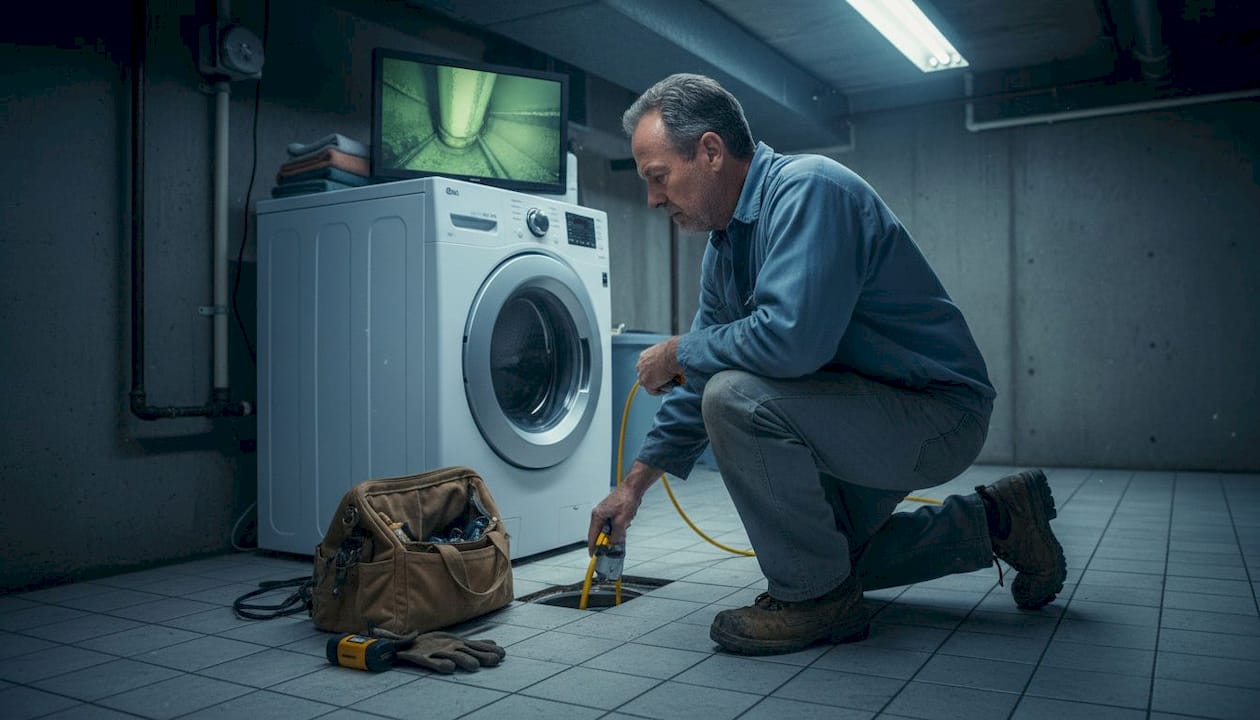
A drain camera is exactly what it sounds like: a small, waterproof camera attached to a flexible cable that gets fed into your pipes. Drain cameras are waterproof cameras on flexible cables inserted into pipes via cleanouts or drains to provide real-time video of pipe interiors, enabling precise diagnosis of issues like blockages, cracks, root intrusion, and collapses without excavation. No digging, no guessing, no unnecessary wall removal.
The process follows a clear sequence. Here’s what happens during a professional camera inspection:
- Access point identification. The plumber locates a cleanout or drain opening to insert the camera cable without disrupting your home.
- Pre-clearing for visibility. If the pipe has standing water or debris, the plumber may clear it first so the camera can actually see clearly.
- Camera deployment. The camera travels through the pipe at roughly 1 foot per second, capturing HD video the entire way.
- Defect documentation. Any issues found are logged by distance from the access point, so repairs are pinpointed precisely.
- Report generation. You receive a summary of findings and recommended next steps.
According to inspection specialists, the inspection phases include access point identification, pre-clearing for visibility, camera deployment with HD recording, defect documentation by distance, and report generation with remediation recommendations.
Compared to older methods, the difference is stark. Traditional approaches rely on feel and sound, like pushing a plumbing snake through a line and hoping you hit the clog. A camera gives you actual visual proof. You can watch the footage alongside your plumber and see the crack or root yourself.
Pro Tip: Always ask your plumber to do a light pre-clean before inserting the camera. Even a partial blockage or murky water can obscure the lens and cause real problems to be missed entirely.
“Seeing inside a pipe changes everything. A plumber who can show you the problem on video isn’t guessing. They’re diagnosing. That’s the difference between a repair that lasts and one that fails again in six months.”
Common plumbing problems detected by drain cameras
Now that you know what drain cameras do, it’s essential to see the range of problems they reveal that traditional methods can easily miss.
Camera inspections are particularly valuable because they catch problems you’d never suspect from the surface. Drain cameras detect grease and debris blockages, tree roots, cracks and collapses, corrosion, pipe offsets, bellies, and foreign objects. They’re ideal for recurring clogs, slow drains, odors, pre-purchase inspections, and situations where digging is planned.
Here are the most common issues Pittsburgh homeowners discover through camera inspections:
- Tree root intrusion. Pittsburgh’s older neighborhoods are full of mature trees. Roots seek out moisture and can push through pipe joints, causing serious blockages and structural damage over time.
- Grease and debris buildup. Kitchen drain lines accumulate grease layers that narrow the pipe opening gradually. You won’t feel it until the drain backs up completely.
- Cracked or collapsed sections. Older clay or cast iron pipes common in Pittsburgh homes can crack from ground movement, freeze-thaw cycles, or simple age.
- Pipe bellies. A section of pipe that has sagged creates a low point where waste collects, causing recurring slow drains and odors.
- Foreign objects. Items flushed accidentally or dropped into drains show up clearly on camera, saving time spent snaking blindly.
- Corrosion. Metal pipes degrade from the inside out. Camera footage shows exactly how far corrosion has progressed before it becomes a full failure.
Among common plumbing problems Pittsburgh homeowners face, misdiagnosis is one of the most expensive. Treating a symptom instead of the actual cause means the problem comes back, often worse. Visual confirmation from a camera means the repair targets the real issue, not a guess.
Camera inspections are also smart when identifying plumbing repairs before buying a home. A pre-purchase inspection can reveal decades of hidden pipe damage that the seller may not even know about, saving you from a costly surprise after closing.
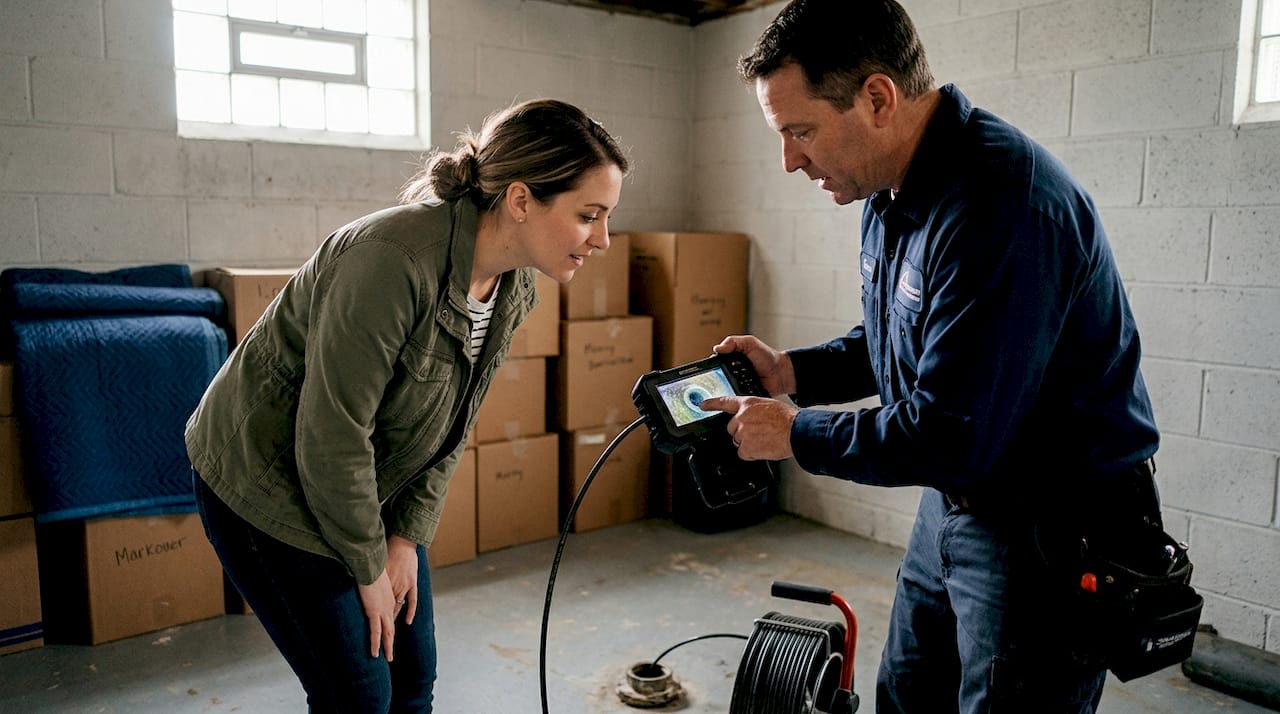
Stat callout: Drain cameras achieve 90%+ accuracy for most accessible drain issues, making them one of the most reliable diagnostic tools in residential plumbing.
Comparing drain cameras with traditional inspection methods
Understanding what drain cameras uncover naturally leads to the question: how do they actually stack up against older inspection methods?
Traditional plumbing diagnosis relies on snaking, physical probing, and in serious cases, digging up sections of pipe to inspect them visually. These methods work for simple, surface-level clogs. But they fall short when the problem is structural, deep, or recurring.
| Feature | Drain camera | Traditional snaking/digging |
|---|---|---|
| Visual confirmation | Yes, HD video | No |
| Accuracy | 90%+ for accessible issues | Variable, based on feel |
| Invasiveness | Non-invasive | Can require excavation |
| Speed | Fast, same-day results | Slower for complex issues |
| Best for | Structural, recurring, complex | Simple surface clogs |
| Cost efficiency | Higher upfront, lower repeat visits | Lower upfront, higher repeat risk |
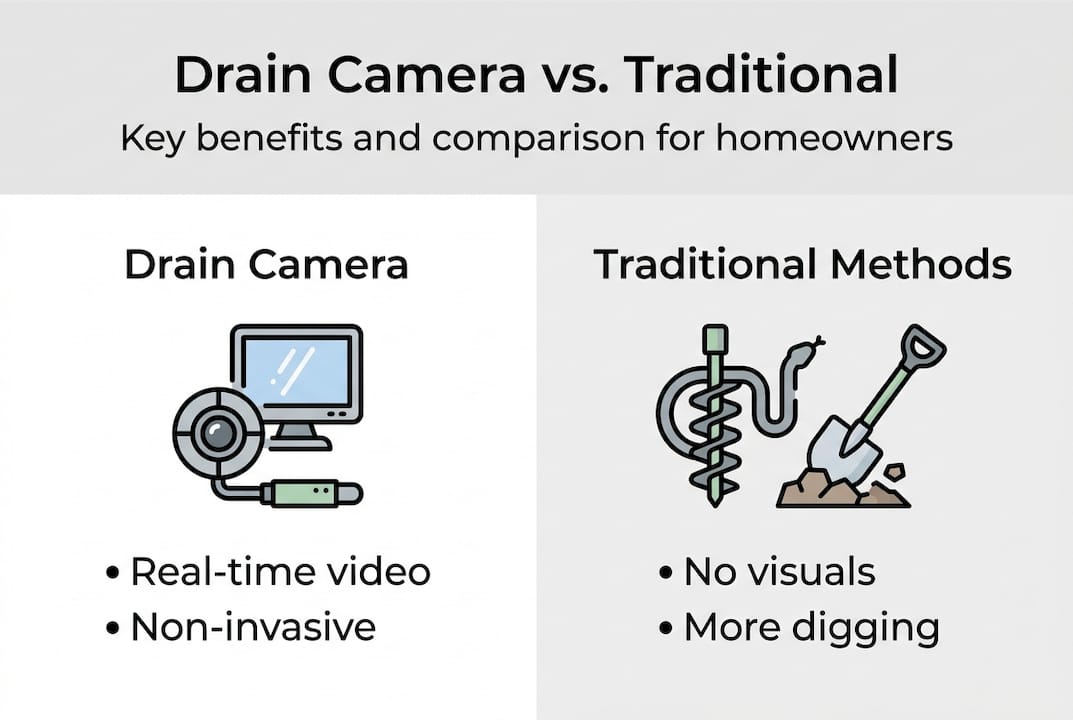
Compared to traditional methods like snaking and digging, cameras are non-invasive, more accurate through visual proof rather than guesswork, faster, and far less disruptive. Traditional methods remain better for simple surface clogs.
The key advantage is eliminating repeat callouts. Drain cleaning and emergencies are often connected: a missed structural problem today becomes a burst pipe or sewage backup tomorrow.
“Repeated snaking may clear a clog temporarily, but if there’s a belly, a root, or a crack driving that clog, you’ll be calling a plumber again in weeks. A camera finds the reason, not just the result.”
For Pittsburgh homeowners, regular drain cleaning paired with periodic camera inspections is the most effective long-term strategy. And when it comes to plumbing inspection savings, catching a small crack before it becomes a collapsed line is the difference between a minor repair and a major excavation.
- Use a drain camera when: clogs are recurring, drains are slow without obvious cause, there’s a persistent odor, or you’re buying a home.
- Use a snake when: you have a simple, one-time clog with no history of repeat issues.
Limitations and edge cases: When drain cameras may fall short
While drain cameras offer powerful advantages, it’s important to recognize their limits so you choose the right diagnostic techniques for your situation.
No tool is perfect, and drain cameras are no exception. Camera limitations include poor visibility in heavy debris, sludge, or standing water (requiring pre-jetting), inability to pass severe blockages or collapses, missing hairline cracks and micro defects, no information on external soil conditions or external leaks, and accuracy that drops in tight bends or obstructions. Operator interpretation is a key factor.
Here’s a practical breakdown of how camera effectiveness varies by pipe condition:
| Pipe condition | Camera visibility | Effectiveness |
|---|---|---|
| Clear, dry pipe | Excellent | Very high |
| Light debris or buildup | Good | High |
| Heavy grease or sludge | Poor | Low without pre-jetting |
| Standing water | Limited | Moderate |
| Severe blockage or collapse | None | Camera cannot pass |
| Hairline cracks | Difficult | May miss micro defects |
For drain cleaning to support clear inspections, hydro jetting before a camera run is often the right call. It clears the line enough for the camera to actually see the pipe walls clearly.
Another real limitation is operator skill. Two plumbers can run the same camera through the same pipe and come back with different findings if one lacks the experience to recognize subtle early-stage damage. This is why choosing a plumber with genuine diagnostic experience matters, not just someone who owns the equipment.
Pro Tip: Before your inspection, ask the plumber to pre-clean the line if there’s any history of buildup. Then review the footage with them in real time. Ask questions. A good plumber will walk you through what you’re seeing and explain what each finding means for your repair options.
Why the right diagnostic tool saves Pittsburgh homeowners thousands
Here’s a perspective that often gets overlooked: the cheapest fix is rarely the most affordable one.
Many Pittsburgh homeowners choose traditional snaking because it costs less upfront. That logic makes sense on the surface. But when that same drain backs up three more times over the next year, each visit adds up fast. The essential plumbing services that actually protect your home long-term are the ones that diagnose correctly the first time.
We’ve seen this play out repeatedly in Pittsburgh’s older neighborhoods. A homeowner deals with a recurring slow drain for two years, paying for snake visits each time. One camera inspection reveals a tree root intrusion at a pipe joint 40 feet from the access point. One targeted repair solves the problem completely. That’s the value of visual proof over guesswork.
The uncomfortable truth is that traditional methods aren’t just less accurate. They can actively delay the right diagnosis. Every visit that clears a symptom without finding the cause pushes a bigger problem further down the road. Combining modern camera technology with experienced plumbing judgment is what separates a genuine fix from a temporary patch.
Professional plumbing help for Pittsburgh homeowners
At AG Heating, Cooling & Plumbing, we’ve spent 30 years solving Pittsburgh’s toughest plumbing problems, and we know that accurate diagnosis is the foundation of every lasting repair.
When you schedule a professional plumbing repair with our team, you get more than a quick fix. You get a thorough look at what’s actually happening inside your pipes. For lines that need clearing before inspection, our hydro jetting services prepare the pipe for a clean, accurate camera run. Whether you’re dealing with a recurring clog, planning a home purchase, or just want peace of mind, our local plumbing experts are ready to help you make the right call the first time.
Frequently asked questions
How often should I get a drain camera inspection for my Pittsburgh home?
Homeowners should schedule a drain camera inspection every few years, or sooner if there are recurring clogs or slow drains, persistent odors, or before purchasing a home.
Will a drain camera inspection cause any damage to my pipes?
No. Drain cameras are non-invasive by design, traveling through pipes on a flexible cable without applying force to pipe walls or joints.
Can camera inspections detect all types of plumbing problems?
Drain cameras are 90%+ accurate for accessible issues but may miss hairline cracks, micro defects, or problems originating outside the pipe itself.
What’s better for tough clogs: a drain snake or a drain camera?
A drain snake clears simple clogs quickly, while a camera provides the visual diagnosis needed for complex or recurring problems that snaking alone cannot resolve.
Recommended
- Heating, Cooling & Plumbing Services Pittsburgh, PA
- Drain Cleaning Benefits 2026: Cut Emergencies by 3X – AG-Plumbing
- What is a plumbing snake? Clear tough clogs fast – AG-Plumbing
- Why Drain Cleaning Is Essential for Preventing Blockages – AG-Plumbing
- Drain CCTV Survey Tutorial: Identify and Resolve Blockages
- Best Guide About CCTV Drain Surveys in 2024
