
TL;DR:
- A faucet cartridge controls water flow and temperature within the faucet. Replacing a faulty cartridge is more cost-effective than replacing the entire faucet. Detect early signs like leaks and stiffness to prevent water damage and costly repairs.
A faucet cartridge is a self-contained valve inside your faucet body that controls both water flow and temperature by regulating internal channels in response to handle movements. Every time you turn on a kitchen or bathroom faucet, the cartridge is the component doing the actual work. Most homeowners never think about it until something goes wrong. Understanding what a faucet cartridge does, how it fails, and when to replace it can save you real money and prevent water damage before it starts.
What is a faucet cartridge and how does it work?
A faucet cartridge is the primary component controlling hot and cold water mixing and water volume in kitchen and bathroom faucets. Think of it as the brain inside your faucet. The handle you turn or push is just the input. The cartridge is what translates that movement into actual water output.
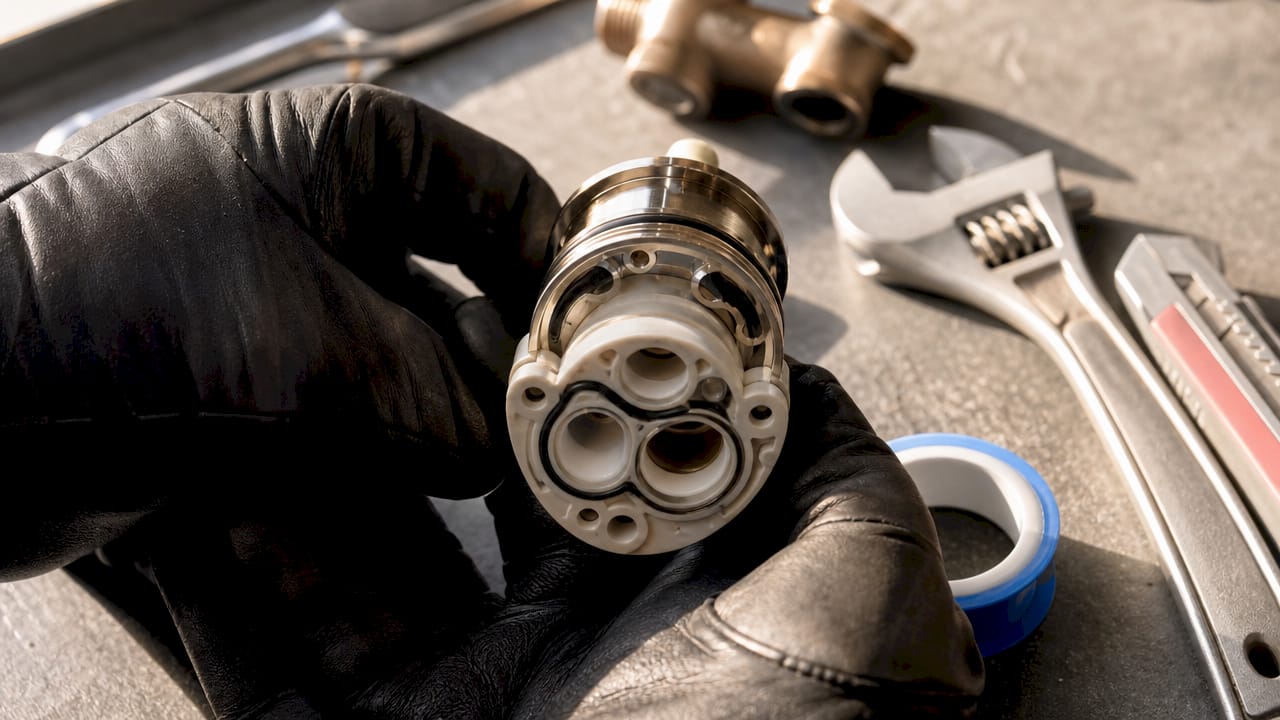
Inside the cartridge are precisely aligned channels and ports. When you move the handle, the cartridge shifts its internal position to open, close, or partially block those channels. That movement controls both how much water flows and what temperature it comes out at.
Single-handle vs. double-handle cartridges
Single-handle faucets use one cartridge that manages both volume and temperature at the same time. Moving the handle left or right adjusts the hot-to-cold ratio. Moving it up or down changes the flow rate. This design is common in modern kitchen faucets.
Double-handle faucets use two separate cartridges, one for hot and one for cold. Each cartridge controls only its side of the supply. You mix the temperature manually by adjusting both handles. This setup is still common in older bathroom faucets and some traditional kitchen designs.
How ceramic discs create a watertight seal
The most reliable cartridges use ceramic disc technology. Two flat ceramic discs sit face-to-face inside the cartridge housing. Rotating one disc against the other opens or closes the water path. Ceramic disc cartridges create tight seals that prevent leaks far better than rubber washers or ball mechanisms. The ceramic surface resists wear, mineral buildup, and corrosion over years of daily use.
Pro Tip: If your faucet handle feels smooth and precise, you likely have a ceramic disc cartridge. If it feels loose or gritty, the cartridge is probably a compression or ball type showing wear.
What are the common types of faucet cartridges?
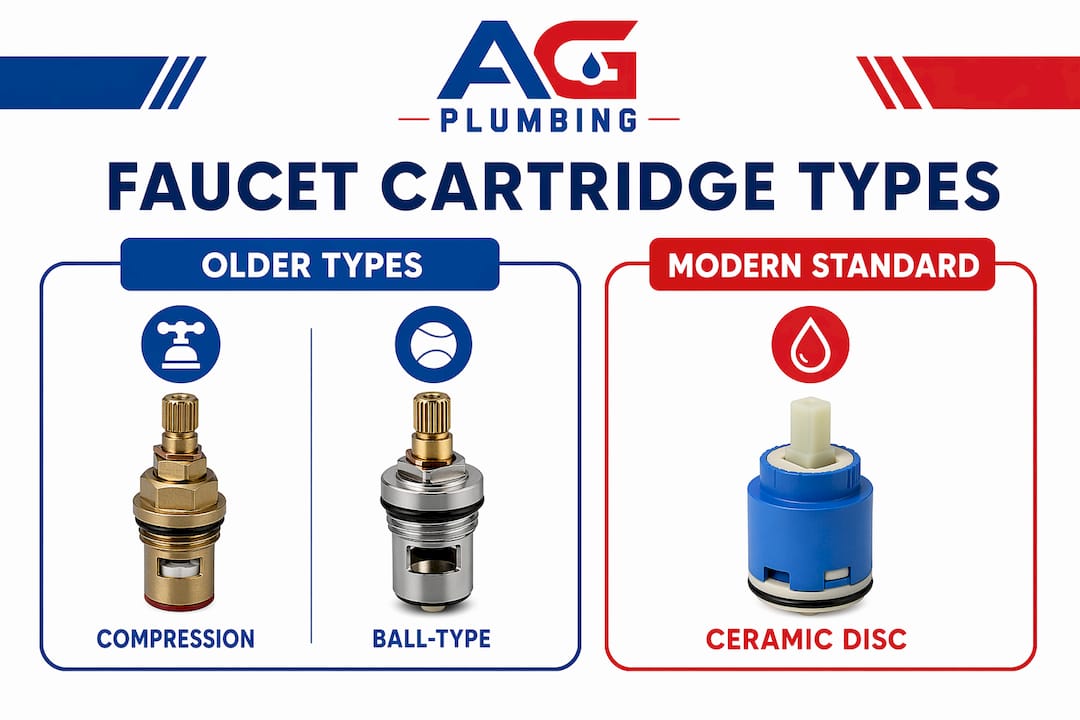
Faucet cartridges come mainly in three types: compression, ball-type, and ceramic disc. Each has a different design, price point, and expected lifespan. Knowing the difference helps you make a smarter replacement decision.
| Type | Cost Range | Lifespan | Best For |
|---|---|---|---|
| Compression | $5–$15 | 1–3 years | Older faucets, budget repairs |
| Ball-type | $15–$40 | Moderate, wears faster | Single-handle faucets, mid-range use |
| Ceramic disc | Higher upfront | Rated for 500,000 cycles | Modern faucets, long-term value |
Compression cartridges are the oldest design. They use a rubber washer that presses against a seat to stop water flow. They are cheap to replace but wear out quickly. Expect to replace them every one to three years with regular use.
Ball-type cartridges use a rotating ball with holes and slots to control flow and temperature. They have more moving parts than ceramic designs, which means more potential failure points. Springs, O-rings, and seats inside the ball assembly all degrade over time. They are common in single-handle faucets made before ceramic disc technology became standard.
Ceramic disc cartridges are the modern standard. They are rated for 500,000 cycles, which translates to decades of daily use for most households. The upfront cost is higher, but the long-term value is clear. Premium ceramic cartridges also deliver smooth handle operation and stable temperature control, outperforming cheaper alternatives that degrade and cause leaks.
Pro Tip: When buying a replacement cartridge, ceramic disc is worth the extra cost if your faucet supports it. The smoother feel and longer lifespan make it the better investment every time.
The quality of the internal cartridge dictates faucet smoothness and longevity more than the faucet’s external design. A beautiful faucet with a cheap compression cartridge will drip and stiffen within a few years. A basic faucet with a quality ceramic disc cartridge will perform reliably for much longer.
When and how should you replace a faucet cartridge?
Replacing a faulty faucet cartridge is more affordable than replacing the entire faucet. Cartridges range from $5 to $40 depending on type, while full faucet replacement costs significantly more in parts and labor. Knowing when to replace the cartridge saves you from unnecessary spending.
Signs your cartridge needs replacement
Failing faucet cartridges often show symptoms before visible damage appears. Watch for these warning signs:
- A dripping faucet that continues even when the handle is fully closed
- A handle that feels stiff, gritty, or hard to turn
- Water temperature that fluctuates unexpectedly
- Reduced water pressure from one or both handles
- Leaking around the base of the handle or spout
Mineral buildup and degraded lubricants inside cartridges cause stiffness. Replacing the cartridge resolves handle stiffness without replacing the entire fixture. If you notice any of these signs, check the cartridge before assuming the whole faucet needs to go.
Step-by-step replacement overview
Follow these steps for a basic faucet cartridge replacement:
- Turn off the water supply valves under the sink.
- Remove the faucet handle by unscrewing the set screw, usually hidden under a decorative cap.
- Pull out the old cartridge. Note its orientation before removing it.
- Bring the old cartridge to a hardware store to match it exactly. Cartridges are not universal, even within the same brand. Visual matching is more reliable than brand name alone.
- Flush the supply lines into a bucket before installing the new cartridge. This removes debris that can score ceramic discs and cause immediate failure.
- Insert the new cartridge in the correct orientation.
- Reassemble the handle and turn the water supply back on slowly.
- Test for leaks and check that hot and cold are correctly oriented.
For a more detailed walkthrough, Ag-plumbing has a step-by-step faucet repair guide built specifically for Pittsburgh homeowners.
Tools and materials you will need:
- Adjustable wrench or basin wrench
- Flathead and Phillips screwdrivers
- Needle-nose pliers
- Replacement cartridge (matched to your faucet model)
- Plumber’s grease
- Bucket and towels
Call a professional plumber when the cartridge replacement does not stop the leak, when you find corrosion inside the faucet body, or when the supply valves under the sink will not close fully. Those situations go beyond a cartridge swap.
How to maintain your faucet cartridge to extend its lifespan
Homeowners often overlook cartridge care despite it being the key factor preventing leaks and faulty operation. A few simple habits extend cartridge life significantly and reduce the frequency of repairs.
Routine maintenance habits that protect your cartridge:
- Clean aerators and faucet heads every few months to reduce mineral pressure on the cartridge.
- Avoid forcing a stiff handle. Forcing it accelerates wear on the internal seals and discs.
- Apply plumber’s grease to the cartridge body during any repair or inspection.
- Check under the sink periodically for slow drips that signal early cartridge wear.
- Flush supply lines any time you do plumbing work nearby, not just during cartridge replacement.
Pro Tip: If your water is hard, meaning it has high mineral content, your cartridges will wear faster. Consider a whole-house water softener or at minimum a faucet filter to reduce mineral deposits inside the valve.
Flushing supply lines before installing a new cartridge is one of the most overlooked steps in DIY faucet repair. Even small debris can score ceramic discs and cause premature failure. This single step protects your investment in a quality cartridge. You can find more general plumbing maintenance advice in Ag-plumbing’s pipe maintenance tips for homeowners.
Stiff or gritty handle movement is the earliest warning sign most homeowners ignore. By the time a faucet drips visibly, the cartridge has usually been degrading for weeks or months. Catching stiffness early and replacing the cartridge then costs far less than waiting for a full leak to develop. If you want to understand how leaks progress before they become visible, a homeowner’s leak detection guide covers the detection process clearly.
Key Takeaways
A faucet cartridge is the single component that controls water flow and temperature, and replacing it is almost always cheaper and faster than replacing the entire faucet.
| Point | Details |
|---|---|
| Cartridge definition | A self-contained valve inside the faucet body that controls flow and temperature. |
| Three main types | Compression ($5–$15), ball-type ($15–$40), and ceramic disc (500,000-cycle rating). |
| Replacement signs | Dripping, stiff handles, and temperature fluctuation all signal cartridge failure. |
| Flush before installing | Always flush supply lines before inserting a new cartridge to protect ceramic discs. |
| Match the old cartridge | Cartridges are not universal. Bring the old one to the store for a visual match. |
The cartridge is the faucet, not the finish
Most homeowners spend time picking faucets based on finish, style, and brand name. That is understandable. What you see every day matters. But after 30 years of watching faucets fail and get replaced, I can tell you the internal cartridge determines almost everything about how a faucet performs over time.
I have seen expensive designer faucets start dripping within two years because they shipped with low-grade compression cartridges. I have also seen basic faucets run perfectly for a decade because they used quality ceramic disc valves. The finish does not drip. The cartridge does.
The most common mistake I see homeowners make is replacing the whole faucet when the cartridge is the only thing wrong. A $15 to $40 part fixes the problem in most cases. The second most common mistake is ignoring a stiff handle. That stiffness is the cartridge telling you it needs attention. Ignore it long enough and you get a leak, then water damage, then a much bigger repair bill.
My honest advice: learn to recognize the early signs, keep a spare cartridge on hand if you have an older faucet, and do not wait for a drip to take action. The cartridge is the unsung component that makes your faucet work. Treat it that way.
— Maayan
Faucet cartridge repair in Pittsburgh, PA
A worn cartridge is one of the most common plumbing repair issues homeowners face, and it is also one of the most fixable. Replacing a cartridge costs a fraction of what a full faucet replacement runs, and the repair typically takes under an hour.
Ag-plumbing has served Pittsburgh, PA and the surrounding areas for 30 years. When a cartridge swap does not stop the leak, or when the job involves corroded valves and supply lines that need professional attention, the Ag-plumbing team handles it correctly the first time. Contact Ag-plumbing’s plumbing repair team for faucet cartridge replacement, leak diagnosis, and any faucet repair that goes beyond a basic DIY fix.
FAQ
What is a faucet cartridge in simple terms?
A faucet cartridge is a small valve inside your faucet that controls how much water flows and what temperature it comes out at. It responds to handle movements to mix hot and cold water.
How long does a faucet cartridge last?
Lifespan depends on the type. Compression cartridges last 1–3 years, ball-type cartridges wear out faster with heavy use, and ceramic disc cartridges are rated for 500,000 cycles, which equals decades of normal household use.
What are the signs of a bad faucet cartridge?
The most common signs are a dripping faucet that will not stop, a handle that feels stiff or gritty to turn, and water temperature that shifts unexpectedly during use.
Can I replace a faucet cartridge myself?
Yes, most cartridge replacements are a straightforward DIY repair. You need basic tools, the correct replacement cartridge matched to your faucet model, and about 30–60 minutes. Always shut off the water supply first and flush the lines before installing the new cartridge.
Is it better to replace the cartridge or the whole faucet?
Replacing the cartridge is almost always the better first step. Cartridges cost $5–$40, while full faucet replacement costs significantly more in parts and labor. Replace the faucet only if the body itself is corroded or structurally damaged.
Recommended
- Install plumbing fixtures: Pittsburgh homeowner guide – AG-Plumbing
- What is a plumbing trap? Homeowner’s guide to clean drains – AG-Plumbing
- Smart Plumbing Tips Every Pittsburgh Homeowner Needs – AG-Plumbing
- Sanitary drainage explained: A homeowner’s guide to reliability – AG-Plumbing
