
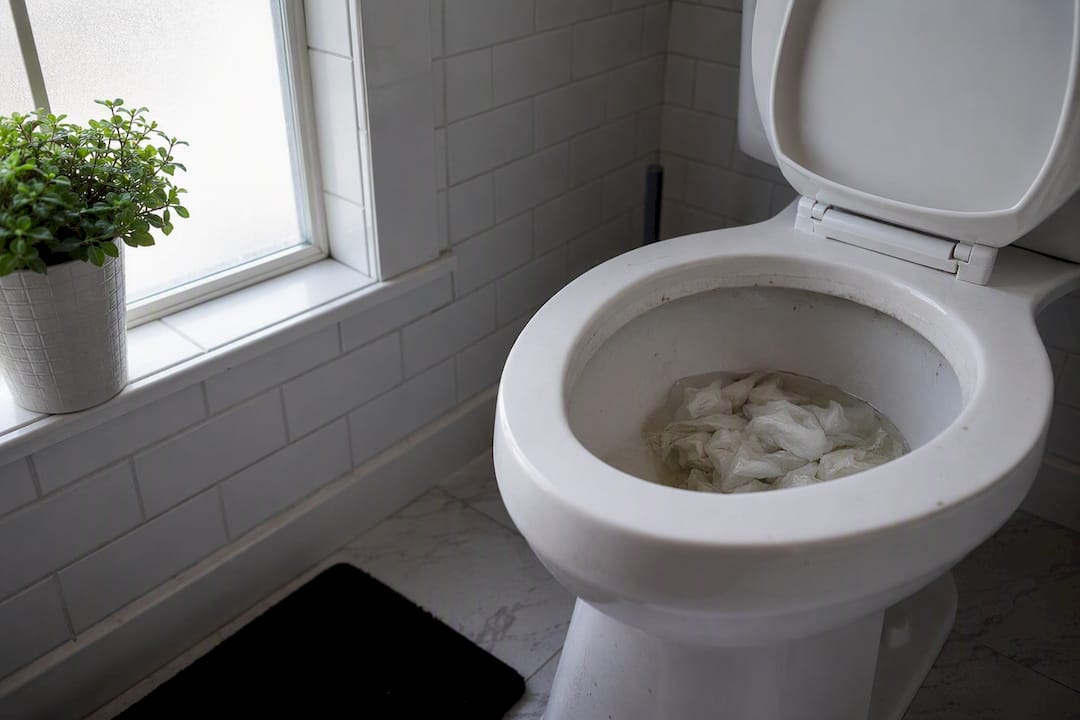
Recurring clogs almost always come from one of two places: something blocking the toilet’s own trap (paper, wipes, a weak flush) or a downstream problem in the branch line, main sewer, or vent stack. If the bowl is filling near the rim, stop flushing immediately and shut off the water supply. If it looks like a simple local blockage, a flange plunger is your first move. Success looks like the bowl draining fully or a quick test telling you whether the problem lives in the toilet or further down the line.
TL;DR:
- Most recurring clogs are caused by flushable wipes, paper towels, or mineral scale buildup in the trapway, especially on older, low-flow toilets.
- A simple two-fixture test can quickly determine if the problem is in the toilet trap or downstream in the sewer line or vent stack, guiding proper diagnosis.
- Hard water deposits can narrow the trapway over time, making clogs more frequent even with normal household habits.
- DIY fixes should start with a flange plunger, then move to an auger and dish soap methods, avoiding chemical cleaners that can damage the toilet seal.
- Persistent or widespread backups require professional inspection, such as camera scans, to identify root intrusion, pipe damage, or vent blockages.
Table of Contents
- Why Does My Toilet Clog So Often?
- How Do You Safely Unclog a Toilet Yourself?
- Is the Clog in the Toilet or Somewhere Deeper?
- When Should You Call a Plumber Instead of DIY?
- How Can You Stop Toilets From Clogging Again?
- Who’s Behind This Guide?
- What This Guide Gets Right (and Where Most Advice Falls Short)
- Stop Guessing and Get a Real Diagnosis
- Sources
- FAQ
Why Does My Toilet Clog So Often?
Most repeat offenders fall into a short list of usual suspects, and figuring out which one applies changes everything about how you fix it.
Wipes and paper towels are the biggest hidden cause. Products labeled “flushable” are engineered to hold together in water rather than break apart, which is exactly what you don’t want in a trap. Consumer Reports testing found these wipes frequently stay intact and mesh with other debris into a solid mass. Paper towels are worse. They’re built to be water-resistant for cleaning up spills, so they behave more like a sponge than tissue once they hit the trapway.
There’s a difference between occasionally needing a second flush and always needing one. Occasional double-flushing usually means you overloaded the bowl on a heavy day. Constant double-flushing points to the toilet itself, especially with low-flow models. Older low-flow toilets built to the first-generation 1.6-gallon standard often have narrower trapways and weaker siphon action than newer designs, so they can’t always move solid waste in a single pass.
Watch for these signals that the problem isn’t the toilet at all:
- Multiple fixtures backing up when you flush (tub, shower drain, or another toilet)
- Gurgling sounds from drains after a flush
- A persistent sewage smell in the bathroom or basement
- Water rising unusually high before draining slowly
That combination almost always signals a branch line, main sewer, or vent stack problem rather than a trap clog.
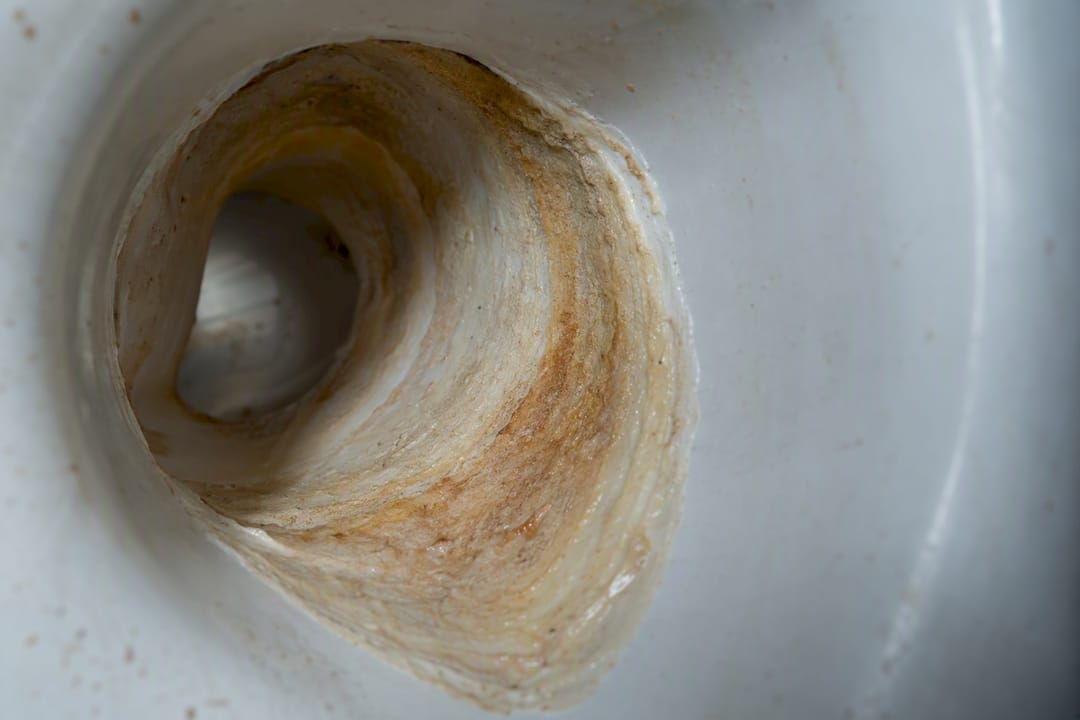
Hard water plays a quieter role. Mineral scale builds up inside the trapway over months and years, and the USGS notes that hardness minerals deposit steadily in plumbing wherever water sits or flows slowly. A trapway that’s lost even a quarter-inch of clearance to scale needs a lot less debris to back up completely, which is why houses on hard well water tend to clog more often even with normal habits.
How Do You Safely Unclog a Toilet Yourself?
Work through these tools in order. Skipping straight to the most aggressive option is how people crack porcelain or push a clog somewhere harder to reach.
- Flange plunger first, every time. A flange plunger has an extended rubber flap that seats inside the trap opening and creates real suction, unlike a flat sink plunger, which The Spruce points out is largely useless on toilets. Push down slowly to force air out, then plunge with firm, steady strokes for 15 to 20 seconds. If the water hasn’t started draining after six or seven solid attempts, stop and move to the next tool.
- Closet auger if the plunger fails. Feed the auger’s flexible cable into the bowl and crank the handle clockwise while pushing gently. You’re aiming to snag or break up whatever’s stuck without scratching the porcelain, which is why the tool’s cable is coated. Expect some resistance; that’s normal.
- Dish soap and warm water for soft clogs. A few squirts of dish soap followed by a bowl of warm water can lubricate the trap and help softer, greasy, or organic clogs slide through. Southern Living confirms this works on minor, soft obstructions but not on solid objects or main-line blockages. Let it sit 15 to 20 minutes before testing a flush.
Pro Tip: Use hot tap water, never boiling. Boiling water can crack porcelain or damage the wax ring seal, while water around 120°F does the same lubricating job safely.
Skip chemical drain cleaners entirely for toilets. They’re formulated for sinks and showers, and the fumes plus the sitting liquid can damage the bowl’s seal without ever reaching the actual clog. If you’ve tried all three steps and nothing moves, that’s your signal to call a plumber rather than keep escalating on your own. Our step-by-step DIY guide walks through each of these tools in more detail if you want visuals before you start.
Is the Clog in the Toilet or Somewhere Deeper?
The fastest diagnostic costs you nothing: it’s called the two-fixture test. Flush the toilet and immediately watch your tub, shower drain, or a nearby sink. If water rises or gurgles in that second fixture, the blockage is downstream of the toilet, in the branch line or main sewer, not in the trap itself.
A few other signs point the same direction:
- Gurgling from drains throughout the house, especially after laundry or dishwasher cycles
- Slow drainage in fixtures that have nothing to do with the toilet
- A sewage odor that lingers regardless of cleaning
- More than one toilet in the house acting up at the same time
Recurring clogs that resist an auger and involve multiple fixtures are frequently caused by tree root intrusion, a partially collapsed line, or heavy buildup that a plunger and auger simply can’t reach. Gurgling paired with slow drains across the house often traces back to a blocked vent stack rather than the drain line itself, since a blocked vent creates a vacuum during flushes that weakens the siphon action every fixture depends on.
If you suspect a vent issue, don’t climb onto the roof to check it yourself unless you’re experienced with roof access and it’s safe to do so. Calling a professional is the safer call, and if any of the signs above show up, a camera inspection is usually the next right step. It’s the only reliable way to see exactly what’s happening inside the line without guessing.
When Should You Call a Plumber Instead of DIY?
A few red flags mean it’s time to stop troubleshooting and pick up the phone:
- Multiple fixtures back up together, not just the toilet
- A sewage smell that doesn’t go away after clearing the visible clog
- The clog returns within days of clearing it, more than once
- The auger meets hard resistance that doesn’t feel like typical debris (possible pipe damage or root intrusion)
Once a plumber is on site, expect one of a few standard approaches depending on what they find. A cable auger handles most stubborn trap and branch-line clogs. A camera inspection shows the interior of the pipe to confirm root intrusion, cracks, or bellied sections before anyone starts digging. Hydro-jetting blasts built-up scale and grease off pipe walls with high-pressure water, and it’s often the fix for recurring buildup that keeps coming back. Severe structural problems, like a collapsed sewer lateral, sometimes require excavation and pipe replacement.
Basic service calls and auger work tend to be the least expensive option, camera inspections cost more because of the specialized equipment, and hydro-jetting or excavation sit at the top of the range given the labor and time involved. Ask your plumber for a written estimate before work begins, whether they recommend a camera inspection first, and what the warranty covers if the clog returns. If your research points toward sewer line trouble, this rundown of sewer line warning signs is worth reading before that call.
How Can You Stop Toilets From Clogging Again?
Prevention here isn’t complicated, but it does require consistency.
- Enforce the rule of the bowl. Only human waste and toilet paper go in. Put a small lidded trash bin next to the toilet for wipes, cotton products, and anything else, and the temptation to flush them mostly disappears.
- Descale if you’re on hard water. A monthly vinegar soak, left in the bowl overnight, helps dissolve early mineral buildup before it narrows the trapway. Homes on well water or municipal hard water benefit most from this habit.
- Run a light auger pass twice a year. Even without a visible clog, a quick pass catches early scale or debris before it becomes a Saturday-afternoon problem.
- Check roof vent caps after major storms. Leaves, nests, and debris can block a vent stack, and a five-minute visual check (from the ground, with binoculars, if the roof isn’t safely accessible) catches it early.
- Consider a toilet upgrade if clogs are chronic. Newer toilets with wider trapways or pressure-assisted flushing systems solve a mechanical problem no amount of good behavior can fix.
Pro Tip: Keep a flange plunger and closet auger under the sink at all times, and know the dish soap and warm water method by heart. Those three tools handle the overwhelming majority of clogs before they ever become an emergency call.
For homes that clog often despite good habits, professional drain cleaning clears buildup that routine maintenance can’t reach on its own.
Who’s Behind This Guide?
AG Heating, Cooling & Plumbing has spent 30 years fixing exactly these problems for homeowners across Pittsburgh, PA and the surrounding communities. That kind of field time changes how you diagnose a clog. It’s rarely just one cause, and the fastest path to a real fix is ruling things out in the right order.
Beyond service calls, AG Heating, Cooling & Plumbing publishes detailed guides for homeowners who want to understand their systems, including how to fix a running toilet and a full toilet installation walkthrough for 2026.
When you call in a professional diagnosis, here’s what that actually looks like:
- A camera inspection to see the exact location and cause of a downstream blockage
- Hydro-jetting when scale or grease buildup is the recurring culprit
- Targeted repairs, from a section of pipe to a full sewer lateral, based on what the camera shows
- A clear, written estimate before any work begins
If your symptoms point toward a main-line or vent issue, that’s exactly the kind of diagnosis worth requesting rather than guessing at with another auger pass.
What This Guide Gets Right (and Where Most Advice Falls Short)
Most articles on this topic treat every clog the same way: try a plunger, try an auger, call a plumber if that fails. That advice isn’t wrong, but it skips the one question that actually matters first, which is whether the problem is even in the toilet at all. A trap clog and a failing vent stack can look identical from where you’re standing over the bowl, and treating a vent problem like a trap problem means you’ll plunge the same toilet a dozen times over a year and never solve anything.
The two-fixture test deserves far more attention than it usually gets. It costs nothing, takes thirty seconds, and tells you immediately whether you’re dealing with a local nuisance or a systemic issue that no amount of plunging will fix. I’d argue that test, not the plunger, is the first tool every homeowner should reach for.
The other overlooked piece is the vent stack. It gets blamed the least and causes more recurring, confusing clogs than most people realize. If your toilet clogs and something gurgles somewhere else in the house, look up before you look down.
— Maayan
Stop Guessing and Get a Real Diagnosis
If you’ve worked through the plunger, the auger, and the soap trick and the clog keeps coming back, you’re past the point where another home remedy helps. Ag-plumbing has spent 30 years diagnosing exactly this pattern for homeowners across Pittsburgh, PA and the surrounding area, and the advantage over trial-and-error DIY is simple: a camera inspection tells you the actual cause in one visit instead of another weekend of guessing.
Whether it’s a worn trapway, a blocked vent, or root intrusion in the main line, our team runs the diagnosis first and quotes the fix before any work starts. Recurring clogs are also one of the clearest early signs of a bigger sewer line issue, so if the two-fixture test pointed downstream, it’s worth having a professional look before it turns into a bigger repair. Schedule a plumbing service visit and get a clear answer instead of another round of plunging.
Sources
- Are flushable wipes really flushable? — Consumer Reports
- Hardness of water — USGS
- Can dish soap really unclog a drain? — Southern Living
- Why Your Toilet Keeps Clogging: 7 Causes and the Fixes That Work — Build-Construct
- 7 reasons your toilet keeps clogging — The Spruce
- Does pouring dish soap into a clogged drain work? — Snopes
FAQ
Why does my toilet get blocked so easily?
Older or low-flow toilets often have narrower trapways and weaker siphon action, which means normal paper use or a slightly heavier load can trigger a clog that a newer toilet would handle without issue.
Can Dawn dish soap unclog a toilet?
Dish soap and warm water can loosen soft, greasy, or organic clogs by lubricating the trapway, but it won’t clear solid objects or main-line blockages, and boiling water should never be used with it.
Why does my toilet keep acting like it’s clogged?
If flushes feel weak or slow even after clearing a visible clog, mineral scale buildup or a partially blocked vent stack is often the cause, not a new obstruction each time.
Why does my toilet keep clogging after I use it?
This usually points to either too much toilet paper going down in one flush or a weak-flush toilet that can’t fully clear solid waste in a single cycle; if it happens with every use, a professional inspection can confirm whether the toilet itself needs replacing.
Recommended
- How to Unclog Your Toilet: Simple DIY Solutions That Work – AG-Plumbing
- How to Fix a Running Toilet: a DIY Guide – AG-Plumbing
- Common Plumbing Repair Issues and How to Fix Them – AG-Plumbing
- Drain Clog Prevention Tips for Pittsburgh Homeowners – AG-Plumbing
