
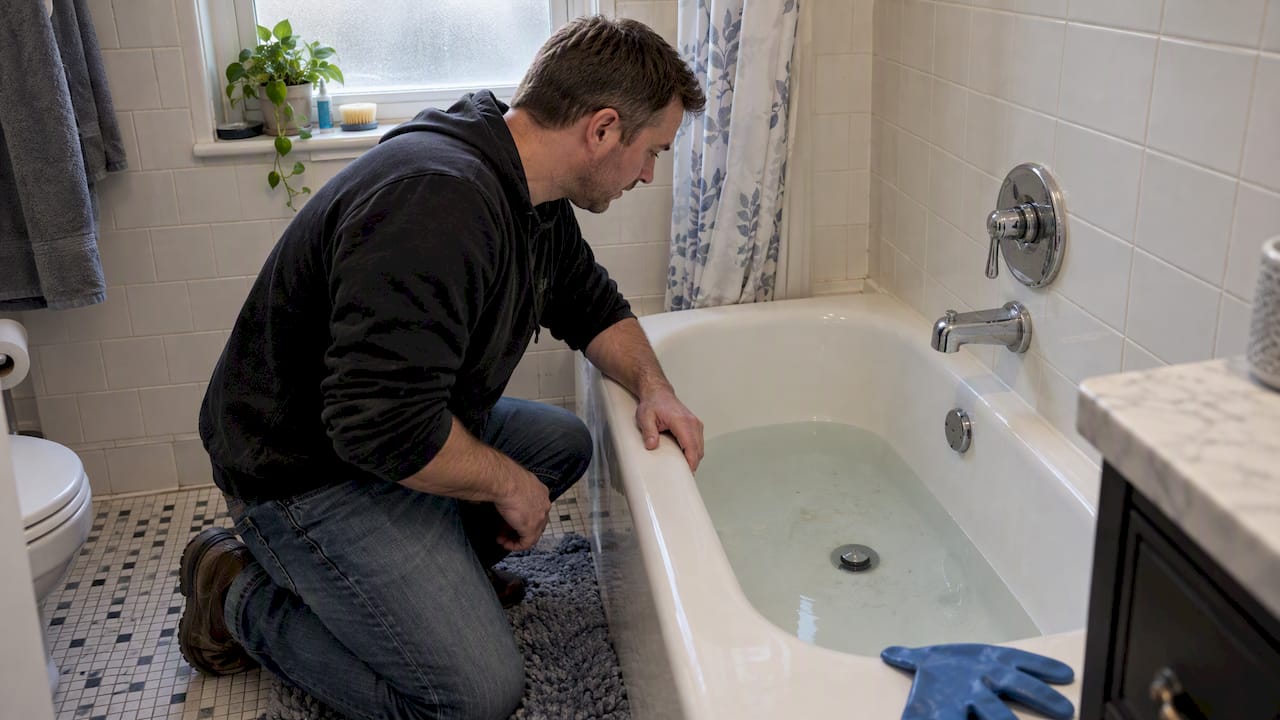
Start by removing the drain stopper and pulling out any visible hair or soap scum, then flush the drain with very hot water. If the tub still drains slowly, move on to a plunger or a hand auger before reaching for a chemical cleaner. Corrosive drain openers carry real safety risks and often make a later plumber’s job harder, so save them for last, if at all.
TL;DR:
- Manual removal of hair and debris, combined with a hot-water flush, solves most slow-drain cases caused by surface clogs.
- Chemical drain cleaners carry safety risks and are less effective than mechanical methods like plunging or snaking for persistent clogs.
- Multiple slow drains, sewer odors, or recurring backups indicate deeper system issues requiring professional camera inspection or hydro-jetting.
- Using a mesh hair catcher and monthly hot-water flushes can prevent buildup and keep drains flowing efficiently.
- Water pressure does not affect drainage speed; slow drains usually result from pipe buildup, corrosion, or vent problems.
Table of Contents
- Why is your bathtub draining slowly?
- Try these DIY steps in order
- Choosing the right tool for each stage of the clog
- When a slow drain needs a plumber, not a plunger
- Prevent the next slow drain before it starts
- What three decades of drain calls teach you about slow tubs
- Does low water pressure affect how fast a tub drains?
- The one DIY mistake that costs homeowners the most
- When it’s time to bring in AG Plumbing
- Sources
- FAQ
Why is your bathtub draining slowly?
Most slow bathtub drains trace back to a dense plug of hair and soap scum sitting just below the drain cover, which is why manual removal paired with a hot-water flush clears the majority of cases. A clog confined to one drain almost always points to something local: hair, soap film, or a small object lodged near the stopper. When the problem shows up in more than one fixture at once, the cause usually sits deeper in the system.
A few quick checks tell you which category you’re dealing with:
- Run water in a nearby sink; if it also drains slowly, the issue may be beyond the tub itself.
- Pull the stopper and look for a visible hair mass or discoloration right at the opening.
- Listen for gurgling or notice any sewage-like odor, both signs of a vent or sewer problem.
- Check whether the slowdown appeared gradually (buildup) or suddenly (an object or a plumbing event).
Corrosion inside older metal pipes and mineral scale from hard water can narrow the pipe over months, producing the same slow-drain symptom without an obvious clog.
Try these DIY steps in order
Work through these steps from least to most invasive, stopping as soon as the water starts draining at normal speed.
- Remove the stopper or drain cover. Most pop-up or lift-and-turn stoppers unscrew or pull free by hand; push-pull styles may need a flathead screwdriver at the base.
- Pull out hair and debris by hand. Wear gloves and use a barbed plastic zip tool or needle-nose pliers to draw out the hair clump sitting just below the opening; manual removal is often more effective than chemicals for this type of clog.
- Flush with very hot water. Pour it slowly and steadily to soften soap scum, but ease off if your home has older plastic piping that could warp under near-boiling water.
- Try baking soda and vinegar as a light follow-up. The fizzing reaction helps with light residue but rarely builds enough force to clear a compacted clog, so treat it as routine upkeep rather than a fix.
- Plunge the drain. Seal the overflow plate with a wet rag, cover the drain fully with a flat-bottomed tub plunger, and push down firmly before pulling up fast to create suction.
- Snake it with a hand auger. Feed the cable in slowly, turn the handle when you feel resistance, and retrieve what it catches rather than forcing it deeper.
Pro Tip: Do the hot-water flush right after manual removal, while the pipe is still warm. It breaks up residue the hair extraction loosened but didn’t carry out.
Choosing the right tool for each stage of the clog
The right tool depends on how deep the obstruction sits and how firmly it’s packed.
- A zip tool (barbed plastic strip) is built for hair sitting within the first few inches of the drain opening and needs only a gentle twist-and-pull motion.
- A flat-bottom tub plunger seals better against a flat tub floor than a cone-style sink plunger, and sealing the overflow with a wet rag keeps suction from escaping.
- A hand auger, sized to the drain’s diameter, reaches clogs in the trap or branch line that a plunger can’t move. A plumbing snake works by catching debris on a coiled tip rather than pushing it through.
- A wet/dry vacuum set to suction, with the hose sealed tightly against the drain opening, can sometimes pull a clog free when plunging only pushes air around it.
- Motorized drain machines and hydro-jetting are professional-grade tools that clear root intrusion and heavy scale; they require training to avoid damaging pipe walls, which is why they stay out of the DIY toolkit.
When a slow drain needs a plumber, not a plunger
Some signs mean it’s time to stop troubleshooting and call for help.
- More than one drain in the house is slow at the same time, which often points to a blocked vent or sewer line rather than the tub itself.
- Water keeps backing up after repeated plunging or snaking attempts.
- You notice a sewage smell, gurgling from other fixtures, or standing water that won’t recede.
- You’ve already used a chemical drain cleaner and the clog remains; tell the plumber before they touch the pipe, since residual corrosive chemicals pose a burn risk during service.
- You suspect pipe corrosion, a sagging drain line, or physical damage rather than a simple blockage.
A plumber typically starts with a camera inspection to see exactly what’s blocking the line, then chooses between powered snaking, hydro-jetting, or a repair depending on what the camera shows. For background on what prompts that escalation, see signs your drains need professional cleaning.
Prevent the next slow drain before it starts
A few small habits keep hair and soap scum from rebuilding.
- Drop a mesh hair catcher over the drain and clean it out weekly.
- Run a hot-water flush once a month even when the tub seems fine.
- Avoid letting bar soap scraps, bath oils, or hair conditioner residue wash straight down the drain.
- In older homes, or if clogs keep coming back, schedule a periodic professional inspection rather than waiting for a full blockage.
Pro Tip: Keep the zip tool under the sink. A thirty-second pull once a month stops most hair clogs before they ever slow the water down.
A simple recurring clog checklist can help you track which habits actually reduce the problem in your own bathroom.
What three decades of drain calls teach you about slow tubs
Most slow-drain calls we see share the same pattern: a DIY attempt that moved the clog instead of removing it, often after a chemical cleaner was poured in first. That residue changes how a technician approaches the job, since corrosive cleaners require extra protective gear and sometimes a neutralizing flush before any tool goes into the pipe. When snaking alone doesn’t restore flow, a camera inspection usually explains why, revealing scale, a sagging section of pipe, or a root intrusion that no amount of plunging would have fixed.
If you’ve used a drain cleaner and still have standing water, say so before a plumber starts work. That one disclosure changes the safety steps on their end.
Tell your plumber about any chemical cleaner used, every time. It’s a small sentence that prevents a real injury.
Does low water pressure affect how fast a tub drains?
Water pressure governs how fast water enters the tub, not how fast it leaves. A slow fill from low household pressure or a municipal supply issue can make a bath feel slower overall, but it has no bearing on drainage speed, which depends entirely on the pipe’s diameter, slope, and how clear it is downstream of the trap.
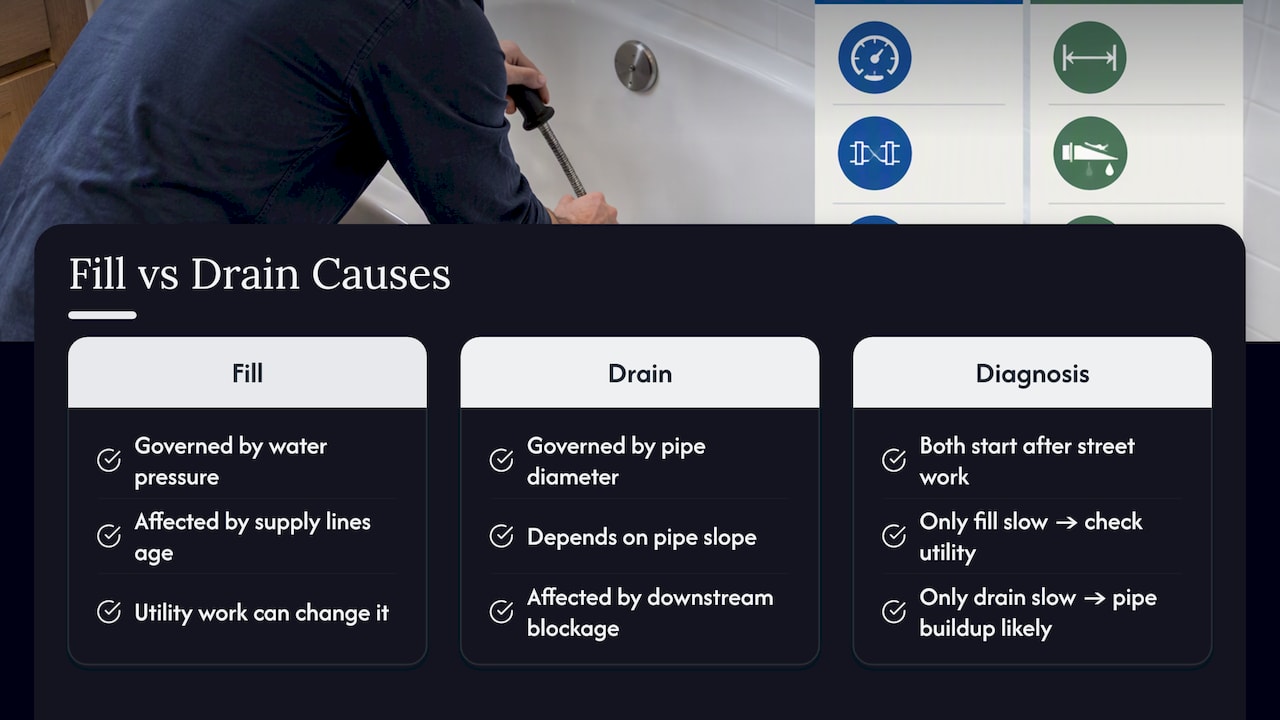
That said, pressure problems and drainage problems sometimes show up together in the same older home, which is why they get confused. A house with corroded galvanized supply lines often has similarly aged drain pipes, so a homeowner dealing with weak shower pressure may also be fighting a slow tub drain, without one causing the other. If your water utility has issued a notice about pressure changes or main work in your area, that’s worth ruling out as a separate issue rather than assuming it explains a slow drain.
The more useful question to ask yourself is whether the slow fill and the slow drain started at the same time or separately. If they appeared together after work on the street, call your water provider. If the drain alone has been getting slower over weeks, that points back to buildup inside the pipe, the far more common explanation.
The one DIY mistake that costs homeowners the most
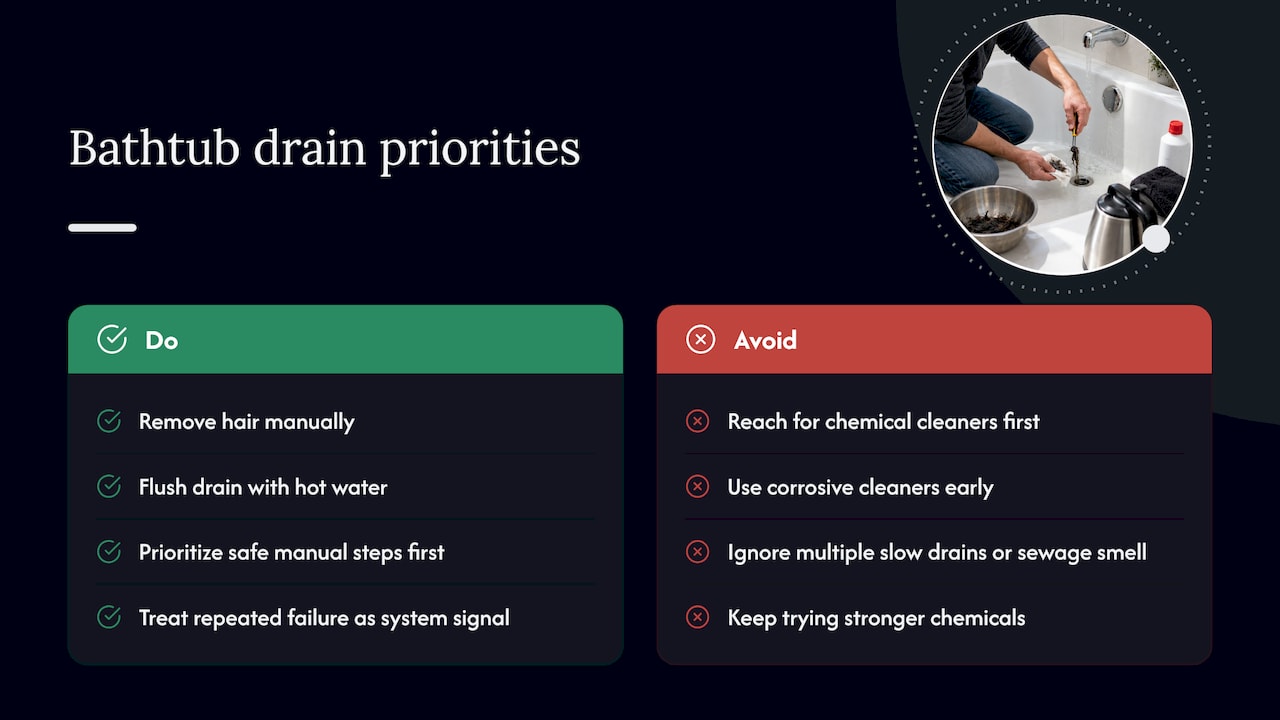
The biggest mistake isn’t skipping steps, it’s reaching for a chemical cleaner too early because it feels like the fast option. In practice, manual hair removal and a hot-water flush solve more slow drains than any bottle on the shelf, and they carry none of the burn or inhalation risk that corrosive cleaners do. Conventional advice treats chemical cleaners as step one; the evidence points the other way, with mechanical removal working better and more safely on the most common cause of tub clogs.
If there’s a second place conventional advice falls short, it’s underselling when to stop DIY. A single slow tub is a weekend project. Multiple slow drains, gurgling, or a smell of sewage are system signals, and no amount of plunging fixes a blocked vent or a sagging line. Prioritize the safe, manual steps first, and treat repeated failure as information rather than a reason to try a stronger chemical.
— Maayan
When it’s time to bring in AG Plumbing
Persistent clogs, repeated backups, or a slow drain that keeps returning after every DIY fix usually mean the problem sits deeper than a plunger can reach. A local plumbing company handles drain cleaning, camera inspection, and hydro jetting for homes and businesses around Pittsburgh, PA, backed by years of experience and licensed, certified staff.

- Drain cleaning service: clears hair, scale, and soap buildup that DIY tools can’t fully remove.
- Hydro jetting: blasts out grease, roots, and heavy scale in older or recurring-clog pipes.
- Camera inspection: pinpoints corrosion, sagging pipe, or blockages before any repair work starts.
| Situation | Why a professional helps |
|---|---|
| Drain clogs that return within weeks | A camera inspection finds the root cause instead of treating the symptom |
| Multiple slow drains at once | Vent and sewer issues need system-level diagnosis, not spot fixes |
| Used a chemical cleaner, still clogged | Technicians take extra precautions and can flush residue safely |
Discounts may be available for seniors, military, new customers, and referrals. Request service through AG Plumbing and a technician will walk you through what to expect before they arrive.
Sources
- How To Clean Bathtub Drain – AdTech Windev
- How To Fix a Slow-Draining Tub – This Old House
- What’s in drain cleaner and what happens if you drink it? | Poison Control
FAQ
How do you fix a slow-draining bathtub?
Remove the stopper, pull out hair and debris by hand, then flush the drain with very hot water, since manual removal paired with heat clears most hair-and-soap-scum clogs. If that doesn’t restore flow, seal the overflow and plunge the drain, then try a hand auger before considering a chemical cleaner.
Why is my drain slow but not clogged?
A drain that feels slow without a visible blockage is often narrowed by mineral scale or corrosion inside the pipe walls rather than a discrete clog. It can also point to a partially blocked vent, which affects airflow and drainage speed without creating a physical obstruction at the drain itself.
Why is my bathtub water draining slowly?
The most common cause is a buildup of hair and soap scum trapped just below the drain cover, which narrows the opening over time. Less commonly, the slowdown comes from a sagging drain line, corroded pipe, or a vent blockage affecting how air and water move through the system.
How can I increase my bathtub drain speed?
Clear existing buildup first with manual hair removal and a hot-water flush, then prevent new buildup with a mesh hair catcher and a monthly hot-water flush. If drainage stays slow after these steps, a hand auger or a professional camera inspection will identify anything deeper in the line.
Recommended
- Homeowners: Quick Checklist to Stop Recurring Drain Clogs
- Step by step drain cleaning guide for PA homeowners
- Common Plumbing Repair Issues and How to Fix Them
- How to snake a drain: DIY guide for Pittsburgh homeowners
