
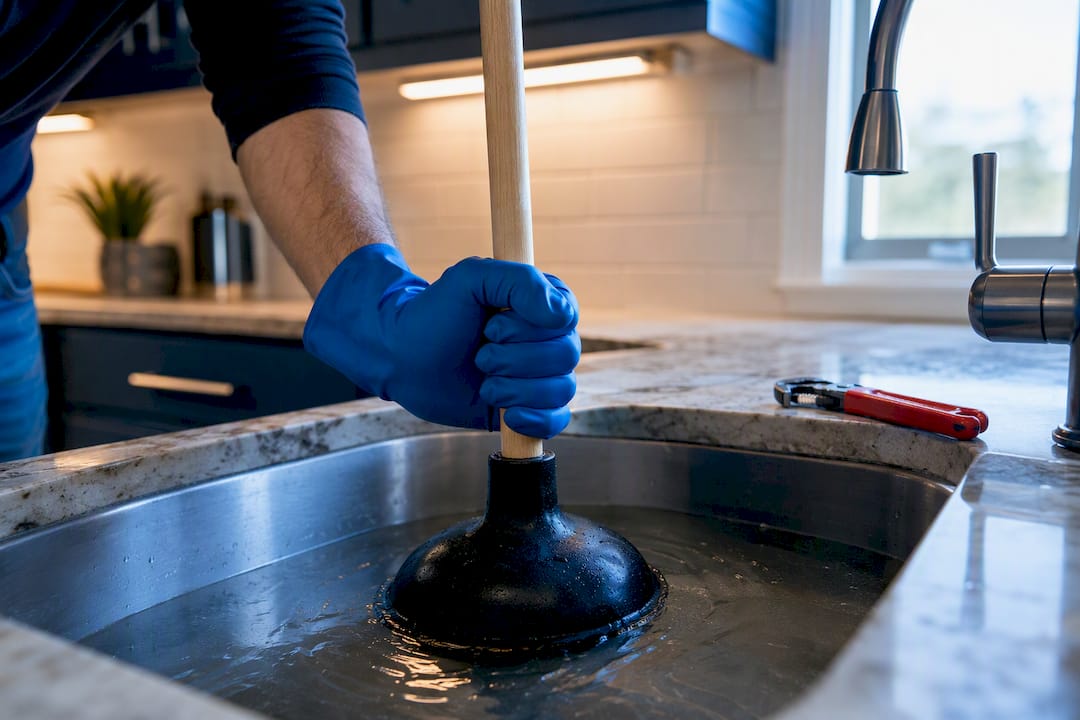
Start by bailing standing water, pulling the stopper or strainer, and plunging the drain. If that fails, clean the P-trap, then run a hand snake through the line. Reset or clear the garbage disposal if it hums but won’t drain, and call a licensed plumber if more than one fixture backs up or you smell sewage. Skip chemical drain cleaners, especially if you’re on a septic system.
TL;DR:
- Most kitchen sink clogs respond well to patience and mechanical removal, such as plunging, cleaning the trap, and snaking the line, without needing chemicals.
- Troubleshooting whether the clog is local or part of a mainline problem involves testing other fixtures, checking for sewage odors, and inspecting for leaks or dampness under the sink.
- Use proper tools like a cup-style plunger, a bucket, gloves, and a drain snake, and avoid mixing chemical cleaners to prevent toxic fumes and pipe damage, especially on septic systems.
- Persistent backups affecting multiple fixtures, gurgling sounds, or visible pipe damage indicate the need for professional plumbing services, including camera inspection and sewer repair.
- Prevent future clogs by scraping solids into trash or compost, pouring away grease, running hot water regularly, and using enzyme cleaners to break down organic residue.
Table of Contents
- Is the clog just in your sink or a bigger drain problem?
- What tools and safety precautions you need before you start
- The right order to try DIY fixes, from easiest to most invasive
- Could your garbage disposal be causing the clog?
- When a stubborn clog means it’s time to call a plumber
- How to keep your kitchen sink from clogging again
- Where this guidance comes from
- A homeowner’s honest take on kitchen sink clogs
- Getting professional help when DIY isn’t enough
- Sources
- FAQ
Is the clog just in your sink or a bigger drain problem?
Before you grab a plunger, figure out whether the blockage is local to the sink or a sign of trouble further down the line. A clog limited to one fixture behaves differently than a mainline or septic issue, and treating the wrong problem wastes time and can make things worse. InspectAPedia’s drain-clog diagnosis recommends checking whether the problem is confined to one fixture before you touch a tool.
Run through these checks first:
- Turn on the other sink, tub, and shower: if they drain fine, the clog is likely local to the kitchen sink.
- Flush a toilet on the same floor: gurgling or slow flushing points toward a shared drain line problem, not just the sink.
- Check both basins on a double sink: water backing into the second side while you run the other means the shared trap or branch line is blocked.
- Smell the drain: a sewage odor suggests venting or mainline trouble rather than a simple sink clog.
- Look under the sink for damp cabinet floors or drips at the trap joints, which point to a leak rather than, or in addition to, a clog.
If only the kitchen sink is slow and nothing else is affected, you’re almost certainly dealing with a localized clog you can clear yourself. Give each DIY method (plunging, then the trap, then the snake) about 10 to 15 minutes before moving to the next step. If you’ve tried all three and water still won’t drain, or if other fixtures start acting up partway through, stop and treat it as a bigger issue. Our guide to sewer line warning signs covers the symptoms that separate a sink clog from a mainline backup.
What tools and safety precautions you need before you start
A basic kitchen sink clog rarely needs more than a few hand tools. Gather a plunger, a bucket, an adjustable wrench or pliers, a flashlight, a hand auger (drain snake), a small pipe brush, rubber gloves, and eye protection before you start.
- Plunger, ideally a cup-style plunger sized for a flat sink basin rather than a toilet flange.
- Bucket to catch water and debris when you open the trap.
- Adjustable wrench or channel-lock pliers for the trap’s slip nuts.
- Hand auger with at least 15 to 25 feet of cable for stubborn clogs.
- Rubber gloves and eye protection, since trap water carries bacteria and old grease.
Never mix cleaning chemicals under the sink. Combining bleach and ammonia-based products, or two different drain cleaners, can produce toxic fumes, and the CPSC has recalled caustic drain-cleaner products over child-resistant packaging failures and mislabeling. If you’re on a septic system, the EPA advises against pouring grease or heavy volumes of caustic cleaner down any drain, since both damage the tank’s bacterial balance. Mechanical removal and enzyme cleaners are the safer default.
Pro Tip: After working on the trap or snake, wash your hands with soap for at least 20 seconds and wipe down metal tools with disinfectant before storing them.
The right order to try DIY fixes, from easiest to most invasive
Work through these steps in order and stop as soon as water drains normally. Skipping ahead to the snake before trying a proper plunge often means more cleanup for no extra benefit.
- Bail the standing water. Scoop it into a bucket, then remove the stopper or strainer basket and clear any visible food debris caught in it by hand.
- Plunge the drain. Fill the basin with a couple of inches of water, press the plunger firmly to form a seal, and push and pull in short, sharp strokes for 15 to 20 seconds. On a double sink, block the second drain with a wet rag or a second plunger so you don’t just push air and water sideways.
- Remove and clean the P-trap. Slide a bucket under the curved trap, loosen the slip nuts by hand or with pliers, and pull the trap free. Dump the contents into the bucket, check inside for a solid grease plug or food clump, then scrub it with a pipe brush before reattaching the nuts snugly (hand-tight plus a quarter turn is usually enough).
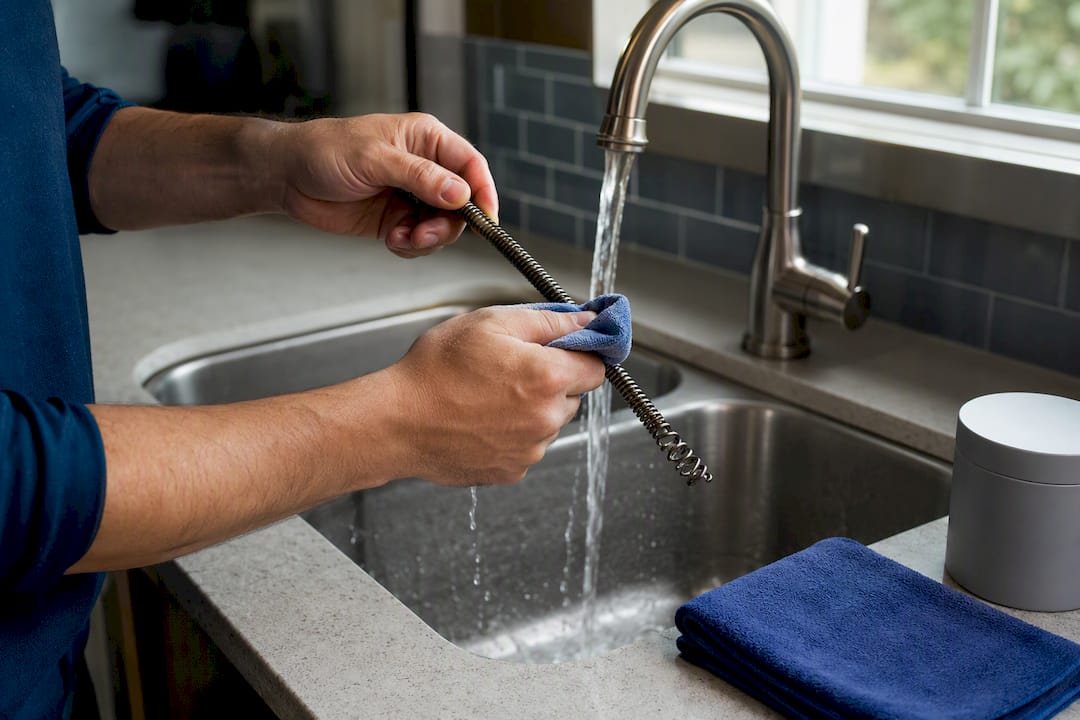
- Snake the line. Feed the auger cable into the drain past the trap opening, cranking the handle as you go. When you feel resistance, work the cable back and forth gently rather than forcing it, which can gouge older metal pipes. Pull the cable back slowly to retrieve whatever it caught.
- Consider a kinetic water ram for a stubborn clog. These rental tools use a burst of compressed air to dislodge blockages without water or chemicals; follow the rental instructions closely, since improper use can strain old pipe joints.
- Flush with hot water and an enzyme cleaner as maintenance. Once flow is restored, a hot water flush followed by a septic-safe enzyme treatment weekly helps break down the organic film that starts new clogs. Penn State Extension notes that enzyme cleaners work more slowly than caustic products but avoid corroding pipes or harming the bacteria septic tanks need.
Plunging success depends heavily on technique. InspectAPedia notes that many homeowners lose effectiveness on double-basin sinks simply because they never seal the second drain, so the plunger just moves air instead of building pressure against the clog.
If you decide to try a caustic chemical cleaner as a last resort, treat it as a genuine hazard, not a shortcut. Wear gloves and eye protection, open a window or run a fan, never mix it with any other cleaning product, follow the label’s exact measurements and wait time, and keep kids and pets out of the room until you’ve flushed the drain clean. Repeated use of caustic cleaners can pit metal pipes over time and, per EPA guidance, disrupts the bacterial digestion a septic tank depends on.
Could your garbage disposal be causing the clog?
A disposal problem often masquerades as a sink clog, but the symptoms are distinct. A humming sound with no water movement usually means a jam inside the disposal, while a slow drain that affects both sides of a double sink but leaves the disposal running normally points to a blockage further down the line.
- Turn off the disposal switch, then check for a jam by looking for a stalled or humming motor rather than silence.
- Use the hex wrench that came with the unit in the bottom center hole to manually turn the flywheel free; never reach a hand inside the disposal, even with the power off.
- If the jam won’t clear with the wrench, cut power at the breaker before doing anything else inside the unit.
- Run cold water for 15 to 20 seconds after each use, and scrub the rubber splash guard where food residue builds up.
- Grind a handful of ice with a few citrus peels every few weeks to knock loose grease film and freshen the unit.
- If the dishwasher drains into the disposal, check that connection for a clog too, since a blocked disposal inlet can back water up into the dishwasher.
When a stubborn clog means it’s time to call a plumber
Some symptoms mean you’re past the point where a plunger or snake will help. Multiple fixtures backing up at once, a persistent sewage smell, a toilet that overflows when you run the sink, or no improvement after plunging, snaking, and cleaning the trap all point to a problem beyond the sink itself.
- Multiple drains slow or backing up together, not just the kitchen sink.
- Gurgling from other fixtures when the sink drains.
- Visible pipe damage, corrosion, or a leak at the trap or supply lines.
- No change after a full round of plunging, trap cleaning, and snaking.
A plumber typically starts with a video camera inspection to locate the exact blockage, then chooses between power snaking for a localized clog and hydro-jetting for grease buildup or roots further down the line. A mainline break or persistent backup may call for sewer repair or a septic inspection and pumping. Before the visit, note when the problem started, which fixtures are affected, and take a few photos, since that speeds up diagnosis considerably.
How to keep your kitchen sink from clogging again
Most kitchen sink clogs are preventable with a few consistent habits rather than a one-time fix. The goal is keeping grease, food scraps, and organic film from ever reaching the trap in volume.
- Scrape plates into the trash or compost before rinsing, rather than relying on the disposal to handle solids.
- Use a mesh sink strainer to catch scraps, and empty it after every use.
- Pour cooled grease, oils, and fats into a container for the trash instead of down the drain, since the EPA identifies fats, oils, and grease as a leading cause of both sink and septic blockages.
- Run a hot water flush through the drain weekly and an enzyme treatment monthly to break down residue before it hardens.
- If you’re on a septic system, schedule pumping on the interval your local guidance recommends, and watch for early warning signs like slow drains or gurgling throughout the house.
Keep non-degradable items, including coffee grounds, eggshells, and fibrous vegetable peels, out of the sink entirely. Our drain clog prevention checklist walks through a longer version of these habits if you want a reference to keep near the sink.
Where this guidance comes from
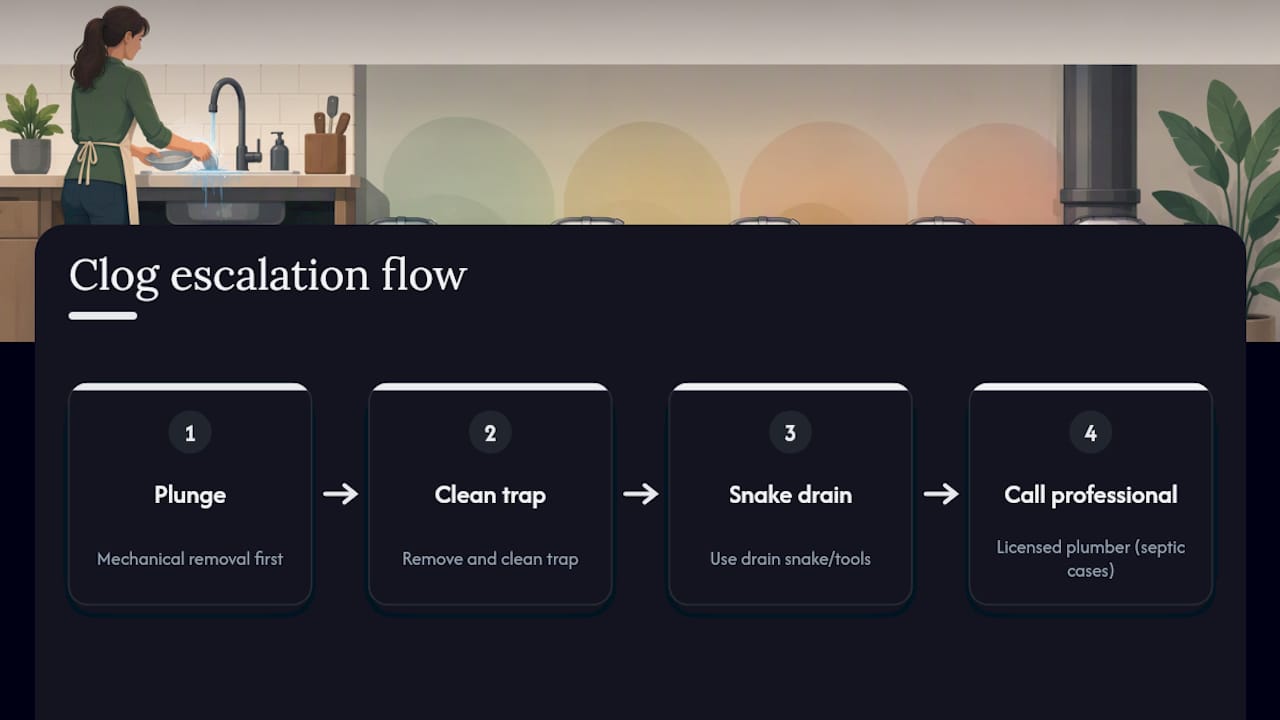
AG Heating, Cooling & Plumbing has spent 30 years handling residential drain and sewer calls, and the sequence in this guide, plunge, trap, snake, then call a professional, reflects that hands-on pattern. It also follows InspectAPedia’s diagnostic approach and Penn State Extension’s septic-protecting practices, which both favor mechanical removal and enzyme treatment over repeated chemical use. Mechanical fixes paired with grease control resolve most sink clogs; anything beyond the trap or snake, especially near a septic system, belongs to a licensed plumber.
A homeowner’s honest take on kitchen sink clogs
Most kitchen sink clogs respond to patience, not chemicals: bail, plunge, clean the trap, snake, and stop reaching for caustic cleaners as a first move. The moment multiple fixtures back up or you smell sewage, hand it to a licensed plumber instead of pushing further.
— Maayan
Getting professional help when DIY isn’t enough
When plunging, the trap, and the snake haven’t fixed it, you’re likely dealing with buildup or a blockage further into the line than hand tools can reach, and that’s where a fixed visit beats another trip to the hardware store. Professional services are available, including drain cleaning, hydro jetting, camera inspection to locate blockages, and sewer repair for mainline problems, provided by experienced, licensed plumbing professionals.
- Drain cleaning to clear stubborn or recurring kitchen sink clogs.
- Hydro jetting for grease buildup or blockages a snake can’t reach.
- Sewer repair when a camera inspection points to a mainline problem.
When you book, mention which fixtures are affected, how long the clog has lasted, and whether you’ve already tried plunging or snaking. That detail helps our team arrive with the right equipment the first time. Visit Ag-plumbing to schedule a visit or check current availability.
Sources
- How to Care for Your Septic System | US EPA
- Clogged drain diagnosis — InspectAPedia
- Five basic practices to protect your septic system — Penn State Extension
- Belle Chemical recalls — CPSC
FAQ
How do you unblock a badly blocked kitchen sink?
Work through the steps in order: bail standing water, plunge with a proper seal on both basins if you have a double sink, then remove and clean the P-trap before snaking the line. If none of that clears it, or other fixtures start backing up too, the problem is likely beyond the sink and needs a licensed plumber.
What is the best way to unclog a kitchen drain?
Mechanical methods work best and cause the least damage: a firm plunge, a cleaned P-trap, and a hand auger clear most kitchen drain clogs without chemicals. Penn State Extension and the EPA both favor these methods over caustic cleaners, especially for homes on septic systems.
Does dish soap really unclog drains?
Dish soap combined with hot water can help break down light grease film, but it rarely clears a solid clog on its own. It works best as a follow-up rinse after plunging or snaking, not as a standalone fix for a blocked drain.
Why is my kitchen sink suddenly clogged?
A sudden clog is usually grease or food debris that finally built up enough to block the trap or branch line, since the EPA points to fats, oils, and grease as a leading cause of kitchen drain blockages. If the clog appeared alongside slow drains elsewhere in the house, it may point to a shared line or septic issue rather than the sink itself.
Recommended
- How to Prevent Clogged Sinks: A Homeowner’s Guide
- Drain Clog Prevention Tips for Pittsburgh Homeowners
- Fix Most Grease Clogs in Two Flushes, When to Call a Pittsburgh Pro
- Step by step drain cleaning guide for PA homeowners
