
TL;DR:
- Proper winter assessment and insulation are essential for preventing costly pipe damage in Pittsburgh.
- Disconnect outdoor hoses, insulate exposed pipes, seal gaps, and monitor water flow during winter.
- Homeowners should seek professional help for inaccessible or aging plumbing features to avoid emergencies.
A burst pipe in the middle of a Pittsburgh winter is not just an inconvenience. It can mean thousands of dollars in water damage, days without running water, and a frantic search for an available plumber when every other homeowner in the city is dealing with the same crisis. Pittsburgh’s winters are unpredictable, swinging between mild stretches and brutal cold snaps that catch pipes off guard. The good news is that a focused, local-specific winterization workflow can protect your home before any of that happens. This guide walks you through exactly what to do, in the right order, so you can head into the cold months with confidence.
Table of Contents
- Assessing your home before winter hits
- The step-by-step winterize plumbing workflow
- Common pitfalls and troubleshooting during winterization
- Verifying your system and staying protected all winter
- Why Pittsburgh’s winter plumbing workflow is more than routine maintenance
- Get expert help for Pittsburgh winter plumbing
- Frequently asked questions
Key Takeaways
| Point | Details |
|---|---|
| Start early, not late | Begin winterizing your plumbing before Pittsburgh’s first freeze to avoid costly pipe damage. |
| Focus on insulation and alerts | Prioritize insulating pipes and water meters and sign up for utility leak alerts for maximum protection. |
| Use local workflow steps | Tailor your winterization approach to Pittsburgh’s climate and housing stock for best results. |
| Don’t ignore the post-check | Regularly verify your plumbing’s status and respond quickly if you detect drips or freezing. |
| Call a pro if in doubt | Professional inspections catch hidden risks and offer peace of mind during harsh winters. |
Assessing your home before winter hits
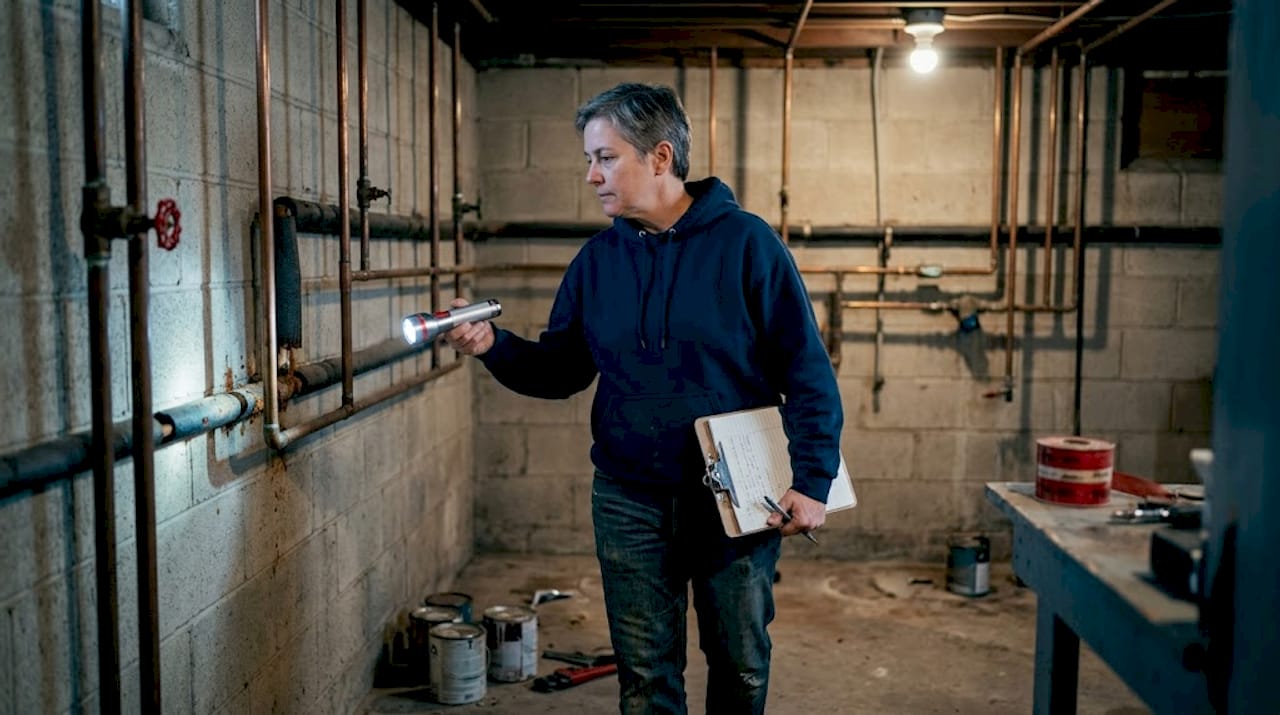
Now that you know why winterizing matters, let’s start with a home assessment. Before you buy a single roll of foam insulation or touch a shutoff valve, you need to know what you’re working with. A proper assessment takes maybe an hour, but it can save you from missing the one pipe that causes all the trouble.
Start by walking your entire home and locating every plumbing line you can find. Pay special attention to pipes in unheated spaces: the basement corners, crawl spaces, the garage, and any areas along exterior walls. These are the spots where cold air gets closest to your water supply. In older Pittsburgh homes, which make up a significant portion of the city’s housing stock, the freeze-thaw cycles that happen repeatedly through winter are especially hard on aging pipe joints and fittings. A pre-freeze inspection for these homes is not optional. It’s essential.
While you’re walking the house, look for signs of existing trouble. Drips under sinks, rust stains near pipe connections, or soft spots in drywall near plumbing walls all point to weak areas that will get worse in the cold. You can learn how to spot plumbing problems early before they escalate into full emergencies. The goal here is to catch small issues now, not after a freeze has done its worst.
What to look for during your walkthrough
- Pipes running through unheated basements, attics, or crawl spaces
- Outdoor hose bibs (the spigots on the outside of your house)
- Your water meter location (usually in the basement)
- Any gaps or cracks in exterior walls near plumbing
- Visible drips, rust, or water stains around pipe connections
- The location of your main water shutoff valve
Supplies to gather before you start
| Supply | Purpose |
|---|---|
| Foam pipe insulation sleeves | Wrap exposed pipes in cold zones |
| Outdoor faucet covers | Protect hose bibs from freezing |
| Adjustable wrench | Close shutoff valves and remove hose connections |
| Plumber’s tape | Seal minor leaks at joints |
| Towels and a bucket | Drain residual water from lines |
| Flashlight | Navigate dark crawl spaces and basement corners |
Pro Tip: Take photos of your pipe locations during the walkthrough. If you ever need to call a plumber mid-winter, having those photos on your phone speeds up the diagnosis significantly.
Reviewing smart plumbing tips before your assessment can also help you spot issues you might otherwise overlook, especially in homes with older cast iron or galvanized steel pipes.
The step-by-step winterize plumbing workflow
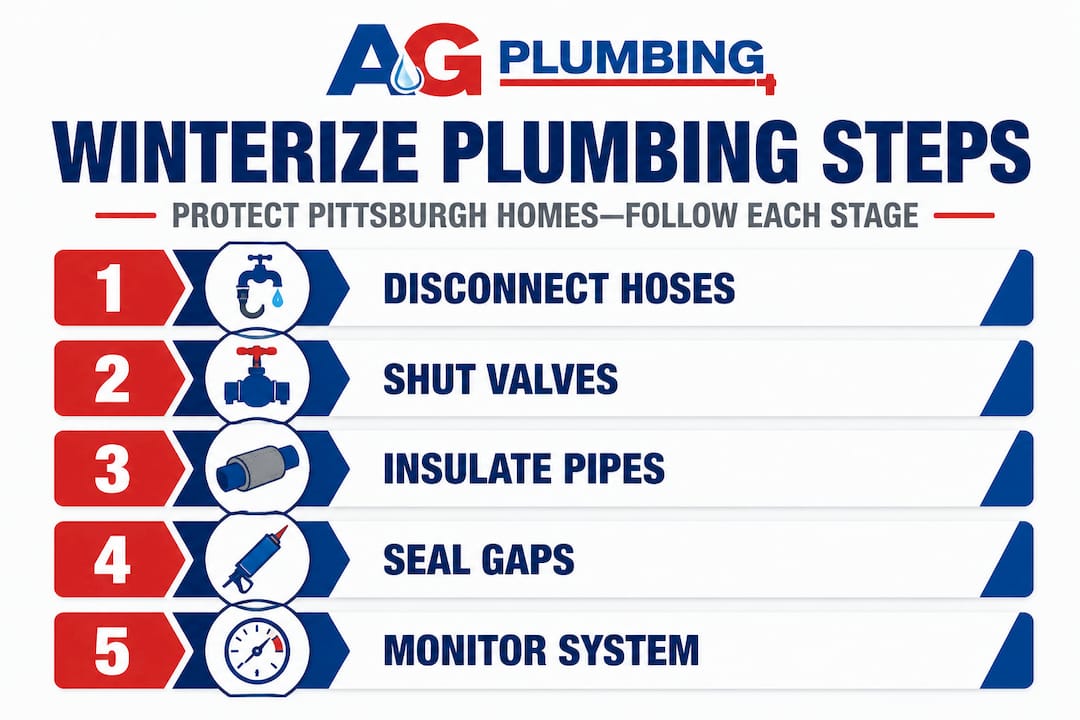
With your assessment complete and materials in hand, here’s how to winterize your plumbing step by step. Follow this in order. Skipping ahead or doing steps out of sequence is one of the most common reasons homeowners end up with a problem they thought they had prevented.
Step 1: Disconnect and drain all outdoor hoses
This is the single most overlooked step. A garden hose left connected to an outdoor spigot traps water in the line and the faucet body. When temperatures drop, that water freezes and expands, cracking the faucet or the pipe behind it. Disconnect every hose, drain it completely, and store it inside or in a shed.
Step 2: Shut off internal valves to outdoor faucets
Most Pittsburgh homes have a shutoff valve inside the house that controls water flow to each outdoor hose bib. Find these valves (often in the basement near the exterior wall) and turn them off. Then go back outside and open the outdoor faucet to drain any remaining water from the line. Leave the outdoor faucet slightly open until you’re sure it’s fully drained, then close it.
Step 3: Insulate exposed pipes in unheated areas
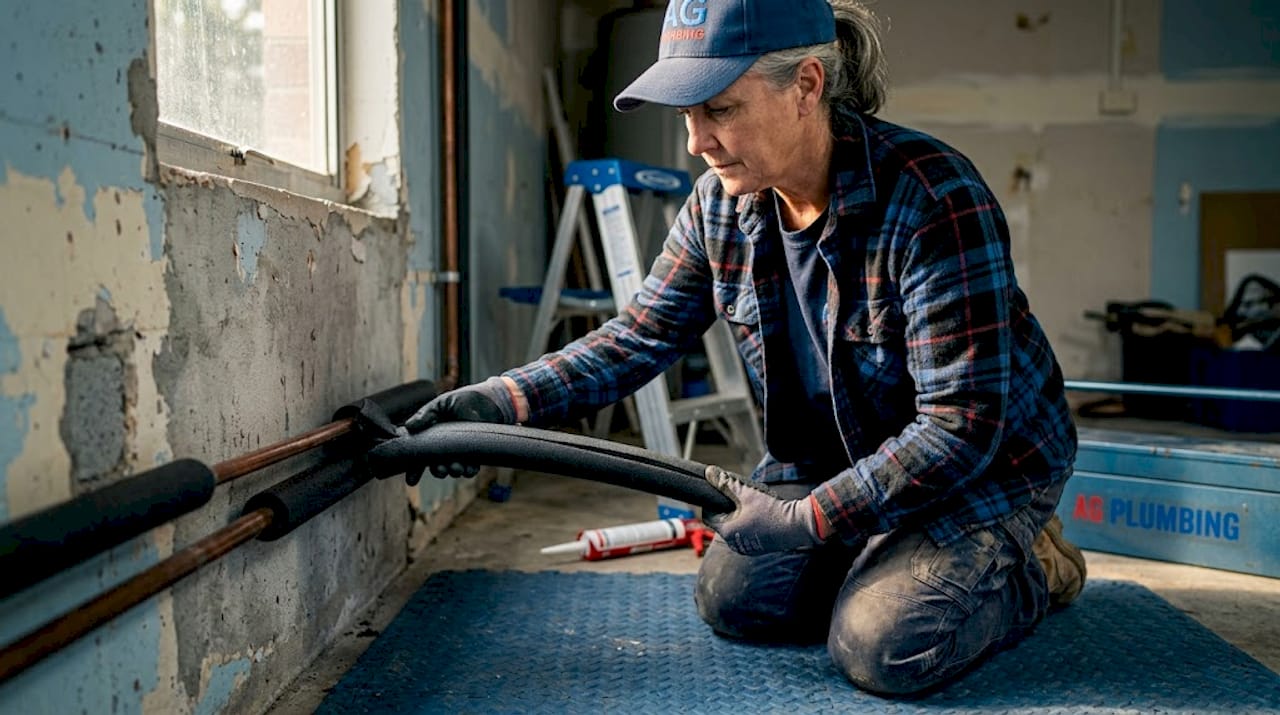
Wrap foam pipe insulation sleeves around any pipes in your basement, crawl space, or garage that are not in a heated zone. Pay extra attention to pipes near exterior walls and in corners where cold air pools. Foam sleeves are inexpensive and easy to cut to size. For pipes in extremely cold spots, consider adding electrical heat tape (a low-wattage cable that wraps around the pipe) beneath the foam for added protection.
Step 4: Insulate your water meter
Pittsburgh Water recommends insulating your water meter, which is typically located in the basement. A frozen meter can disrupt your entire water supply and result in costly repairs that are your responsibility as a homeowner. Wrap the meter in a foam cover or thick insulation blanket, making sure not to block the reading display.
Step 5: Seal gaps and air leaks near plumbing
Use caulk or expanding foam to seal any gaps where cold air can reach your pipes. Common spots include where pipes pass through exterior walls, around basement windows, and near the foundation. This step is often skipped but makes a real difference in keeping your pipe temperatures stable.
Step 6: Sign up for Pittsburgh Water leak alerts
This one costs nothing and takes two minutes. Pittsburgh Water offers a leak alert system through their online portal that notifies you of unusual usage patterns that could indicate a frozen or burst pipe. It’s a safety net that works even when you’re asleep or away from home.
Step 7: Decide between the drip method and full drain
For occupied homes, letting vulnerable faucets drip slightly during extreme cold (below 20°F) keeps water moving and reduces freeze risk. For vacant homes or vacation properties, dripping is not enough. You need to fully drain the system: shut off the main water supply, then open every faucet from the top floor down to drain all water from the lines. Review your plumbing maintenance checklist to make sure you haven’t missed any lines or fixtures.
Occupied vs. vacant home comparison
| Situation | Best approach | Notes |
|---|---|---|
| Occupied home, mild cold | Insulate + seal + monitor alerts | Standard protection |
| Occupied home, extreme cold | Insulate + drip method + alerts | Drip faucets farthest from meter |
| Vacant home, any temperature | Full system drain | Shut off main, open all faucets |
| Vacation property | Full drain + antifreeze in drains | Don’t rely on dripping alone |
“Meter insulation and signing up for leak alerts are the two steps Pittsburgh homeowners skip most often. They’re also two of the most effective.” This is consistent advice from local plumbing professionals and Pittsburgh Water alike.
Pro Tip: If you can’t access a shutoff valve or a section of pipe because it’s behind a finished wall, don’t ignore it. Note it during your assessment and call a plumber before the freeze hits. Inaccessible pipes that freeze are far more expensive to deal with than accessible ones. Check out bathroom plumbing ideas if you’re considering adding access panels during a renovation.
Common pitfalls and troubleshooting during winterization
Even with good planning, mistakes happen. Here’s how to avoid the most common ones and what to check if you hit problems.
Leaving hoses connected is the number one cause of outdoor faucet freeze damage in Pittsburgh. It seems minor, but it creates a direct path for freezing temperatures to travel into your home’s plumbing. Make disconnecting hoses the very first thing you do each fall.
Missing cold spots in the basement is the second most common error. Basement corners, especially those near the foundation, can be significantly colder than the center of the room. Run your hand along the walls during your assessment. If it feels noticeably colder near a corner where a pipe runs, that pipe needs insulation.
Relying on dripping for a vacant property is a mistake that causes real damage. Pittsburgh Water is clear that for vacant properties, a full system drain is the correct approach. Dripping requires water pressure and flow to work. If something goes wrong while you’re away, you have no way to catch it in time.
Ignoring leak alerts after signing up for them defeats the purpose. Check your email or phone notifications regularly during cold stretches. An alert that triggers at 2 a.m. during a cold snap is telling you something important. Act on it.
- Check insulation on pipes after the first hard freeze of the season. Foam sleeves can shift or fall away.
- If you notice reduced water pressure mid-winter, check for partial freezing in an exposed line before assuming a bigger problem.
- A water bill that spikes unexpectedly in winter is often a sign of a slow leak from a cracked pipe. Review plumbing repairs Pittsburgh homeowners need to understand what a mid-winter repair might involve.
“Dripping wastes water, but it prevents bursts in occupied homes during extreme cold. For vacant properties, always drain fully. Pittsburgh Water prioritizes meter insulation and alerts above the drip method.”
Pro Tip: Keep your main water shutoff valve location memorized. If a pipe does burst, the first thing you need to do is shut off the water. Seconds matter when water is flowing into your walls or floors.
Verifying your system and staying protected all winter
After winterizing, here’s how to ensure you stay protected all season in Pittsburgh’s unpredictable weather. Winterization is not a one-and-done task. Pittsburgh winters can go from 50°F to single digits within 48 hours. Your system needs periodic checks throughout the season.
Post-winterization checklist:
- Test every indoor and outdoor faucet to confirm proper flow and no drips
- Check that all outdoor faucet covers are securely in place
- Confirm your water meter insulation is intact and covering the full unit
- Verify that your Pittsburgh Water leak alert registration is active
- Check foam insulation on exposed pipes for gaps or displacement
- Locate and test your main shutoff valve to make sure it turns freely
After any significant cold snap (temperatures below 15°F for more than 24 hours), do a quick walk of your basement and crawl space. Look for frost on pipes, unusual condensation, or any sign that insulation has shifted. Catching a partially frozen pipe before it fully freezes and cracks is a much better outcome than discovering a burst pipe after the thaw.
A key statistic worth knowing: Water damage from frozen pipes is one of the most common and costly homeowner insurance claims filed in winter months, with average repair costs ranging from $5,000 to $70,000 depending on the extent of damage. Insulation and monitoring cost a fraction of that.
Monitor your water bill throughout the winter. A sudden increase in usage without a clear reason is a red flag. Cost-saving plumbing tips can help you keep usage in check while staying protected. If you notice any of the following mid-winter, call a plumber promptly: no water from a faucet, visible frost on a pipe, a bulging or discolored section of pipe, or the sound of running water inside walls when nothing is turned on.
Why Pittsburgh’s winter plumbing workflow is more than routine maintenance
Here’s something most generic winterization guides won’t tell you: the advice written for homeowners in, say, Atlanta or Denver does not fully apply to Pittsburgh. Our city has a specific combination of challenges that demands a more tailored approach.
Pittsburgh’s freeze-thaw cycles are particularly hard on plumbing. We don’t just get one long freeze. We get repeated cycles of freezing and thawing throughout winter, and each cycle stresses pipe joints, expands small cracks, and loosens fittings. Older homes, which are abundant across Pittsburgh’s neighborhoods, often have plumbing that was installed decades ago and was never designed with modern insulation standards in mind. Pre-freeze inspections for these homes are not just recommended. They’re what separates homeowners who make it through winter without incident from those who don’t.
The other thing national guides miss is the local utility angle. Pittsburgh Water’s specific recommendations around meter insulation and alert signup are not generic advice. They reflect real data about where Pittsburgh homeowners experience the most freeze-related service disruptions. Most national guides tell you to let a faucet drip and call it done. That’s not wrong, but it’s incomplete for our market.
After 30 years of working on Pittsburgh plumbing systems, we’ve seen the same pattern repeatedly: the homeowners who invest an afternoon in a proper pre-winter workflow almost never call us in a panic at midnight in January. The ones who skip it or do a partial job are the ones dealing with burst pipes, water-soaked drywall, and emergency repair bills. Understanding what pro plumbers do in Pittsburgh during winter prep can give you a clearer picture of what a thorough inspection actually covers and why it matters.
Prevention is always less expensive than reaction. That’s not a platitude. It’s a financial reality we see play out every single winter.
Get expert help for Pittsburgh winter plumbing
If you’ve worked through this guide and feel confident, that’s great. But if any part of your assessment turned up inaccessible pipes, aging fixtures, or areas you couldn’t fully inspect, don’t leave those gaps unaddressed heading into winter.
AG Heating, Cooling & Plumbing has spent 30 years helping Pittsburgh homeowners protect their plumbing through every kind of winter this city throws at us. Our team can identify hidden vulnerabilities you might miss during a DIY walkthrough, handle insulation and shutoff work on hard-to-reach lines, and provide 24/7 emergency support if a freeze or burst does occur. Whether you want a full pre-winter inspection or just need help with one tricky section of pipe, our Pittsburgh plumbing repair services are built for exactly this kind of work. You can also use our plumbing maintenance checklist as a starting point to see where you stand before booking a visit.
Frequently asked questions
When should I start winterizing my plumbing in Pittsburgh?
Begin winterizing before temperatures consistently drop below freezing, which in Pittsburgh typically means starting in late October or early November. Getting ahead of the first hard freeze gives you time to address any issues your assessment uncovers without rushing.
Which pipes are most likely to freeze?
Pipes in unheated areas like basements, crawl spaces, garages, and along exterior walls are at the highest risk of freezing, particularly in older Pittsburgh homes where insulation may be minimal or absent.
Should I let faucets drip to prevent freezing?
Letting faucets drip can help prevent freezing in occupied homes during extreme cold, but Pittsburgh Water recommends insulating your water meter and signing up for leak alerts as more reliable and water-efficient protection strategies.
Is it necessary to insulate my water meter in Pittsburgh?
Yes. Pittsburgh Water strongly encourages meter insulation because a frozen meter can cut off your entire water supply and result in repair costs that fall on the homeowner, not the utility.
What should I do if I can’t access certain pipes?
If you cannot reach pipes for insulation or shutoff, contact a local plumber before the first freeze of the season. Inaccessible frozen pipes are among the most damaging and expensive winter plumbing emergencies to repair.
Recommended
- Smart Plumbing Tips Every Pittsburgh Homeowner Needs – AG-Plumbing
- Cost-saving plumbing tips for Pittsburgh homeowners – AG-Plumbing
- Install plumbing fixtures: Pittsburgh homeowner guide – AG-Plumbing
- Plumbing Maintenance Checklist: Prevent Costly Home Repairs – AG-Plumbing
