
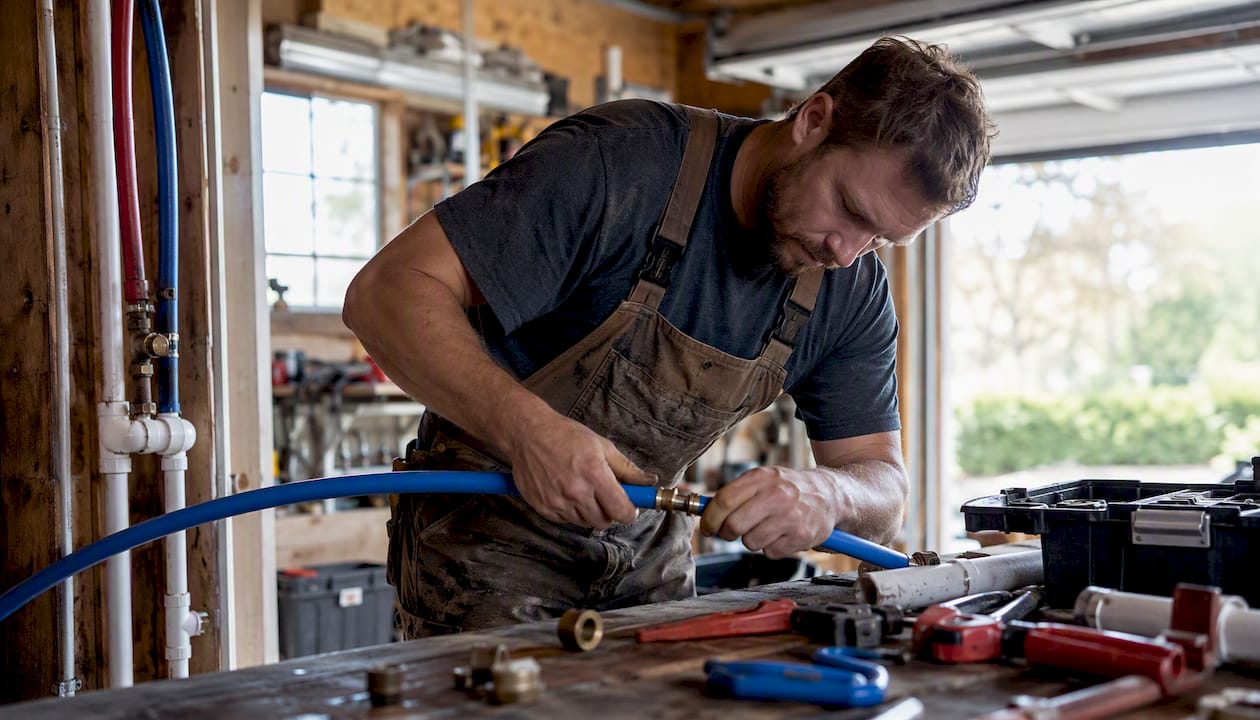
Replacing your home’s plumbing typically costs between $1,500 and $15,000 for a whole-house repipe, with most projects landing somewhere in the $4,000–$8,500 range depending on home size, pipe material, and how accessible your walls and floors are. A single-pipe replacement runs far less, often $150–$5,700 per pipe according to industry cost data. The smartest immediate next step: get at least three itemized bids from licensed, insured plumbers before committing to anything.
- Single-pipe repair: $150–$5,700
- Per linear foot (material only): roughly $0.40 for basic plastics up to several dollars for copper
- Whole-home repipe: $4,000–$15,000 nationally, with a national average near $8,500
- Homeowners insurance: generally does NOT cover planned repipes or wear-and-tear pipe failure
Pro Tip: If budget is a concern, ask your plumber to quote PEX specifically. PEX material costs roughly one-third of copper per linear foot and installs faster, which cuts labor hours too.
Key Takeaways
A whole-house repipe costs $4,000–$15,000 nationally, with PEX offering the most cost-effective path for most homeowners, and getting three itemized bids from licensed plumbers is the single most reliable way to protect your budget.
| Point | Details |
|---|---|
| Whole-home repipe cost range | National estimates run $4,000–$15,000, with a typical average near $8,500 depending on size and material. |
| PEX vs. copper savings | PEX material costs roughly one-third of copper per linear foot, often saving $2,000–$4,000 on material alone. |
| Insurance won’t cover repipes | Standard homeowners insurance covers sudden damage but not wear-and-tear pipe replacement or planned repipes. |
| Get three itemized bids | Collecting three to four bids typically saves 10–30% versus accepting the first quote; compare unit costs, not just totals. |
| Ag-plumbing for Pittsburgh repipes | Ag-plumbing offers free inspections, permit handling, and itemized quotes backed by 30 years of local experience. |
Table of Contents
- How much does replacing plumbing cost?
- What actually drives your pipe replacement cost up or down
- Which pipe material should you choose?
- Red flags that tell you it’s time to repipe now
- What a professional repipe actually looks like, step by step
- When is DIY pipe replacement okay, and when should you hire a pro?
- How long does pipe replacement take?
- Permits, inspections, and what your homeowners insurance will and won’t cover
- Sample cost breakdowns for common home sizes and projects
- How to get reliable quotes and compare bids fairly
- How Ag-plumbing handles repipes in Pittsburgh
- What experienced plumbers wish homeowners knew before a repipe
- Ag-plumbing is ready to help Pittsburgh homeowners repipe with confidence
- Sources
- FAQ
How much does replacing plumbing cost?
The honest answer is that the range is wide enough to be almost useless without context. A $150 single-pipe fix and a $14,000 whole-home repipe are both “pipe replacement.” What separates them is scope, material, and access.
| Scenario | Typical Cost Range |
|---|---|
| Single-pipe repair | $150–$5,700 |
| Per linear foot (material) | $0.40 to several dollars |
| Whole-home repipe (national avg.) | $4,000–$15,000 |
| Per-fixture plumbing work | $200–$1,000+ per fixture |
| Water main replacement | $1,500 to several thousand |
According to HomeGuide’s cost data, a full-home repipe commonly runs $3,100–$5,500 on average in many markets, though larger homes or copper-heavy projects push well past that.
Sample calculation: 1,500 sq ft home with PEX
A 1,500 sq ft, two-bath home with accessible walls and attic routing might look like this:
- Materials (PEX, fittings, shutoffs): $800–$1,400
- Labor (2–3 days, two-person crew): $2,000–$3,500
- Permits and inspections: $200–$600
- Drywall patching (8–12 access points): $400–$900
- Total estimate: $3,400–$6,400
Sample calculation: water main replacement
- Materials (copper or PEX service line, 50–80 ft): $400–$900
- Labor and excavation: $800–$2,500
- Permits: $150–$400
- Total estimate: $1,350–$3,800
Regional variance matters. Pittsburgh-area labor rates differ from San Francisco or rural Texas. These figures are national benchmarks; your actual bids may land higher or lower.
Statistic: A 2026 repipe cost calculator puts the national average whole-house repipe at roughly $8,500, with material choice, fixture count, and accessibility as the three biggest variables.
What actually drives your pipe replacement cost up or down
Most homeowners focus on the pipe material price and miss the factors that move the needle far more. Here is where the real money goes.
Pipe footage and fixture count are the foundation. More linear feet of pipe and more fixtures (toilets, sinks, showers, hose bibs) mean more material, more labor hours, and more access points cut into walls. A three-bath home costs meaningfully more than a one-bath home of the same square footage.
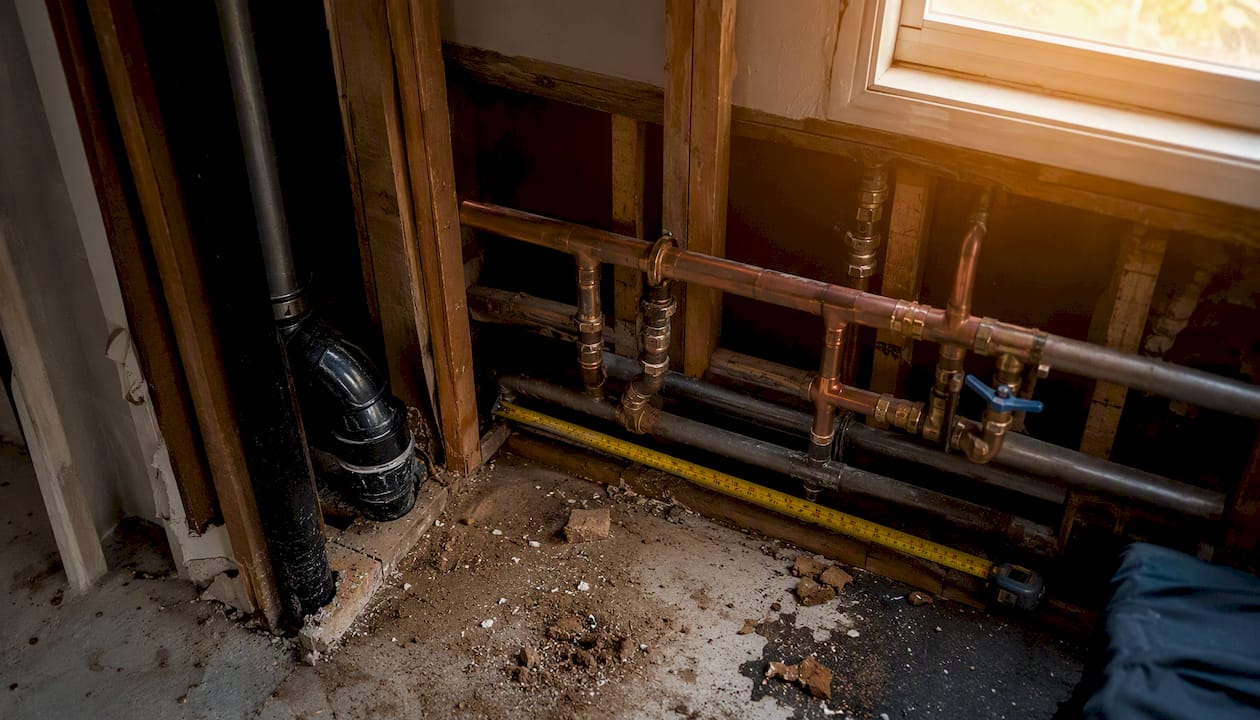
Pipe material is the most negotiable variable. PEX, copper, and CPVC carry very different per-foot costs, and the choice ripples into labor time too. Copper requires soldering; PEX uses push-fit or crimp connections that go in faster.
Accessibility is where budgets blow up. Pipes running through open attic or crawl space cost a fraction of pipes buried in a finished basement ceiling or encased in a concrete slab. Slab work requires jackhammering or rerouting overhead, which can add thousands to a quote.
- Open attic/crawl space: lowest labor cost, minimal drywall work
- Finished walls and ceilings: moderate drywall patching required
- Concrete slab: highest cost; often worth rerouting overhead instead
Labor rates vary by market and by crew experience. A licensed master plumber in a high-cost metro charges more per hour than a journeyman in a smaller market, but the faster, cleaner work often justifies the premium.
Permit and inspection fees are non-negotiable once a job triggers them. Expect $150–$600 for most residential repipes, though complex jobs or municipalities with higher fee schedules can run more.
Drywall and finish repairs are a hidden line item many homeowners forget to budget. Patching, taping, mudding, and painting after a repipe can add $500–$2,000 depending on the number of access points and finish quality required.
Hazardous pipe removal adds cost when the old system contains lead or polybutylene. Disposal fees and the extra care required to handle these materials safely push labor time up.
Pro Tip: Ask your plumber whether rerouting through the attic instead of opening finished walls is feasible for your home’s layout. The drywall savings alone often offset any extra pipe footage cost, and the job finishes faster.
The negotiable levers are material choice and access strategy. The non-negotiable factors are your home’s square footage, fixture count, and local permit requirements.
Which pipe material should you choose?
The pipe material decision affects upfront cost, long-term durability, and how much wall damage the job creates. Here is a side-by-side view of the materials you will encounter in quotes.

| Material | Cost per Linear Foot | Expected Lifespan | Pros | Cons | Typical Use |
|---|---|---|---|---|---|
| PEX | $0.40–$2.00 | 25 to 50 years | Flexible, freeze-resistant, fast install, fewer joints | Cannot be used outdoors (UV degrades it), newer track record | Supply lines, whole-home repipes |
| Copper | $2.00 to several dollars | 50 plus years | Proven longevity, recyclable, antimicrobial | Expensive, requires soldering, susceptible to pinhole leaks in acidic water | Supply lines, service lines |
| CPVC | $0.50–$1.50 | 25 to 40 years | Cheaper than copper, handles hot water | Brittle in cold climates, can crack with movement | Supply lines, hot water runs |
| Galvanized steel | Legacy material | 20–50 years | Once common, widely understood | Corrodes from inside, reduces water pressure over time, no longer installed new | Older homes; replacement recommended |
| Lead | Legacy material | Indefinitely if undisturbed | None for new use | Serious health hazard; banned for new plumbing for decades; must be replaced | Pre-1986 homes; immediate replacement priority |
| Polybutylene | Legacy material | Failed within one to two decades | Was inexpensive | Degrades from chlorine in municipal water; prone to sudden failure; no longer manufactured | 1978–1995 homes; replacement strongly advised |
Safety callout: Lead and polybutylene pipes are not a “monitor and wait” situation. Lead leaches into drinking water and poses serious neurological risks, particularly for children. Polybutylene fails without warning, often causing significant water damage. If your home has either material, understanding why repiping matters for water quality is the first step toward protecting your family.
From a sustainability standpoint, copper is fully recyclable at end of life and has a proven 50-plus-year track record. PEX produces less embodied energy during manufacturing and its flexibility reduces the number of fittings and potential leak points. CPVC sits in the middle. For homeowners interested in green plumbing options, PEX’s longer maintenance intervals and lower failure rate give it a strong lifecycle argument despite being a plastic product.
Statistic: PEX material costs roughly one-third of copper per linear foot and installs faster, according to HomeGuide’s pipe cost data. For a budget-sensitive whole-home repipe, that difference can mean $2,000–$4,000 in savings on material alone.
Red flags that tell you it’s time to repipe now
Repairs buy time. At some point, the math flips and a full repipe costs less over five years than continued patching. These are the signs that point is approaching.
Visible warning signs:
- Rusty or brown water, especially first thing in the morning
- Persistent low water pressure throughout the house (not just one fixture)
- Pinhole leaks in copper pipes, particularly in homes with acidic well water
- Visible corrosion, green staining, or white mineral buildup on exposed pipes
- Polybutylene pipes (gray plastic, typically stamped “PB2110”) anywhere in the supply system
- Frequent leaks requiring repair more than once or twice a year
Inspection checklist for homeowners:
- Check pipe age: galvanized steel past 40 years, copper past 50 years, and polybutylene at any age warrant professional evaluation
- Run a cold-water test: fill a clear glass and let it sit. Rust particles or cloudiness suggest interior pipe corrosion
- Count recent repairs: two or more leak repairs in 12 months on the same pipe run is a pattern, not bad luck
- Review your insurance or mortgage inspection reports for flagged piping materials
- Ask about water testing if you have lead pipes or suspect contamination
Pro Tip: A video pipe inspection costs $150–$400 and gives you actual footage of interior pipe condition. If a plumber recommends a full repipe without one, ask why. For older homes with mixed materials, the video often reveals whether you need a full replacement or targeted repairs.
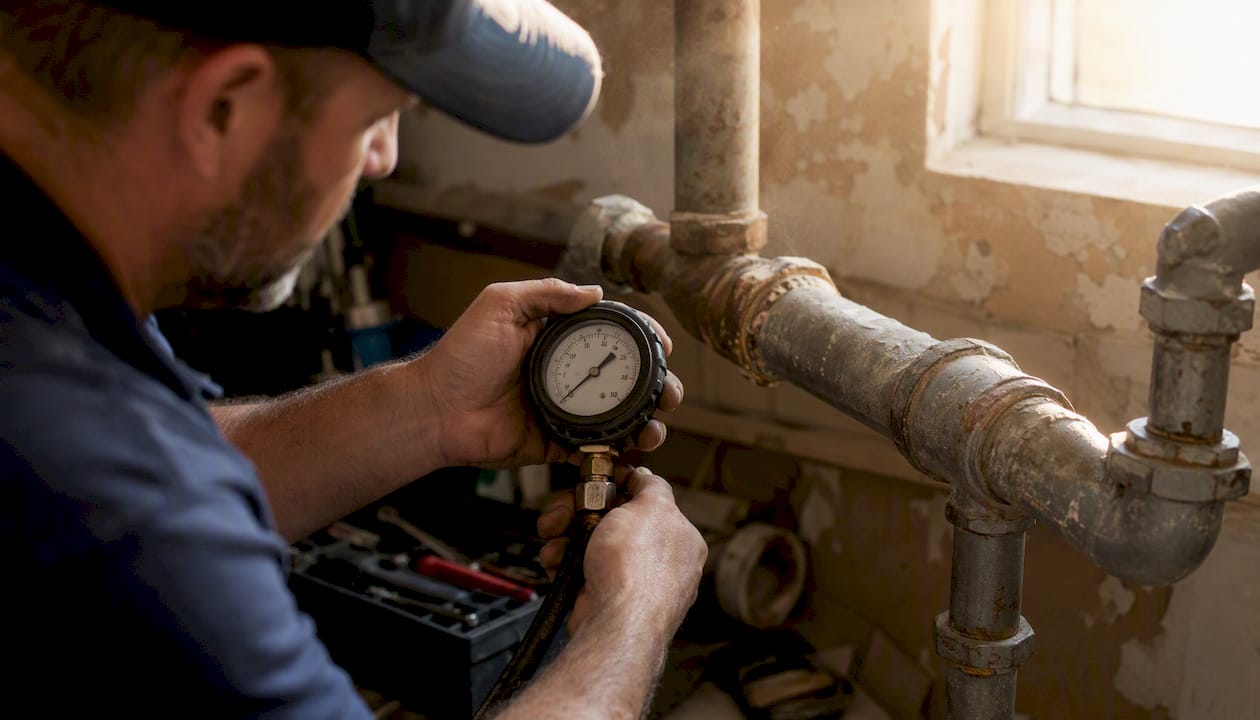
When a professional diagnostic is warranted: if you have galvanized pipes past 30 years, any polybutylene, or recurring leaks, schedule a pressure test and video inspection before the next repair. You can also use this early warning sign checklist to triage before calling a plumber.
What a professional repipe actually looks like, step by step
Most homeowners picture demolition. The reality with a skilled crew using modern PEX techniques is far less dramatic, though it still takes planning and a few days of disruption.
-
Initial inspection and system mapping. The plumber walks the home, photographs existing pipe runs, identifies material types, locates shutoffs, and maps the new routing. This step determines how many access points are needed and where.
-
Written estimate and scope of work. You receive an itemized quote covering linear footage, fixture count, material type, access points, permit fees, and drywall patching. Never sign a vague one-page estimate.
-
Permit application. For whole-home repipes, permits are required in virtually every U.S. jurisdiction. Your contractor pulls the permit; you should receive a copy before work starts.
-
Selective drywall access. Rather than opening entire walls, experienced crews cut strategic 8–15 inch access holes at key junctions. PEX’s flexibility lets it snake through existing wall cavities, dramatically reducing the number of cuts compared to rigid copper.
-
Disconnection and removal. Old supply lines are shut off, drained, and disconnected. Whether old pipes are removed or left in place depends on accessibility and cost. Leaving them in place (abandoned in wall) is common and code-compliant in most jurisdictions; it saves labor and drywall costs. Removal is required when the old material is hazardous (lead) or when the pipe run interferes with new routing.
-
New pipe installation. New supply lines are run from the main shutoff to each fixture. Drain lines are replaced only when separately scoped. Connections are made at each fixture stub-out.
-
Pressure testing. Before any wall is patched, the crew pressurizes the new system and holds it for a set period. Any leak shows up here, not after the drywall is closed. This step is non-negotiable in professional repipe work.
-
Code inspection. A municipal inspector visits to verify the installation meets local plumbing code. No patching happens until the inspection passes.
-
Drywall patching and finish. Access holes are patched, taped, and mudded to a paint-ready state. Painting is typically a separate scope item.
-
Final walkthrough and documentation. The plumber walks through every fixture with you, confirms water pressure and flow, and hands over permit sign-off, pressure-test records, and warranty documentation.
Documents to request from your contractor before they leave:
- Permit copy with municipal sign-off
- Pressure-test record (date, pressure held, duration)
- Warranty terms in writing (parts and labor, separately stated)
- License number and insurance certificate
For a localized step-by-step breakdown, the Pittsburgh pipe replacement guide covers what to expect from inspection through final walkthrough.
When is DIY pipe replacement okay, and when should you hire a pro?
The short answer: DIY is defensible for a narrow set of small, exposed jobs. For anything involving permits, wall access, or whole-system work, hiring a licensed plumber is not optional.
Jobs an experienced DIYer can reasonably handle:
- Replacing an exposed shutoff valve under a sink
- Swapping a single supply line from shutoff to fixture (braided stainless, no soldering)
- Installing a new faucet on an existing, accessible stub-out
- Replacing a toilet fill valve or flapper
Jobs that require a licensed plumber:
- Whole-house repipe (requires permits, pressure testing, and code inspection)
- Any work inside walls or under a slab
- Gas piping of any kind
- Water main or sewer line work
- Any rerouting that requires a permit
The liability math is stark. A failed DIY repipe that causes water damage may not be covered by your homeowners insurance if the work was unpermitted. Mortgage lenders and home buyers also flag unpermitted plumbing work during inspections, which can derail a sale years later. The risks and hidden costs of DIY plumbing go well beyond the repair itself.
Documentation to require from any licensed plumber you hire:
- State plumbing license number (verify it independently)
- General liability insurance certificate (minimum $1 million)
- Workers’ compensation coverage
- Confirmation they will pull and manage the permit
- Written warranty covering both parts and labor
Complex home projects across trades consistently show the same pattern: what looks like a manageable DIY job expands once walls open. For a parallel perspective from another trade, this overview of DIY project pitfalls illustrates how quickly scope and cost escalate when hidden conditions appear.
How long does pipe replacement take?
Timeline expectations vary enormously by scope. Here is a realistic breakdown.
-
Single-pipe or fixture swap: 2–6 hours for an exposed, accessible pipe. Same-day completion is standard.
-
Partial repipe (one bathroom or one floor): 1–2 days for a two-person crew, plus inspection time.
-
Whole-house repipe, 1,200–1,500 sq ft: 2–4 days for installation, plus 1–2 days for permit inspection scheduling and drywall drying before final patching.
-
Whole-house repipe, 2,000+ sq ft or multi-story: 4–7 days is typical. Multi-story access, slab reroutes, or complex layouts add time.
-
Slab excavation (if required): Add 2–5 days for jackhammering, pipe work, concrete pour, and curing. This is the scenario where overhead rerouting pays for itself in time savings.
Factors that stretch timelines beyond these estimates: permit office backlogs (common in busy seasons), required subcontractor coordination (electricians if walls share conduit, drywall crews), and unexpected conditions like hidden corrosion or non-standard pipe routing discovered after walls open.
Pro Tip: Schedule your repipe for a Monday start. That gives the crew a full week to complete installation, hit the mid-week inspection window most municipalities offer, and finish drywall patching before the weekend. Starting on a Thursday risks a permit inspection delay that leaves your walls open over the weekend.
Permits, inspections, and what your homeowners insurance will and won’t cover
When permits are required
Virtually every whole-home repipe in the U.S. requires a permit. Specific triggers include:
- Replacing more than a single pipe or fixture connection
- Any rerouting of supply or drain lines
- Water main or service line replacement
- Gas line modifications
- Sewer line work
The contractor pulls the permit in most cases. If a plumber tells you permits are not needed for a whole-house repipe, that is a red flag.
What homeowners insurance covers (and what it doesn’t)
According to GEICO’s homeowners insurance guidance, standard policies cover sudden and accidental water damage from a burst pipe, but they do not pay to replace the pipe itself. Gradual leaks, rust, and wear-and-tear claims are routinely denied.
Standard homeowners insurance excludes wear-and-tear and gradual deterioration, which means a proactive whole-house repipe is almost never reimbursable. What insurance does cover is the resulting damage: flooring, drywall, and personal property damaged by a sudden burst.
Endorsements that can help:
- Service line coverage: covers repair or replacement of supply and sewer lines from the street to your home, often for a small monthly premium addition
- Ordinance or law coverage: pays the cost to bring repaired areas up to current code after a covered loss (relevant when a burst pipe forces a partial repipe that must meet today’s standards)
- Water backup coverage: covers damage from sewer or drain backup, not the same as pipe replacement but often bundled with service line coverage
One underappreciated risk: insurance carriers may require plumbing upgrades as a condition for policy renewal if an inspection finds high-risk piping materials like galvanized steel, lead, or polybutylene. That can force a full repipe at the homeowner’s expense even when no claim has been filed.
If a burst pipe does trigger a claim: document everything with photos before cleanup begins, get a written diagnostic from a licensed plumber, and notify your insurer before authorizing major repairs. For water main-specific considerations, the Pittsburgh water main replacement guide covers local permit and insurance steps in detail.
Sample cost breakdowns for common home sizes and projects
These are illustrative estimates based on national cost data. Your actual bids will reflect local labor rates, specific pipe routing, and material choices.
Example 1: 1,200 sq ft home, two baths, PEX repipe
- Materials (PEX tubing, fittings, shutoffs): $600–$1,000
- Labor (1.5–2 days): $1,500–$2,800
- Permits and inspections: $200–$400
- Drywall patching (6–10 access points): $300–$700
- Total: $2,600–$4,900
Example 2: 1,500 sq ft home, two baths, copper repipe
- Materials (copper pipe, fittings, solder): $1,800–$3,200
- Labor (2–3 days, soldering required): $2,500–$4,000
- Permits and inspections: $250–$500
- Drywall patching: $400–$900
- Total: $4,950–$8,600
For copper-specific considerations in the Pittsburgh area, this guide to copper piping for Pittsburgh homes covers local water chemistry and longevity factors.
Example 3: 2,000 sq ft home, three baths, PEX repipe
- Materials: $1,000–$1,800
- Labor (3–5 days): $3,500–$6,000
- Permits and inspections: $300–$600
- Drywall patching (12–18 access points): $600–$1,500
- Total: $5,400–$9,900
Example 4: Single-bath repipe
Replacing supply lines to one bathroom only (toilet, sink, shower): $800–$2,500 depending on access and material.
Cost reminder: National repipe cost data consistently shows that collecting three to four itemized bids narrows realistic budgets and can save 10–30% versus accepting the first quote. Regional variance is real; Pittsburgh-area pricing may differ from these national benchmarks.
How to get reliable quotes and compare bids fairly
Three bids is the minimum. Four is better. The goal is not to find the cheapest number; it is to find the most accurate scope at a fair price.
Checklist of what every bid should include:
- Total linear footage of pipe being replaced
- Number and location of fixtures included
- Pipe material (brand, type, diameter)
- Number and approximate size of wall access points
- Labor hours or days estimated
- Permit fees (itemized separately)
- Drywall patching scope and finish level
- Disposal fees for old pipe material
- Warranty terms (parts and labor, duration)
- Payment schedule (never pay more than 10–20% upfront)
Red flags in bids:
- Vague scope (“replace all pipes as needed”) with no footage or fixture count
- No mention of permits or inspection
- No proof of license or insurance offered
- Bid significantly lower than all others without explanation
- Pressure to pay in cash or pay in full before work starts
- No written warranty
Questions to ask every plumber:
- Will you pull the permit, and can I have a copy before work starts?
- What pipe material are you quoting, and why?
- How many access holes do you expect to cut?
- What does your warranty cover, and for how long?
- Can I see photos or speak with a homeowner from a recent repipe job?
When comparing bids, look at unit costs: cost per linear foot and cost per fixture. A bid with a lower total but higher per-foot cost may be quoting less footage than the job actually requires. Ask each plumber to walk you through their scope assumptions before you sign.
For a broader look at common plumbing repair issues that often surface during a repipe assessment, that resource helps homeowners understand what else might need attention before the crew leaves.
How Ag-plumbing handles repipes in Pittsburgh
Ag-plumbing has been working in Pittsburgh and the surrounding areas for 30 years. That kind of local tenure means the crew knows Pittsburgh’s housing stock: the older homes with galvanized or lead supply lines, the row houses with tight wall cavities, and the newer construction that mixed materials in ways that create headaches during repipes.
The process Ag-plumbing follows for repipe jobs:
- Free initial inspection: a licensed plumber walks the home, identifies pipe materials, maps routing, and flags any hazardous materials before quoting
- Itemized written quote: scope includes linear footage, fixture count, material type, access point count, permit fees, and drywall patching
- Permit handling: Ag-plumbing pulls and manages all required permits; you receive copies
- Minimal-access PEX routing where suitable: flexible PEX reduces wall damage and speeds installation in most Pittsburgh-area homes
- Pressure testing before patching: no wall closes until the system holds pressure
- Drywall patching to paint-ready finish: included in standard repipe scope
What to request from Ag-plumbing (and any other plumber you consider):
- State plumbing license number
- Proof of general liability and workers’ compensation insurance
- Permit copy before work begins
- Pressure-test record at job completion
- Written warranty covering parts and labor
Pro Tip: Ask Ag-plumbing specifically about attic routing options for your home. In many Pittsburgh-area homes, running new PEX through the attic instead of opening finished walls on the main floor cuts drywall costs significantly and shortens the job by a full day.
For material selection guidance tailored to Pittsburgh’s local conditions, Ag-plumbing’s published resources cover water chemistry, freeze risk, and code considerations specific to the region.
What experienced plumbers wish homeowners knew before a repipe
The surprise that catches homeowners off guard most often is not the cost. It is what gets found once the walls open. Hidden corrosion on pipes that looked fine from the outside, a section of lead pipe tucked behind a finished wall that nobody knew about, or a drain line that was never properly sloped and has been slowly backing up for years. None of that shows on a quote until the crew is already inside.
The practical tip: before the crew arrives, clear out the areas under every sink, move anything stored in the basement near the water main, and make sure the attic hatch is accessible. A crew that can move freely works faster and makes fewer mistakes. Every hour spent moving furniture or hunting for access panels is an hour billed at plumber rates.
What an experienced crew prevents is the cascade. A homeowner who patches a pinhole leak in a 40-year-old galvanized pipe has bought maybe six months before the next one appears two feet away. A licensed crew that pressure-tests the full system after installation catches every weak point before the walls close, not after the ceiling collapses in the room below.
Ag-plumbing is ready to help Pittsburgh homeowners repipe with confidence
Thirty years of Pittsburgh-area experience means Ag-plumbing has seen every pipe material, every access challenge, and every hidden surprise a repipe can produce. The plumbing repair services Ag-plumbing offers cover the full repipe process: free inspection, itemized quote, permit handling, PEX installation with minimal wall damage, pressure testing, and drywall patching to paint-ready finish.
The inspection is free, the quote is itemized, and there is no pressure to commit before you have compared bids. Ag-plumbing’s 30-year track record in Pittsburgh and the surrounding areas means the crew knows local code, local housing stock, and what a fair repipe price looks like in this market.
Ready to get a clear picture of what your repipe will cost? Book an inspection or request an itemized quote from Ag-plumbing today and get a written scope you can actually compare against other bids.
Sources
The following sources were used for cost figures, insurance guidance, and repipe technique information in this article.
- Cost to Install New House Plumbing Pipes | HomeGuide
- What Does Pipe Replacement Cost? | Angi
- Will Repiping Damage My Walls? What to Expect During Installation — Repipe Services
- Does Homeowners Insurance Cover Repiping Costs? – LegalClarity
- Whole-House Repiping Cost Calculator (2026)
FAQ
How much does it cost to repipe a 2,000 sq ft house?
A 2,000 sq ft, three-bath home typically costs $5,400–$9,900 for a PEX repipe or a significantly higher amount for copper, based on national cost data. Final price depends on accessibility, fixture count, permit fees, and local labor rates.
Does homeowners insurance cover replacing plumbing pipes?
Generally, no. Standard homeowners insurance covers sudden and accidental water damage but not the cost of replacing aging, corroded, or worn-out pipes. Service line endorsements can help with supply line replacement in some cases.
Can you repipe a house without removing drywall?
Yes, in most cases. Flexible PEX tubing can be routed through existing wall cavities with small, strategic access holes rather than full wall demolition. The number of cuts depends on your home’s layout and the pipe material being installed.
How hard is it to replace plumbing in a house?
A whole-home repipe is a multi-day, permit-required job that demands specialized tools, code knowledge, and pressure-testing equipment. Industry guidance strongly recommends hiring a licensed plumber for any work beyond simple fixture swaps, since unpermitted DIY repipes can void insurance coverage and complicate future home sales.
Recommended
- Smart Plumbing Tips Every Pittsburgh Homeowner Needs – AG-Plumbing
- What Is Plumbing and Why It Matters for Homeowners – AG-Plumbing
- Emergency Plumbing Guide: Quick Solutions for Homeowners – AG-Plumbing
- Common Plumbing Repair Issues and How to Fix Them – AG-Plumbing
