
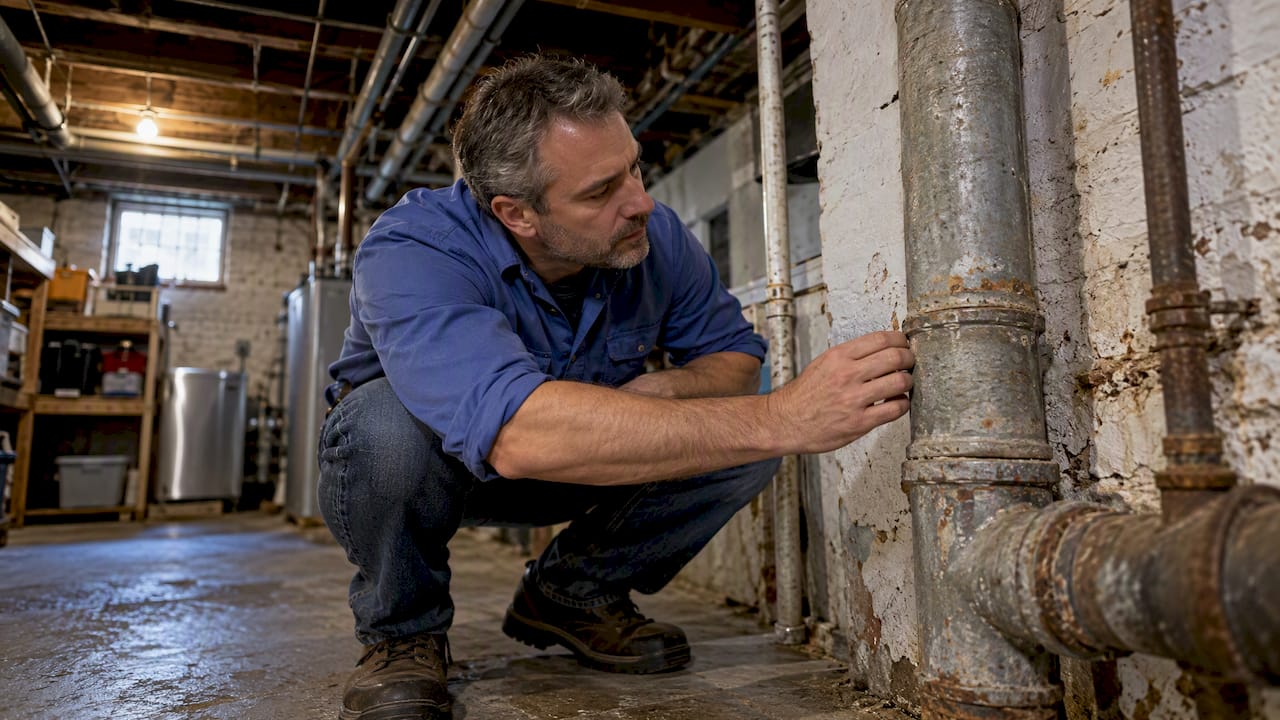
Older homes typically run into outdated pipe materials, hidden leaks, sewer backups, chronic clogs, aging water heaters, and low water pressure, and the right first move is simple: inspect visible plumbing, run a flush test on your cold taps, and stop using any fixture tied to a suspected lead line or sewage backup until a licensed plumber checks it. Lead service lines were common in homes built before 1986, and most homeowners insurance policies exclude sewer backup damage unless you add a specific endorsement.
TL;DR:
- An estimated 6.5 to 10 million U.S. homes still have lead service lines; water testing is the only reliable way to assess exposure.
- Standard homeowners policies generally cover sudden, accidental indoor pipe damage, but exclude wear and tear, maintenance failures, and sewer backups without a separate endorsement.
- Before buying, request a camera inspection of the sewer lateral and service line records; underground cracks and root intrusion can remain hidden until a backup.
- Avoid chemical drain cleaners and aggressive snaking in brittle cast iron or clay lines, because either can worsen pipe damage instead of clearing a clog.
- After work near suspected lead plumbing, flush taps and consider an NSF certified lead reduction filter while awaiting line replacement.
Table of Contents
- Common plumbing problems in older homes
- How to spot problems: an inspection checklist for homeowners and buyers
- What causes these problems: the mechanisms behind old pipe failures
- Health and safety risks to prioritize right now
- Costs and insurance: what your policy usually covers
- When to call a licensed plumber and what to ask them
- Maintenance that reduces risk without risky DIY
- Impact of old plumbing problems on home value and resale considerations
- Common temporary DIY fixes and their risks in old plumbing
- Modern plumbing upgrade options compatible with historic homes
- Our take on older-home plumbing
- How we can help with your old house’s plumbing
- FAQ
- Sources
Common plumbing problems in older homes
Older houses tend to fail in predictable ways, and most of it traces back to what the pipes are made of and how long they have been underground or behind the walls.
Homes built before the mid-1980s often still have at least some of the following:
- Lead service lines, used widely in home construction before 1986 and still present in an estimated 6.5 to 10 million U.S. homes.
- Galvanized steel pipe, which corrodes from the inside out and gradually narrows, cutting water flow.
- Cast iron drain lines, prone to cracking and root intrusion as the pipe ages.
- Polybutylene supply pipe, installed in some homes in past decades and known for brittle, failure-prone fittings.
Corrosion inside galvanized or cast iron pipe produces pinhole leaks that weep slowly before they burst, often showing up first as discolored or rust-tinted water. Underground, clay or cast iron sewer laterals crack over decades, and tree roots exploit those cracks, leading to backups that start as slow drains and end as sewage in a basement. Drain lines installed with older geometry, tighter bends and narrower diameters, also clog more easily, especially with grease buildup from kitchen drains.
Water heaters compound the problem. Sediment collects at the bottom of the tank over years of use, reducing efficiency and eventually causing leaks or total tank failure, usually without much warning. Low water pressure throughout a house is frequently the cumulative result of internal corrosion and mineral scale narrowing the supply lines, not a problem with the municipal supply itself.
How to spot problems: an inspection checklist for homeowners and buyers
Most warning signs are visible if you know where to look, whether you are maintaining your own home or walking through one you are considering buying.
- Check ceilings, walls, and floors near bathrooms and the kitchen for stains, peeling paint, or persistent dampness.
- Smell for musty or sewage odors near floor drains, in basements, and around toilets.
- Run every faucet and check for discoloration, aerator debris, or inconsistent water temperature.
- Inspect under sinks for loose fittings, corrosion, or active drips.
- Walk the basement or crawlspace looking for standing water, white mineral deposits (efflorescence) on foundation walls, or a floor drain that gurgles when other fixtures run.
- Flush every toilet and run multiple fixtures at once to see whether drains back up or drain slowly.
- Let a cold tap run after the house has sat unused for a while, since this first-draw water can carry accumulated lead.
- If accessible, check the water heater’s age and look for rust or sediment residue around its base.
Pro Tip: Bring a simple water-pressure gauge (sold at most hardware stores) when touring an older home; consistently low readings can point to internal corrosion rather than a municipal supply issue.
Our leak detection tips cover several of these checks in more depth if you want a closer look before calling anyone in.
What causes these problems: the mechanisms behind old pipe failures
Pipe failure in older homes almost always comes down to materials reacting with water, soil, or each other over long stretches of time. Galvanic corrosion occurs when dissimilar metals meet, such as a copper fitting joined to galvanized steel, accelerating rust at the connection point. Mineral scale builds up inside pipes in areas with harder water, narrowing the interior diameter year after year.
Decades of incremental repairs add another layer of risk. A house repiped in sections over many years can end up with copper, galvanized, and even older lead segments connected together, and each junction becomes a weak point. Outside the house, tree roots seek out moisture at pipe joints, ground movement shifts buried lines, and freeze-thaw cycles stress pipes in unconditioned crawlspaces or exterior walls. Inside, years of grease poured down a kitchen drain or items flushed that should not be can narrow already-tight older drain lines until a full clog is inevitable.
Health and safety risks to prioritize right now
Three risks deserve more urgency than everything else on this list: lead, sewage, and mold.
- Lead can enter drinking water when plumbing materials that contain it corrode, particularly in water that is acidic or low in minerals, and testing your water is the only reliable way to know your exposure, according to EPA guidance on lead in drinking water.
- Sewage backups expose a household to bacteria and pathogens; after any backup, stop using affected drains, avoid direct contact with the water, and bring in professionals for cleanup rather than handling it yourself.
- Mold takes hold quickly after a chronic leak goes unnoticed behind a wall or under a floor, and persistent dampness is usually the first sign something is already wrong.
An estimated 6.5 to 10 million U.S. homes are still served by lead service lines, according to the EPA, which means many owners of older homes may be living with a service line they have never tested.
Disturbing old plumbing during repair work can dislodge trapped lead particles, so Philadelphia Water Department guidance recommends flushing taps after any plumbing work and considering an NSF-certified lead-reduction filter at the point of use until a line can be replaced or confirmed lead-free. For ongoing mold concerns tied to a leak that has already caused damage, a dedicated remediation specialist like The Mold Genius handles moisture detection and water damage restoration separately from the plumbing repair itself.
Costs and insurance: what your policy usually covers
A standard HO-3 homeowners policy typically covers sudden, accidental water damage from inside the home, such as a pipe that bursts without warning, but it excludes routine wear and tear and, in most cases, sewer or drain backups unless you have added a specific endorsement, per the Insurance Information Institute.
- Sewer backup coverage is widely available as an endorsement to a standard policy, often at a modest added cost, and is worth adding proactively in a house with an aging sewer lateral.
- Repiping, sewer lateral replacement, and water heater replacement all carry wide cost ranges depending on pipe material, length of run, and access; get written, itemized estimates rather than relying on a single verbal quote.
- Homeowners are generally responsible for maintaining their own sewer lateral, and insurers recommend backwater valves and routine root control to reduce backup risk.
- Insurance policies commonly exclude damage traced to a lack of maintenance, so staying on top of inspections protects both your plumbing and your claim eligibility.
When to call a licensed plumber and what to ask them
Some situations do not leave room for a wait-and-see approach: an active leak you cannot stop, any sewage backing up into a drain or fixture, repeated clogs across multiple fixtures at once, or any work that might disturb a suspected lead service line.
- Ask whether the plumber is licensed and insured for work in your area.
- Ask whether they offer a camera inspection of the sewer lateral before recommending excavation.
- Ask about their specific experience with older homes and mixed-material plumbing systems.
- Ask for a written, itemized estimate before any work begins, including repiping options if relevant.
Pro Tip: Photograph or video the issue, with a timestamp, before the plumber arrives; it speeds up diagnosis and gives you a record if you later file an insurance claim.
Maintenance that reduces risk without risky DIY
Routine upkeep goes a long way toward preventing the emergencies above, and most of it is low-risk work you can do yourself.
- Inspect washing machine and dishwasher supply hoses once a year, and replace them periodically even if they look fine.
- Clean faucet aerators periodically to catch early sediment or debris before it clogs fixtures.
- Flush your water heater according to the manufacturer’s schedule to limit sediment buildup.
- Dispose of cooking grease in a sealed container instead of pouring it down a drain.
- Avoid flushing wipes, paper towels, or anything other than toilet paper, even products labeled “flushable.”
- Consider installing a backwater valve if your home has had a sewer backup or sits on a lateral with a history of root intrusion.
Anything beyond this, opening a wall, excavating a lateral, or disturbing a service line, is a licensed plumber’s job, not a weekend project.
Impact of old plumbing problems on home value and resale considerations
Plumbing issues surface during almost every home inspection, and buyers increasingly factor them into their offers. A home with a confirmed lead service line, visible galvanized pipe, or a documented history of sewer backups can lose negotiating leverage, since the buyer’s lender or insurer may require remediation or a specific endorsement before closing.
Sellers who repipe or replace a failing sewer lateral before listing generally present a cleaner inspection report, which tends to move a sale along faster and with fewer renegotiations after the fact. On the buyer’s side, a camera inspection of the sewer lateral before closing is one of the few ways to catch a costly repair risk hiding underground, since cracked clay or cast iron pipe shows no exterior symptoms until a backup happens.
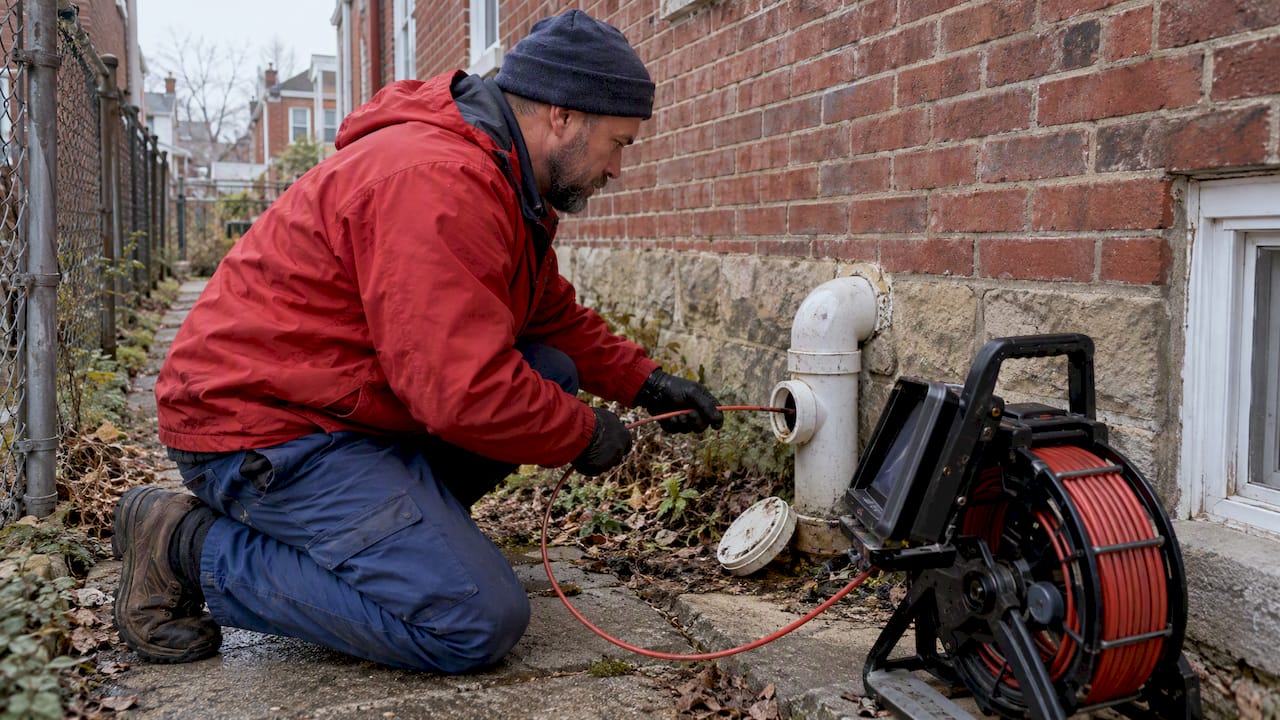
Appraisers do not typically adjust value based on pipe material alone, but a documented, un-remediated issue, such as lead, active leaks, or a failed lateral, becomes a line item in a buyer’s renovation budget and gets negotiated accordingly. For a buyer evaluating an older rowhouse or century home, requesting service-line records and recent plumbing invoices before making an offer is worth the extra step. For a seller, addressing the most visible risks ahead of a listing, rather than letting a home inspector find them first, usually protects more value than it costs.
Common temporary DIY fixes and their risks in old plumbing
Pipe tape, hose clamps, and epoxy putty can temporarily slow a small leak, but on galvanized or cast iron pipe that is already corroding from the inside, a patch on one spot rarely addresses the pipe’s condition further down the line. The leak can reappear nearby.
Chemical drain cleaners are a common response to a slow drain, but in older cast iron or galvanized pipe that is already thinning, the heat these products generate can accelerate internal corrosion and, in some cases, weaken an already fragile pipe wall. A plumbing snake used aggressively on a brittle clay or cast iron lateral carries a similar risk: it can punch through a wall that is already compromised rather than simply clearing the clog.
Even well-intentioned DIY fixes on a suspected lead line carry a specific hazard: disturbing old solder joints or lead pipe during a repair can release trapped particles into the water supply, which is why flushing protocols and certified filtration matter even after a quick fix. None of these temporary measures resolve the underlying material failure, they simply buy time, and in a house with multiple aging systems, that borrowed time tends to run out at the least convenient moment.
Modern plumbing upgrade options compatible with historic homes
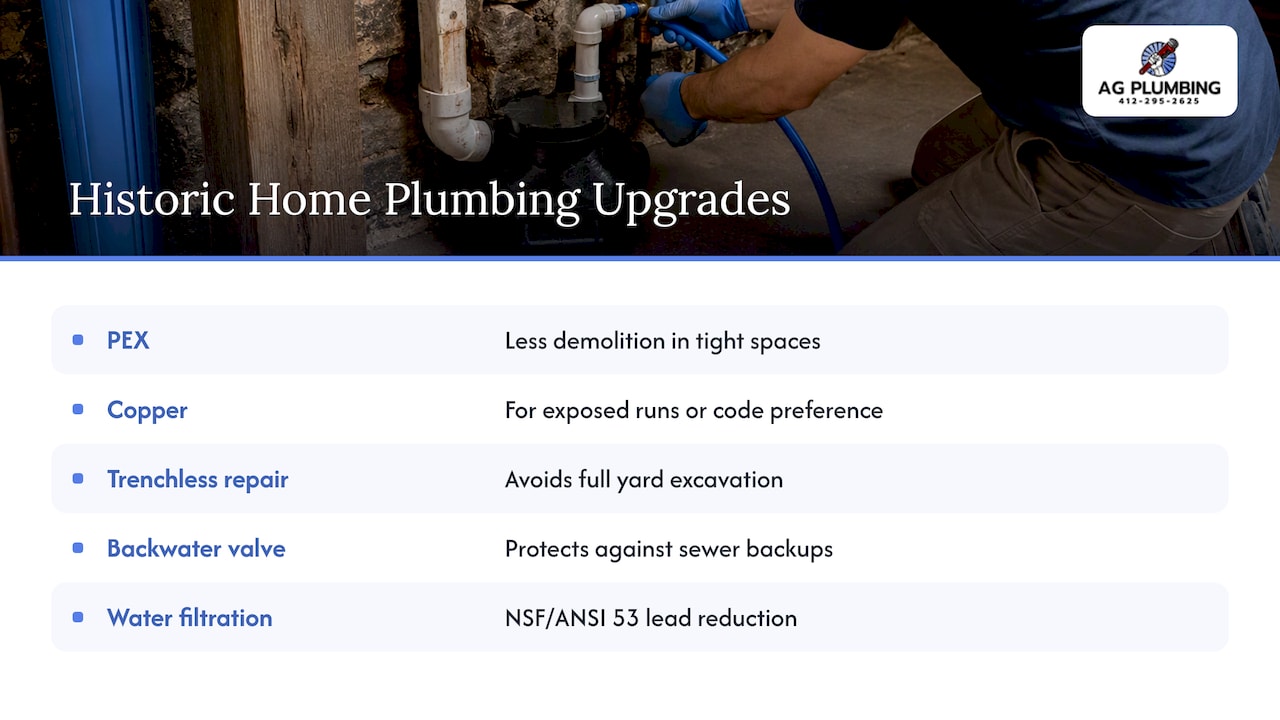
Full repiping does not have to compromise the character of an older home. PEX tubing is flexible enough to route through tight joist bays and plaster walls with far less demolition than rigid copper, making it a common choice for whole-house repipes in historic properties. Copper remains an option where code or preference calls for it, particularly for exposed runs.
For sewer laterals, trenchless repair methods such as pipe lining or pipe bursting can replace a failing clay or cast iron line without excavating an entire yard or driveway, which matters when a historic home’s landscaping or hardscape is part of its value. Backwater valves install at a relatively low point in the system and offer meaningful protection against future sewer backups without altering the home’s existing drain layout.
Point-of-use water filtration certified to NSF/ANSI 53 for lead reduction is a practical interim step for a household still waiting on full lead service line replacement, and it pairs well with the EPA’s flushing guidance in the meantime. None of these upgrades require changing a home’s layout or finishes, which is the main reason they fit historic homes as well as they fit any other property. Our guide on galvanized pipe walks through how this material compares to modern alternatives in more detail, and our guide to identifying lead pipes explains what to look for before you commit to a repipe plan.
Our take on older-home plumbing
Maayan is affiliated with AG Heating, Cooling & Plumbing, where our team brings extensive local plumbing experience to older housing stock throughout Pittsburgh and the surrounding area. That history shapes a specific habit: we test and inspect with a camera before we ever recommend excavation or a blind repair, because guessing at what is underground in an old lateral costs more than checking first.
— Maayan
How we can help with your old house’s plumbing
If any of the red flags above sound familiar, a professional inspection is the fastest way to find out what you are actually dealing with instead of guessing. Our team handles plumbing repair, sewer repair, and plumbing repiping for homes throughout Pittsburgh, PA and the surrounding area.

When you call, ask us for a camera inspection of your lateral, a written and itemized estimate before any work starts, and post-repair testing to confirm the fix holds. Schedule a plumbing inspection with our team and get a clear answer on what your older home’s plumbing actually needs.
This article is general information, not a substitute for advice from a qualified doctor. Consult a qualified healthcare professional about your own circumstances before acting on anything here.
FAQ
Did houses have indoor plumbing in 1900?
Many did not. Indoor plumbing was far from universal in 1900, and in 1940 about 45 percent of U.S. housing units lacked complete plumbing facilities, with the gap especially wide in the South and Midwest.
What are some common topics in plumbing?
Common topics include pipe materials and corrosion, drain clogs, water heater maintenance, sewer line condition, water pressure, and leak detection. For older homes specifically, lead service lines, galvanized pipe, and sewer lateral root intrusion come up most often.
What is the 135 rule in plumbing?
There is no widely recognized plumbing code rule labeled “135” in residential or industry guidance. If you encountered this term in a specific local code or product manual, check with a licensed plumber familiar with your area’s requirements rather than relying on an unofficial definition.
Are major plumbing issues covered by homeowners insurance?
Standard homeowners insurance generally covers sudden, accidental water damage, such as a pipe that bursts without warning, but it typically excludes routine wear and tear and sewer or drain backups unless you have purchased a separate endorsement. Damage linked to a lack of maintenance is also commonly excluded, so regular inspections help protect both your plumbing and your coverage.
Sources
Recommended
- Essential plumbing safety tips for Pittsburgh homeowners
- Leak Detection Tips for Homeowners: 10 Quick Checks
- Why Install Shutoff Valves: A Homeowner’s Safety Guide
- Plumbing Maintenance Checklist: Prevent Costly Home Repairs
