
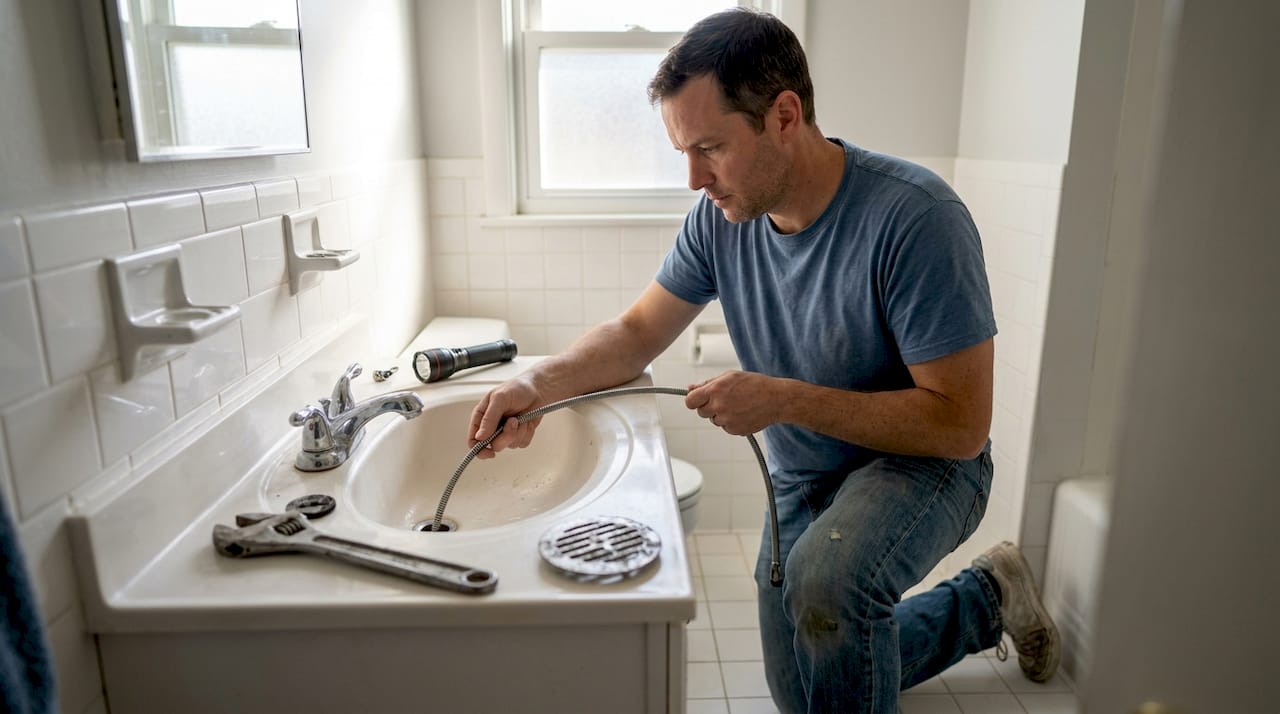
When your kitchen sink backs up or the bathroom drain refuses to budge despite repeated plunging, frustration sets in quickly. Many Pittsburgh homeowners face clogs that simple tools can’t handle. A plumbing snake offers a powerful solution for these stubborn blockages. This flexible tool reaches deep into pipes to break up or retrieve debris that plungers miss. Understanding what a plumbing snake is, how it works, and when to use one empowers you to tackle common drain problems confidently and avoid costly emergency calls.
Table of Contents
- Key takeaways
- What is a plumbing snake and how does it work?
- Types of plumbing snakes and when to use them
- Step-by-step guide to using a plumbing snake safely at home
- Comparing plumbing snakes to other clog removal methods
- Discover professional plumbing services in Pittsburgh
- Frequently asked questions
Key Takeaways
| Point | Details |
|---|---|
| What a plumbing snake is | A plumbing snake is a long flexible coil with a helix tip that breaks up or retrieves clogs by rotating through the pipe. |
| How it works | It is inserted into the drain and you rotate the handle to advance the cable until the blockage is reached, where it breaks up debris or pulls it out. |
| Common clogs addressed | Hair, soap scum, food particles, grease, roots, and small objects are typical targets for snakes. |
| Pre use prep | Remove the drain cover and inspect with a flashlight to spot surface level clogs you can clear without inserting the tool. |
| Tool types | Hand augers, closet augers, and drum augers are designed for different drains and depths to protect fixtures and improve success. |
What is a plumbing snake and how does it work?
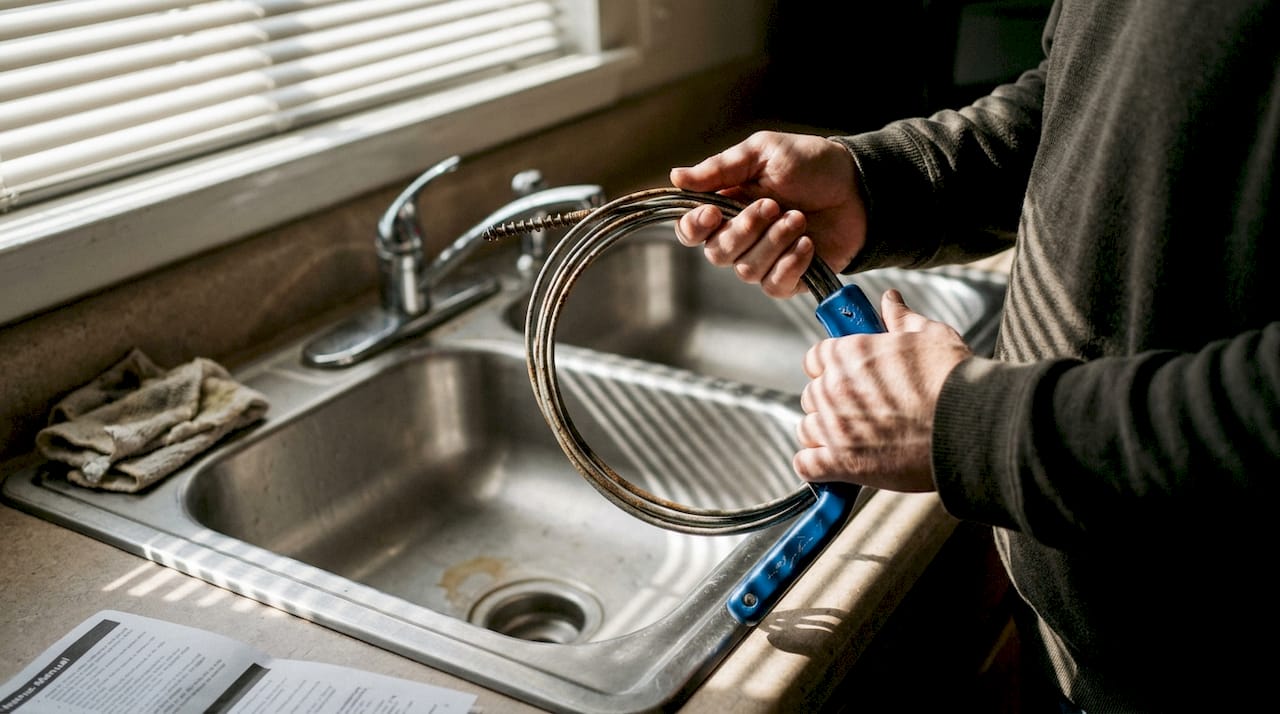
A plumbing snake, also known as a drain snake or drain auger, is a long, flexible coiled metal cable with a helix-shaped tip used to dislodge clogs by rotating to break up, snag, or scrape blockages. The tool typically measures anywhere from 15 to 100 feet depending on the model and intended use. Professional plumbers rely on these devices daily, but homeowners can also master basic snaking techniques for routine maintenance.
The physical design features tightly wound metal coils that provide both flexibility and strength. This construction allows the cable to navigate through curved pipes and P-traps without losing effectiveness. The auger tip at the end comes in various configurations, some designed to bore through soft clogs while others feature hooks to retrieve solid objects.
It works by inserting the cable into the drain, rotating the handle to advance through pipes, breaking up shreddable clogs or snagging debris. As you turn the handle clockwise, the cable spirals forward, pushing past water and working its way toward the obstruction. When the tip encounters resistance, continued rotation either breaks apart the clog material or catches it on the auger head for removal.
Common blockages addressed by plumbing snakes include:
- Hair accumulation in bathroom drains
- Soap scum and mineral buildup
- Food particles in kitchen sinks
- Tree roots infiltrating sewer lines
- Small objects accidentally dropped down drains
- Grease deposits hardened inside pipes
The mechanical action differs fundamentally from chemical drain cleaners or plungers. While chemicals dissolve certain materials and plungers use air pressure, snakes provide direct physical contact with the clog. This makes them particularly effective for drain snaking explained situations where other methods fail.
Pro Tip: Before using a plumbing snake, remove the drain cover and use a flashlight to inspect the opening. Sometimes you can spot and remove surface-level clogs without inserting the tool at all.
The versatility of plumbing snakes makes them valuable for various household drains. Bathroom sinks frequently clog with hair and toothpaste residue. Kitchen drains accumulate grease and food scraps despite garbage disposal use. Shower drains collect soap and hair over time. Regular drain cleaning importance prevents these minor issues from becoming major problems.
Types of plumbing snakes and when to use them
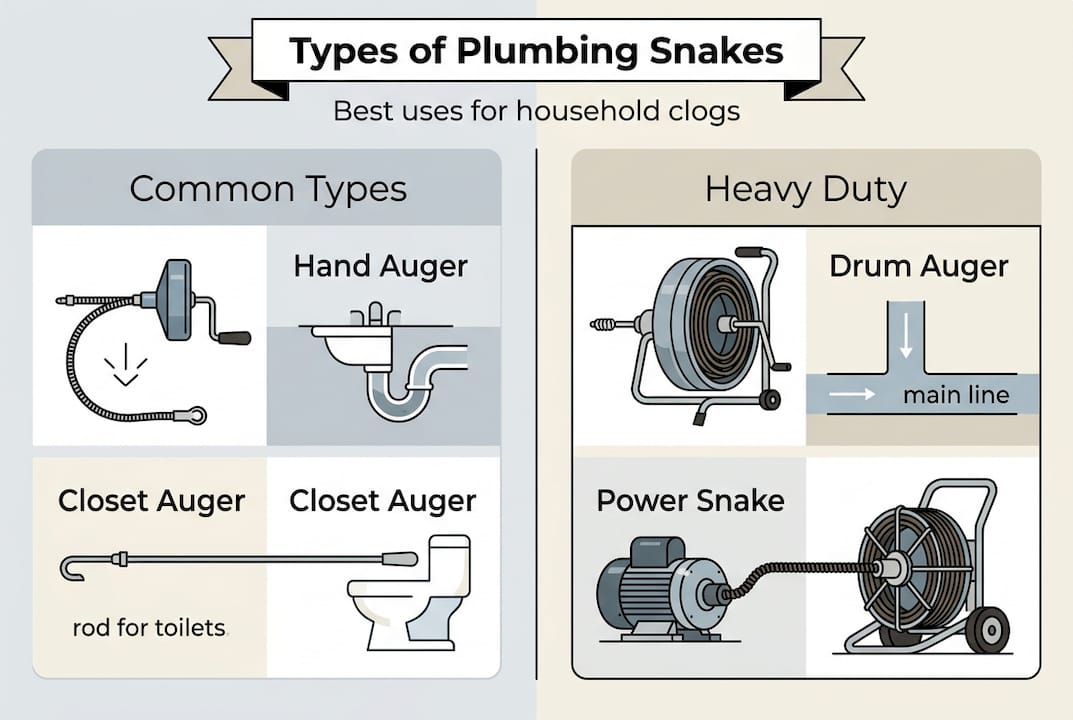
Different plumbing situations require specific snake designs. Types include hand augers for sinks and tubs, closet augers for toilets with porcelain protection, and drum augers for deeper sewer lines and roots. Selecting the right tool prevents damage and improves success rates dramatically.
Hand augers represent the most common type for residential use. These compact tools typically extend 15 to 25 feet and work perfectly for bathroom sinks, tubs, and shower drains. The manual crank handle provides enough torque for most household clogs without requiring electrical power. Their portability and ease of storage make them ideal starter tools for homeowners building basic plumbing kits.
Closet augers specifically target toilet clogs. The design includes a protective rubber sleeve that prevents scratching porcelain surfaces during use. A curved guide tube directs the cable into the toilet trap effectively. This specialized configuration reaches blockages lodged in the toilet’s internal passages where standard plungers often fail.
Drum augers, also called sewer snakes, handle heavy-duty applications. These larger units feature 50 to 100 feet of cable wound inside a drum housing. Manual models require significant physical effort, while motorized versions provide consistent power for tough jobs. Professional plumbers favor drum augers for main sewer line work and stubborn root intrusions.
| Snake Type | Length | Best For | Power Source |
|---|---|---|---|
| Hand Auger | 15-25 ft | Sinks, tubs, showers | Manual crank |
| Closet Auger | 3-6 ft | Toilet clogs | Manual crank |
| Drum Auger | 50-100 ft | Main lines, roots | Manual or electric |
| Mini Auger | 10-15 ft | Small drains | Manual crank |
Choosing the appropriate snake depends on several factors. Drain size matters because using an oversized cable in small pipes risks damage. Clog location determines required cable length. Blockage type influences whether you need cutting power or retrieval capability. For most DIY drain snaking guide projects, a standard hand auger handles typical household needs.
Pro Tip: Rent a motorized drum auger from hardware stores for main line clogs rather than purchasing one. These powerful tools cost hundreds of dollars but rent for reasonable daily rates when you need serious clearing power.
Typical use cases for each type:
- Hand augers clear hair clogs in bathroom sinks within minutes
- Closet augers retrieve toys or hygiene products from toilet traps
- Drum augers cut through tree roots invading sewer lines
- Mini augers work well for bar sinks and utility room drains
Recognizing signs you need drain cleaning helps you act before simple clogs become emergencies. Slow drainage, gurgling sounds, and recurring backups all indicate developing problems that snaking can address effectively.
Step-by-step guide to using a plumbing snake safely at home
Proper technique protects your pipes while maximizing effectiveness. DIY methodology includes preparing the work area, inserting the snake while rotating gently, feeling resistance, applying pressure carefully, and flushing the drain to confirm clearing. Following systematic steps reduces risk and improves outcomes significantly.
-
Prepare your workspace by placing towels around the drain opening to catch water and debris. Wear rubber gloves to protect your hands from dirty pipe residue. Ensure adequate lighting so you can see what you’re doing clearly. Remove the drain stopper or cover completely to provide unobstructed access.
-
Insert the snake cable into the drain opening slowly while keeping the handle close to the entry point. Push gently until you feel initial resistance, which might be a curve in the pipe rather than the actual clog. Avoid forcing the cable aggressively at this stage.
-
Begin rotating the handle clockwise while applying steady forward pressure. The spinning action helps the cable navigate bends and work through the blockage. You’ll feel distinct resistance when the auger tip contacts the clog material.
-
Work through the clog by continuing rotation while pushing forward incrementally. The blockage may break apart suddenly, or you might need several minutes of patient effort. If the cable stops advancing despite rotation, pull back slightly and try again from a different angle.
-
Retrieve the snake carefully once you’ve cleared the path or snagged debris. Pull the cable out slowly while continuing to rotate, which prevents caught material from falling back into the pipe. Expect the auger tip to bring out unpleasant clog remnants.
-
Flush the drain thoroughly with hot water for several minutes. This confirms the blockage is completely cleared and washes away remaining debris. If water still drains slowly, the clog may be deeper or more extensive than initially apparent.
Pro Tip: Mark your cable with tape at one-foot intervals before inserting it. This helps you gauge how deep the clog sits and whether you’re making progress as you work.
Critical safety warnings prevent costly mistakes. Never force the snake aggressively, as excessive pressure can puncture older pipes or create new problems. Avoid using power tools on delicate fixtures without proper training. Don’t attempt main sewer line work without understanding potential complications. For complex situations, preventative drain cleaning from professionals saves money compared to repair bills from DIY damage.
Recognize when to stop and call for help. If you’ve worked for 20 minutes without progress, the clog likely requires professional equipment. Hearing unusual sounds or feeling the cable bind suggests you’ve encountered something beyond basic blockages. Standing water that won’t drain at all after snaking indicates a more serious issue. Professional drain cleaning services have specialized tools and expertise for challenging situations.
Comparing plumbing snakes to other clog removal methods
Homeowners have multiple options for clearing drains, each with distinct advantages. Understanding how snaking compares to alternatives helps you choose the most effective approach for specific situations. While plungers work for simple clogs and chemicals dissolve certain materials, snakes provide mechanical action that handles a broader range of blockages.
Hydro jetting uses high-pressure water streams to scour pipe interiors completely clean. Professional equipment delivers 3,000 to 4,000 PSI, removing years of accumulated buildup. This method excels at preventative maintenance and restoring severely restricted pipes. However, it requires expensive equipment and trained operators, making it impractical for quick DIY fixes.
Snaking works well to break path quickly and handle many emergency clogs but may not fully clean pipe walls compared to hydro jetting’s scour. The mechanical cable creates a channel through blockages rather than removing all residue. For immediate relief from backed-up drains, snakes provide faster results at lower cost. For comprehensive pipe cleaning, hydro jetting delivers superior long-term outcomes.
| Method | Speed | Cost | Effectiveness | DIY Friendly |
|---|---|---|---|---|
| Plunger | Fast | Very Low | Limited | Yes |
| Snake | Moderate | Low | Good | Yes |
| Chemicals | Slow | Low | Variable | Yes |
| Hydro Jetting | Moderate | High | Excellent | No |
Key advantages of plumbing snakes include:
- Immediate availability for homeowners without scheduling delays
- Relatively low equipment cost compared to professional services
- Effective against physical blockages that chemicals can’t dissolve
- Reusable tool that handles multiple future clogs
- No harsh chemicals that might damage older pipes
- Ability to retrieve solid objects causing obstructions
Limitations to consider:
- May not fully clean pipe walls of accumulated grease or mineral deposits
- Requires physical effort and some technical skill
- Can damage pipes if used incorrectly with excessive force
- Limited effectiveness against certain clog types like hardened concrete
- Shorter cables can’t reach deep main line blockages
Chemical drain cleaners offer convenience but come with significant drawbacks. They work slowly, often requiring hours to dissolve clogs. Harsh ingredients can corrode older pipes over time. They’re ineffective against solid objects or dense accumulations. Environmental concerns and safety hazards make them less appealing than mechanical methods.
For Pittsburgh homeowners, snakes serve as an excellent middle ground. They handle most common clogs that plungers miss without requiring professional service calls. When snaking doesn’t resolve the issue, that’s the signal to explore hydro jetting guide options or consider whether hydro jetting benefits justify the investment for your specific situation.
Pro Tip: Use a plumbing snake first for any clog beyond simple plunger fixes. If snaking provides temporary relief but clogs return within weeks, that pattern indicates buildup requiring professional hydro jetting for lasting results.
Discover professional plumbing services in Pittsburgh
While DIY snaking handles many household clogs effectively, some situations demand professional expertise and equipment. Recognizing when to call for help prevents minor issues from escalating into expensive repairs. AG Heating, Cooling & Plumbing brings 30 years of experience to Pittsburgh area homes, combining proven techniques with modern technology.
Our team understands the unique challenges Pittsburgh’s older homes present, from aging cast iron pipes to tree root intrusions common in established neighborhoods. When your DIY efforts hit a wall or you’re dealing with recurring drain problems, professional assessment identifies underlying issues that basic snaking can’t address. We offer comprehensive plumbing repair services that go beyond temporary fixes to deliver lasting solutions.
Complex clogs in main sewer lines, persistent backups affecting multiple drains, or situations where you suspect pipe damage all warrant professional attention. Our professional drain cleaning service includes video inspection capabilities that reveal exactly what’s happening inside your pipes. This diagnostic approach ensures we apply the right solution whether that’s advanced snaking, hydro jetting, or repair work.
Pittsburgh homeowners trust our responsive service and transparent pricing. We explain your options clearly, helping you make informed decisions about your plumbing system’s health. From routine maintenance to emergency situations, our experienced technicians deliver reliable results that protect your home’s plumbing infrastructure. Visit AG Plumbing Pittsburgh services to learn more about how we can help maintain your drains and prevent future problems.
Frequently asked questions
What is a plumbing snake?
A plumbing snake is a flexible metal cable tool designed to clear drain clogs by rotating through pipes to break up or retrieve blockages. The coiled design allows it to navigate curved pipes while the auger tip physically contacts and dislodges obstructions that plungers can’t reach.
How do you use a plumbing snake safely?
Insert the cable slowly while rotating clockwise, applying gentle pressure when you encounter resistance. Work through the clog patiently without forcing the tool aggressively, which could damage pipes. Always wear gloves and flush thoroughly with hot water after clearing the blockage.
When should you call a plumber instead of using a snake?
Call a professional if you’ve worked for 20 minutes without progress, hear unusual sounds, or notice the clog returns quickly after clearing. Main sewer line issues, multiple backed-up drains simultaneously, or suspected pipe damage all require professional assessment and equipment beyond DIY capabilities.
Can a plumbing snake damage your pipes?
Yes, excessive force or improper technique can scratch, puncture, or crack pipes, especially older or fragile materials. Using the wrong size snake for your drain or forcing the cable aggressively creates risk. Following proper procedures and knowing when to stop prevents damage.
What’s the difference between a snake and hydro jetting?
Snakes use mechanical rotation to break through clogs and create a drainage path quickly, while hydro jetting uses high-pressure water to completely scour pipe walls clean. Snakes work well for immediate blockage relief, whereas hydro jetting provides thorough cleaning that addresses buildup and prevents future clogs more effectively.
Recommended
- Drain Snaking Explained: Solving Pittsburgh Clogs Fast – AG-Plumbing
- Heating, Cooling & Plumbing Services Pittsburgh, PA
- How to snake a drain: DIY guide for Pittsburgh homeowners – AG-Plumbing
- Clear Sewer Line Blockages: 2026 Homeowner’s Guide – AG-Plumbing
