
TL;DR:
- CCTV pipe inspection uses waterproof cameras to visually diagnose pipe issues without excavation, allowing early defect detection and targeted repairs. It provides documented, objective reports that help prevent costly emergencies, especially when performed regularly by certified professionals. While effective for identifying structural problems, it should be complemented with other tests for comprehensive leak detection and thorough system evaluation.
Most homeowners assume that diagnosing a pipe problem means either guessing or tearing up a yard. Neither option is accurate anymore. CCTV pipe inspection gives you a direct, visual look inside your pipes without any digging, drilling, or destruction. It is one of the most practical tools available for diagnosing what is actually happening inside your plumbing system, and understanding how it works puts you in a much stronger position when something goes wrong. This guide covers exactly what the technology is, how the process works, and when you should use it.
Table of Contents
- Key takeaways
- What is CCTV pipe inspection and how it works
- Common problems CCTV inspections uncover
- Benefits and limitations of CCTV pipe inspection
- How CCTV compares to other inspection methods
- When to schedule an inspection and what to expect
- My take on proactive inspections as a long-term strategy
- Get expert pipe inspection services in Pittsburgh
- FAQ
Key takeaways
| Point | Details |
|---|---|
| Non-invasive technology | CCTV pipe inspection uses waterproof cameras inside pipes, requiring no excavation to diagnose problems. |
| Detects multiple defects | Inspections identify cracks, root intrusion, blockages, corrosion, and collapsed sections before they escalate. |
| Cost is manageable | Residential inspections typically cost between $125 and $500, far less than emergency excavation repairs. |
| Professional standards matter | Certified inspectors using NASSCO PACP standards produce objective, coded reports that guide real repair decisions. |
| Proactive use saves money | Scheduling regular inspections extends pipe lifespan and avoids costly emergency failures. |
What is CCTV pipe inspection and how it works
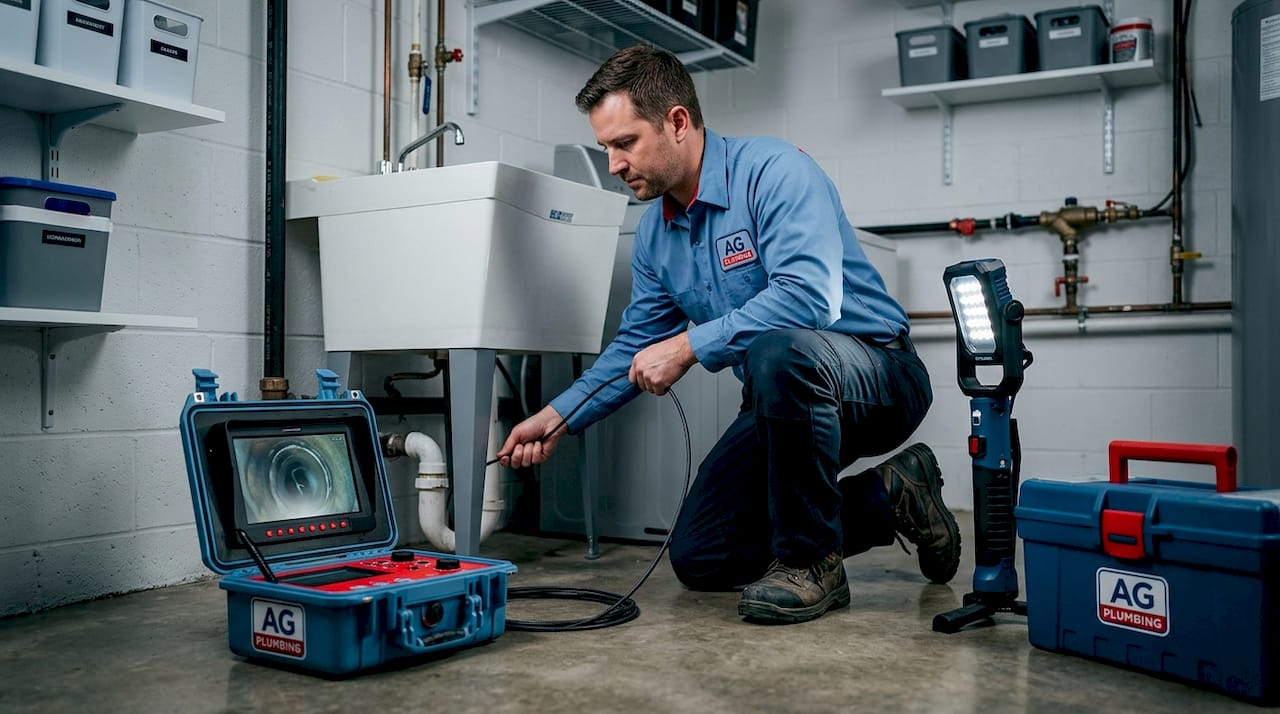
CCTV stands for closed-circuit television. In plumbing, it refers to the practice of inserting a waterproof camera into pipes to visually inspect their interior condition without any surface disruption. The camera transmits live video to a monitor operated by a technician above ground, who records the footage and analyzes it for defects.
The equipment varies depending on the pipe size and complexity. Smaller residential lines typically use a push-rod camera, which is a flexible cable with a high-definition camera head that the technician feeds through the pipe by hand. Larger or more complex systems use robotic crawlers with pan-tilt-zoom cameras that navigate bends and junctions while transmitting real-time high-definition video to a surface operator.
Here is how a standard CCTV pipe inspection process unfolds:
- Access point setup. The technician locates the nearest cleanout, drain opening, or manhole entry point. In residential properties, this is often a bathroom cleanout or outdoor sewer access.
- Camera insertion. The push-rod or crawler is fed into the pipe at the access point.
- Live video monitoring. The operator watches the footage on a monitor as the camera travels through the line, controlling direction and speed.
- Defect logging. Any issues the camera encounters are noted with their location, often measured in feet from the access point.
- Footage recording and reporting. The full video is saved and paired with a written report that documents the findings, including photographs pulled from the footage.
Typical areas covered include main sewer lines, lateral drain lines, storm drains, and interior plumbing pipes. The CCTV drainage inspection process works in pipes as small as two inches in diameter, making it useful across residential, commercial, and municipal settings.
Pro Tip: Ask your inspector whether the camera records in high definition. Low-resolution footage can miss hairline cracks and early-stage corrosion, which are exactly the kinds of defects worth catching early.
Common problems CCTV inspections uncover
CCTV inspection is not just a diagnostic curiosity. It is the most reliable way to find a specific list of problems that visual surface checks cannot detect. According to common pipe defects identified by camera inspection technology, the most frequently discovered issues include:
- Root intrusion. Tree and shrub roots enter through pipe joints and cracks, gradually growing until they cause complete blockages or structural damage.
- Cracks and fractures. Ground movement, freezing temperatures, and age all cause pipe walls to develop hairline cracks that worsen over time.
- Blockages and buildup. Grease accumulation, sediment deposits, and debris clogs restrict flow long before a backup occurs.
- Pipe offsets. Soil shifting causes pipe segments to misalign at joints, disrupting flow and creating catch points for debris.
- Corrosion. Older metal pipes develop interior corrosion that thins pipe walls and eventually leads to leaks or collapse.
- Collapsed sections. Severely deteriorated pipes can partially or fully collapse, requiring immediate repair or replacement.
What makes CCTV inspection particularly valuable is its ability to catch these problems at early stages. High-resolution imaging detects hairline cracks and sediment buildup that, if left alone, compound into failures requiring full pipe replacement. Compare that with the traditional approach: without a camera, a plumber diagnosing slow drains might clear the line with a snake and call it done. The underlying crack or root intrusion stays in place, and six months later you are dealing with the same problem, or a worse one.
For property managers overseeing multiple units or older buildings, this early detection capability is particularly significant. Proactive inspections catch minor defects before they escalate into emergency failures that disrupt tenants and require urgent, expensive repairs.

Benefits and limitations of CCTV pipe inspection
Understanding the honest trade-offs of CCTV inspection helps you make smarter decisions about when to use it and what to expect from the results.
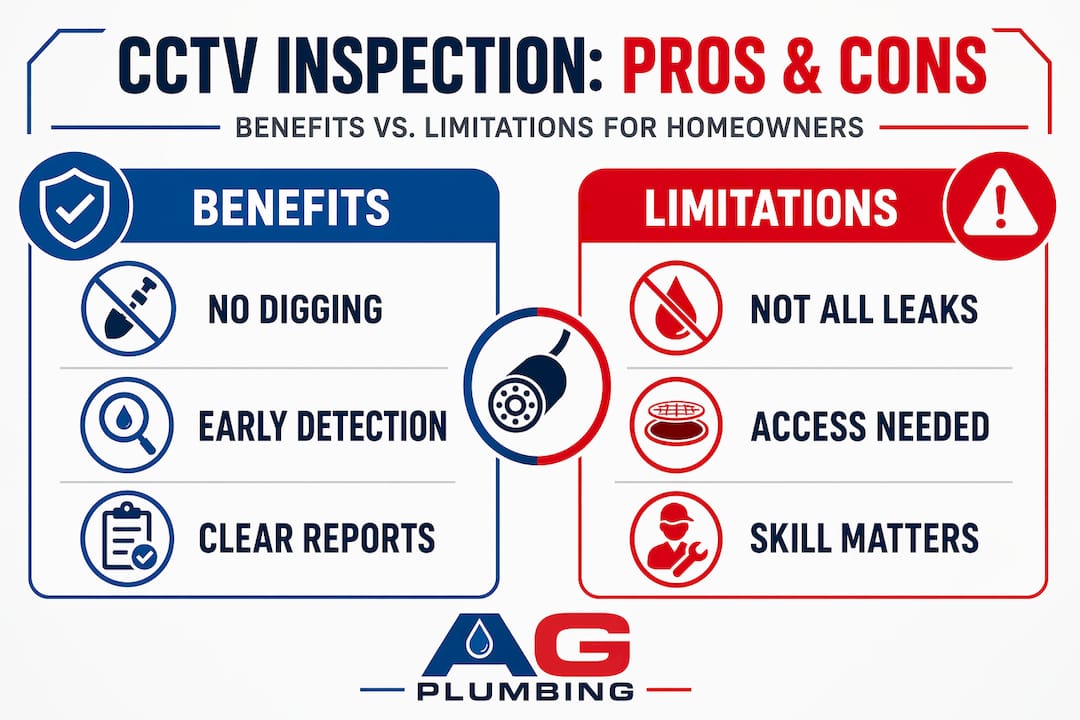
What makes it worth it
| Benefit | What it means for you |
|---|---|
| No excavation required | Your yard, driveway, and flooring stay intact during diagnosis |
| Targeted repairs only | Repairs are made exactly where problems exist, not along the entire line |
| Documented evidence | Recorded footage and written reports back up repair decisions and insurance claims |
| Cost control | Minimizing excavation reduces costs significantly compared to exploratory digging |
| Long-term planning | Reports become a baseline record for tracking pipe condition over time |
The documentation benefit deserves extra attention. A good CCTV inspection report gives you a before-and-after baseline. If you sell your home or hand over a property to a new manager, that report proves the system’s condition at a specific point in time. It also protects you if a contractor recommends expensive repairs that the footage does not actually support.
Real constraints to know about
CCTV inspection is not perfect. Camera inspections can miss small leaks or subtle damage, and tight angles or turns can obscure sections of pipe from the camera’s field of view. It also cannot detect leaks that are seeping through an otherwise intact pipe wall. In those cases, pressure testing or dye tracing provides information that cameras cannot.
Professional certification also matters more than most homeowners realize. NASSCO PACP certification requires inspectors to grade defects on a 1-to-5 severity scale and produce standardized coded reports that engineers and contractors can act on with confidence. A homeowner who gets an uncertified “video walkthrough” may receive footage with no formal defect coding, which makes it harder to prioritize repairs or compare results across inspections. NASSCO-certified professionals consistently emphasize that any video of a pipe is not automatically a survey. Standardized coding makes the data objective and usable.
Pro Tip: When requesting quotes, ask specifically whether the inspector holds NASSCO certification and whether the report will include PACP defect codes. This one question separates professionals from operators with a camera and a cable.
How CCTV compares to other inspection methods
Before committing to CCTV, it helps to know where it stands relative to the alternatives.
| Method | Best for | Limitation |
|---|---|---|
| CCTV camera inspection | Visual defect detection, documentation, targeted repairs | Cannot detect leaks through intact walls |
| Pressure testing | Confirming leaks and testing pipe integrity | Does not identify location or type of defect |
| Smoke testing | Tracing sewer gas entry points and connection paths | Only useful for gas leak pathways, not structural issues |
| Dye tracing | Confirming drainage flow paths and cross-connections | Requires controlled conditions and cleanup |
| Excavation | Direct pipe access for severe blockages or collapses | Expensive, disruptive, and often unnecessary |
CCTV inspection sits at the top of most diagnostic sequences because it provides visual confirmation before any money is spent on repair. Pressure testing tells you a leak exists. CCTV tells you where it is and what caused it. For that reason, many plumbing repair decisions in residential properties now start with a camera inspection before any other method is considered.
There are situations where combining methods delivers the best outcome. If a camera inspection identifies a structural defect but cannot confirm whether the pipe is still holding pressure, adding a pressure test afterward gives a complete picture. The two methods complement each other without duplication.
When to schedule an inspection and what to expect
You do not need to wait for a plumbing emergency to justify a CCTV inspection. Knowing the right triggers helps you act before small problems become expensive ones.
Schedule a CCTV pipe inspection when you notice:
- Slow-draining sinks, showers, or tubs that persist after basic clearing.
- Recurring backups in the same drain or toilet.
- Foul odors coming from drains or the yard near sewer lines.
- Unexplained wet spots in the yard or basement with no obvious cause.
- Before purchasing a home, particularly one built before 1980 with original cast iron or clay pipes.
- After a large tree is removed from your property near sewer lines.
- As part of a routine plumbing maintenance schedule every three to five years.
When the inspector arrives, expect the process to take between one and three hours for a standard residential property. They will locate the access point, insert the camera, and walk you through the footage in real time if possible. After the inspection, you should receive a written report and a copy of the video recording.
On cost: residential sewer camera inspections typically run between $125 and $500, with an average around $280. More complex inspections involving multiple lines, longer footage, or formal written reports may push toward $500 or beyond. That range is a fraction of what undetected damage costs once it becomes an emergency.
Pro Tip: If a contractor includes a free camera inspection as part of a repair estimate, ask for an independent copy of the footage. You want documentation that belongs to you, not just to the contractor recommending the repair.
My take on proactive inspections as a long-term strategy
I have seen the same pattern repeat more times than I can count. A homeowner notices a slow drain, clears it with a chemical solution, and moves on. A year later, the main sewer line backs up into the basement and the repair bill is $8,000. Every single time, a camera inspection done at the first warning sign would have caught the issue for under $300.
The uncomfortable truth is that most pipe failures are not sudden events. They are the result of problems building slowly over months or years. Root intrusion does not happen overnight. Corrosion does not collapse a pipe in a single week. The pipe gives you signals, and CCTV inspection is the tool that reads those signals accurately.
What I have also learned is that the quality of the inspection matters as much as doing one at all. I strongly favor inspectors with NASSCO PACP certification because the coded reports they produce are actually useful for long-term planning. A video file on its own is interesting. A coded defect report tells you what to fix now, what to monitor, and what can wait.
The future of pipe maintenance for homeowners will look much more like what property managers already do at scale: scheduled inspections, documented baselines, and repairs made on evidence rather than guesswork. If you treat your pipes that way now, you will spend less and stress less over the life of your home.
— Maayan
Get expert pipe inspection services in Pittsburgh
When you are ready to get a clear picture of what is happening inside your pipes, the team at Ag-plumbing is ready to help. With 30 years of experience serving homeowners and property managers in Pittsburgh, PA, Ag-plumbing brings the expertise and equipment to deliver accurate, documented inspections you can actually use.
Whether you are dealing with recurring backups, buying a new property, or simply want a baseline for your plumbing system, our professional plumbing services cover camera inspections, pipe repairs, and full maintenance programs. We work with certified inspectors who provide detailed reports, not just video footage. Reach out to schedule a plumbing inspection and get the kind of honest, documented diagnosis that protects your property for the long term.
FAQ
What is CCTV pipe inspection used for?
CCTV pipe inspection is used to visually assess the interior condition of pipes, identifying defects like cracks, root intrusion, blockages, and corrosion without excavation. It is used for both diagnosing active problems and proactive maintenance planning.
How much does a CCTV pipe inspection cost?
Residential CCTV sewer camera inspections typically cost between $125 and $500, averaging around $280 in the US. Costs vary based on pipe length, accessibility, and whether a formal written report is included.
Is CCTV pipe inspection effective for finding leaks?
CCTV inspection is highly effective for detecting structural defects that cause leaks, such as cracks and joint offsets, but it may miss leaks seeping through otherwise intact pipe walls. Pressure testing is often combined with camera inspection when a hidden leak is suspected.
How long does a CCTV pipe inspection take?
A standard residential inspection typically takes one to three hours depending on pipe length, access difficulty, and the number of lines inspected. The operator monitors live footage and logs defect locations throughout the process.
What credentials should I look for in a CCTV pipe inspector?
Look for inspectors with NASSCO PACP certification, which requires standardized defect coding on a 1-to-5 severity scale. This certification ensures the report you receive is objective, consistent, and usable for long-term repair planning rather than a subjective video opinion.
Recommended
- What Is PVC Piping? A Homeowner’s Guide to Plumbing – AG-Plumbing
- Pipe bursting: Modern trenchless repair for Pittsburgh homes – AG-Plumbing
- Step-by-step pipe replacement guide for Pittsburgh homeowners – AG-Plumbing
- Why annual plumbing inspections save Pittsburgh homeowners thousands – AG-Plumbing
