
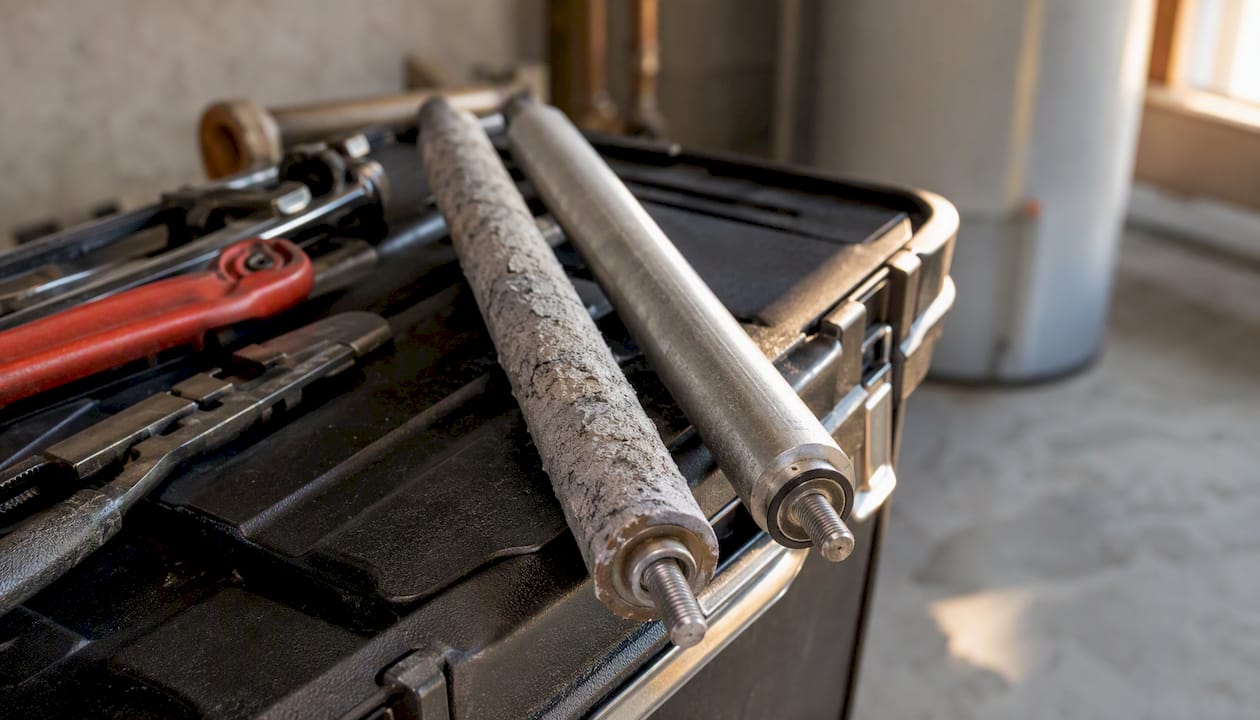
Magnesium is the better default anode for most home water heaters because it delivers the strongest active protection against tank corrosion. Choose aluminum instead when you have hard water, chlorinated city water, or a house that already smells like rotten eggs.
A few things decide which one you actually need:
- Protection strength: magnesium’s electrochemical potential outworks aluminum in most freshwater tanks.
- Odor risk: magnesium reacts with sulfate-reducing bacteria more often than aluminum, which is why plumbers swap it out when the smell shows up.
- Lifespan: aluminum corrodes slower, so it usually lasts longer between replacements.
- Water chemistry rules everything: test your pH and TDS before you buy either one.
Key Takeaways
Magnesium anode rods deliver the strongest active protection for most home water heaters, while aluminum rods last longer and reduce odor risk in hard or sulfate-heavy water.
| Point | Details |
|---|---|
| Default to magnesium | It offers the strongest protection for soft, low-sulfate residential water. |
| Switch to aluminum for hard water | Aluminum resists depletion better in mineral-heavy or chlorinated supplies. |
| Odor means switch materials | Persistent rotten-egg smell usually resolves after moving from magnesium to aluminum. |
| Check the rod at 50% depletion | Exposed core wire over half the rod’s length means it’s time to replace it. |
| Call Ag-plumbing for the full check | Ag-plumbing inspects the rod, tests water chemistry, and replaces it safely in one visit. |
Table of Contents
- Aluminum vs Magnesium Anode Rod Comparison
- How a Sacrificial Anode Rod Actually Protects Your Tank
- Which Anode Rod Fits Your Water Type?
- Why Your Water Heater Smells Like Rotten Eggs
- How Long Anode Rods Last and When to Replace Them
- Identifying Whether Your Current Rod Is Aluminum or Magnesium
- Cost, Thread Size, and Compatibility Basics
- Zinc, Powered Anodes, and Marine-Specific Choices
- When to Call a Plumber Instead of DIY-ing It
- Get Your Water Heater’s Anode Checked by a Local Pro
- Sources
- FAQ
Aluminum vs Magnesium Anode Rod Comparison
| Dimension | Magnesium | Aluminum |
|---|---|---|
| Best for | Soft, low-mineral, low-sulfate water | Hard, chlorinated, or high-sulfate water |
| Protective strength | Very reactive; strongest active protection | Less reactive but still effective |
| Typical lifespan | Shorter, depletes faster in reactive water | Longer, corrodes more slowly |
| Odor risk | Higher risk of rotten-egg smell | Lower odor risk; often used to fix it |
| Cost | Comparable unit price to aluminum | Comparable unit price to magnesium |
| Typical use | Residential tanks, freshwater boats | Hard-water homes, some marine setups |
| Installation notes | Standard fit, factory default in most tanks | Direct swap in most tanks; check manual |
Manufacturers ship magnesium as the factory-installed default in most residential tanks, and it earns that spot through raw reactivity, not marketing. Aluminum trades a little protection for a longer service life, which matters once odor or scale becomes the bigger problem.
How a Sacrificial Anode Rod Actually Protects Your Tank
A sacrificial anode protects the steel tank by corroding first, so the anode dissolves instead of your water heater. That is the entire job of the rod, and it explains why the metal you pick changes how well the system works.
- Magnesium sits at roughly -1.55 V versus a reference electrode, more negative than zinc’s -1.05 V or aluminum’s -1.10 V, which is why it protects steel more aggressively.
- A more negative potential means the anode gives up electrons faster, shielding the tank walls more completely.
- That same reactivity produces more corrosion byproducts, which is part of why magnesium tanks develop odor issues more often.
- Manufacturers default to magnesium because most municipal water supports it well and it maximizes tank life under normal conditions.
Which Anode Rod Fits Your Water Type?
Your water chemistry decides this, not personal preference. Here is how to sort it out by situation:
- Soft water, low mineral content: magnesium is the right call. It reacts efficiently without extra risk.
- Hard water with heavy mineral buildup: aluminum resists depletion better in mineral-heavy water and lasts longer between swaps.
- High-sulfate well water: aluminum reduces the odor risk that magnesium tends to trigger in these conditions.
- Chlorinated or chloraminated city water: aluminum handles the added chemical load with less aggressive reaction.
- Brackish or marine environments: neither residential option is ideal; a marine-rated alloy anode belongs there instead.
Run a simple pH and TDS test before buying a rod. Acidic pH or low TDS points toward magnesium, since it needs less mineral content to work efficiently. Elevated sulfate readings, especially in well water, point the other way toward aluminum. If your water already smells sulfurous, or you know your well has sulfate-reducing bacteria, skip straight to aluminum and skip the guesswork. Boats that shuttle between freshwater lakes and coastal saltwater need a different conversation entirely, covered further down.
| Water condition | Recommended anode |
|---|---|
| Soft water, low TDS | Magnesium |
| Hard, mineral-heavy water | Aluminum |
| High-sulfate well water | Aluminum |
| Chlorinated city water | Aluminum |
Why Your Water Heater Smells Like Rotten Eggs
That rotten-egg smell comes from hydrogen sulfide gas, produced when sulfate-reducing bacteria interact with the sulfates in your water and the metal ions the anode releases. Magnesium’s higher reactivity can accelerate that reaction in water already prone to it, which is why the smell often shows up shortly after a magnesium rod is installed in sulfate-rich water.
Quick diagnostic checklist:
- Smell strongest at the hot tap only, not the cold? That points to the tank, not your supply line.
- Smell fades when you run water for a while, then returns? Bacterial buildup inside the tank is the likely cause.
- Well water with a known sulfur history? Assume sulfate-reducing bacteria are involved.
What to do about it:
- Test the water for hydrogen sulfide and sulfates using a home kit or a lab test.
- Swap the magnesium rod for an aluminum or zinc-alloy anode, which reacts less aggressively with sulfur compounds.
- Flush the tank fully after the swap to clear residual bacteria and byproducts.
- Give it one to two weeks; if the smell persists past that, call a plumber rather than cycling through more anode types.
How Long Anode Rods Last and When to Replace Them
Anode life depends almost entirely on water chemistry, which makes any single number a rough guess rather than a guarantee. Magnesium rods in reactive water can deplete within a couple of years, while aluminum rods generally stretch longer between replacements because they corrode more slowly. Softer water on either metal extends the timeline; aggressive or high-mineral water shortens it.
Inspection checklist:
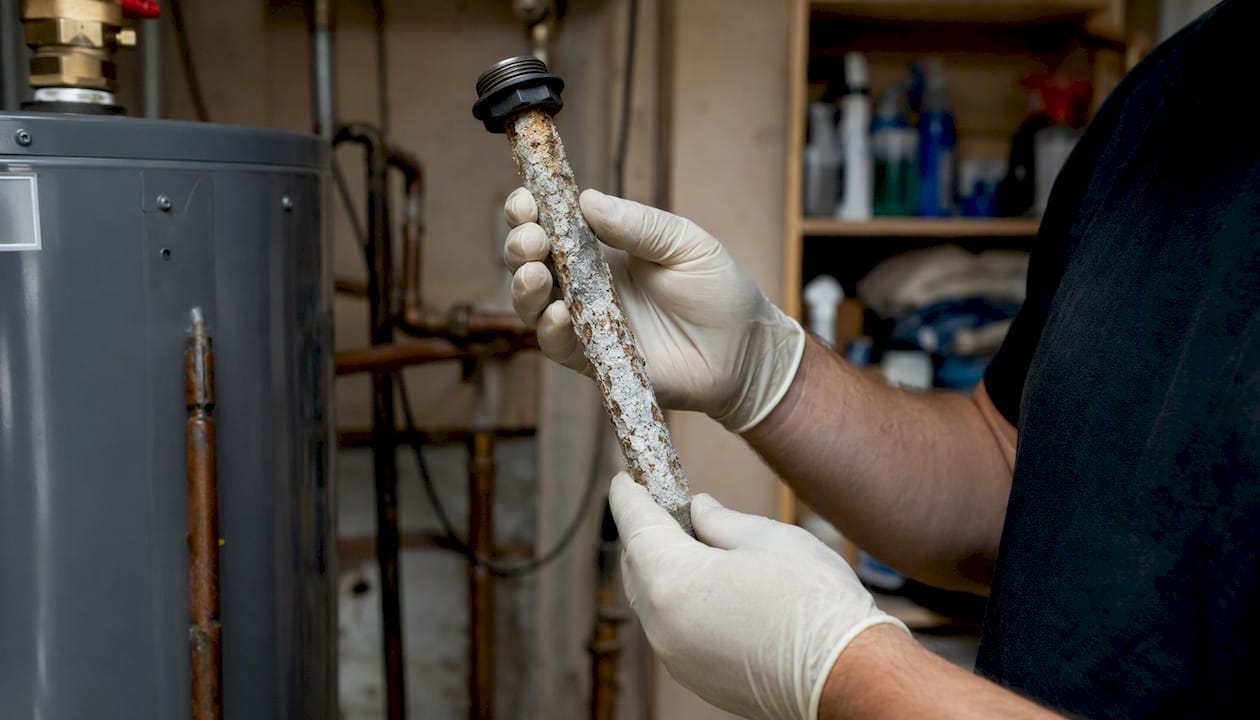
- Pull the rod and look at the core wire. If it’s exposed along more than half its length, the rod is roughly 50% depleted and due for replacement.
- Heavy pitting, chalky white buildup, or a rod reduced to a thin wire all signal it’s overdue.
- Rusty water or metallic taste can mean the anode is gone and the tank itself has started corroding.
Replacement steps, high level:
- Turn off power (electric) or gas and the cold water supply to the tank.
- Relieve pressure by opening the temperature and pressure relief valve.
- Drain a few gallons to drop the water level below the anode port.
- Remove the old rod with a socket wrench, and check the maintenance interval for your tank size.
- Install the new rod with fresh thread tape, refill the tank, and check for leaks before restoring power.
Pro Tip: Keep a bucket and towels handy before you pull the old rod. Even a “drained” tank holds enough residual water to make a mess if you’re not ready for it.
Identifying Whether Your Current Rod Is Aluminum or Magnesium
Pull the rod and check its color and corrosion pattern. Magnesium typically shows a duller gray surface with chalky, uneven pitting, while aluminum tends to corrode more evenly and often retains a slightly shinier finish. Manufacturer stamps near the top of the rod sometimes list the metal directly. If you can’t tell, correlate it with symptoms: persistent sulfur odor alongside a heavily pitted rod usually points to magnesium. When you’re still unsure, bring the rod to a plumber for a quick visual confirmation.
Cost, Thread Size, and Compatibility Basics
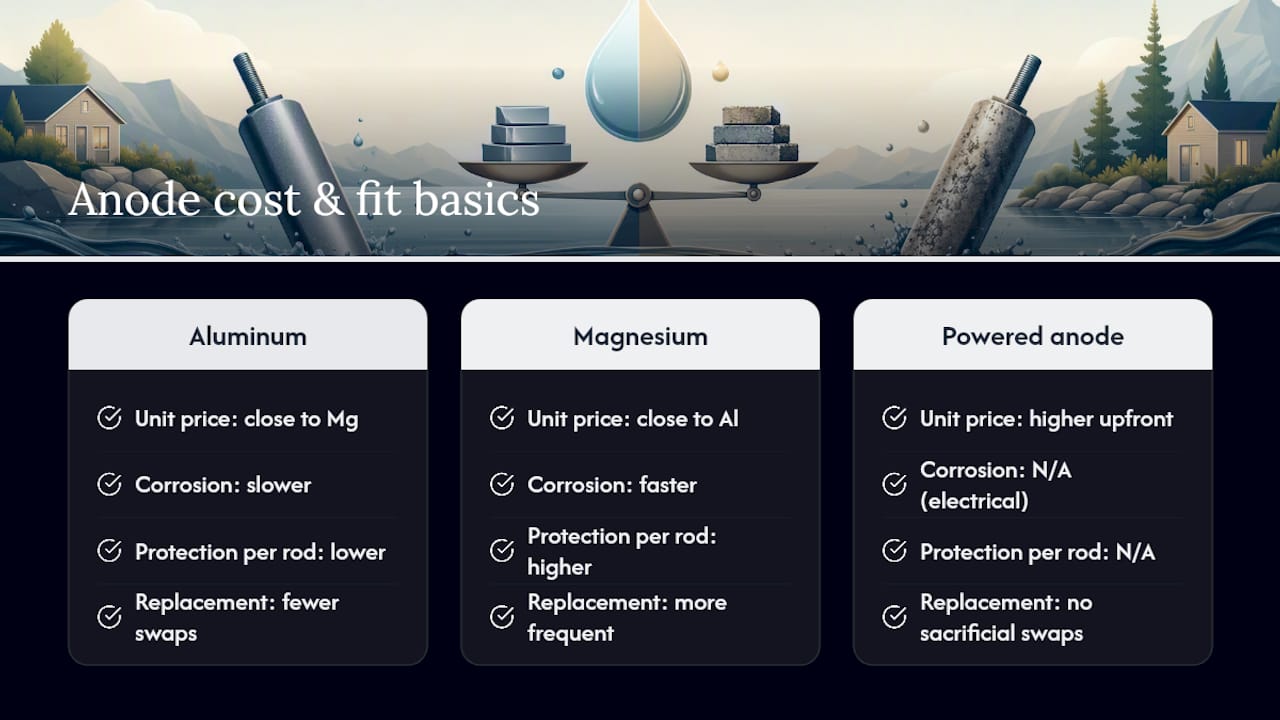
Unit prices for aluminum and magnesium rods run close to each other, so the real cost difference shows up in replacement frequency. Aluminum’s slower corrosion often means fewer swaps over the life of the tank, even if magnesium wins on raw protection per rod.
Most residential water heaters use a 3/4 inch NPT fitting, but rod length varies by tank height, so check your owner’s manual before ordering. Some tanks use a combination anode built into the hot water outlet rather than a separate hex-head rod. Powered anode rods sidestep the material question entirely by using electric current instead of a sacrificial metal, though they cost more upfront and require a nearby outlet.
Zinc, Powered Anodes, and Marine-Specific Choices
Zinc-alloy anodes show up mostly in marine settings because they hold a stable, moderate potential in seawater without depleting as fast as magnesium does. Aluminum is often the better call for boats too, especially where weight and current capacity matter more than raw protective strength. Magnesium is generally a poor fit for high-salinity seawater since it consumes too quickly and can overprotect the hull. Boats that move between fresh and salt water sometimes need a mixed-material strategy, swapping anode type by season. Powered anode rods offer a maintenance-light alternative for owners who’d rather not track any of this.
When to Call a Plumber Instead of DIY-ing It
Call a plumber when the odor won’t clear after a rod swap, you spot visible internal tank corrosion, an anode depletes unusually fast more than once, or you notice leaks near the tank base. A professional visit typically includes inspecting the rod and tank, testing or recommending water-chemistry tests, advising on the right material for your specific supply, replacing the rod safely, and handling disposal or recycling of the old one.
Pro Tip: If you’ve replaced an anode twice in under two years, the issue is usually your water chemistry, not the rod itself. That’s worth a professional water test before buying a third one.
A Practical Note From the Publisher
Water chemistry beats guesswork every time I’ve seen this debate play out. Switching anode material is a low-risk fix, and it resolves most odor complaints without touching the rest of the tank…
Get Your Water Heater’s Anode Checked by a Local Pro
If you’d rather skip the water testing and rod research entirely, Ag-plumbing handles the whole process in one visit, backed by 30 years of plumbing experience in the Pittsburgh area. A service call includes inspecting your current rod, checking your water chemistry, recommending the right material for your specific supply, replacing it safely, and disposing of the old rod properly.
No guessing which metal fits your well water or city supply. Book an inspection through Ag-plumbing’s plumbing repair services and get a straight answer along with the fix, in the same visit.
Sources
- Electrochemical performance of sacrificial anode metals: literature review (DOI)
- Magnesium vs Aluminum Anode Rod (2026) — PlumbingToolsReview
- Deyuanmetal
- Aluminum vs Magnesium Anode Rods: Protecting Your Tank (WaterConnection)
- Aluminum vs Magnesium Water Heater Anode Rods: Which to Choose – Accelerate Net Zero
FAQ
Should I use magnesium or aluminum anode rod?
Magnesium is the better default for soft, low-sulfate water. Aluminum works better in hard, chlorinated, or high-sulfate water where odor is a concern.
Why use magnesium instead of aluminum?
Magnesium has a more negative electrochemical potential, giving it stronger active protection against tank corrosion in most freshwater conditions.
How do I know if my anode is magnesium or aluminum?
Check the rod’s color and corrosion pattern, magnesium usually looks duller with chalky pitting, and look for a manufacturer stamp near the top of the rod.
Which anode rod lasts the longest?
Aluminum rods generally last longer between replacements because they corrode more slowly than magnesium, though actual lifespan depends heavily on your water chemistry.
Recommended
- Types of Water Heaters: A 2026 Guide for Homeowners – AG-Plumbing
- Why Choose Copper Piping for Your Pittsburgh Home – AG-Plumbing
- How to Choose Plumbing Materials for Pittsburgh Homes – AG-Plumbing
- Why Test for Lead Pipes: A Pittsburgh Homeowner’s Guide – AG-Plumbing
