
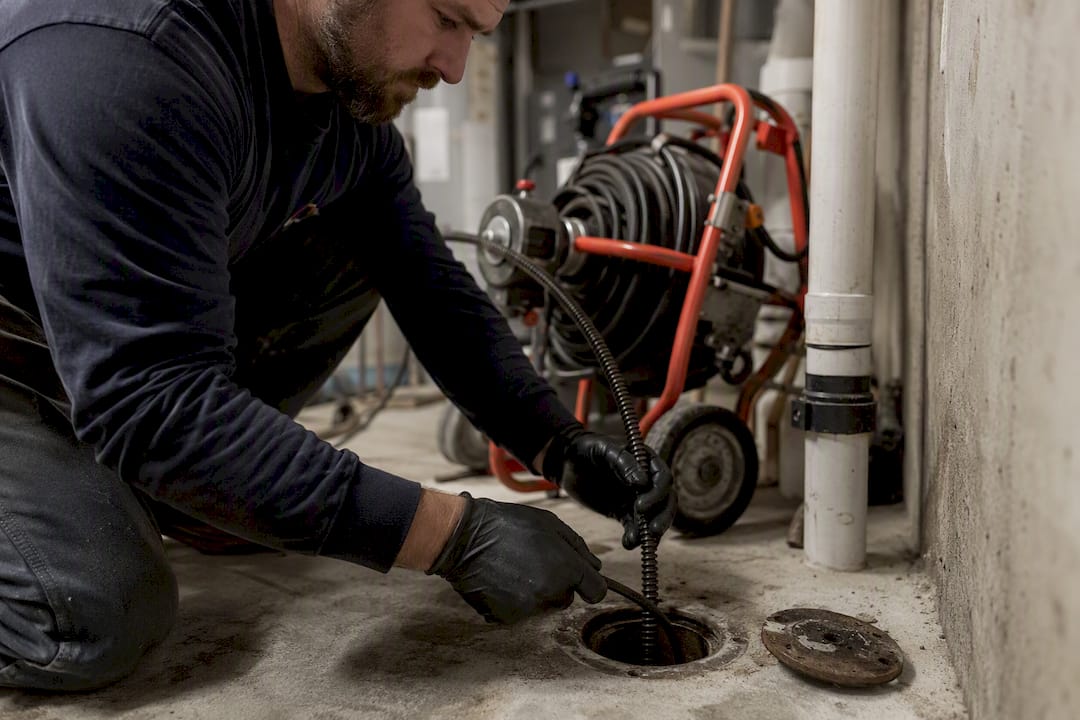
Clearing roots from drains permanently means three steps in order: locate the intrusion with a camera, clear it mechanically (or with hydro jetting), then seal the entry point with a repair or trenchless lining. Chemical root killers come after that, as maintenance, not as a fix.
If more than one drain in your house is running slow or gurgling, stop snaking blindly and get a sewer-camera (CCTV) inspection first. It tells a technician exactly where roots entered and whether the pipe underneath is still round or already collapsing.
- Get a CCTV inspection before paying for any clearing work.
- Ask specifically whether hydro jetting, not just cabling, was used to clear the line.
- Treat any chemical product as upkeep between real repairs, never a cure.
Pro Tip: A camera inspection typically runs less than a single emergency service call, and it’s the only way to know if you’re buying a repair or a temporary reprieve.
Key Takeaways
Permanently clearing roots from drains requires camera diagnosis, mechanical or hydro-jet removal, and structural repair, because chemicals alone never seal the leak that attracted the roots.
| Point | Details |
|---|---|
| Roots follow leaks, not luck | Roots enter through existing cracks or loose joints, so intrusion signals a pipe defect, not just a “root problem.” |
| Camera inspection comes first | CCTV footage shows intrusion depth, pipe roundness, and joint condition before you pay for any clearing work. |
| Jetting beats cabling for thoroughness | Hydro jetting clears root fiber and debris more completely than cable cutting, which often leaves regrowth-prone stubs. |
| Chemicals are maintenance, not a cure | Hercules R-D Root Destroyer, RootX, and copper sulfate slow regrowth after clearing; copper sulfate is restricted in many areas. |
| Repair stops the cycle | Trenchless lining or replacement seals the entry point permanently, unlike repeated cleaning alone. |
| Ag-plumbing runs the full sequence | Ag-plumbing pairs CCTV diagnosis with hydro jetting and repair recommendations for Pittsburgh-area homeowners in one service relationship. |
Table of Contents
- How Tree Roots Get Into Drain and Sewer Pipes
- Signs You Have Root Intrusion in a Drain or Sewer Line
- What a Sewer-Camera Inspection Actually Tells You
- How Professionals Remove Roots: Cutting, Jetting, and Rehab
- DIY Root Removal: What Works and What’s a Waste of Money
- Stopping Roots From Coming Back for Good
- What Root Clearing and Repair Actually Cost
- Safety and Legal Limits on Chemical Root Killers
- When to Stop DIY and Call a Plumber
- How a Trusted Plumber Handles Root Removal Start to Finish
- Digging Deeper: The Case for Cameras Before Chemicals
- Get Your Line Cleared and Sealed the Right Way
- Sources
- FAQ
How Tree Roots Get Into Drain and Sewer Pipes
Roots don’t drill through solid pipe. They can’t. What they do is follow moisture and warmth seeping out through a crack, a loose joint, or a deteriorated seal, then wedge into that opening and expand. Extension-service research on tree roots and sewer lines confirms roots exploit existing gaps rather than creating new ones, which means finding roots in your line is really a diagnosis of a pre-existing leak.
Certain pipe types are far more vulnerable than others:
- Older clay pipe, common in homes built before the 1970s, with mortar-sealed joints that shrink and crack over decades.
- Cast iron lines where the bell-and-spigot joints were never rated for a lifetime of ground movement.
- Aging concrete pipe with seals that degrade chemically over time.
- Any section with a prior root cut, since the wound rarely heals and often reopens.
Once a root gets a foothold inside a pipe, it finds a warm, damp, nutrient-rich environment and keeps growing, sometimes filling the entire cross-section within a couple of seasons. That’s why cutting the roots out without fixing the underlying gap usually buys you six months, not six years.
Signs You Have Root Intrusion in a Drain or Sewer Line
A single slow sink is usually just a local clog. Root intrusion in the main lateral shows up differently, and the pattern matters more than any one symptom.
- Multiple drains around the house running slow at the same time, not just one fixture.
- Toilets gurgling when you run the washing machine or a shower elsewhere in the house.
- Blockages that keep coming back on a seasonal cycle, often worse in spring and summer when root growth accelerates.
- Soft, soggy, or unusually green patches in the yard tracing the path of your sewer line.
According to Mother’s guide on root intrusion, multiple affected fixtures and gurgling toilets are among the earliest and most reliable homeowner-visible signs, well before a full backup happens. If you notice sewage backing up into the lowest drain in the house, a sinkhole forming near the lateral, or a strong sewage smell outdoors, skip the troubleshooting and call a plumber immediately. Those are property-damage and health situations, not weekend projects.
What a Sewer-Camera Inspection Actually Tells You
A CCTV inspection is a small waterproof camera fed through the line on a flexible cable, and it’s the closest thing to X-ray vision a plumber has for your sewer. It shows exactly where roots entered, how far the intrusion extends, and whether the pipe itself has started to deform. The drain cleaning industry’s diagnostic standard treats camera footage as the deciding factor between routine cleaning and structural repair. Ag-plumbing’s own CCTV pipe inspection work follows the same logic locally in Pittsburgh.
Three questions are worth asking the technician while the camera is still in the ground:
- How deep into the line does the root mass extend, and is it a single point or spread across several joints?
- Is the pipe still round, or has it started to oval or flatten under soil pressure?
- Are the joints still seated correctly, or has one separated enough to let soil and roots in permanently?
The answers change your entire plan. A single hairline crack with a small root wisp often just needs cleaning and a follow-up chemical maintenance schedule. Joint separation or an ovaled pipe section points toward trenchless lining or a targeted dig-and-replace. Ag-plumbing’s breakdown of how drain cameras work covers what that footage typically reveals in older Pittsburgh-area homes.
How Professionals Remove Roots: Cutting, Jetting, and Rehab
Most professional root removal starts with mechanical cutting, using a rotating cable head, root saw, or chain knocker to physically chew through the root mass and restore flow. It works quickly and it’s the cheapest first move, but it has a real limitation: cutting tends to leave root stubs behind, and those stubs regrow faster than the surrounding root network did the first time.
Hydro jetting solves that gap. A root-cutting nozzle sprays water at high pressure, generally in the thousands of PSI range depending on pipe diameter and material, which shreds root fiber and scours the pipe walls clean rather than just punching a hole through the blockage. Industry guidance on sewer root removal treats jetting as the standard second step after mechanical cutting, precisely because it clears material a cable simply pushes aside. Specialized hydro jetting equipment for root removal combines directed jets with a rotating head, which is a different animal from what you can rent at a hardware store.
Neither method fixes the hole roots came through. When the camera shows a collapsed section, severe ovaling, or joints that have separated beyond repair, the real options become excavation and section replacement, or trenchless rehabilitation using cured-in-place pipe (CIPP) lining or pipe bursting. Both trenchless methods seal the entire run from the inside without tearing up your yard, and both stop future root entry because they eliminate the gaps roots were using in the first place.
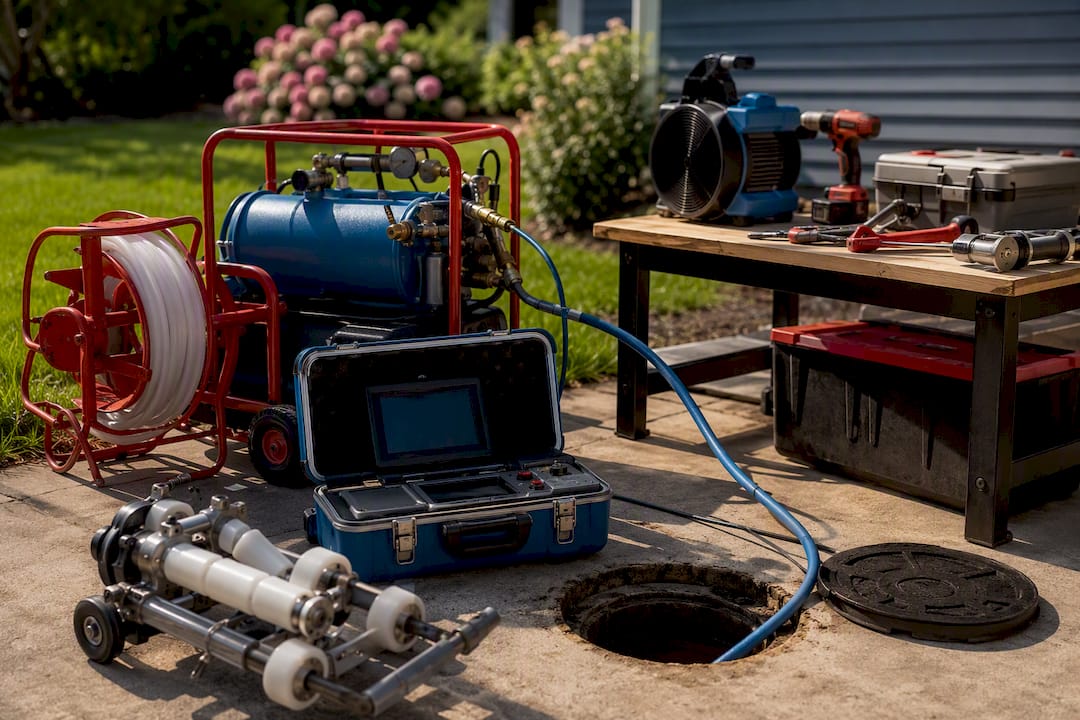
Here’s how the main approaches stack up when you’re deciding what to authorize:
| Method | Effectiveness on existing roots | Permanence | Relative cost | Risk | DIY feasible? |
|---|---|---|---|---|---|
| Mechanical cutting/augering | Good, but often leaves root stubs | Temporary, regrowth common | Low | Low risk to pipe if done correctly | Rental units exist, limited results |
| Hydro jetting | Very good, clears root mass and debris | Temporary unless paired with repair | Moderate | Low, but needs correct pressure for pipe age | Professional-only for root heads |
| Trenchless CIPP lining | Doesn’t remove existing severe roots first; used after clearing | Long-term, seals joints | Higher | Low environmental impact | Professional-only |
| Pipe bursting/replacement | Complete, eliminates the section entirely | Permanent | Highest | Yard disruption during work | Professional-only |
| Chemical root killers | Poor on established root masses | Maintenance only | Low | Toxicity concerns, local restrictions | DIY, with caution |
For a hairline intrusion in a single joint, mechanical clearing followed by a chemical maintenance plan might be entirely reasonable. For an ovaled or collapsed section, that same plan is just delaying a bigger bill. Ag-plumbing’s hydro jetting service is built around exactly this two-step logic: clear thoroughly, then advise on repair need based on what the camera actually shows.
DIY Root Removal: What Works and What’s a Waste of Money
Rental augers can genuinely help with a fresh, minor root intrusion close to a cleanout access point. They struggle badly, though, once roots have packed a pipe section tightly or spread across multiple joints, because consumer equipment lacks the cutting heads and torque that professional root saws carry. That gap in capability is a big part of why DIY rental attempts often stall out on anything beyond a starter-level clog.
Chemical root killers are the other DIY lever, and they’re worth understanding correctly rather than dismissing outright. Hercules R-D Root Destroyer, RootX, and copper sulfate are the three products homeowners run into most often, and all three are designed to work as maintenance after a line is already open, not as a way to clear an active blockage. Copper sulfate kills root tissue on contact but is restricted or banned in many municipalities because of toxicity to trees, pets, and waterways. Foaming products like RootX and Hercules R-D are formulated to cling to pipe walls and slow regrowth over days, and some formulations are labeled safe for septic systems when used exactly per instructions, according to sewer root removal guidance.
If you decide to try a chemical maintenance product yourself, follow this sequence:
- Confirm the line is already flowing (chemicals don’t clear an active blockage).
- Check your municipal code for restrictions before buying anything copper-based.
- Apply the labeled dose through the recommended cleanout, never through a fixture with standing water.
- Keep pets and children away from the treated cleanout area until fully flushed.
- Reapply on the product’s stated schedule, not more frequently, to avoid overtreatment.
Pro Tip: If you’ve cabled the same drain twice in one year, the problem isn’t the drain. It’s the crack the roots keep finding, and no amount of chemical treatment fixes a structural gap.
Stopping Roots From Coming Back for Good
Cleaning restores flow. It does not restore the pipe. Repeated clearing without ever sealing the entry point is a well-documented pattern that eventually forces homeowners into a full pipe replacement anyway, usually after paying for several cleanings first that never addressed the actual crack.
Structural repair options break down into a few categories depending on what the camera shows:
- Spot repair for a single damaged joint or short section, dug up and replaced without touching the rest of the line.
- Trenchless CIPP lining, where a resin-saturated liner is inserted and cured in place, sealing every joint along the treated run from the inside.
- Pipe bursting, which fractures the old pipe outward while pulling a new one through the same path, useful when the whole line has aged out.
- Full open-cut replacement, reserved for lines too damaged or misaligned for trenchless methods to work reliably.
Ag-plumbing’s guide to sewer line repair options walks through how a technician decides between these based on camera findings and pipe age.
On the landscaping side, “just plant the tree a few feet farther away” is weaker advice than it sounds, because roots regularly extend well past a tree’s canopy and will still find a leaking pipe fifteen or twenty feet away. Physical root barriers installed between trees and the lateral, along with choosing slower-growing species for new plantings near the line, help more than spacing alone. The Cooperative Extension research is blunt about this: the real fix is a structurally sound pipe with no leak to attract roots in the first place, not distance.
A sensible maintenance cadence for a property with a known history of root intrusion is a camera check every two to three years, jetting on a schedule your plumber recommends based on tree density and pipe age, and chemical maintenance products between visits only where local rules allow them.
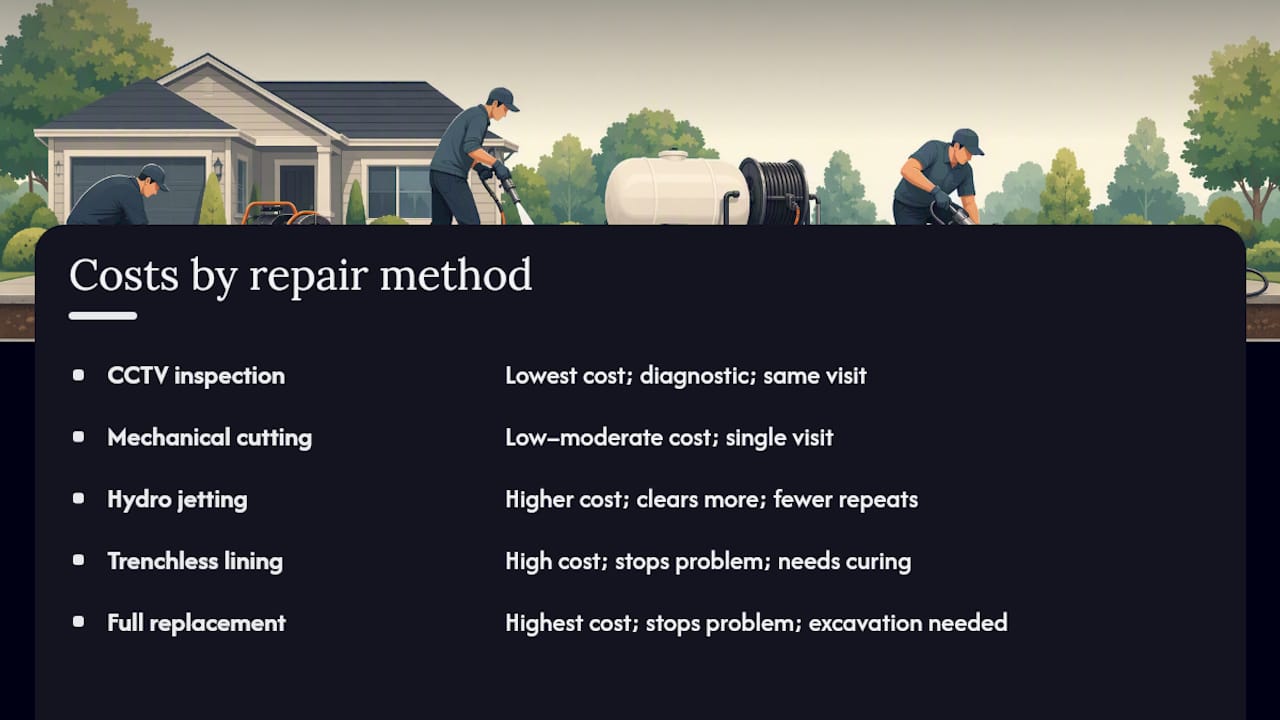
What Root Clearing and Repair Actually Cost
Costs vary by pipe access, line length, and how bad the damage is, so treat these as planning ranges rather than quotes. A standalone CCTV inspection is generally the least expensive line item, since it’s diagnostic rather than corrective. Mechanical cutting sits in the low-to-moderate range for a single visit. Hydro jetting costs more than cabling because of the specialized equipment and pressure required, but it typically clears more material per visit, which can mean fewer repeat calls. Trenchless lining and full replacement carry the highest price tags, but they’re the only options on this list that stop the problem instead of managing it.
Timelines follow a similar curve: a camera inspection and initial clearing can often happen in a single visit, while trenchless lining or excavation usually requires scheduling, curing time for CIPP resin, and sometimes a permit depending on your municipality. Homeowners are typically responsible for maintaining the private sewer lateral on their own property, with city responsibility usually limited to cases involving a city-owned tree, so check local rules before assuming anyone else will cover the bill.
When comparing quotes, ask every contractor for the same four things: camera footage you can actually watch, a written recommendation distinguishing maintenance from repair, warranty terms on any lining or replacement work, and proof of insurance and permits where required.
Safety and Legal Limits on Chemical Root Killers
Copper sulfate is effective at killing root tissue, but it’s also toxic to fish, aquatic plants, and pets if it reaches waterways or standing water, which is exactly why several municipalities restrict or ban its residential use. Foam-based alternatives are generally gentler on the environment but still carry label warnings about ventilation and contact.
- Check your city or county code before buying any copper-based product.
- Keep children and pets away from treated cleanouts until the product fully clears.
- Never pour chemical root killers into a fixture with standing water; use the designated cleanout.
- Dispose of unused product per the label, not down a storm drain.
The safest workflow stays consistent regardless of which product you’re considering: mechanically open the line first, confirm what’s actually going on with a camera, and only then apply an approved chemical product as maintenance, if your local rules permit it at all.
When to Stop DIY and Call a Plumber
Some situations aren’t DIY decisions anymore. Sewage backing up into your lowest drain, a sinkhole or persistently saturated patch in the yard, or a blockage that returns within a few months of clearing all mean the problem has moved past what a homeowner can safely fix. If a camera pass shows joint separation or a pipe that’s started to oval, that’s a structural finding, not a cleaning task.
- Multiple fixtures affected at once, especially with gurgling.
- A DIY cabling or jetting attempt that didn’t restore normal flow.
- Any camera footage showing deformation, separation, or standing water pooling mid-line.
When you do call, ask for CCTV footage as part of the estimate, confirm the company has hydro jetting equipment and experience (not just cabling), and get the repair-versus-maintenance recommendation in writing along with any warranty terms. Ag-plumbing’s sewer repair services in the Pittsburgh area follow that same documentation standard on every job.
How a Trusted Plumber Handles Root Removal Start to Finish
A properly run root job follows a sequence, not a single visit. The camera goes in first to map the problem, mechanical clearing or jetting removes the root mass, a second camera pass confirms the line is actually clear (not just quieter), and only then does the technician recommend lining, replacement, or a maintenance schedule based on what the pipe condition actually supports.
- Initial CCTV inspection to locate and grade the intrusion.
- Mechanical clearing or hydro jetting sized to the pipe diameter and root density.
- A follow-up camera pass to confirm the line is genuinely clear, not just flowing again.
- A written recommendation: lining, replacement, or scheduled maintenance, based on defect severity.
- An ongoing maintenance plan where the pipe condition supports one.
Pro Tip: Ask any plumber to grade the defect on camera before they quote a fix. A vague “it’s bad” isn’t a diagnosis; a specific joint separation or ovaling percentage is what a real repair plan gets built from.
Before hiring anyone, ask for the raw video, not just a verbal summary, and ask how the line-item cost changes between a maintenance visit and a structural repair. A contractor with decades of local experience, like Ag-plumbing’s three decades serving the Pittsburgh area, should be able to walk you through that comparison without hesitation.
Digging Deeper: The Case for Cameras Before Chemicals
Most articles on this topic treat chemical root killers as a first resort because they’re cheap and available at any hardware store. That’s backward. The research consistently points the other way: cameras and mechanical clearing come first, chemicals come after, as upkeep.
The bigger blind spot in conventional advice is treating root intrusion as a drain problem when it’s really a pipe-condition problem wearing a drain problem’s symptoms. A gurgling toilet gets you to call someone about the toilet. What actually needs attention is the thirty-year-old joint two houses down the lateral that’s been slowly weeping moisture into the soil for years. Fixate on the roots and you’ll keep cutting the same regrowth forever.
If there’s one thing homeowners consistently underestimate, it’s how cheap a camera inspection is relative to the cost of guessing wrong. Skipping it to save a small diagnostic fee, then paying for repeat cable jobs over two or three years, is the single most common way this problem gets more expensive than it needed to be.
Get Your Line Cleared and Sealed the Right Way
Hardware-store augers and copper sulfate jugs can buy you time, but they can’t tell you what’s actually wrong underground, and they can’t seal a joint. Ag-plumbing runs the full sequence in one relationship: camera diagnosis, mechanical clearing or hydro jetting sized to your pipe, and a straight answer on whether you need a repair or just a maintenance plan.
That’s the practical advantage over piecing together DIY equipment and guesswork: one licensed team with three decades of Pittsburgh-area experience handling the diagnosis, the clearing, and the repair recommendation, instead of three separate purchases and a hope that it holds. If your drains have been slow more than once this year, book a CCTV inspection and drain service with Ag-plumbing and get a real answer on what’s happening below your yard before you spend another dollar guessing.
Sources
- Master the basics of sewer root removal | Plumbing & Mechanical
- Tree Roots and Sewer Lines — North Carolina Cooperative Extension
- Root Intrusion: Drain cleaning and removal methods
- Root intrusion in sewer line? Find it and fix it for good – Mother
FAQ
What dissolves tree roots in drains?
Nothing truly “dissolves” established root mass on contact. Chemical products like Hercules R-D Root Destroyer and RootX cling to root tissue and slow regrowth over days, but mechanical cutting or hydro jetting is what physically removes the root material.
What can I pour down my drain to help with tree roots?
Foaming root-control products designed for sewer lines can be poured through a cleanout after the line is already flowing, as maintenance between professional clearings. Copper sulfate works similarly but is restricted or banned in many municipalities, so check local rules first.
What kills roots in sewer lines fast?
Nothing chemical works fast on an active blockage. Mechanical cutting or hydro jetting clears the line immediately; chemical treatments take days and only prevent regrowth afterward.
What kills roots permanently?
No chemical kills roots permanently, because roots regrow as long as the pipe keeps leaking moisture that attracts them. Permanent resolution comes from trenchless lining or pipe replacement that seals the crack or joint roots were entering through.
How much does professional root removal typically cost?
Costs depend heavily on pipe length, access, and severity, ranging from a modest inspection fee up to a much larger investment for trenchless lining or replacement. Getting a camera inspection first helps you compare quotes on the same terms.
Recommended
- Clear Sewer Line Blockages: 2026 Homeowner’s Guide – AG-Plumbing
- Step by step drain cleaning guide for PA homeowners – AG-Plumbing
- Sanitary drainage explained: A homeowner’s guide to reliability – AG-Plumbing
- Why Drain Cleaning Is Essential for Preventing Blockages – AG-Plumbing
