
TL;DR:
- Green plumbing solutions focus on eco-friendly fixtures like low-flow toilets, tankless water heaters, and greywater recycling systems to reduce water and energy consumption. Implementing these upgrades with proper planning, code compliance, and product selection ensures measurable savings and environmental benefits. Starting with simple fixture replacements and gradually scaling up, under professional guidance when needed, delivers long-term sustainability and cost savings.
Green plumbing solutions are eco-friendly plumbing options designed to cut water and energy consumption while reducing a home’s environmental footprint. The best examples of green plumbing solutions include low-flow fixtures, tankless water heaters, greywater recycling systems, pipe insulation, and wastewater heat recovery. Products like the Kohler San Souci toilet and WaterSense-certified faucets prove that sustainable plumbing techniques deliver real savings, not just good intentions. For homeowners and property managers in Pittsburgh and beyond, these upgrades pay off in lower utility bills and a measurably smaller environmental impact.
1. Low-flow toilets and WaterSense fixtures
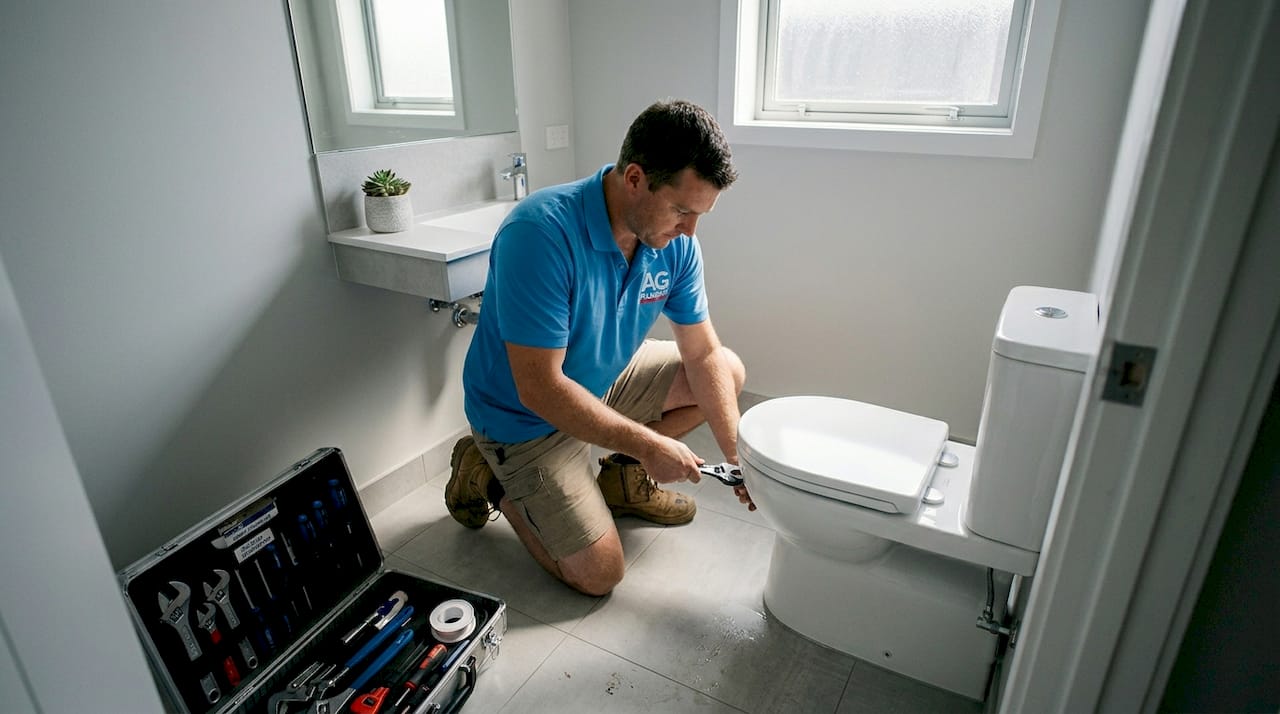
Low-flow toilets are the single most impactful water-saving plumbing solution available to homeowners today. The Kohler San Souci uses just 1.28 gallons per flush and can save up to 16,500 gallons per year compared to older 3.5-gallon models. That volume of savings equals roughly 45 gallons per day for a family of four. The AquaPiston flush engine delivers powerful performance without the water waste.
WaterSense certification from the EPA is the standard to look for when comparing fixture efficiency. Certified toilets, faucets, and showerheads meet independently verified flow-rate thresholds. Flow rates alone do not tell the full story, though. WaterSense criteria and annual savings estimates together give you a complete picture of a fixture’s real-world efficiency.
2. Tankless water heaters
Tankless water heaters heat water on demand rather than storing 40 to 80 gallons in a tank around the clock. This eliminates standby heat loss, which accounts for a significant share of residential water heating energy. Brands like Rinnai, Navien, and Rheem all manufacture condensing tankless units that reach efficiency ratings above 90%. The result is hot water exactly when you need it, with no energy wasted maintaining a tank.
Installation costs run higher than traditional tank heaters upfront, but the long-term energy savings offset that gap within a few years. For property managers overseeing multi-unit buildings, installing individual tankless units per unit also eliminates the risk of one failed tank affecting multiple tenants. This is one of the most practical energy-efficient plumbing options available at any budget level.
3. Greywater recycling systems
Greywater reuse systems reduce outdoor water usage by up to 50% and provide mild fertilization benefits to soil. Greywater is the relatively clean wastewater from showers, bathroom sinks, and laundry machines. It does not include toilet waste. Redirecting it to garden irrigation instead of the sewer is one of the most effective water-saving plumbing solutions for homes with outdoor landscaping.
A basic DIY system uses a diverter valve on the shower drain, a filtration stage, and gravity-fed distribution to mulch basins. A DIY greywater system can be built for as little as $15 using PVC pipe and a food-grade bucket, assembled in about three hours. Professional systems with pumps, advanced filtration, and subsurface distribution cost $2,500 or more. The gap between those two price points reflects the difference in capacity, reliability, and code compliance.
Pro Tip: Use HDPE food-grade buckets rather than standard plastic containers for greywater collection. HDPE resists bacterial growth and does not leach chemicals into water that will contact your soil.
4. Pipe insulation
Pipe insulation is one of the most overlooked green plumbing practices, yet it delivers immediate and measurable results. Uninsulated hot water pipes lose heat between the water heater and the tap, forcing the heater to work harder and making you run the faucet longer before hot water arrives. Foam pipe insulation from brands like Armacell or Frost King costs just a few dollars per linear foot and installs without professional help in most cases.
For homes in colder climates like Pittsburgh, pipe insulation also prevents freezing and the burst pipes that follow. Insulating both hot and cold supply lines in unheated spaces like basements and crawlspaces protects the system year-round. This upgrade pairs well with updated plumbing systems to maximize energy retention across the entire home.
5. Wastewater heat recovery
Wastewater heat recovery captures thermal energy from drain water before it exits the building. Drain water heat recovery (DWHR) units like the PowerPipe or GFX System mount on vertical drain stacks and transfer heat from outgoing wastewater to incoming cold water. This preheats the cold supply entering the water heater, reducing the energy needed to reach the target temperature.
At the urban scale, the Sen̓áḵw district energy project uses sewer heat recovery to provide carbon-free heating and hot water to multiple buildings. Heat pumps extract thermal energy from sewage after solids are removed, then distribute it across the development. This model shows where residential-scale wastewater heat recovery is heading as the technology becomes more accessible.
6. Greywater system pitfalls to avoid
A greywater retrofit fails when homeowners treat it as a plumbing-only project. Filtration and proper discharge are equally critical to prevent odors, clogging, and vector attraction. Without adequate filtration, lint, hair, and soap residue clog distribution lines within weeks. Without proper discharge to mulch basins or subsurface zones, standing water attracts mosquitoes and creates health risks.
Gravity-fed systems without pumps reduce mechanical failure risk, but they still require careful slope design to move water consistently. A minimum slope of 1/4 inch per foot on all distribution lines keeps flow moving without pooling. Seasonal diverter valves let you redirect greywater back to the sewer during winter months when irrigation is not needed, protecting pipes from freezing and preventing oversaturation of dormant soil.
Pro Tip: Install a three-way diverter valve at the source rather than a simple Y-fitting. A three-way valve lets you switch between greywater reuse and standard sewer discharge in seconds, which matters during heavy rain or system maintenance.
7. Choosing products with Environmental Product Declarations
Environmental Product Declarations, or EPDs, are verified documents that quantify the environmental impact of a specific product across its full lifecycle. For plumbing materials, EPDs cover raw material extraction, manufacturing, transportation, and end-of-life disposal. The Plastic Pipe and Fittings Association released 22 new EPDs for plastic pipe and fittings products in 2026, giving specifiers and homeowners more data to work with than ever before.
Selecting products with EPDs helps you make choices that reduce environmental impact beyond just water savings. This matters most for property managers pursuing LEED certification or green building standards for multi-unit properties. An EPD is not a marketing claim. It is a third-party verified document, which makes it a reliable tool for comparing the true sustainability of competing products.
8. Code compliance and IAPMO standards
Green plumbing solutions must comply with plumbing codes to protect public health and safety. IAPMO develops the Uniform Plumbing Code through open consensus and scientific analysis, and most jurisdictions in the United States adopt it as the baseline standard. Greywater reuse, in particular, falls under specific code provisions that vary by state and municipality. Some states allow simple laundry-to-landscape systems without a permit, while others require full engineering review.
For property managers scaling green plumbing across multi-unit or commercial properties, aligning upgrades with Uniform Plumbing Code provisions and pulling the correct permits is not optional. Unpermitted greywater systems can void homeowner’s insurance and create liability in the event of a health complaint. Working with a licensed plumber who understands local code requirements protects your investment and keeps the project legal.
9. Scenario-based recommendations for different property types
The right eco-friendly plumbing solution depends on your property type, budget, and goals. The table below maps common scenarios to the most practical starting points.
| Scenario | Best starting solution | Budget range | DIY or professional |
|---|---|---|---|
| Single-family home, tight budget | Low-flow showerheads and faucet aerators | $10 to $50 | DIY |
| Single-family home, mid budget | Greywater diversion system with filtration | $15 to $500 | DIY to semi-pro |
| Single-family home, full remodel | Tankless water heater plus low-flow fixtures | $1,500 to $4,000 | Professional |
| Multi-unit property | Tankless units per unit, pipe insulation | $3,000 to $10,000+ | Professional |
| Commercial or large property | Wastewater heat recovery, EPD-specified materials | $10,000+ | Professional with permits |
Small homes benefit most from fixture swaps and simple greywater diversion because the payback period is short and installation is manageable. Multi-unit properties see the greatest return from tankless water heaters and pipe insulation because the savings multiply across every unit. Commercial properties have the scale to justify wastewater heat recovery systems, which require significant upfront investment but deliver carbon-free heat at operating costs well below conventional systems.
Key takeaways
Green plumbing solutions deliver the greatest combined impact when low-flow fixtures, greywater recycling, and energy-efficient water heating are implemented together rather than as isolated upgrades.
| Point | Details |
|---|---|
| Low-flow fixtures save the most water | WaterSense-certified toilets like the Kohler San Souci save up to 16,500 gallons per year. |
| Greywater systems cut outdoor water use | A properly built greywater system reduces outdoor water consumption by up to 50%. |
| Tankless heaters eliminate standby loss | On-demand water heating removes the energy cost of maintaining a full storage tank. |
| Code compliance protects your investment | IAPMO standards and local permits are required for greywater and advanced systems. |
| EPDs verify environmental claims | Choose plumbing products with third-party EPDs to confirm their true sustainability credentials. |
What I’ve learned after years of watching green plumbing projects succeed and fail
Most homeowners approach green plumbing the wrong way. They start with the most visible upgrade, usually a low-flow showerhead, declare victory, and stop there. That is not a strategy. It is a gesture.
The projects I have seen deliver real results start with an honest audit of where water and energy actually leave the building. In most homes, the water heater and the toilets account for the largest share of consumption. Fixing those two systems first, with a tankless heater and WaterSense-certified toilets, produces savings you can measure on the next utility bill.
The greywater conversation is where things get interesting. A $15 DIY system genuinely works if you design it correctly. The homeowners who struggle are the ones who skip the filtration stage or ignore slope requirements. The ones who succeed treat it like a small engineering project, not a weekend hack. That distinction matters more than the budget.
My honest advice for property managers: do not attempt greywater or wastewater heat recovery without a licensed plumber who knows your local code. The savings are real, but so is the liability if something goes wrong without permits. Start with fixtures and insulation, build confidence, then scale up. The cost-saving potential of green plumbing is not a myth. It just requires patience and the right sequence.
— Maayan
Ready to upgrade your home with sustainable plumbing?
Ag-plumbing has served Pittsburgh homeowners and property managers for 30 years, and the team knows which green plumbing upgrades deliver the best return for each property type. Whether you are replacing aging fixtures, installing a tankless water heater, or planning a full eco-friendly remodel, professional installation makes the difference between a system that performs and one that creates problems.
Ag-plumbing handles fixture installation, water heating upgrades, pipe insulation, and code-compliant system design across Pittsburgh and the surrounding areas. Visit Ag-plumbing’s plumbing services to explore options or book a consultation. For specific repair and replacement needs, the plumbing repair services page covers eco-friendly fixture upgrades in detail. Pair your DIY knowledge with expert installation for results that last.
FAQ
What are the easiest green plumbing upgrades to start with?
Low-flow faucet aerators and WaterSense-certified showerheads are the simplest starting points, costing as little as $10 and requiring no professional installation. They deliver immediate water savings with zero disruption to your daily routine.
How much does a greywater system cost to install?
A basic DIY greywater diversion system costs as little as $15 using PVC pipe and a food-grade bucket, while professional systems with advanced filtration run $2,500 or more. The right choice depends on your water usage, landscaping needs, and local code requirements.
Do green plumbing solutions require permits?
Many green plumbing upgrades, including greywater reuse systems and wastewater heat recovery, require permits under IAPMO-based plumbing codes. Simple fixture swaps like low-flow toilets and showerheads typically do not require permits.
What is a WaterSense certification?
WaterSense is an EPA program that certifies plumbing fixtures meeting independently verified water efficiency and performance standards. A WaterSense label confirms a product uses at least 20% less water than standard models without sacrificing performance.
Are tankless water heaters worth the upfront cost?
Tankless water heaters cost more upfront than storage tank models but eliminate standby heat loss entirely, reducing water heating energy consumption over the long term. For most households, the payback period falls between three and seven years depending on usage and energy rates.
Recommended
- Heating, Cooling & Plumbing Services Pittsburgh, PA
- Plumbing upgrades that save Pittsburgh homes money – AG-Plumbing
- Top bathroom plumbing ideas for Pittsburgh homeowners – AG-Plumbing
- Cost-saving plumbing tips for Pittsburgh homeowners – AG-Plumbing
