
TL;DR:
- Water main replacement involves removing aging underground pipes and installing new ones to ensure safe water delivery. Proper planning, permits, and communication help minimize surface disruption and avoid costly surprises, especially with trenchless methods preserving landscaping. Homeowners should recognize signs of deterioration and understand that private-side line costs fall on them, necessitating thorough estimates and proactive coordination.
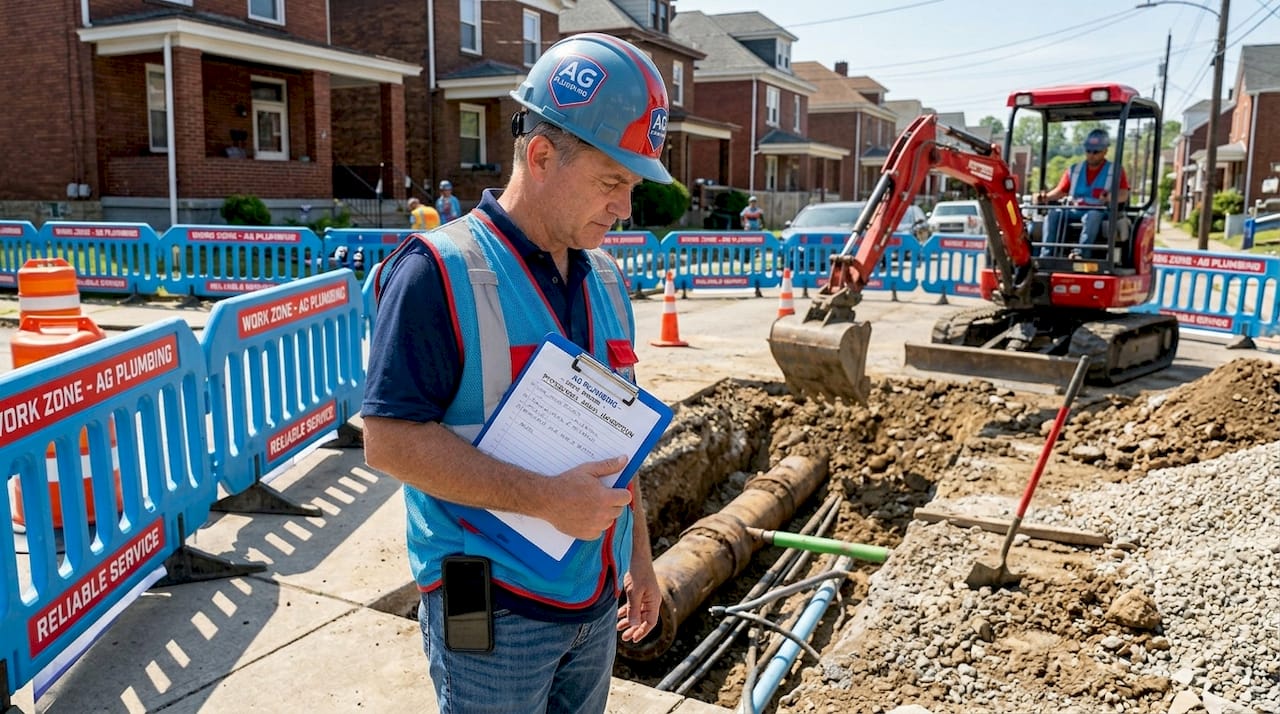
Water main replacement is the process of removing existing underground water distribution pipes and installing new ones to restore safe, reliable water delivery to homes and businesses. Pittsburgh Water’s 2026–2027 replacement program targets 11.1 miles of aging mains across seven neighborhoods, replacing 120 fire hydrants, 662 valves, and 1,607 service lines. For Pittsburgh homeowners and property managers, understanding what water main replacement involves, what it costs, and how to prepare makes the difference between a smooth project and a costly surprise.
What is water main replacement and how does it work?
Water main replacement, known in the industry as water distribution main renewal, follows a strict operational sequence that utilities and licensed plumbers must complete in order. Portland Water District describes the process as improving water flow characteristics by prioritizing mains based on leak frequency and aging materials. Most projects run between April and November to avoid frozen ground conditions that complicate excavation and pipe bedding.
The typical water main repair process unfolds in these steps:
- Utility marking and permits. Before any ground breaks, crews mark all underground utilities including gas, electric, and telecom lines. Permits from the City of Pittsburgh or Allegheny County are pulled and inspections scheduled.
- Segment isolation. Crews close valves on either side of the work zone to depressurize the affected main. Nearby residents may experience a water shutoff during this phase.
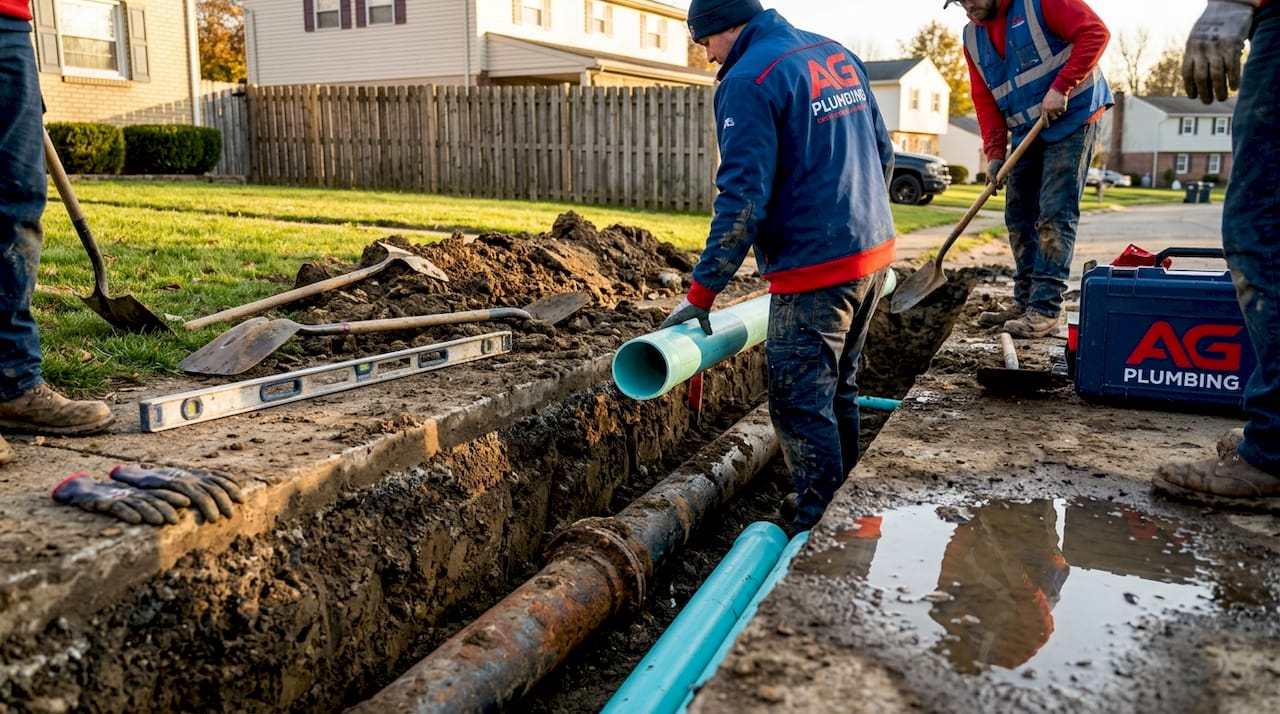
- Excavation or trenchless access. Traditional open-trench excavation exposes the existing pipe. Trenchless methods like directional drilling or pipe bursting reach the old main with far less surface disruption.
- Pipe removal and installation. The old main is cut out and new pipe, typically high-density polyethylene (HDPE) or ductile iron, is placed and connected to the existing distribution network.
- Pressure testing. Before any backfilling occurs, crews pressure test the new pipe to confirm the connection holds. This step is non-negotiable and cannot be skipped to save time.
- Backfill and temporary restoration. The trench is backfilled in compacted layers. Temporary asphalt or gravel patches cover the surface while soil settles.
- Permanent restoration. Sidewalks, driveways, and landscaping receive permanent repairs, though surface restoration often follows weeks or months after the pipe work finishes.
Open-trench vs. trenchless methods
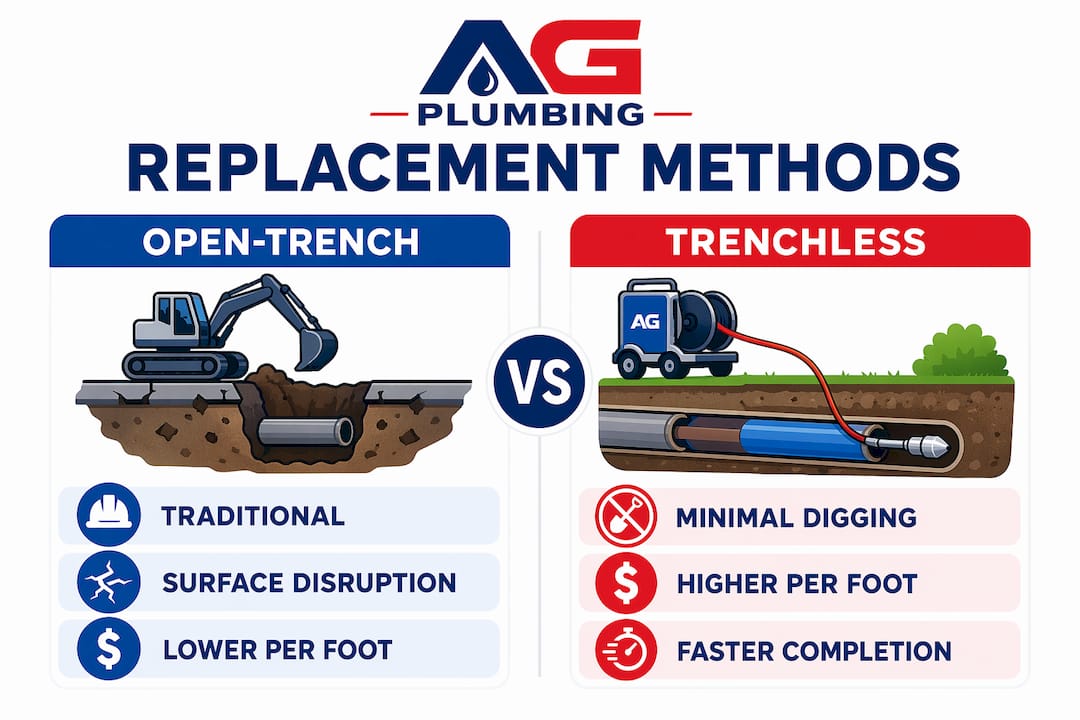
Open-trench replacement is the traditional approach and works well in areas with straightforward access and minimal surface improvements. Trenchless methods like directional drilling cut surface excavation significantly, preserving driveways, mature trees, and landscaping that would otherwise be destroyed. For Pittsburgh properties with finished yards or narrow access corridors, trenchless repair options are worth requesting specifically when getting contractor estimates.
Pro Tip: Ask your contractor to confirm which method they plan to use before signing any contract. Trenchless methods cost more per linear foot but can save thousands in surface restoration costs.
What are the signs that a water main needs replacement?
Recognizing when repair is no longer enough is the first step toward protecting your property and water quality. Water main replacement programs prioritize mains showing frequent leaks, aging materials, and flow issues over isolated small repairs, because repeated patching on a deteriorating main costs more over time than a full replacement.
Watch for these warning signs:
- Recurring breaks or leaks. A main that has broken twice in five years is a candidate for full replacement, not another patch.
- Discolored or cloudy water. Rust-colored or cloudy water at the tap signals pipe corrosion inside aging iron or steel mains.
- Persistent low water pressure. Pressure drops across multiple fixtures, especially during peak morning hours, point to flow restrictions inside a deteriorating main.
- Lead service lines. Pittsburgh Water has already replaced over 15,000 public lead lines, with over 83% of residential customers now served by lead-free lines. If your property still has a lead service line, replacement is not optional. It is a public health necessity.
- Undersized or dead-end mains. Older Pittsburgh neighborhoods sometimes have mains that were sized for 1920s demand. These mains restrict fire flow and cannot support modern water pressure requirements.
- Infrastructure age. Cast iron mains installed before 1960 have typically exceeded their useful service life. Age alone, combined with any of the above symptoms, justifies replacement over repair.
Understanding why repiping improves water quality helps property managers make the case to building owners who are reluctant to authorize the work.
How much does water main replacement cost in Pittsburgh?
Water main replacement cost varies more than most homeowners expect, and the pipe itself is rarely the largest expense. Restoration and access difficulty drive pricing as much as the pipe material or method chosen.
| Cost factor | Typical range |
|---|---|
| Trenchless replacement (per linear foot) | $75 to $150 |
| Traditional open-trench replacement (per project) | $1,500 to $13,000 |
| Full service line replacement (average) | $647 to $2,834 per linear foot |
| Permit and inspection fees | Varies by municipality |
| Surface restoration (sidewalk, driveway) | Often exceeds pipe cost |
The table above reflects 2026 national cost data from Angi, which tracks contractor pricing across major U.S. markets. Pittsburgh projects fall within these ranges, though properties with long service line runs from the street or finished hardscape will land toward the upper end.
One cost factor Pittsburgh homeowners frequently overlook is the public versus private line boundary. Pittsburgh Water covers replacement of the public main and the public-side service line. The private-side line, from the property line to your home’s foundation, is the homeowner’s financial responsibility. Clarifying this boundary before work begins prevents billing disputes after the project closes.
Pro Tip: Get at least three written estimates that itemize pipe work, restoration, and permits separately. A low headline price that excludes restoration can end up costing far more than a higher all-in quote.
Trenchless methods cost more per linear foot but reduce costly surface reinstatement that open-trench work requires. For a property with a concrete driveway or mature landscaping, the trenchless premium pays for itself quickly. The pipe bursting method is one trenchless option that works well for replacing deteriorated service lines without full excavation.
How to prepare for water main replacement at your property
Preparation reduces disruption and protects you from unexpected costs. The most common homeowner mistake is assuming the utility handles everything. In Pittsburgh, the coordination between Pittsburgh Water, your licensed plumber, and the city’s permit office requires active involvement from the property owner.
Follow these steps before and during the project:
- Confirm the scope in writing. Identify exactly where the public main ends and your private service line begins. Ownership boundary clarity is critical before permits are pulled and materials ordered.
- Store water in advance. Expect water shutoffs up to eight hours on replacement day. Fill containers, bathtubs, and any portable storage the day before work begins.
- Notify tenants early. Property managers with rental units must give tenants advance written notice of shutoff times. Failure to do so creates liability and tenant complaints.
- Flush your plumbing after replacement. After any lead service line work, run cold water from every tap for several minutes to clear any disturbed particles from interior pipes.
- Plan for phased restoration. Surface repairs often happen in two stages. Expect a temporary patch first, then a permanent fix weeks later once soil compacts. Review home repair timelines to set realistic expectations with tenants and family members.
- Confirm permit status before work starts. A contractor who begins without a permit creates legal and insurance problems for the property owner, not just themselves.
Reviewing how to prepare your home for renovation work gives property managers a practical framework for coordinating contractors, tenants, and timelines on any major infrastructure project.
Key takeaways
Water main replacement requires coordinating permits, contractor selection, public versus private line boundaries, and phased restoration to avoid cost overruns and extended disruption.
| Point | Details |
|---|---|
| Define public vs. private boundaries | Confirm where Pittsburgh Water’s responsibility ends and yours begins before any work starts. |
| Trenchless methods reduce restoration costs | Directional drilling and pipe bursting preserve driveways and landscaping that open-trench work destroys. |
| Lead lines require urgent action | Over 83% of Pittsburgh residential customers now have lead-free lines; verify your property’s status immediately. |
| Budget for restoration separately | Surface reinstatement often costs more than the pipe work itself; get itemized quotes. |
| Prepare for full-day shutoffs | Store water and notify tenants before replacement day, as shutoffs can last up to eight hours. |
What 30 years of Pittsburgh plumbing work taught me about water main projects
Most homeowners call us after something has already gone wrong. A contractor started work without a permit, the restoration patch cracked after one winter, or the bill came in twice the estimate because nobody defined the private-side scope upfront. These are not rare edge cases. They are the standard outcome when property owners treat water main replacement as a utility-only problem.
The public versus private line distinction is where most Pittsburgh projects get complicated. Pittsburgh Water handles the public main and often the curb stop, but the service line from your property line to your foundation is yours. I have seen homeowners receive a bill for $8,000 in private-side work they did not know was coming because nobody walked them through the scope before the excavator arrived.
My honest advice: treat this like any major home renovation. Get the scope in writing, get three itemized estimates, and ask specifically whether the contractor carries Pittsburgh-specific permits and has experience with the city’s inspection process. A plumber who has worked in Pittsburgh’s older neighborhoods knows that cast iron mains from the 1940s behave differently than newer PVC systems, and that soil conditions in areas like Squirrel Hill or Lawrenceville require different bedding approaches than suburban sites.
Trenchless methods are worth the conversation on almost every Pittsburgh residential project. The city’s older streetscapes have mature trees, brick sidewalks, and narrow access corridors that make open-trench work genuinely destructive. The extra cost per foot for directional drilling or pipe bursting is almost always recovered in avoided restoration expenses.
— Maayan
How Ag-plumbing supports Pittsburgh homeowners with water main work
Ag-plumbing brings 30 years of Pittsburgh-area experience to water main and service line replacement projects across the city and surrounding communities. The team handles the full scope: permits, excavation coordination, trenchless options including pipe bursting and directional drilling, pressure testing, and surface restoration coordination. For homeowners navigating Pittsburgh Water’s 2026 replacement program or managing a private-side service line issue, Ag-plumbing provides clear written estimates that separate pipe work, restoration, and permit costs. Explore the full range of Pittsburgh plumbing services or review the Pittsburgh plumbing repair options available for service line and water main issues. Contact Ag-plumbing for a consultation before work begins, not after.
FAQ
What is water main replacement exactly?
Water main replacement is the removal of an existing underground water distribution pipe and installation of a new one to restore water flow, pressure, and quality. It differs from repair in that the entire pipe segment is replaced rather than patched.
How long does water main replacement take?
Most residential service line replacements complete in one day, though pressure testing and utility approval may extend the timeline. Permanent surface restoration typically follows weeks later once soil settles.
Who pays for water main replacement in Pittsburgh?
Pittsburgh Water covers the public main and public-side service line. The private-side line from the property line to the home is the homeowner’s financial responsibility, which can add thousands of dollars to the total project cost.
Is trenchless replacement better than open-trench?
Trenchless methods like directional drilling and pipe bursting cause significantly less surface damage, making them the better choice for properties with finished driveways, landscaping, or narrow access. They cost more per linear foot but typically reduce total project cost by avoiding expensive surface restoration.
How do I know if my Pittsburgh home still has a lead service line?
Contact Pittsburgh Water directly or check the lead service line replacement records on their website. As of mid-2026, over 83% of Pittsburgh residential customers have lead-free lines, but properties not yet reached by the program should verify their status and request replacement.
Recommended
- Main Water Line Replacement Guide for Pittsburgh Homeowners – AG-Plumbing
- Step-by-step pipe replacement guide for Pittsburgh homeowners – AG-Plumbing
- Advantages of updated plumbing for Pittsburgh homeowners – AG-Plumbing
- How to clean water lines: Pittsburgh homeowner guide – AG-Plumbing
