
TL;DR:
- Accurately measuring the toilet rough-in, the distance from the finished wall to the flange center, is essential for a proper fit. Standard sizes are 12, 10, and 14 inches, with 12 inches being the most common in North American homes. Incorrect measurements can cause instability, leaks, and installation issues, emphasizing the importance of measuring from the finished wall surface to the bolt cap centers before purchasing a toilet.
Toilet rough-in is defined as the distance from the finished wall surface to the center of the toilet flange, and getting this number wrong means your new toilet will not fit. This single measurement determines which toilets are compatible with your bathroom, which wax ring you need, and whether your installation will be solid or a rocking, leaking mess. Standard rough-in sizes in North America are 12 inches, 10 inches, and 14 inches, with 12 inches covering the vast majority of American homes. Brands like Kohler, Gerber, and TOTO build their toilet lines around these three dimensions, so knowing yours before you shop saves a return trip to the hardware store.
What is toilet rough-in and why does it matter?
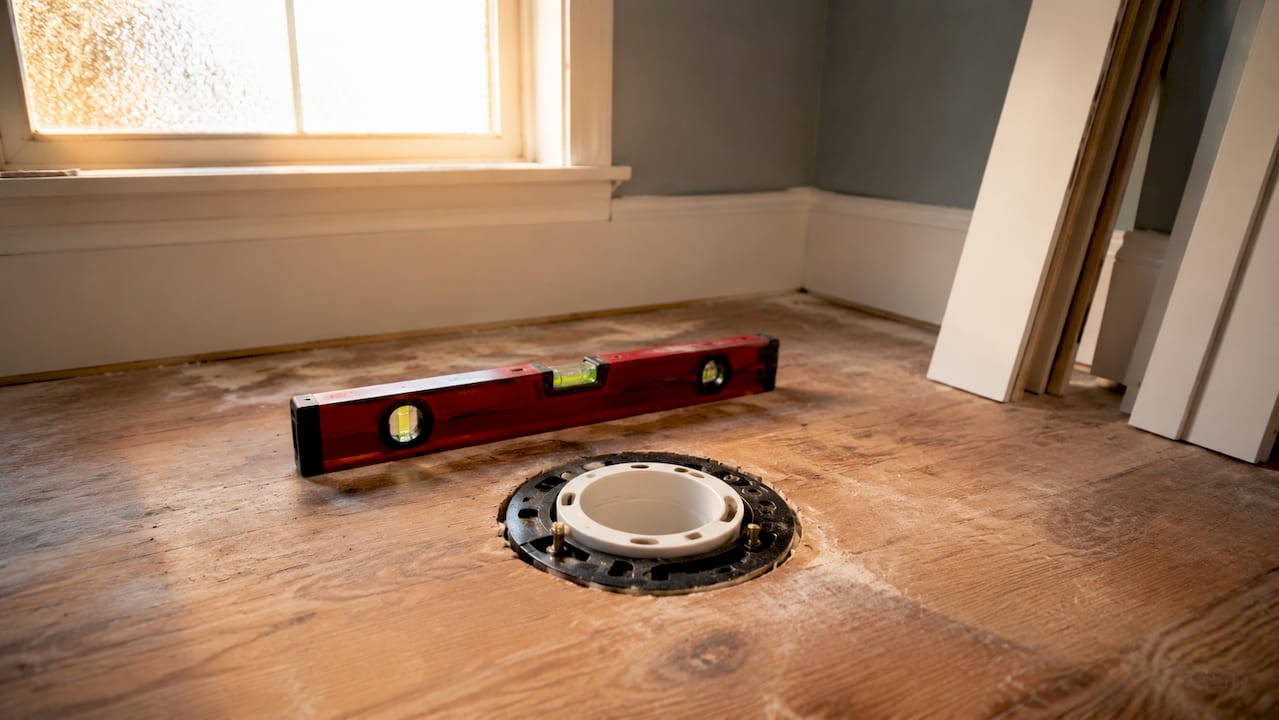
The toilet rough-in measurement is the foundation of any toilet installation guide. It tells you exactly where the drain pipe exits the floor relative to the wall behind the toilet. The flange center to finished wall distance is what manufacturers use to size their toilet bases, which is why a toilet designed for a 12-inch rough-in will leave a visible gap if your bathroom has a 10-inch rough-in. That gap is not cosmetic. It signals that the toilet base is not sitting flush, the wax ring is not compressing correctly, and you have a potential leak waiting to happen.
Rough-in plumbing explained simply: the plumber sets the drain location during construction, and every toilet you ever install in that bathroom must match that fixed point. You cannot move the flange without opening the floor, which is an expensive project. This is why measuring before purchasing is non-negotiable.
How to measure toilet rough-in accurately
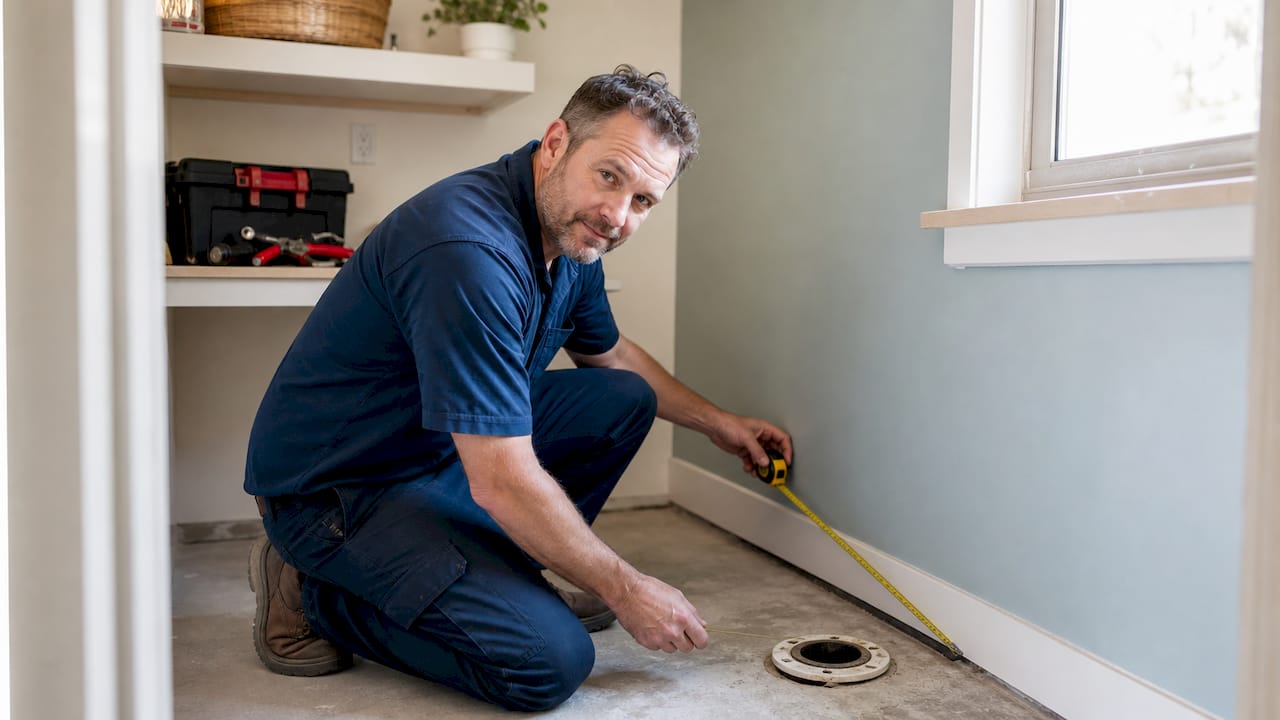
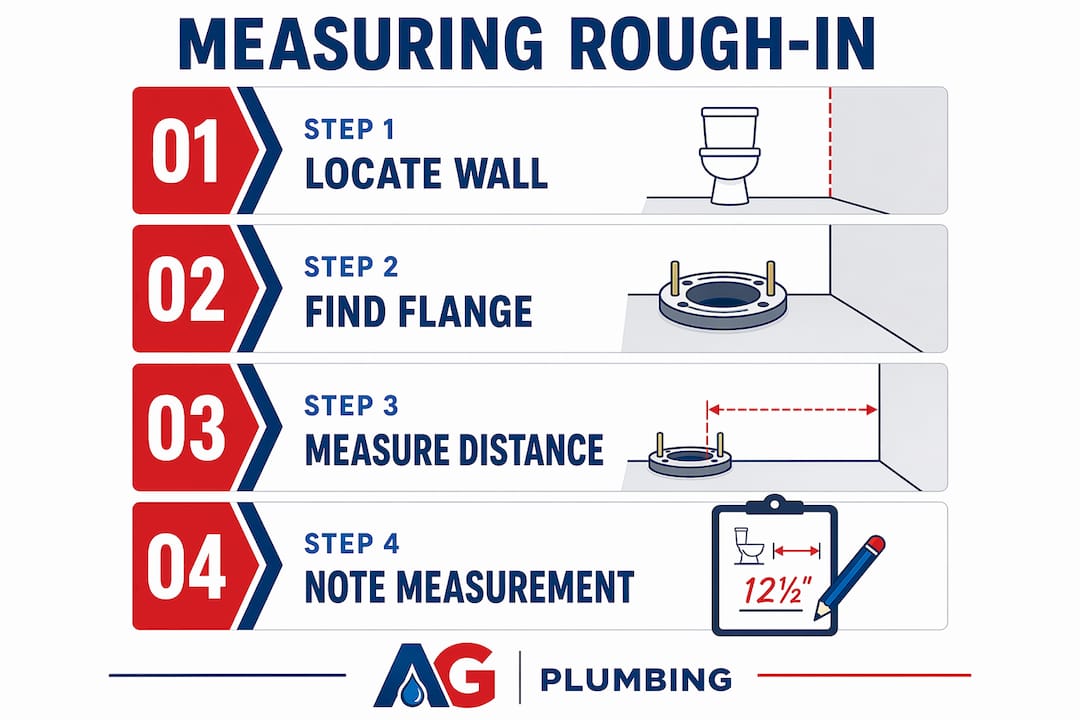
Measuring your toilet rough-in takes about two minutes with a tape measure. Follow these steps precisely, because the most common errors come from measuring to the wrong surface.
- Clear the area behind the toilet. If you have baseboard trim, note that you measure past it, not to it. The finished wall surface, meaning drywall or tile, is your starting point.
- Locate the toilet flange or closet bolt caps. On an installed toilet, you will see two bolt caps at the base of the toilet on either side. These caps sit directly over the closet bolts, which align with the center of the flange beneath.
- Measure from the finished wall to the center of one bolt cap. Do not measure to the baseboard. Do not measure to the wall stud. The finished wall surface is your reference plane, and measuring to anything else will give you a number that does not match toilet specifications.
- Record the measurement. Most results will land at 12 inches. If yours reads between 11.5 and 12.5 inches, you have a 12-inch rough-in. A reading around 10 inches means a 10-inch rough-in, and 14 inches means a 14-inch rough-in.
- Remeasure if your number looks unusual. If you get something like 13.2 inches or 9.1 inches, remeasure carefully before drawing conclusions. Slight variations in tape placement are common, and a second measurement confirms accuracy.
Pro Tip: For an installed toilet, the fastest and most precise method is measuring between the two bolt caps at the base of the toilet. The bolt cap centers align directly with the flange centerline, giving you a reliable rough-in reading without removing the toilet.
If you are measuring in a new construction bathroom where no toilet is installed yet, measure from the finished wall to the center of the exposed flange opening in the floor. If tile has not been laid yet, account for tile thickness in your final measurement, since tile adds to the finished wall and floor surfaces.
Common rough-in sizes and toilet compatibility
Understanding which rough-in size you have determines your entire shopping list. Here is how the three standard sizes break down and what each means for toilet selection.
The 12-inch rough-in is the default for most American homes built after 1960. Nearly every major toilet manufacturer, including Kohler, American Standard, and Gerber, offers their full product line in 12-inch configurations. If your bathroom has a 12-inch rough-in, you have the widest selection available at any price point.
The 10-inch rough-in appears most often in older homes and in bathrooms with limited wall-to-drain spacing. Toilet options for 10-inch rough-ins are more limited, but brands like TOTO and Kohler produce dedicated 10-inch models. TOTO’s Unifit adapter system is worth knowing about: it allows a single toilet model to fit 10-inch, 12-inch, and 14-inch rough-ins by adjusting an internal adapter, which is a practical solution when you are renovating a bathroom with an unusual rough-in size.
The 14-inch rough-in is the least common and appears mainly in older construction. Fewer off-the-shelf options exist, so homeowners with 14-inch rough-ins sometimes use a 12-inch toilet with a spacer plate to fill the gap, though this requires careful sealing.
| Rough-in size | Typical home age | Toilet availability | Notable brands |
|---|---|---|---|
| 12 inches | Post-1960 construction | Widest selection | Kohler, Gerber, American Standard, TOTO |
| 10 inches | Older or compact bathrooms | Moderate selection | TOTO, Kohler |
| 14 inches | Pre-1960 construction | Limited selection | Specialty models; adapter solutions |
One practical note: rough-in sizes must comply with local plumbing codes, but the three standard dimensions above are accepted in virtually every jurisdiction across the United States. Checking your local code before a full bathroom remodel is still worth doing, particularly if you are relocating the drain.
Why getting the measurement wrong causes real problems
A wrong rough-in measurement does not just mean an awkward gap behind the toilet. It creates a chain of installation problems that cost time and money to fix.
Here is what goes wrong when the rough-in does not match the toilet:
- Rocking and instability. A toilet base that does not sit flat on the floor rocks with use. This stresses the wax ring seal and eventually breaks it.
- Wax ring failure. The wax ring, bolt hardware, and flange must all align with the correct rough-in distance. A mismatched rough-in means the wax ring compresses unevenly, which leads to sewer gas leaks or water seeping under the floor.
- Visible gaps. A toilet designed for a 12-inch rough-in installed on a 10-inch rough-in will have the tank pressing against the wall, while a 14-inch rough-in toilet on a 12-inch rough-in leaves a gap between the tank and the wall.
- Wrong bolt length. Closet bolt length is sized to the flange height and toilet base thickness. An incorrect rough-in often means the bolts supplied with the toilet do not reach the flange correctly.
The root cause of most of these problems is measuring from the wrong reference point. Measuring from studs or baseboards instead of the finished wall surface throws off the measurement by the exact thickness of your drywall or tile, typically 0.5 to 1 inch. That small error is enough to put you in the wrong rough-in category entirely.
Pro Tip: Before buying any toilet, wax ring, or bolt kit, write your rough-in measurement on a piece of tape and stick it to your phone case or bathroom mirror. Bring that number to the store. The flange center measurement is the single most important spec when matching toilet hardware.
Rough-in measurement in remodeling and new construction
How you approach rough-in measurement depends on whether you are replacing an existing toilet or planning from scratch in new construction.
For toilet replacement, the process is straightforward:
- Measure the existing rough-in before removing the old toilet, using the bolt cap method described above.
- Match that measurement to the toilet specification sheet before purchasing. Every toilet sold in the United States lists its rough-in size on the box and in the product specs.
- Verify that your new toilet’s rough-in spec matches your measurement within half an inch.
- Purchase the wax ring and bolt kit rated for your flange height at the same time, since these are sized to work together.
For new construction, the rough-in is set by the plumber during the framing and rough plumbing phase, before walls and floors are finished. The plumber positions the drain pipe and installs the flange based on the planned toilet location and the wall layout. If you are building a new bathroom and have a specific toilet in mind, share the toilet’s rough-in spec with your plumber before the concrete is poured or the subfloor is closed. Changing the drain location after the fact means cutting into finished flooring, which is expensive.
For DIY remodeling projects, the sequence matters. Measure first, then shop. This sounds obvious, but many homeowners buy a toilet on sale and measure afterward, only to discover a mismatch. The measurement before purchase rule prevents this entirely. If you are also planning broader bathroom upgrades, reviewing a plumbing fixture installation guide before starting will help you sequence the work correctly and avoid conflicts between the toilet, vanity, and floor tile installation.
For homeowners tackling a full bathroom renovation, understanding how toilet rough-in fits into the larger picture of bathroom plumbing upgrades can save significant rework costs down the line.
Key takeaways
The toilet rough-in distance from the finished wall to the flange center is the single measurement that determines toilet fit, wax ring selection, and installation stability.
| Point | Details |
|---|---|
| Definition of rough-in | The distance from the finished wall to the toilet flange center, not the baseboard or stud. |
| Standard sizes | 12 inches is the North American standard; 10 and 14 inches are common alternatives. |
| Measure correctly | Use the finished wall surface and bolt cap centers as reference points for accuracy. |
| Wrong measurement consequences | Mismatched rough-in causes rocking, wax ring failure, and visible gaps behind the tank. |
| Measure before you shop | Record your rough-in before purchasing any toilet, wax ring, or bolt hardware. |
The measurement most homeowners get wrong once
After working with homeowners on toilet installations across Pittsburgh for years, the single most consistent mistake I see is measuring to the baseboard instead of the finished wall. It seems like a minor distinction until you realize that a standard 3/4-inch baseboard puts your measurement off by exactly enough to land you in the wrong rough-in category. You buy a 12-inch toilet, bring it home, and discover your actual rough-in is closer to 11.25 inches because you measured to the trim.
The second mistake is assuming that because the old toilet fit, any new toilet will fit too. Toilet dimensions vary significantly between manufacturers and even between product lines from the same brand. A Kohler Cimarron and a Kohler Highline have different base footprints even though both are available in 12-inch rough-in configurations. The rough-in tells you the drain location. It does not tell you whether the tank will clear the wall or whether the base will cover the old floor outline left by the previous toilet.
My honest advice: spend two minutes measuring before you spend two hours at the hardware store. If your measurement lands in an ambiguous range, say 11.5 inches, go with the 12-inch toilet. Manufacturers build in a small tolerance, and a 12-inch toilet on an 11.5-inch rough-in will seat correctly. When in doubt, call a licensed plumber before purchasing. A five-minute phone call is cheaper than a return trip with a 70-pound toilet box.
— Maayan
Get professional toilet installation help in Pittsburgh
Ag-plumbing has delivered plumbing repair and installation services across Pittsburgh, PA for 30 years. If your rough-in measurement is unclear, your flange is damaged, or you simply want the installation done right the first time, the AG Heating, Cooling & Plumbing team handles it all. Accurate rough-in measurement, correct wax ring selection, and solid flange seating are standard parts of every toilet installation the team completes.

Contact AG Heating, Cooling & Plumbing to schedule a toilet installation or plumbing inspection. Serving Pittsburgh and surrounding areas, the team brings the tools, experience, and code knowledge to get your bathroom back in working order without the guesswork.
FAQ
What is toilet rough-in in simple terms?
Toilet rough-in is the distance from the finished wall behind the toilet to the center of the toilet flange in the floor. This measurement determines which toilet models will fit your bathroom correctly.
What is the standard toilet rough-in size?
The standard toilet rough-in size in North America is 12 inches. Ten-inch and 14-inch rough-ins exist as alternatives, primarily in older homes or bathrooms with unusual drain placement.
How do I measure toilet rough-in on an existing toilet?
Measure from the finished wall surface to the center of the bolt caps at the base of the toilet. The bolt caps align with the flange centerline, giving you an accurate rough-in reading without removing the toilet.
What happens if I buy a toilet with the wrong rough-in?
A toilet with the wrong rough-in will either press against the wall or leave a gap behind the tank, and the wax ring will not seal correctly. This leads to rocking, potential leaks, and sewer gas entering the bathroom.
Can I use a 12-inch toilet on a 10-inch rough-in?
No. A 12-inch toilet on a 10-inch rough-in will push the tank into the wall and prevent the base from sitting flat. You need a toilet specifically designed for a 10-inch rough-in, or a system like TOTO’s Unifit adapter that accommodates multiple rough-in sizes.
Recommended
- Install plumbing fixtures: Pittsburgh homeowner guide – AG-Plumbing
- How to Fix a Running Toilet: a DIY Guide – AG-Plumbing
- What Is PVC Piping? A Homeowner’s Guide to Plumbing – AG-Plumbing
- Plumbing stacks explained: homeowner’s guide (2026) – AG-Plumbing
