
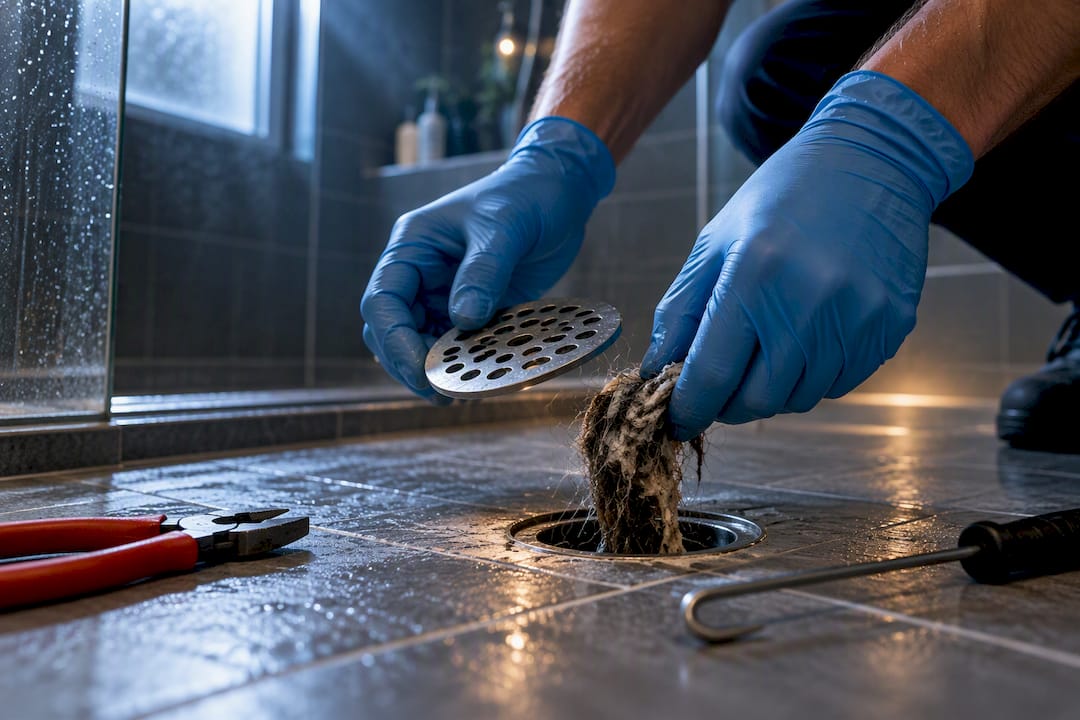
Try mechanical clearing first: remove the drain cover, pull out visible hair, plunge the drain, then run a snake through it. Skip chemical cleaners unless mechanical methods fail, and never mix products together. If more than one fixture in your home is backing up, or the drain keeps clogging after you clear it, stop troubleshooting and call a plumber.
TL;DR:
- Mechanical clearing methods, such as plungers and drain snakes, are effective and recommended as the first step before using chemicals.
- Clogs close to the surface typically result from hair or soap scum, while deeper or shared fixture issues may indicate more serious problems like venting or main line blockages.
- Chemical cleaners should only be used as a last resort because they pose risks to pipes and health, especially when mixed with other household chemicals.
- Routine maintenance, including installing a hair catcher and using enzymatic cleaners periodically, can prevent frequent or stubborn clogs.
- Persistent or recurring clogs, especially when multiple fixtures are involved or odors are present, require professional plumbing intervention with specialized tools like camera inspection and hydro jetting.
Table of Contents
- How bad is the clog, really?
- Clearing the clog by hand: tools and steps that work
- What about chemical drain cleaners?
- Do home remedies like baking soda and vinegar actually work?
- Simple habits that stop clogs before they start
- When a plumber, not a plunger, is the right call
- Knowing where DIY ends
- Getting help for stubborn or recurring shower clogs
- Sources
- FAQ
How bad is the clog, really?
Before grabbing any tool, figure out what you are dealing with. A slow drain that eventually empties is usually a partial blockage near the surface, often hair or soap scum. A shower that fills and stays full, or one that gurgles when the toilet flushes, points to something deeper or a problem shared by multiple fixtures.
A quick look tells you a lot:
- Slow draining with no odor usually means hair or soap scum near the drain opening.
- Full stoppage, bubbling, or a rotten-egg smell can signal a clog farther down the line or a venting issue.
- Trouble in more than one fixture at once (shower, tub, toilet) suggests the main line, not the shower drain itself.
Pipe material matters too. Older homes sometimes still have galvanized steel or cast iron drain lines, which corrode and narrow over time. PVC, common in newer construction, holds up better against heat and pressure but is not immune to physical damage from aggressive snaking.
Clearing the clog by hand: tools and steps that work
Mechanical clearing solves most shower clogs, and it costs nothing beyond a few basic tools you may already own.
What you’ll need:
- A cup or accordion-style plunger (cup plungers work well for flat surfaces like shower and tub drains)
- A hand auger or drain snake
- Rubber gloves and a flashlight
- Needle-nose pliers or a bent wire hanger for grabbing hair
Step-by-step:
- Remove the drain cover using a screwdriver or by unscrewing it, depending on the style.
- Shine a flashlight into the opening and pull out any visible hair or debris with pliers or a hooked wire hanger.
- Add enough water to the shower floor to cover the plunger’s cup, then plunge with firm, steady strokes rather than one hard slam.
- If the drain still will not clear, feed a hand auger into the pipe, cranking as you push, until you feel resistance, then rotate a few more times to snag debris and pull it back out.
- If your drain has an accessible trap, remove and clean it, then reassemble everything before running water again.
Consumer Reports and industry plumbing groups both point to mechanical methods, plunger and snake, as the first line of defense before reaching for any chemical product. A plumbing snake is especially effective on clogs sitting just past the trap, which is where most shower blockages form.
Go slowly with the auger. Forcing it can scratch fixtures, damage older pipe joints, or push the clog deeper instead of pulling it out.
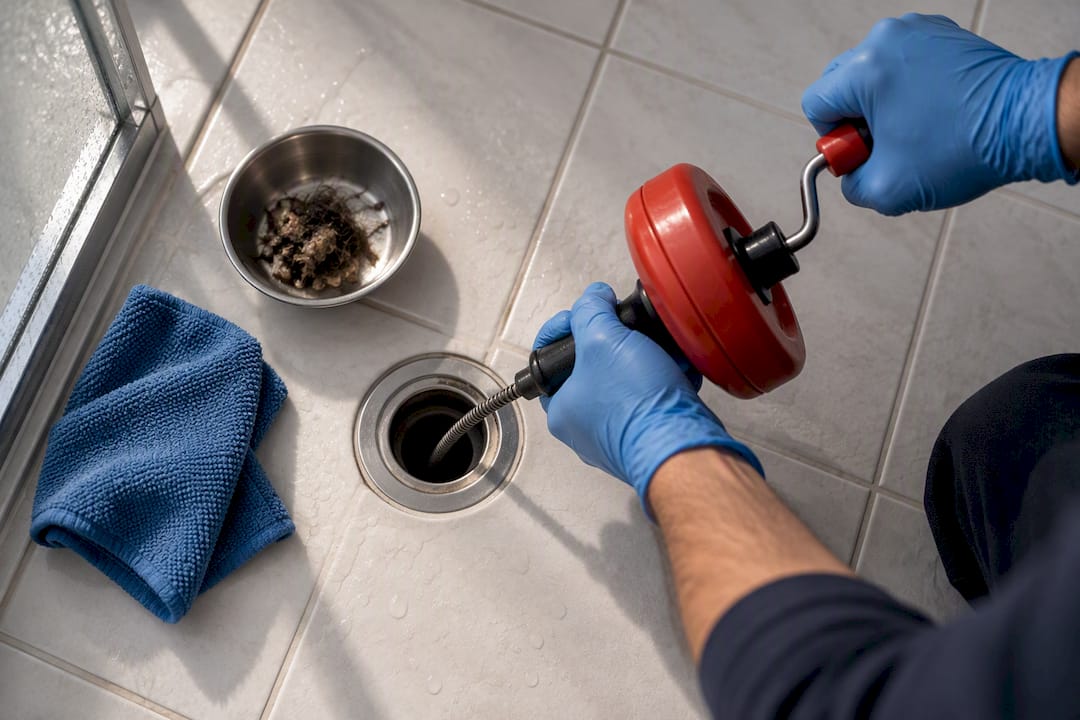
Pro Tip: If you feel the auger hit something solid and it won’t budge after a few turns, back off. Pushing harder often jams debris further into the pipe instead of freeing it.
What about chemical drain cleaners?
Chemical cleaners are not the first tool to reach for, and both plumbing trade groups and Consumer Reports recommend trying a plunger or snake first, since mechanical methods clear most clogs without any chemical risk.
When you do need a chemical option, it helps to know the difference:
- Caustic cleaners (often lye-based) break down hair and grease but generate heat and can damage aging pipes.
- Oxidizing cleaners (peroxides, nitrates) work through a chemical reaction and carry similar handling risks.
- Enzymatic cleaners use bacteria and enzymes to digest organic buildup slowly. They are gentler on pipes and septic systems, though they take longer to work.
Before using any chemical cleaner:
- Read the label fully and follow dilution instructions exactly.
- Open a window or run a fan for ventilation.
- Wear gloves and eye protection.
- Never mix one product with another, including bleach, ammonia, vinegar, or a second drain opener.
Mixing cleaners is one of the more dangerous mistakes homeowners make. The Washington State Department of Health warns that combining drain cleaner with bleach or other household chemicals can produce toxic gas. The U.S. Poison Help line, 1-800-222-1222, is the number to call for any chemical exposure, and it operates around the clock for exactly this kind of emergency. MedlinePlus documents severe burns and poisoning from drain-opener exposure, underscoring why label instructions are not optional.
Do home remedies like baking soda and vinegar actually work?
Hot water and pantry staples have a real but limited place in clearing minor buildup.
- Boiling water can loosen soap scum in some cases, but pour it slowly and skip this method if your pipes are older PVC or you are unsure of the material, since heat and pressure can warp or crack certain plastics.
- Baking soda and vinegar creates a fizzing reaction that may loosen light residue, but it produces mostly carbon dioxide and water, not a strong enough force to clear compacted hair or a real blockage.
- A how-to guide on shower drain clogs lists boiling water as a common home remedy while cautioning about pipe-material limits, which lines up with what plumbers see in practice.
- A wet/dry shop vacuum set to liquid mode can sometimes pull a stubborn clog free, and repeated plunging over several minutes often outperforms a single hard attempt.
Treat these remedies as a first pass for mild slowdowns, not a fix for a drain that has stopped completely.
Simple habits that stop clogs before they start
A little routine maintenance goes a long way toward keeping shower drains clear.
- Install a mesh drain guard or hair catcher over the drain opening and empty it after every shower.
- Pull loose hair from the guard immediately rather than letting it build up over days.
- Run an enzymatic cleaner through the drain every few months to break down grease and soap film before it hardens.
- Rinse conditioner, shaving cream, and soap residue fully down the drain rather than letting it sit on wet hair or skin near the opening.
These habits cost very little and take just a few minutes a week. For a more detailed routine, our drain clog prevention guide walks through product picks and a maintenance schedule you can follow month to month.
When a plumber, not a plunger, is the right call
Some signs mean it is time to stop troubleshooting on your own.
- More than one fixture backing up at once, especially if it happens with every shower or toilet flush.
- A clog that returns within days or weeks of a proper mechanical clearing.
- Sewage odor, gurgling from other drains, or water backing up into the tub when you run the washing machine.
These point to a problem in the main line rather than the shower drain itself. Plumbers use tools homeowners typically do not have: motorized snakes for longer runs, camera inspection to see exactly where a blockage or pipe defect sits, and hydro jetting to blast through buildup that a hand auger cannot reach. The EPA’s guidance on deeper obstructions notes that these tools become necessary once a clog sits beyond what a homeowner’s snake can access. Catching a recurring clog early is usually cheaper than waiting for a full stoppage or a sewer line repair.
Knowing where DIY ends

Most homeowners can clear a hair clog with a plunger and a snake in under thirty minutes, and that is genuinely satisfying to pull off yourself. The mistake I see most often is skipping straight to a chemical cleaner because it feels faster, then dealing with fumes, pipe damage, or a clog that was never really solved because the hair causing it is still sitting in the trap.
Before you call anyone, ask yourself: did I actually remove debris, or just push it further down? Is more than one drain affected? Has this exact clog come back before? If the answer to any of those is yes, a plumber’s experience with recurring or systemic issues is worth the call.
— Maayan
Getting help for stubborn or recurring shower clogs
When plunging and snaking do not solve it, or the same clog keeps coming back, Professional plumbing services can take it from there with drain cleaning, camera inspection, and hydro jetting for buildup that a hand auger cannot reach.
 A service visit typically starts with an inspection to locate the blockage, followed by a clear explanation of repair options before any work begins. If your shower drain has become a repeat problem, schedule a drain cleaning service and get it handled properly the first time.
Sources
- Dangers of Mixing Bleach with Cleaners | Washington State Department of Health
- Drain opener poisoning: MedlinePlus Medical Encyclopedia
- How to choose and use a drain cleaner – Consumer Reports
- EPA guidance describing snake use and professional interventions
FAQ
How do I unclog the drain in my shower?
Start by removing the drain cover and pulling out any visible hair, then plunge with steady strokes and follow up with a hand auger if water still is not draining. Clean the trap if you can access it, and only consider a chemical or enzymatic cleaner if mechanical methods do not clear it.
Why shouldn’t you use baking soda and vinegar to unclog a drain?
Baking soda and vinegar mostly produce carbon dioxide and water, which is not a strong enough reaction to clear compacted hair or a real blockage. It can help with light soap scum, but treat it as a minor assist rather than a dependable fix.
What can I pour down my shower drain to make it drain faster?
An enzymatic cleaner is the safest option for breaking down soap film and organic buildup over time, and it is gentler on pipes than caustic or oxidizing products. Boiling water can help loosen soap scum in some cases, but avoid it if you are unsure of your pipe material, since heat can damage certain plastics.
What is the best way to unclog a shower drain?
Mechanical methods work best for most shower clogs: remove the cover, pull out hair, plunge, then snake if the plunger alone does not clear it. Save chemical cleaners for stubborn cases, and never mix cleaning products together.
Recommended
- Skip Caustic Cleaners: Fix a Laundry Drain Clog Fast, Homeowners
- Homeowners: Quick Checklist to Stop Recurring Drain Clogs
- How to Prevent Clogged Sinks: A Homeowner’s Guide
- How to Unclog Your Toilet: Simple DIY Solutions That Work
