
TL;DR:
- Plumbing vents carry air, not water, to balance pressure and prevent sewer gases from entering homes.
- Faulty or blocked vents cause slow drains, odors, gurgling toilets, and pipe damage.
- Regular inspections and proper code compliance ensure vent systems function safely and effectively.
Most Pittsburgh homeowners assume every pipe in the walls carries water. That assumption is wrong, and it quietly causes some of the most frustrating plumbing problems around. Your home’s plumbing system includes a network of vent pipes that carry no water at all. Instead, they move air, and that air movement is what keeps your drains flowing freely and your home smelling clean. Neglecting vent pipes can lead to drainage failures and dangerous sewer gas buildup. This guide covers what plumbing vents do, how they work in Pittsburgh homes, what goes wrong when they fail, and how to stay code compliant.
Table of Contents
- What is a plumbing vent and why is it important?
- How plumbing venting works in Pittsburgh homes
- Common problems caused by faulty plumbing vents
- Plumbing vent codes and options for Pittsburgh homeowners
- What most Pittsburgh homeowners overlook about plumbing vents
- Need help with plumbing vents or repairs?
- Frequently asked questions
Key Takeaways
| Point | Details |
|---|---|
| What plumbing vents do | They equalize air pressure and prevent sewer gases from entering your home. |
| Common vent problems | Blocked or frozen vents cause slow drains and bad smells—especially common in Pittsburgh winters. |
| Check local codes | Always verify venting alternatives with local authorities due to Pittsburgh’s unique code adaptations. |
| DIY vs. professional help | Simple vent checks are possible, but persistent vent issues call for professional diagnostics. |
What is a plumbing vent and why is it important?
Now that you know plumbing vents matter more than you might think, let’s start with what they actually do.
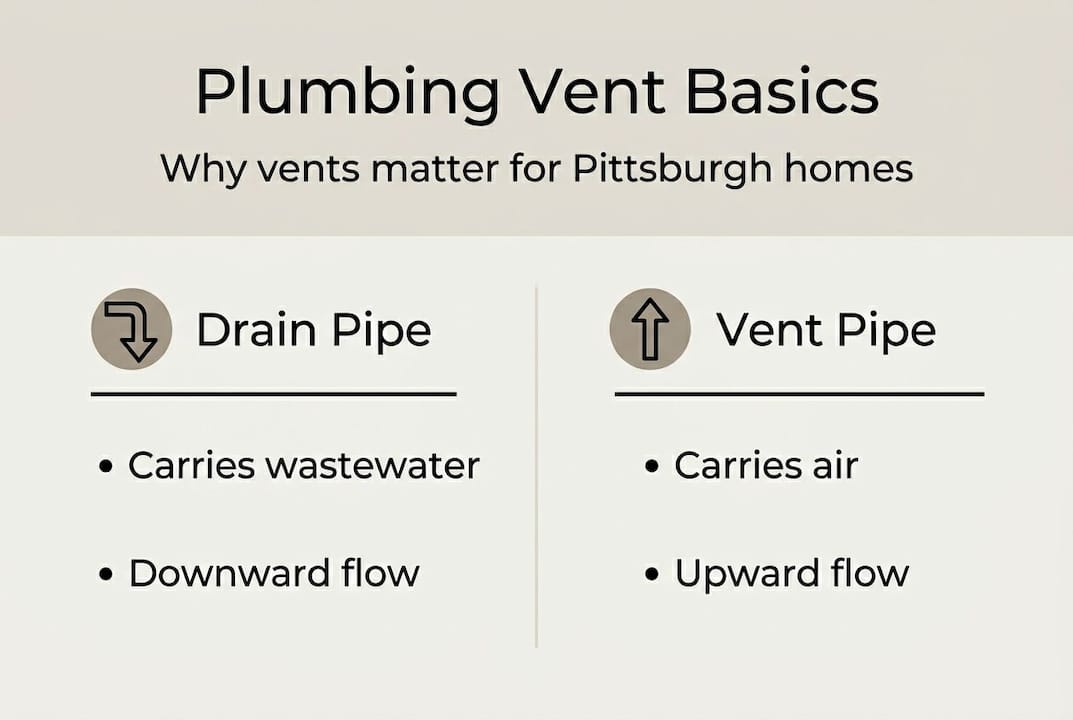
A plumbing vent, also called a vent pipe or vent stack, is a pipe that connects your home’s drain system to the outside air, usually exiting through the roof. It does not carry wastewater. Its job is to keep air pressure balanced inside your drain pipes so water flows out smoothly and sewer gases stay where they belong.
Every drain in your home has a trap, which is a curved section of pipe that holds a small amount of water. That water creates a seal blocking sewer gases from rising into your living space. Without proper venting, flowing water creates suction that pulls that water seal right out of the trap. Once the seal is gone, sewer gases enter your home freely. A properly functioning vent prevents traps from being siphoned and blocks those gases from entering.
| Feature | Drain pipe | Vent pipe |
|---|---|---|
| Carries | Wastewater | Air only |
| Direction | Downward to sewer | Upward to atmosphere |
| Primary role | Remove waste | Balance air pressure |
| Visible location | Under sinks, in walls | Roof or exterior wall |
When vents work correctly, Pittsburgh homeowners rarely think about them. When they fail or get blocked, the symptoms show up fast: slow drains, gurgling sounds, and odors that seem to come from nowhere.
Here is what healthy, functioning vents deliver for your home:
- Odor prevention: Sewer gases, including hydrogen sulfide, stay out of your living space.
- Rapid drainage: Air behind flowing water keeps drains running at full speed.
- Pipe longevity: Balanced pressure reduces stress on pipe joints and seals.
- Trap protection: Water seals in every drain remain intact and effective.
“A plumbing system without proper venting is like trying to pour liquid from a sealed container. The air has nowhere to go, and neither does the water.”
How plumbing venting works in Pittsburgh homes
With a clear idea of what vents do and why they matter, let’s zoom into how they operate in your Pittsburgh home.
In a typical Pittsburgh house, the main vent stack runs vertically through the interior walls and exits through the roof. Every time water drains from a sink, tub, or toilet, it pushes air ahead of it and pulls air behind it. The vent pipe allows outside air to enter the system from above, keeping pressure neutral so water flows freely downward without creating suction on the traps.
Here is how it plays out step by step:
- You flush a toilet or drain a sink.
- Water rushes down the drain pipe toward the sewer.
- Moving water creates a low-pressure zone behind it.
- Air enters through the roof vent to equalize that pressure.
- Traps stay sealed, drainage stays fast, and no odors escape.
Pittsburgh homes use two main types of venting setups:
| Vent type | How it works | Best use case |
|---|---|---|
| Traditional atmospheric vent | Open pipe to outside air via roof | Whole-house main stack |
| Air admittance valve (AAV) | Mechanical valve opens to let air in | Isolated fixtures, remodels |
AAVs are popular in renovation projects because they avoid the need to run new pipes through walls and roofs. However, local code verification is essential before installing one, since Pittsburgh uses regional adaptations of national plumbing codes. Choosing the right materials for Pittsburgh homes also affects how well your venting system performs over time.
If you are adding a new fixture, consult a licensed plumber and review the fixture installation guide to make sure venting is part of the plan from the start.
Pro Tip: Before making any changes to your venting setup, contact the Allegheny County Health Department. What is allowed under national code may not be approved locally, and unpermitted work can create serious problems if you ever sell your home.
Common problems caused by faulty plumbing vents
So, what can go wrong if your home’s venting is compromised? Let’s look at the issues affecting real Pittsburgh residents.
Vent problems are sneaky. They rarely announce themselves loudly. Instead, they show up as recurring annoyances that homeowners often blame on other causes. Blocked or undersized vents are a frequent source of slow drains and backup throughout the home.
Common vent problems Pittsburgh homeowners encounter include:
- Debris clogs: Leaves, bird nests, and dirt collect at roof vent openings, especially after storms.
- Frozen vents: Pittsburgh winters are brutal. Moisture inside vent pipes can freeze and seal the opening completely.
- Improper installation: Vents that are too small, too long, or incorrectly angled do not move air efficiently.
- Cracked or disconnected pipes: Age and settling cause vent pipes to separate inside walls.
The symptoms are just as recognizable:
- Slow draining sinks or tubs that do not respond to drain cleaning
- Toilets that bubble or gurgle when another fixture drains
- Persistent sewer smells, especially after heavy rain or cold snaps
- Water backing up in unexpected locations
Winter is a particular concern in Pittsburgh. When temperatures drop sharply, moisture in vent pipes can freeze solid overnight. This is one reason why professional drain cleaning sometimes uncovers vent issues that were masked by what looked like a simple clog. Understanding how to prevent drain blockages starts with knowing that vents are part of the drainage equation.
Pro Tip: If you hear gurgling from your toilet when the bathroom sink drains, that sound is air being pulled through the toilet trap because the vent is restricted. Check the vent before assuming you need major plumbing repair work.
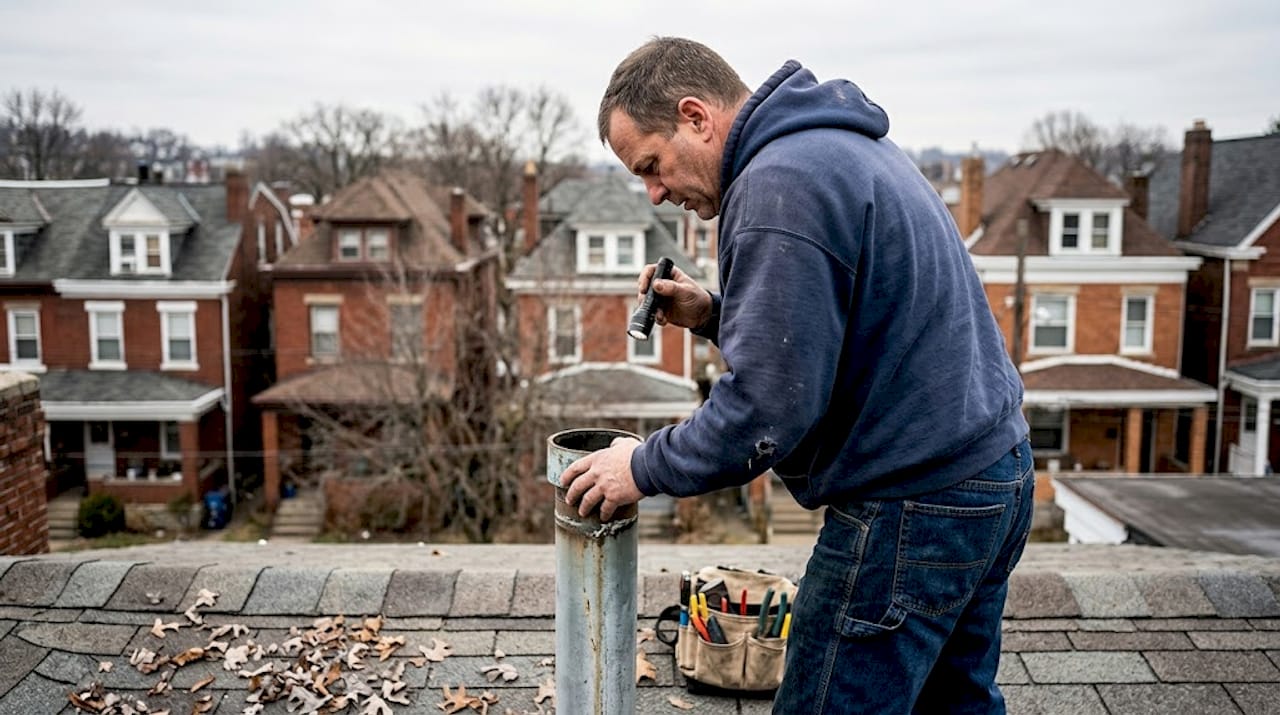
For basic maintenance, inspect your roof vent opening each fall before winter sets in. Clear any visible debris with a flashlight and a long brush. If the problem persists or you cannot safely access the roof, call a licensed plumber.

Plumbing vent codes and options for Pittsburgh homeowners
Understanding problems is just part of the puzzle. Making sure your fixes are legal and safe is the next priority.
Pittsburgh draws from the International Plumbing Code (IPC), which offers more flexibility than the Uniform Plumbing Code (UPC) used in other parts of the country. The IPC permits the use of AAVs in more situations, while the UPC generally requires traditional atmospheric venting for most applications. Knowing which code applies to your home matters more than most people realize.
Here is why code compliance is not optional:
- Home sales: Buyers’ inspectors flag non-compliant venting. It can kill a deal or force expensive last-minute repairs.
- Insurance claims: Water damage tied to improper plumbing may be denied if unpermitted work is found.
- Remodeling permits: Any permitted renovation that touches plumbing triggers a code review of existing systems.
- Safety: Non-compliant venting can allow sewer gas, including methane, to accumulate indoors.
To verify your home’s venting meets current standards, follow these steps:
- Locate your home’s original plumbing permits, if available.
- Identify where your main vent stack exits the roof.
- Note any AAVs installed under sinks or in crawl spaces.
- Contact the Allegheny County Health Department to confirm which code version applies to your address.
- Schedule a licensed plumber to inspect and document your system.
Allegheny County and Pittsburgh often follow regional adaptations of national codes, so confirming venting alternatives with local officials is always the right move. Reviewing local plumbing codes before starting any project keeps you protected.
“Code compliance is not just about passing inspection. It is about protecting your family, your investment, and your neighbors.”
What most Pittsburgh homeowners overlook about plumbing vents
Let’s take a step back and share a lesson learned from our years of Pittsburgh plumbing experience.
After 30 years of working in Pittsburgh homes, we can tell you with confidence that plumbing vents are the most overlooked part of any residential plumbing system. Homeowners call us about slow drains, strange smells, and gurgling toilets. Many of them have already spent money on drain cleaning, new fixtures, or even partial pipe replacements. In a surprising number of those cases, the real issue was a blocked or undersized vent.
Vents do not leak visibly. They do not make obvious noise when they fail. They just quietly stop working, and the symptoms get blamed on something else. That pattern costs homeowners real money.
The uncomfortable truth is that a simple annual vent check costs very little compared to water damage, mold remediation, or failed home inspections. Pittsburgh’s climate makes this especially relevant. Cold winters, wet springs, and heavy leaf fall all create conditions that clog or freeze roof vents faster than in milder climates.
We recommend that homeowners learn to spot early plumbing warning signs before small vent issues become expensive emergencies. A professional check once a year, or any time you notice drainage or odor symptoms, is a small investment that pays for itself many times over.
Need help with plumbing vents or repairs?
If you’ve discovered potential vent issues or want peace of mind, here’s how to get reliable help.
At AG Heating, Cooling & Plumbing, we have spent 30 years diagnosing and fixing exactly the kind of vent problems Pittsburgh homes face. Whether you are dealing with slow drains, sewer odors, or need a full system inspection before a home sale, our licensed plumbers can help.
We offer diagnostics, vent cleaning, and complete professional plumbing repair services across Pittsburgh and the surrounding areas. Not sure what you need? Browse common plumbing repairs Pittsburgh homeowners request most often and see if your situation matches. Call us today to schedule an inspection and get your plumbing system working the way it should.
Frequently asked questions
Can I use an air admittance valve (AAV) in Pittsburgh’s plumbing systems?
AAVs are sometimes permitted in Pittsburgh, but IPC flexibility with AAVs still requires local code verification with the Allegheny County Health Department before installation.
What are the signs that my plumbing vent is clogged?
Common signs include slow draining sinks or tubs, bubbling toilets, and persistent sewer odors inside the house. Blocked vents cause these symptoms to appear across multiple fixtures at once.
Is it safe for homeowners to clear plumbing vents themselves?
Some minor obstructions at accessible rooftop vent openings can be cleared safely, but professional help is recommended for persistent or severe blockages that do not resolve with basic cleaning.
How often should Pittsburgh homeowners have their plumbing vents checked?
Regular inspections prevent issues and annual checks are ideal for older homes, though any time you notice odors or slow drains warrants an immediate inspection.
Recommended
- Install plumbing fixtures: Pittsburgh homeowner guide – AG-Plumbing
- Top bathroom plumbing ideas for Pittsburgh homeowners – AG-Plumbing
- How to Choose Plumbing Materials for Pittsburgh Homes – AG-Plumbing
- Cost-saving plumbing tips for Pittsburgh homeowners – AG-Plumbing
