
TL;DR:
- Greywater recycling involves reusing household wastewater from sinks, showers, and laundry for non-potable purposes. Proper separation from blackwater, local permits, and advanced treatment are essential for safe and compliant systems in Pennsylvania. Ag-plumbing offers assessment, installation, and maintenance services tailored to local regulations and property needs.
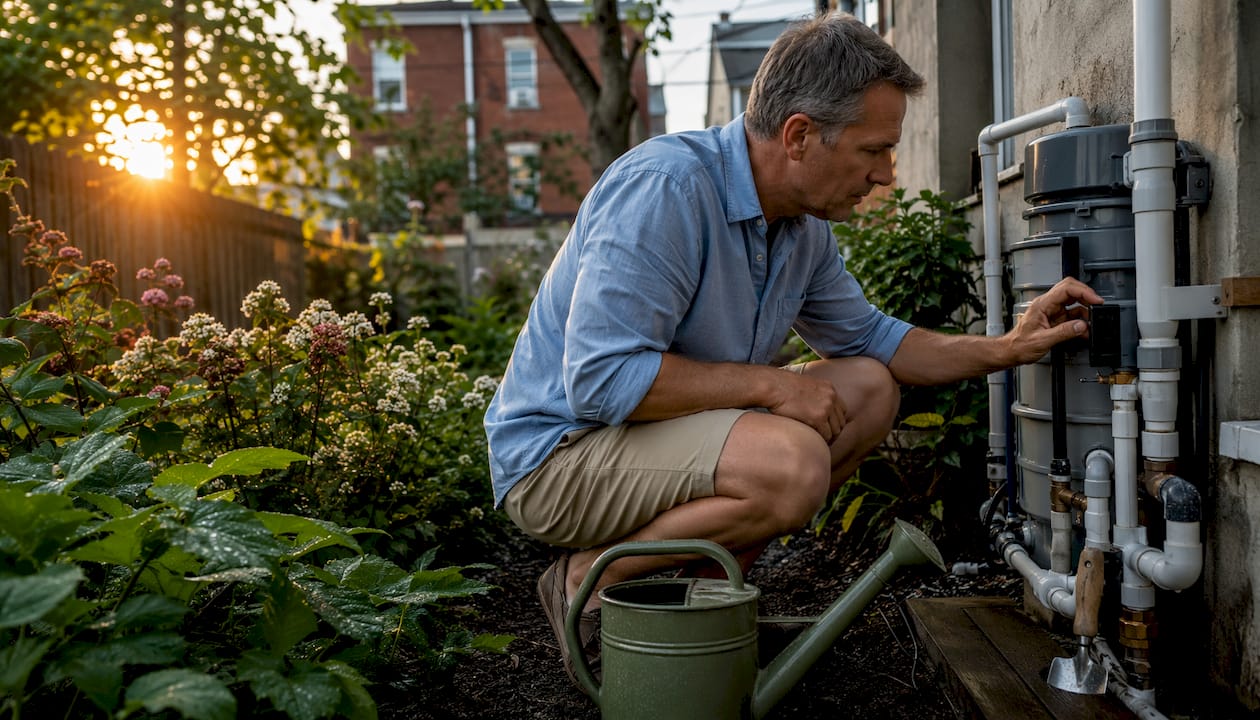
Greywater recycling is the practice of capturing household wastewater from sinks, showers, bathtubs, and laundry, then treating and reusing it for non-potable purposes like subsurface irrigation, toilet flushing, or cooling systems. The EPA’s onsite non-potable reuse research sets pathogen-removal targets that determine exactly how much treatment each end use requires. In Pennsylvania, PA DEP guidance adds another layer: local onlot sewage ordinances often govern whether your system needs a permit, an engineered design, or both.
The line between greywater and blackwater matters enormously for cost and complexity. Greywater comes from:
- Bathroom sinks, showers, and bathtubs
- Laundry washing machines (excluding diaper loads)
- Utility sinks not connected to food waste
Blackwater is everything from toilets, kitchen sinks, and dishwashers. Kitchen wastewater carries high organic loads and pathogens that push it into the same treatment category as toilet waste. Once greywater and blackwater mix, the combined stream requires full-scale biological wastewater treatment, which is far more expensive and heavily regulated.
Common non-potable end uses for greywater: subsurface drip irrigation, toilet flushing, and commercial cooling tower makeup water.
Table of Contents
- What is greywater recycling, and how does a system actually work?
- Is greywater safe to use, and when is advanced treatment required?
- What permits do you need in Pennsylvania?
- What are the real benefits, and what are the limits?
- What does installation cost, and what maintenance is involved?
- When should you hire a licensed plumber or engineer?
- When greywater recycling isn’t the right fit
- Key Takeaways
- A Pittsburgh plumber’s honest take on greywater projects
- Ag-plumbing can assess, permit, and install your greywater system
- FAQ
What is greywater recycling, and how does a system actually work?
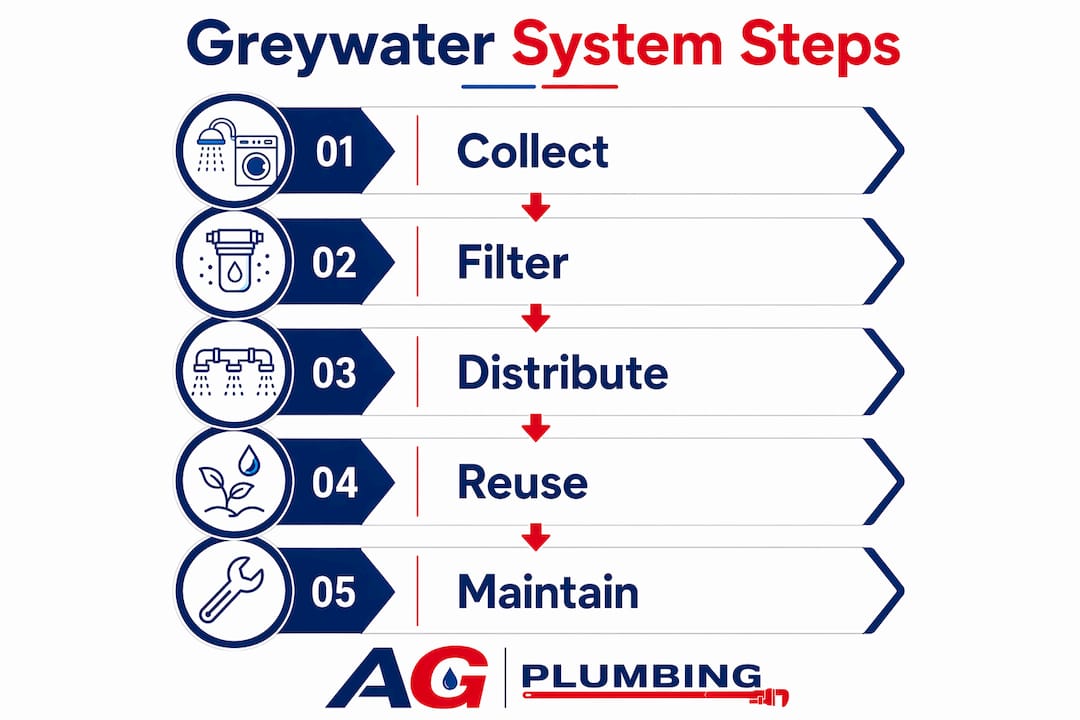
A greywater system follows a straightforward path: source diversion → screening or pretreatment → storage (if used) or direct distribution → end use. Understanding each stage helps you know what a site assessment will look at and what a licensed plumber will need to design around.
Core components:
- Source diverter or dual piping: Splits greywater lines from the main drain before they reach the sewer or septic system.
- Grease and lint screens: First-pass filters that catch hair, lint, and solids before they clog downstream components.
- Sediment or media filters: Remove finer particles; sand filters are common for outdoor irrigation systems.
- Storage tank (if applicable): Holds treated water for later use. Tanks introduce pathogen-growth risk if water sits longer than 24 hours without disinfection.
- Pump and distribution lines: Move water to drip irrigation zones or a toilet-flush loop.
- Backflow prevention device: Prevents any non-potable water from flowing backward into the potable supply.
Direct diversion (no storage) works well for laundry-to-landscape setups. Water moves from the washing machine directly to subsurface drip lines while it is still fresh. Storage systems offer more flexibility but demand disinfection and more maintenance.
Pro Tip: Never connect a kitchen sink to a greywater diversion line, even if it seems convenient. The organic load from food waste will overwhelm basic filtration and may violate PA DEP requirements. Laundry-to-landscape piping is typically the simplest, lowest-risk starting point for Pittsburgh homeowners.
Is greywater safe to use, and when is advanced treatment required?
Treatment needs are determined by the intended end use and the pathogen-removal target for that use. Outdoor subsurface irrigation sits at the lower-risk end; indoor toilet flushing requires more stringent treatment and physical separation from the potable supply.
EPA’s QMRA-based framework: The EPA uses quantitative microbial risk assessment to set pathogen-removal targets for each end use, allowing designers to match treatment level to actual health risk rather than applying a one-size-fits-all standard.
Treatment tiers by use:
- Subsurface irrigation (lower risk): Coarse screening, sand or media filtration, and subsurface distribution that keeps water below the soil surface and away from direct human contact.
- Toilet flushing (higher risk): Requires documented pathogen reduction, often membrane filtration or UV disinfection, plus code-compliant backflow prevention and labeled non-potable piping throughout.
- Advanced systems (MBR, chlorination/UV): Required when water will contact humans, be used indoors, or when local regulations mandate it.
Cross-connections between non-potable greywater lines and the potable supply are a documented health hazard. The EPA’s cross-connection guidance is explicit: physical separation, permanent labeling, and backflow devices are non-negotiable design requirements. Mixing greywater with blackwater eliminates the option for simple filtration and triggers full wastewater treatment requirements under both EPA guidance and PA DEP rules. For Pittsburgh homeowners, this is the single most expensive mistake to make during installation. The role of plumbing in health is directly tied to maintaining these separations correctly.
What permits do you need in Pennsylvania?
Many greywater systems in Pennsylvania require review under local onlot sewage management ordinances and PA DEP guidance before a single pipe is moved. The PA DEP guidance document flags that improper installation can cause public health hazards or groundwater contamination, and that systems must be evaluated against local onlot rules.
Permitting checkpoints to confirm with local authorities:
- Local onlot sewage management ordinance compliance
- Municipal or county building permit
- Pennsylvania Uniform Construction Code (plumbing chapter)
- Setback requirements from property lines, wells, and water features
- Soil and site suitability assessment
- Act 537 sewage facilities planning review (for systems that alter existing onlot flows)
- Engineered design sign-off (required for indoor reuse and larger systems)
Action steps for Pittsburgh-area homeowners:
- Call your local municipal building or health department to confirm which ordinances apply to your property.
- Schedule a site assessment with a licensed plumber or professional engineer familiar with PA DEP onlot requirements.
- Gather site data: lot size, soil type, existing septic or sewer connection, and planned end use.
- Submit permit applications and, if required, an Act 537 planning module review.
- Receive written approval before any dual-pipe work begins.
Projects that skip the site assessment stage are more likely to face permit refusal or expensive retrofits, according to PA DEP guidance. In Pennsylvania, outdoor subsurface irrigation is generally the simpler, more-permitted pathway; indoor toilet flushing frequently requires an engineered treatment system and documented pathogen-reduction performance.
What are the real benefits, and what are the limits?

The primary benefit of greywater reuse is reduced potable water demand and lower sewer flows. EPA assessment data indicates household potable water reductions of up to roughly 50% when greywater is reused for suitable non-potable applications.
Benefits:
- Potable water savings, particularly during summer irrigation peaks
- Reduced sewer load and potentially lower utility fees
- Drought resilience for properties with irrigated yards
- Reduced peak demand on municipal water systems
| Metric | Estimate | Source |
|---|---|---|
| Max household potable water reduction | Up to ~50% | EPA NEPIS assessment |
| Constructed wetland treatment | Meets restricted irrigation standards in many trials | EPA NEPIS wetlands study |
| Greywater share of indoor use | Up to ~50% | EPA NEPIS assessment |
Practical limitations: Seasonal irrigation demand in Pittsburgh drops to near zero in winter, which limits year-round savings for outdoor-only systems. Water quality varies by household products used (soaps, detergents, medications). Small lots may lack space for subsurface distribution lines. Kitchen and toilet sources are excluded, which caps the total volume available for reuse. EPA WaterSense guidance recommends pairing greywater reuse with drought-tolerant landscaping rather than treating it as a standalone solution.
What does installation cost, and what maintenance is involved?
Installation cost depends heavily on pretreatment level, whether storage is included, pump requirements, permitting and engineering fees, and site-specific plumbing complexity. Simple laundry-to-landscape systems cost far less than indoor toilet-flush systems with storage tanks and UV disinfection. There is no single flat price; a site assessment is the only reliable way to get an accurate estimate.
Common cost drivers:
- Dual piping or source diverter installation
- Filtration and disinfection equipment
- Storage tank (if required)
- Pump and distribution lines
- Engineering design and permit fees
- Site work (trenching for subsurface drip lines)
Installation timeline:
- Site assessment and system design (1–3 weeks depending on permit complexity)
- Permit submission and approval (2–8 weeks for PA municipalities)
- Installation and plumbing work (1–5 days on site)
- Testing, commissioning, and inspection sign-off
Ongoing maintenance tasks:
- Monthly: inspect screens and lint filters; clear any blockages
- Quarterly: check pump operation and distribution lines for clogs or root intrusion
- Annually: inspect storage tank, test disinfection system, verify backflow device function
- Seasonally: winterize outdoor distribution lines before freezing temperatures
- As needed: licensed plumber inspection for cross-connection verification and permit compliance checks
When should you hire a licensed plumber or engineer?
Call a licensed plumber or engineer for any greywater project that involves dual-pipe work, storage, indoor reuse, or any situation where mixing risk exists. This is not optional in Pennsylvania. What professional plumbers do in this context includes system design, permit coordination, code-compliant installation, and post-installation inspection.
Vetting checklist:
- Pennsylvania plumbing license (verify with the State Architects Licensure Board or relevant board)
- General liability and workers’ compensation insurance
- Demonstrated experience with onsite non-potable reuse or greywater systems
- Familiarity with PA DEP onlot requirements and local Pittsburgh-area ordinances
- References and photos from comparable projects
Questions to ask during the estimate:
- Who pulls the permit, and will you handle Act 537 review if needed?
- How will you document separation from blackwater piping?
- What treatment level will the system achieve, and how is that verified?
- What does the maintenance plan look like, and which tasks require a licensed plumber?
- What warranty covers the installation and equipment?
Red flags: Any contractor who promises potable reuse without permits, claims DIY dual-plumb work is fine, or refuses to provide engineering documentation should be avoided. A system installed without proper permits can create liability, fail inspections, and require complete removal.
When greywater recycling isn’t the right fit
Greywater reuse is unsuitable when blackwater mixing has already occurred, when the lot is too small for subsurface distribution, when local ordinances prohibit it outright, or when the household simply does not generate enough reusable water to justify the system cost.
Simpler alternatives worth considering:
- Rainwater capture systems for outdoor irrigation (often simpler to permit)
- High-efficiency low-flow toilets and showerheads, which reduce demand without added infrastructure
- Xeriscaping and drought-tolerant landscaping that cuts irrigation need at the source
- Smart irrigation controllers that adjust watering schedules to weather data
- Municipal rebate programs for water-efficient fixture upgrades
For properties with limited outdoor irrigation needs or strict local rules, green plumbing upgrades like low-flow fixtures often deliver faster payback with far less permitting complexity. Eco-friendly property maintenance approaches consistently show that fixture efficiency and landscaping changes together can match or exceed the savings of a basic greywater system without the regulatory overhead.
Key Takeaways
Greywater recycling can cut household potable water demand substantially, but safe and legal installation in Pennsylvania requires a licensed plumber, local permit review, and strict separation from blackwater sources.
| Point | Details |
|---|---|
| Greywater vs. blackwater | Never mix streams; mixing triggers full wastewater treatment and sharply higher costs. |
| PA permitting is mandatory | Check local onlot ordinances and PA DEP requirements before any pipe work begins. |
| Savings potential | EPA data shows up to ~50% potable water reduction when greywater is reused appropriately. |
| Treatment matches end use | Subsurface irrigation needs basic filtration; indoor toilet flushing requires engineered treatment and documented pathogen removal. |
| Ag-plumbing next step | Ag-plumbing provides site assessments, permit coordination, and licensed installation for Pittsburgh homeowners and businesses. |
A Pittsburgh plumber’s honest take on greywater projects
After 30 years of plumbing work across Pittsburgh and the surrounding communities, the pattern on greywater projects is consistent: the homeowners who call early save money, and the ones who start digging first call later with bigger problems.
The appeal of greywater reuse is real. Single-family homes with irrigated yards in neighborhoods like Squirrel Hill or Mt. Lebanon are genuinely good candidates, especially properties on septic systems where reducing wastewater volume has a direct operational benefit. Small commercial properties with landscaped grounds can also see meaningful savings. But the gap between “I read that greywater systems are simple” and what PA DEP and local municipalities actually require is wider than most people expect.
The most underestimated part of any greywater project is not the plumbing. It is the permitting timeline and the site suitability work that has to happen before a single pipe moves. Soil conditions, lot size, existing septic capacity, and local ordinance language all shape what is actually buildable on a given property. An early site assessment does not just protect you from permit refusal. It tells you whether a greywater system is even the right tool for your situation, or whether a set of high-efficiency fixtures gets you 80% of the savings at 20% of the cost and complexity.
Ag-plumbing can assess, permit, and install your greywater system
Thirty years of Pittsburgh-area plumbing experience means Ag-plumbing has seen what works on local lots, what local municipalities require, and where projects go sideways without professional guidance.
Ag-plumbing offers on-site greywater assessments, plumbing design coordination, permit submission support, licensed installation, and post-installation maintenance for both residential and commercial properties across Pittsburgh and the surrounding areas. A service visit starts with a clear-eyed look at your site, your water use, and your local permit requirements before any work is proposed.
Ready to find out whether a greywater system makes sense for your property? Schedule a plumbing assessment with Ag-plumbing, or contact the team directly to discuss your project.
FAQ
What counts as greywater in a home?
Greywater is wastewater from bathroom sinks, showers, bathtubs, and laundry machines, excluding toilets, kitchen sinks, and dishwashers. Kitchen and toilet water is classified as blackwater because of its higher pathogen and organic load.
Do I need a permit for a greywater system in Pennsylvania?
Most greywater systems in Pennsylvania require review under local onlot sewage ordinances and PA DEP guidance; some also require an Act 537 planning module and an engineered design before installation can begin.
How much water can a greywater system actually save?
EPA assessment data indicates household potable water reductions of up to roughly 50% when greywater is reused for appropriate non-potable applications such as subsurface irrigation or toilet flushing.
What happens if greywater mixes with blackwater?
Once mixed, the combined stream requires full-scale biological wastewater treatment, which is significantly more expensive and subject to stricter regulatory requirements than a standard greywater filtration system.
Can Ag-plumbing handle greywater system installation in Pittsburgh?
Yes. Ag-plumbing provides site assessments, permit coordination, licensed installation, and ongoing maintenance for greywater reuse systems across Pittsburgh and surrounding areas.
Recommended
- Sanitary drainage explained: A homeowner’s guide to reliability – AG-Plumbing
- How to clean water lines: Pittsburgh homeowner guide – AG-Plumbing
- Examples of Green Plumbing Solutions for Homeowners – AG-Plumbing
- Plumbing Myths Debunked for Pittsburgh Homeowners – AG-Plumbing
