
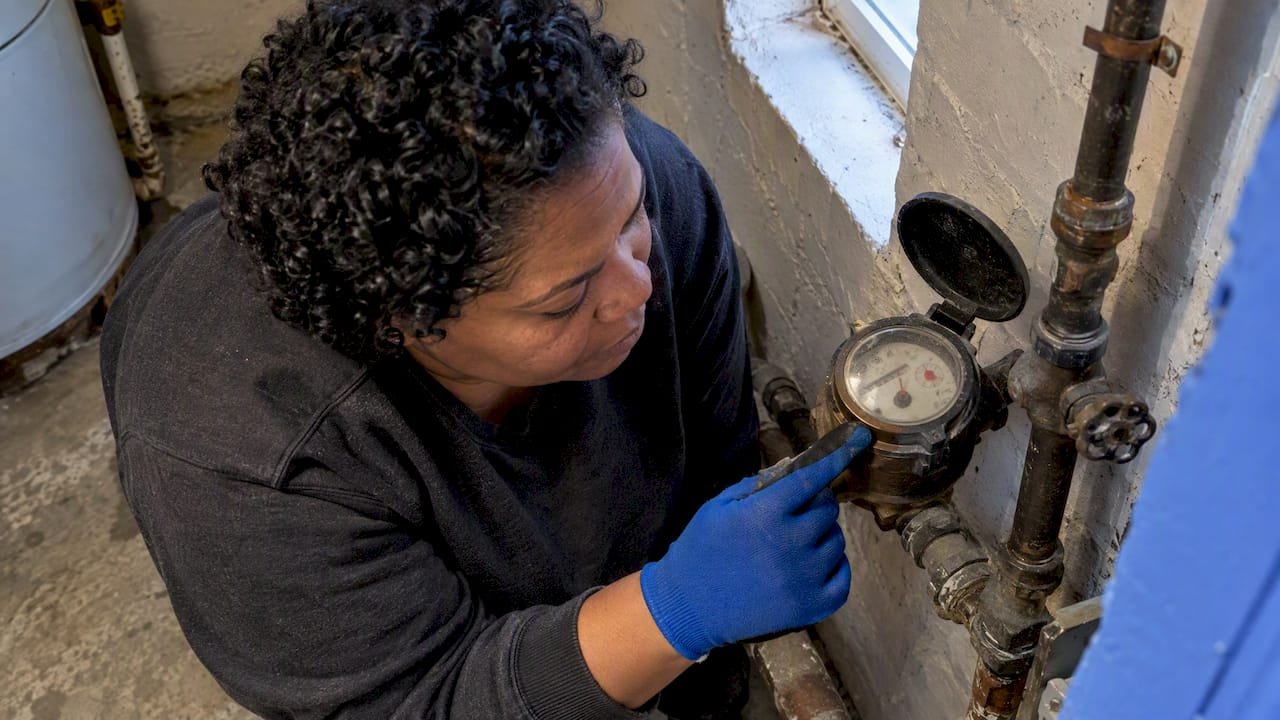
A hidden water leak usually shows itself through your water bill, your nose or a stain long before you see water. If your bill jumped for no reason, a room smells musty, or your meter moves when every tap is off, assume there is a leak until you prove otherwise. Then confirm it with a simple meter test and call a licensed plumber before the damage spreads.
This guide is written for Pittsburgh-area homeowners and property managers. It covers the signs worth acting on, a test you can do in two hours, what professionals use to find leaks behind walls and under floors, and what Pittsburgh Water may and may not do to help with the bill.
TL;DR
- A household with a leak wastes an average of 10,000 gallons a year, so an unexplained rise in your bill is the first alarm.
- Do the two-hour meter test: shut off all water, record the meter, wait two hours, read it again. Any change means a leak.
- Musty smells, warm floor spots, stains, and the sound of running water with nothing on are the common physical clues.
- If a home stays wet for 24 to 48 hours, the CDC says to assume mold is present, so do not wait and watch.
- Pittsburgh Water may issue a leak credit, but only with proof of repair from a licensed plumber, so keep the invoice.
Table of Contents
- Why a hidden leak costs more than the water
- Signs of a hidden water leak
- The two-hour meter test
- How plumbers find leaks you cannot see
- Mold, moisture and the rest of the house
- Pittsburgh specifics: pressure, credits and programs
- Perspective: what we see in the field
- When to call a plumber
- Need a leak found and fixed in Pittsburgh?
- FAQ
- Sources
Why a hidden leak costs more than the water
The water you lose is the smaller problem. A slow leak inside a wall, under a slab or above a ceiling keeps framing, drywall and insulation damp for weeks or months. That is where mold, rot and pests start.
The CDC advises that if a home has been wet or flooded for more than 24 to 48 hours, you should assume mold is present, even when you cannot see it. Penn State Extension notes that oriental cockroaches, often called water bugs, prefer dark, damp and cool places such as under sinks, behind washing machines and in damp basements. A leak gives them exactly that.
The water bill matters too. The Pennsylvania Public Utility Commission points out that fixing household leaks can trim bills by roughly 10%. Over a year that adds up, and it is money you were paying for water that never reached a faucet.
If you want the longer background, our own article on why water leaks matter goes through the damage chain in more detail.
Signs of a hidden water leak
No single sign proves a leak. Two or three together, or one that keeps coming back, is the pattern to take seriously.
On the water bill
Compare this month with the same month last year. Seasonal use (lawn watering, a houseful of guests) explains some changes, but a climb with no change in habits does not have an innocent explanation.
The PUC and EPA suggest checking usage in a colder month such as January or February. A household of four is suspected of having a serious leak if winter use goes above 12,000 gallons a month. Our page on pinpointing high water bills starts from the meter and works outward.
What you can hear and smell
Pittsburgh Water says your senses are the quickest tools: listen for water running continuously, smell for musty or foul odors, and look for puddles or dampness around pipes, gaskets and fittings.
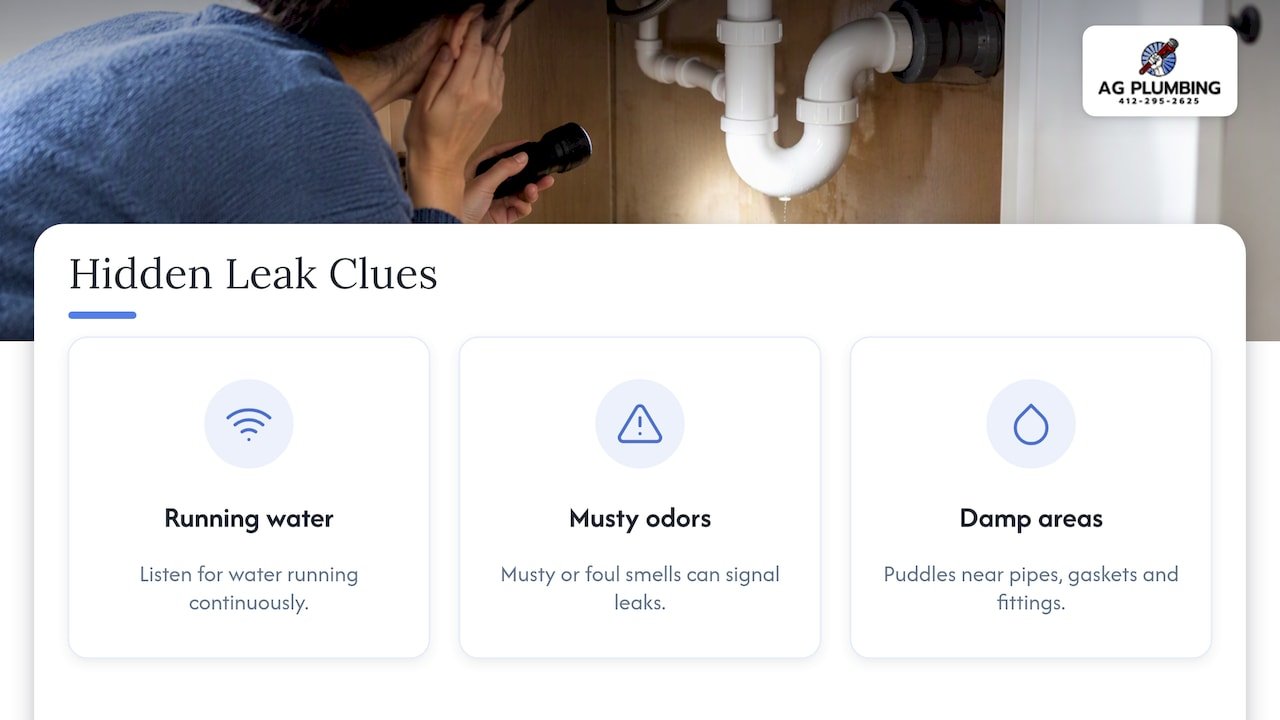
Stand in a quiet house at night and listen near the water heater, the main shutoff and the bathrooms. A faint hiss or trickle when nothing is running is a classic clue.
A rotten-egg smell or slimy deposits can also point to moisture. Penn State Extension explains that leaks promote iron and sulfur bacteria, which cause nuisance odors and slime, so a leak can sometimes be smelled before it is seen.
What you can see and feel
- Stains on ceilings or walls, especially ones that grow or change color.
- Paint that bubbles, peels or flakes, and wallpaper that lifts at the seams.
- Warped baseboards, cupped hardwood or loose tile.
- A floor that is warm in one spot, which can mean a leaking hot water line.
- A damp carpet corner with no obvious source.
- Water pressure that drops without warning.
- Small clusters of insects around a bathroom, kitchen or basement wall.
The high-moisture rooms deserve the closest look: under kitchen and bathroom sinks, behind the toilet, around the water heater, around the washing machine hoses and along basement walls. For the cabinet under a sink, our guide to four pro tests for a sink leak shows what to check. If a stain is on a wall, see our notes on the signs of a leak behind a wall.
Signs that are easy to miss
A toilet that refills by itself, a faucet drip you have tuned out and a sprinkler line that stays wet are all small, steady losses. Toilets are the usual suspect: a worn flapper lets water slip into the bowl silently. Add a few drops of food coloring to the tank, wait without flushing, and color in the bowl means the flapper is leaking.
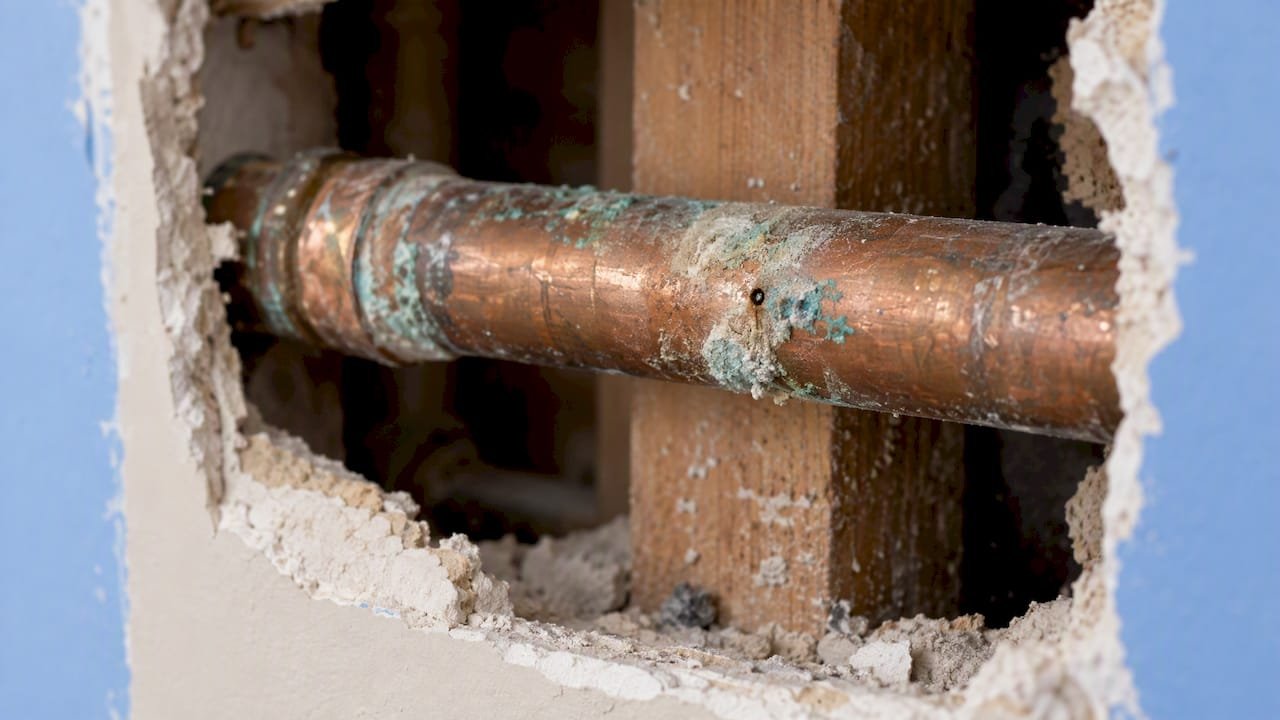
Copper pipes can also develop tiny pinholes that spray inside a wall. If your home has older copper and you have seen green or white crusting or unexplained dampness, read about copper pinhole leak causes.
The two-hour meter test
This is the single most useful check, and it costs nothing. Pittsburgh Water and the EPA recommend it: record the meter during a period of zero water use and check it again two hours later. If the reading has changed, water is going somewhere.
- Turn off every faucet, appliance and irrigation system. Make sure the dishwasher, washing machine and ice maker are not running.
- Do not flush any toilet.
- Find your meter, usually in the basement near where the service line enters, or in a pit outside, and write down the reading. Note the small leak indicator dial if it has one.
- Wait two hours without using water.
- Read the meter again.
If the number moved, the leak is real. To narrow it down, close the main shutoff valve to the house and check the meter. If it still moves, the leak is on the service line between the meter and your house. If it stops, the leak is inside the building.
A second step helps locate it. Close the shutoff valve for individual fixtures one at a time, such as the toilet or the washing machine, and see whether the meter stops. Our article on leak detection tips for homeowners lists ten quick checks to pair with this one.
How plumbers find leaks you cannot see
When the meter says there is a leak but the location is a mystery, guessing means opening walls. Professionals avoid that with detection tools.
| Method | What it does | Best for |
|---|---|---|
| Acoustic listening (listening sticks, noise loggers) | Picks up the sound of water escaping a pipe. Smaller leaks make higher-frequency sounds, larger leaks lower | Pressurized lines in walls, slabs and yards |
| Thermal imaging | Shows temperature differences caused by water. Works best when the water and surroundings differ noticeably in temperature | Hot water lines, radiant heat, wet drywall |
| Moisture meters | Read moisture content in drywall, wood and flooring | Confirming and mapping damp areas |
| Pressure testing | Isolates a section of pipe and watches for pressure loss | Telling which branch of the system is leaking |
| Camera inspection | Looks inside drain and sewer lines | Drain and sewer leaks, cracks and root intrusion |
The tools complement each other. A thermal camera may show a cool patch, a listening device pins it to a foot or two, and a moisture meter confirms the extent of the damage before anyone cuts drywall. For a closer look at the techniques, see our overview of top leak detection methods and our page on leak detection in Pittsburgh.
Not every hidden leak is on the supply side. Drain and sewer lines can leak into soil or under a slab, which shows up as soggy ground, sewer odors, slow drains or sinking spots in the yard. A camera inspection is the right first step there, which is why our sewer repair work starts by seeing the pipe before deciding on a fix.
Mold, moisture and the rest of the house
Once you have found or suspected a leak, think about what the water already touched. Leaks behind walls, under carpet or behind cabinets often go unnoticed until mold appears or structure is damaged. Fixing the pipe stops the source, but wet materials still need to be dried or removed.
Bathrooms are a common hiding place because humidity, grout lines and plumbing all meet in one small room. If you are dealing with growth after a leak, this piece on hidden bathroom mold explains where it tends to hide and what routine cleaning can and cannot do. Cleaning does not replace repairing the leak: if the moisture source remains, the mold returns.
A practical order of operations:
- Find and stop the leak (shut off water to that line if you can).
- Get a licensed plumber to repair it and give you a written invoice.
- Dry the area fast with fans and a dehumidifier, and open access to wet cavities if needed.
- Remove materials that stayed wet for more than a couple of days.
- Clean surfaces once the source is fixed and the area is dry.
If someone in the home has asthma, allergies or a weakened immune system, or the wet area is large, bring in a professional for the drying and mold work as well. Do not rely on bleach or air fresheners to deal with a musty smell.
Pittsburgh specifics: pressure, credits and programs
High pressure can look like repeated bad luck
Hilly neighborhoods can run high water pressure. If toilet fill valves keep failing or a service line has broken more than once, repeated fixture repairs may be treating a symptom. A filing in a Pennsylvania PUC case describes how installing a pressure-reducing valve without proper relief can leave the service pipe under constant high pressure on the supply side. The takeaway for homeowners: if your plumbing keeps failing on a steep street, ask for a professional pressure assessment rather than another round of small repairs.
The Pittsburgh Water leak credit
If an unknown leak spikes your bill, Pittsburgh Water may lower the bill to your normal usage, based on your average use over the 12 months before the leak started. To qualify you must prove the repair: a bill from a licensed plumber explaining where the leak was and how it was fixed, or a letter or email from the plumber. The word is “may”: it is not automatic.
Practical tip: ask your plumber to write the location and the repair on the invoice, and keep it with your bill. Check the utility’s page for the current requirements and deadlines before you file, since they can change.
The Line Repair and Conservation Program
For leaking private service lines, Pittsburgh Water runs a Line Repair and Conservation Program that may cover repairs on the part of the service line you own. It requires a signed agreement and an on-site estimate. It covers exposed plumbing, not unexposed plumbing, and many hidden leaks start in the unexposed parts. If your leak is inside a wall or under a slab, do not count on it. Apply if you think you qualify, but get the leak assessed and repaired on its own timeline.
Perspective: what we see in the field
Most homeowners call us after the stain appears. By then the leak has often been running for weeks. In our experience, the leaks that cost the most are rarely dramatic. They are slow, steady and in a spot nobody checks: a supply line in a basement ceiling, a shower valve behind tile, a drain joint under the kitchen floor.
We would rather you call after the meter test than after the ceiling comes down. If the meter moves, you do not need to know where the leak is. You only need to tell us what you found, and we will find the source and explain the options before any wall is opened. Our approach rests on clear communication and a transparent process: you hear what we found, what the repair involves and why, then you decide.
One more thing we say often: do not repair the same fixture three times. If a toilet fill valve, a faucet cartridge or a section of pipe keeps failing, there is usually a cause upstream, such as pressure, corrosion or age. Fixing the cause costs less than the fourth repair. After 30 years working in Pittsburgh homes, that pattern is one we know well.
— Maayan
When to call a plumber
Call right away if:
- The meter moves with everything off.
- You see a spreading stain, sagging drywall or a wet floor with no known source.
- You smell sewage or persistent mustiness.
- Water pressure drops suddenly.
- You have already repaired the same fixture more than once.
While you wait, shut off the water at the fixture or main valve if you can do it safely, move belongings away from the wet area, and photograph the damage for your records. If water is near electrical outlets, panels or appliances, stay away and shut off power only if you can reach the panel without standing in water. If you are unsure, call an electrician or the utility.
For property managers and business owners, the same logic applies at larger scale: an unexplained usage jump across tenants or a wet utility room deserves a prompt inspection, because leaks in shared lines affect multiple units.
Not every repair is a patch. If your home has aging supply lines that keep springing leaks, a conversation about plumbing repiping may be the right long-term answer. For a single failed pipe or fixture, plumbing repair is usually enough, and our guide on identifying when plumbing repair is necessary helps you tell which is which.
Need a leak found and fixed in Pittsburgh?
AG Heating, Cooling & Plumbing serves homeowners, residential property managers and local businesses in Pittsburgh, PA and surrounding areas. We handle leak repair, fixture repair, sewer repair, drain cleaning and general plumbing repair, and we are BBB accredited. We also offer discounts for seniors, military, new customers and referrals. Start with our plumbing repair page or reach us through the AG Plumbing homepage to book a visit.
FAQ
How can you tell if you have a hidden water leak in your home?
Start with the meter. Turn off all water, record the reading, and check it again after two hours: any change means a leak. Also compare this month’s bill to the same month last year, and watch for musty smells, stains, warped flooring and the sound of running water when nothing is on.
What do plumbers use to detect hidden leaks?
Common tools include acoustic listening devices and noise loggers, thermal imaging cameras, moisture meters, pressure tests and drain cameras. Acoustic tools pick up the sound of escaping water, while thermal cameras show temperature differences in walls and floors. Which one works best depends on where the pipe runs and whether it carries hot or cold water.
Can a hidden leak cause mold?
Yes. Mold can grow inside damp wall cavities, under flooring and behind cabinets before any stain shows. The CDC advises assuming mold is present if a home has been wet for more than 24 to 48 hours. Fix the leak first, dry the area quickly, then clean or remove affected materials.
Will Pittsburgh Water help with a bill caused by a hidden leak?
Possibly. Pittsburgh Water may issue a leak credit that reduces a spiked bill toward your normal usage, but you must show proof the leak was repaired, such as an invoice from a licensed plumber. Approval is not guaranteed, so check the utility’s current requirements before you apply.
Sources
- Leak Detection, Pittsburgh Water
- PUC Highlights Affordability During 2026 Fix a Leak Week, Pennsylvania PUC
- Leak Credit Request, Pittsburgh Water
- Line Repair and Conservation Program, Pittsburgh Water
- Distribution System Leak Detection, U.S. Department of Energy
- About Mold and Health, CDC
- Oriental Cockroaches, Penn State Extension
- Post-hearing brief, Pennsylvania PUC
Recommended
- Stop Water and Mold: 4 Pro Tests to Find a Sink Leak for Homeowners
- Leak Detection Tips for Homeowners: 10 Quick Checks
- Signs of a Leak Behind Wall: How to Confirm and Fix It
- Top Leak Detection Methods for Homeowners and Pros
