
TL;DR:
- A single faucet drip wastes over 3,000 gallons of water annually, increasing utility bills.
- Worn washers, corrosion, and mineral buildup are common causes of faucet leaks.
- Fixing leaks early saves water, money, and prevents structural damage and mold growth.
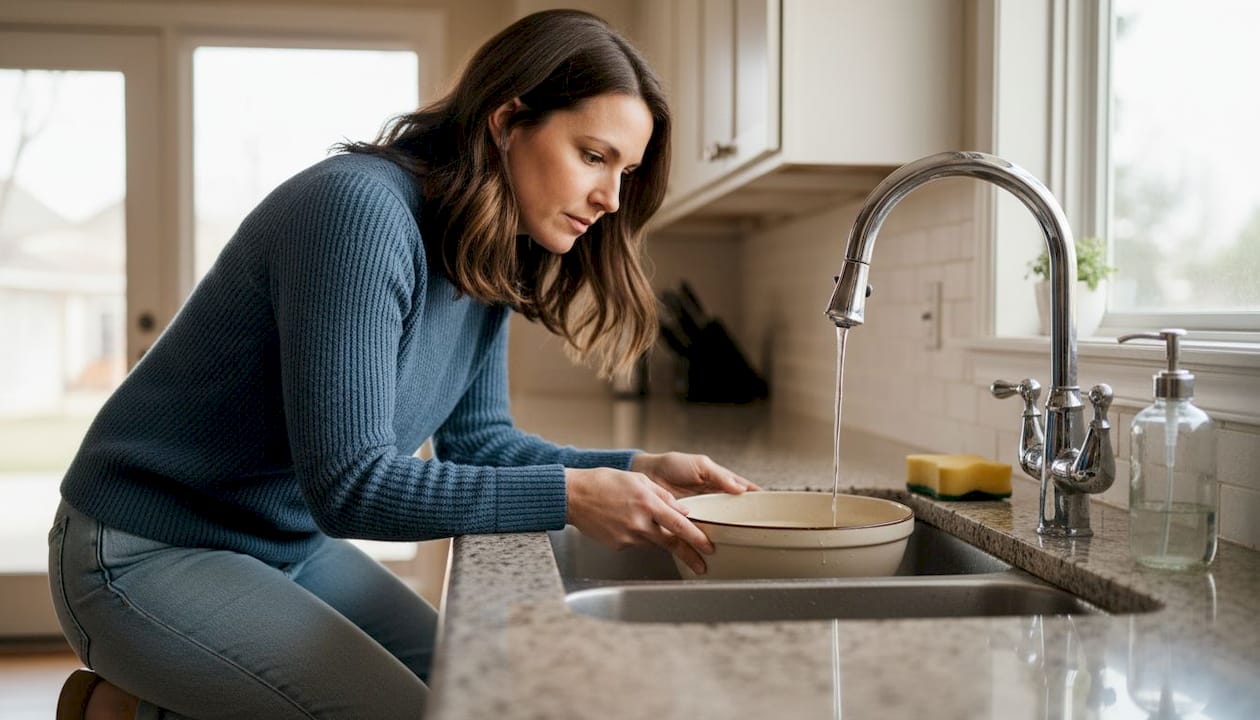
That slow, steady drip from your kitchen faucet seems harmless. Most Pittsburgh homeowners tune it out within days, treating it like background noise. But that single drip is quietly draining your wallet and wasting a resource you’re paying for every month. A faucet dripping once per second wastes more than 3,000 gallons of water annually, and that’s just one faucet. Multiply that across a household with two or three problem fixtures, and you’re looking at a serious hit to your utility bill. This guide breaks down exactly what’s causing your faucet to drip, what it’s really costing you, and what you can do about it today.
Table of Contents
- What causes a dripping faucet?
- How much water (and money) does a dripping faucet waste?
- What problems can a dripping faucet cause besides water waste?
- How to stop faucet drips: DIY fixes and when to call a plumber
- Why ‘just a drip’ is Pittsburgh’s most expensive plumbing mistake
- Need help with stubborn drips or bigger plumbing issues?
- Frequently asked questions
Key Takeaways
| Point | Details |
|---|---|
| Water waste adds up fast | A dripping faucet can waste thousands of gallons each year, costing you money. |
| Minor leaks cause major damage | Ignoring small drips can lead to mold, floor damage, and expensive repairs. |
| Simple repairs pay off | Many leaks are quick fixes that save on water bills and protect your home long-term. |
| Know when to call a pro | Some leaks need expert attention to avoid hidden plumbing issues and future headaches. |
What causes a dripping faucet?
Now that you’re thinking beyond the drip, let’s see what actually causes faucets to leak in the first place. A faucet works by controlling water flow through a series of internal parts: washers, seals, O-rings, cartridges, and valve seats. When any one of these parts wears out or fails, water finds a way through even when the handle is fully closed. The result is that familiar, maddening drip.
Worn washers or seals, faulty installation, and corrosion are the leading causes of faucet leaks. Washers, in particular, press against a valve seat every time you use the faucet. Over years of use, that friction degrades the rubber, and a worn washer can no longer create a watertight seal. O-rings, which sit around the stem screw, face the same fate. Cartridge faucets have their own set of internal components that can crack or warp over time.
Mineral buildup is another major culprit, especially in areas with hard water. Pittsburgh’s water supply carries minerals that deposit inside your fixtures over time. These deposits can pit the valve seat, prevent parts from seating correctly, and accelerate corrosion. Once corrosion sets in, even a new washer won’t fix the problem because the surface it presses against is no longer smooth.
Here’s a quick breakdown of common causes:
- Worn rubber washers or O-rings from repeated use
- Corroded valve seats caused by mineral sediment buildup
- Loose packing nuts that allow water to seep around the stem
- Damaged cartridges in single-handle or two-handle cartridge faucets
- Faulty ceramic disc in newer disc-style faucets
- Improper installation that leaves parts misaligned from the start
Some of these issues are genuinely DIY-friendly. Replacing a washer or O-ring takes basic tools and about 30 minutes. But if you’re seeing signs that repair is necessary like recurring leaks after a fix, rust-colored water, or visible corrosion around the fixture base, that’s when a professional should step in. The EPA’s fix a leak tips also recommend checking faucet gaskets and packing as a first step before assuming you need a full replacement.
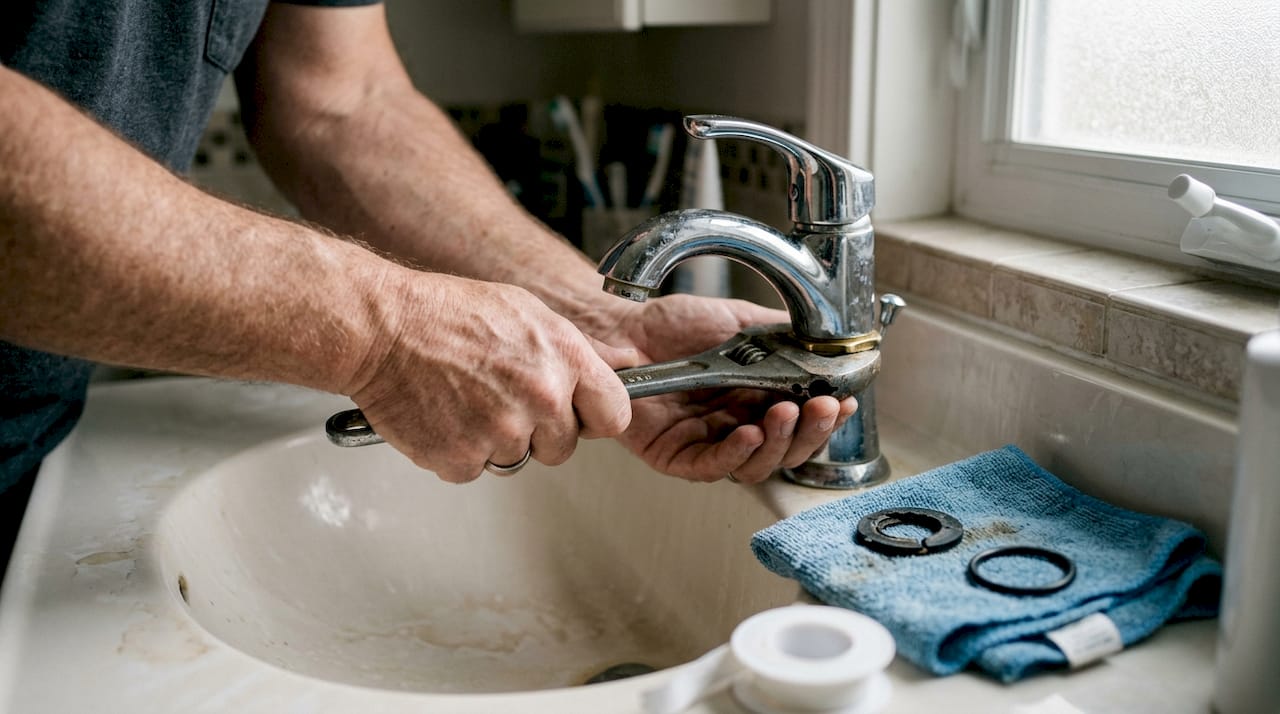
Pro Tip: If you fix a faucet and it starts dripping again within a few weeks, the problem isn’t the washer. It’s likely the valve seat. Catching this early prevents you from spending money on repeated short-term fixes.
How much water (and money) does a dripping faucet waste?
Understanding why faucets drip matters most when you realize what’s really going down the drain. The numbers are more alarming than most people expect, and seeing them laid out makes it hard to keep ignoring that drip.
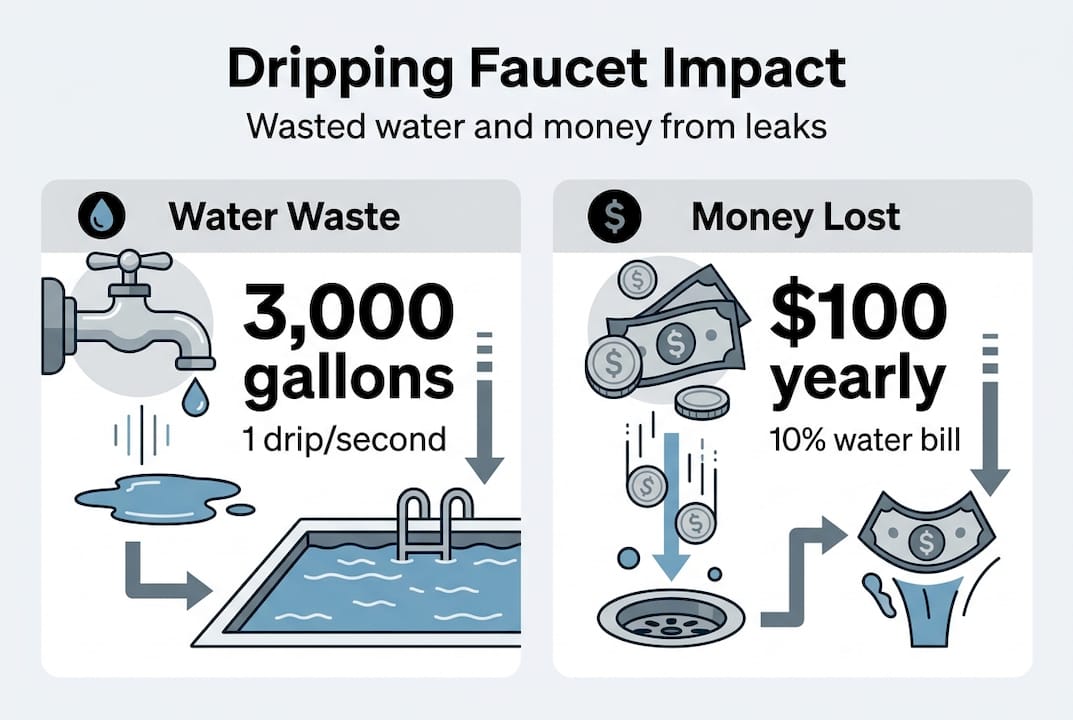
A single faucet dripping once per second wastes roughly 3,000 gallons of water per year. Speed that drip up even slightly, and the waste compounds fast. The average household’s leaks can waste nearly 10,000 gallons of water per year across all fixtures combined. To put that in perspective, 10,000 gallons is enough to fill a backyard swimming pool.
| Drip rate | Gallons wasted per day | Gallons wasted per year | Estimated annual cost |
|---|---|---|---|
| 1 drip/second | ~8 gallons | ~3,000 gallons | $15 to $25 |
| 10 drips/second | ~80 gallons | ~29,000 gallons | $150 to $200 |
| Steady stream | ~200+ gallons | ~73,000+ gallons | $400 to $600+ |
Those dollar figures might look small for a single slow drip, but remember: most homes have multiple faucets, and many leaks go undetected for months or years. Pittsburgh homeowners dealing with water loss and repair costs often discover that a cluster of small leaks has been inflating their bills for an entire season without anyone noticing.
“Fixing easily corrected household water leaks can save homeowners about 10 percent on their water bills.” — EPA WaterSense
That 10 percent adds up. If your Pittsburgh household pays $80 a month for water, that’s nearly $100 a year back in your pocket just from fixing leaks you probably already know about. And that’s before factoring in the cost of any water damage those leaks may be quietly causing behind your walls or under your sink.
What problems can a dripping faucet cause besides water waste?
Water waste isn’t the only thing to worry about. Let’s look at what else these drips can do over time.
Unchecked leaks can lead to mold growth, pipe corrosion, and higher repair costs that dwarf the original problem. Mold thrives in damp, dark spaces, and the cabinet under your kitchen or bathroom sink is a perfect environment. Once mold takes hold, you’re no longer dealing with a plumbing issue. You’re dealing with a health hazard that requires professional remediation.
Beyond mold, persistent moisture causes real structural damage:
- Cabinet floors and walls warp and rot from constant moisture exposure
- Flooring materials like hardwood, laminate, and tile grout break down under repeated water contact
- Subfloor damage can occur when leaks seep past the cabinet base unnoticed
- Rust stains appear on sinks and fixtures, making your bathroom or kitchen look older than it is
- Pipe fittings corrode faster when moisture sits around them, leading to bigger leaks downstream
There’s also the noise factor. A dripping faucet at night is genuinely disruptive to sleep, and the psychological toll of a persistent drip is something most homeowners don’t account for until they’ve lived with it for weeks.
“A leak today could mean a major repair tomorrow.”
Small leaks can also be symptoms of larger system stress. A faucet that suddenly starts dripping after years of no issues could indicate rising water pressure in your pipes, a failing shut-off valve nearby, or early-stage corrosion spreading through your plumbing system. Checking your plumbing maintenance checklist regularly helps you catch these warning signs before they turn into expensive emergencies.
How to stop faucet drips: DIY fixes and when to call a plumber
Now that you know what’s at stake, here’s how to take action before the drip becomes a real headache.
Simple leaks can sometimes be fixed with affordable DIY methods, but persistent or hidden leaks need a professional. Here’s a straightforward process to follow:
- Turn off the water supply. Locate the shut-off valve under the sink and turn it clockwise until it stops. Turn on the faucet to release any remaining pressure.
- Remove the handle. Most handles are held by a screw under a decorative cap. Pop the cap, remove the screw, and pull the handle off.
- Inspect the washer and O-ring. Look for visible wear, cracking, or deformation. These parts cost less than $5 at any hardware store.
- Check the cartridge or ceramic disc. If replacing the washer doesn’t solve the problem, the cartridge may need replacement. Take the old one to the store to match the part exactly.
- Reassemble and test. Turn the water back on slowly and check for drips. Run the faucet through hot and cold to confirm the fix holds.
For DIY faucet repairs, having the right replacement parts before you start saves a frustrating mid-project hardware store run. Most basic repairs are manageable for a homeowner with a screwdriver and an adjustable wrench.
But there are clear signs you need professional plumbing repair. If you see mold under the sink, if the leak returns within weeks of a fix, or if the faucet handle feels loose or grinds when you turn it, stop and call a plumber. The same goes for leaks that appear at the base of the faucet rather than the spout. These often indicate a failed seal deep in the fixture that requires disassembly beyond basic DIY. Our troubleshooting steps for Pittsburgh homeowners can also help you decide which path makes sense for your specific situation.
Pro Tip: Never ignore leaks under the sink just because they seem slow. Water sitting in an enclosed cabinet creates the perfect conditions for mold within 24 to 48 hours. Check under your sinks once a month as part of your regular home maintenance routine.
Why ‘just a drip’ is Pittsburgh’s most expensive plumbing mistake
Beyond the practical steps, here’s our take from serving Pittsburgh homeowners for 30 years.
Pittsburgh’s housing stock is older than most American cities. Many homes in neighborhoods like Lawrenceville, Brookline, and Mt. Washington were built with plumbing systems that are now 50 to 80 years old. In these homes, a dripping faucet isn’t just a worn washer. It’s often a signal that the entire system is under stress. Aging galvanized pipes corrode from the inside out, and a faucet drip can be the first visible symptom of pressure changes or mineral buildup happening deeper in the system.
We’ve seen homeowners spend $20 on a washer kit three times over before finally calling us, only to discover the valve seat was damaged from the start. That’s $60 in parts, hours of frustration, and months of wasted water. A single professional visit would have cost less and solved it permanently.
Insurance companies are paying closer attention to plumbing neglect. Water damage claims that trace back to ignored leaks are increasingly being flagged, and some policies exclude damage from leaks that were “known and unaddressed.” That’s a risk most homeowners don’t realize they’re taking.
Our honest opinion: the best home improvement you can make in 2026 is fixing the smallest problems before they grow. Check your common plumbing repairs list and be honest about what you’ve been putting off. The cost of action now is always lower than the cost of emergency repair later.
Need help with stubborn drips or bigger plumbing issues?
If you’re ready to tackle that annoying drip or upgrade your home’s plumbing, here’s how we can help.
At AG Heating, Cooling & Plumbing, we’ve been solving Pittsburgh’s plumbing problems for 30 years. From simple faucet repairs to full leak detection and fixture upgrades, our team handles it all with the kind of precision that comes from real experience.
Whether you need a quick fix or a full assessment of your home’s plumbing health, our plumbing repair services are designed to give you lasting results, not temporary patches. Explore our full range of plumbing services for homeowners and find out how easy it is to stop wasting water and money. Contact us today and let’s get that drip fixed for good.
Frequently asked questions
How much water does a leaky faucet really waste?
A single leaking faucet can waste over 3,000 gallons per year, and a household with multiple leaks can waste nearly 10,000 gallons annually, which adds up on your water bill fast.
Can a dripping faucet cause damage to my home?
Yes. Unchecked leaks can cause mold growth, wood rot, warped cabinets, and structural damage if left untreated for weeks or months.
Is it cheaper to fix a leak myself or hire a plumber?
DIY works well for simple washer or O-ring replacements, but persistent or hidden leaks should be handled by a professional to avoid repeat costs and bigger damage.
Will fixing a faucet drip really lower my water bill?
Absolutely. Stopping water loss through leaks can reduce your water bill by up to 10 percent, which adds up to real savings over the course of a year.
Recommended
- Emergency Plumbing Guide: Quick Solutions for Homeowners – AG-Plumbing
- Low-flow plumbing explained: save water and cut costs – AG-Plumbing
- Common Plumbing Repair Issues and How to Fix Them – AG-Plumbing
- How plumbing improves energy efficiency and cuts costs – AG-Plumbing
- Fix A Leaking Water Tap in Belgium?
- How to fix leaking pipes fast: step-by-step repair guide
