
TL;DR:
- Mineral deposits silently restrict water flow in Pittsburgh homes, risking costly pipe failures if untreated. Regular professional descaling extends pipe life, restores pressure, and prevents emergencies, especially in older cast iron systems. Scheduling inspections and maintenance every 1-2 years ensures better water quality, efficiency, and long-term savings.
Pittsburgh homeowners deal with a plumbing problem that rarely announces itself: mineral deposits silently narrowing pipes from the inside, choking water pressure and setting up the conditions for expensive failures. Understanding why pipeline descaling belongs on your maintenance calendar is the kind of knowledge that saves you money before a crisis forces the conversation. This article breaks down what scale buildup actually does to your pipes, what the descaling process looks like, and how regular maintenance protects both your plumbing system and your budget.
Table of Contents
- Key takeaways
- Why pipeline descaling keeps your plumbing healthy
- The pipeline descaling process: methods and tools
- Benefits of regular descaling for homeowners and property managers
- How often to descale pipes in Pittsburgh homes
- My honest take on descaling for Pittsburgh homeowners
- Keep your Pittsburgh plumbing running at its best
- FAQ
Key takeaways
| Point | Details |
|---|---|
| Scale buildup is silent damage | Calcium, rust, and grease deposits restrict flow long before you notice a problem. |
| Descaling extends pipe life | Regular removal of mineral deposits prevents corrosion and delays costly replacements. |
| Professional methods outperform DIY | Hydro jetting and mechanical tools clear buildup safely without risking pipe damage. |
| Frequency depends on local factors | Pittsburgh’s water quality and older cast iron pipes mean most homes need descaling every 1 to 2 years. |
| Proactive maintenance saves money | Planned descaling costs far less than emergency repairs triggered by severe blockages or pipe failure. |
Why pipeline descaling keeps your plumbing healthy
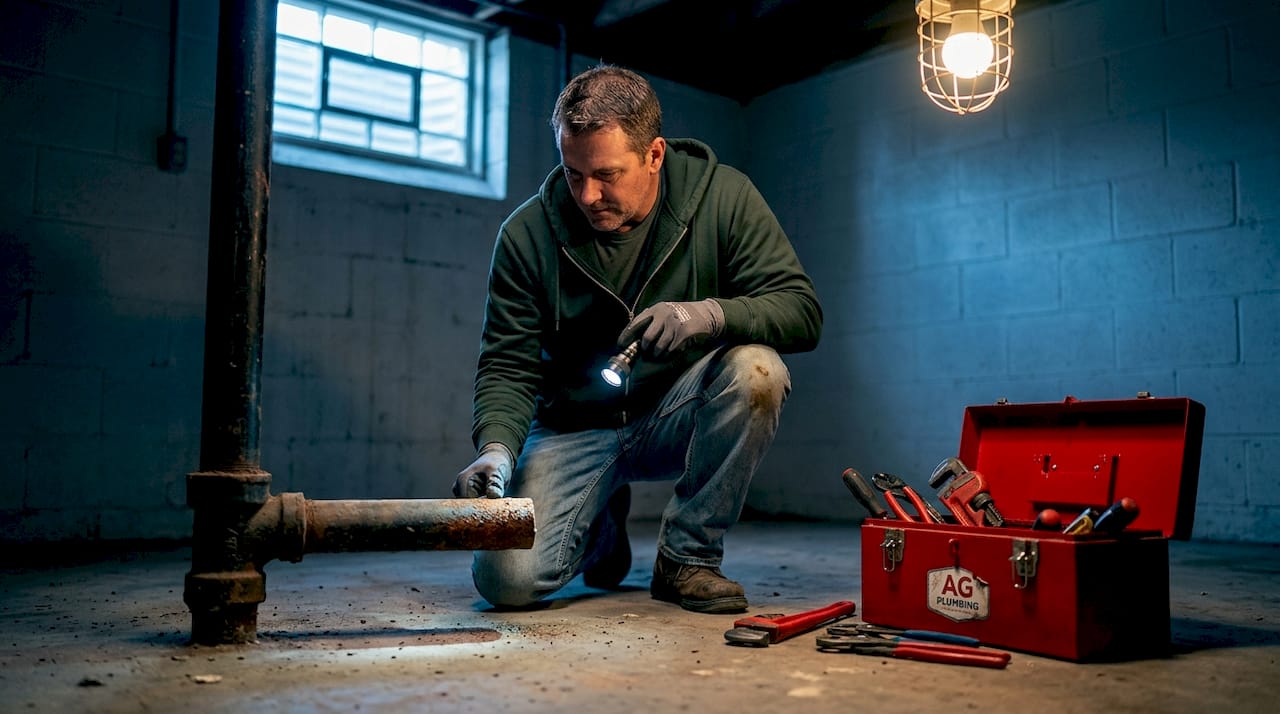
Scale buildup is one of those problems that gets worse the longer you ignore it. In Pittsburgh, older homes with cast iron pipes are especially exposed because rust accelerates scale buildup by creating a rough surface that grabs onto mineral deposits. Once rust and magnesium salts start layering together, the buildup compounds fast.
The core issue is diameter. Deposits reduce pipeline internal diameter and restrict flow in ways that show up as sluggish drains, weak shower pressure, and appliances working harder than they should. Left alone, that restriction becomes a blockage. And blockages under pressure become burst pipes.
What actually builds up inside your pipes
Three types of deposits show up most often in residential plumbing:
- Calcium and magnesium scale. Hard water leaves mineral deposits every time it sits in or passes through a pipe. Pittsburgh’s water supply carries enough hardness to produce visible buildup on fixtures, and the same process happens inside your pipes where you cannot see it.
- Rust and iron oxide. Cast iron pipes corrode from the inside out. That corrosion roughens the pipe wall and gives calcium deposits something to grip, compounding the buildup cycle.
- Grease and organic deposits. Kitchen drains accumulate fat, oil, and soap residue that harden over time. Combined with mineral scale, these create a dense layer that resists basic flushing.
Pro Tip: If you notice dark or rust-colored water coming from your taps, your cast iron pipes may already be corroding. That is a strong signal to get a professional inspection before descaling becomes urgent repair.
Cast iron pipes degrade quickly without regular descaling, and the costs of replacement far exceed the cost of preventive maintenance. Understanding pipe corrosion and how to stop it gives you a fuller picture of what is happening inside older plumbing systems.
The pipeline descaling process: methods and tools
Not all descaling is the same. The right method depends on your pipe material, the type of deposits present, and how severe the buildup has become. Here is how professional plumbers approach the process.
Physical vs. chemical descaling
| Method | How it works | Best for | Watch out for |
|---|---|---|---|
| Hydro jetting | High-pressure water blasts through pipe interiors | Heavy mineral and grease buildup | Weakened or cracked pipes may not handle pressure |
| Mechanical scraping | Rotating tools scrape deposits from pipe walls | Stubborn localized scale | Labor-intensive in long pipe runs |
| Chemical descaling | Acid or alkaline solutions dissolve mineral deposits | Light to moderate calcium scale | Must match chemical to pipe material |
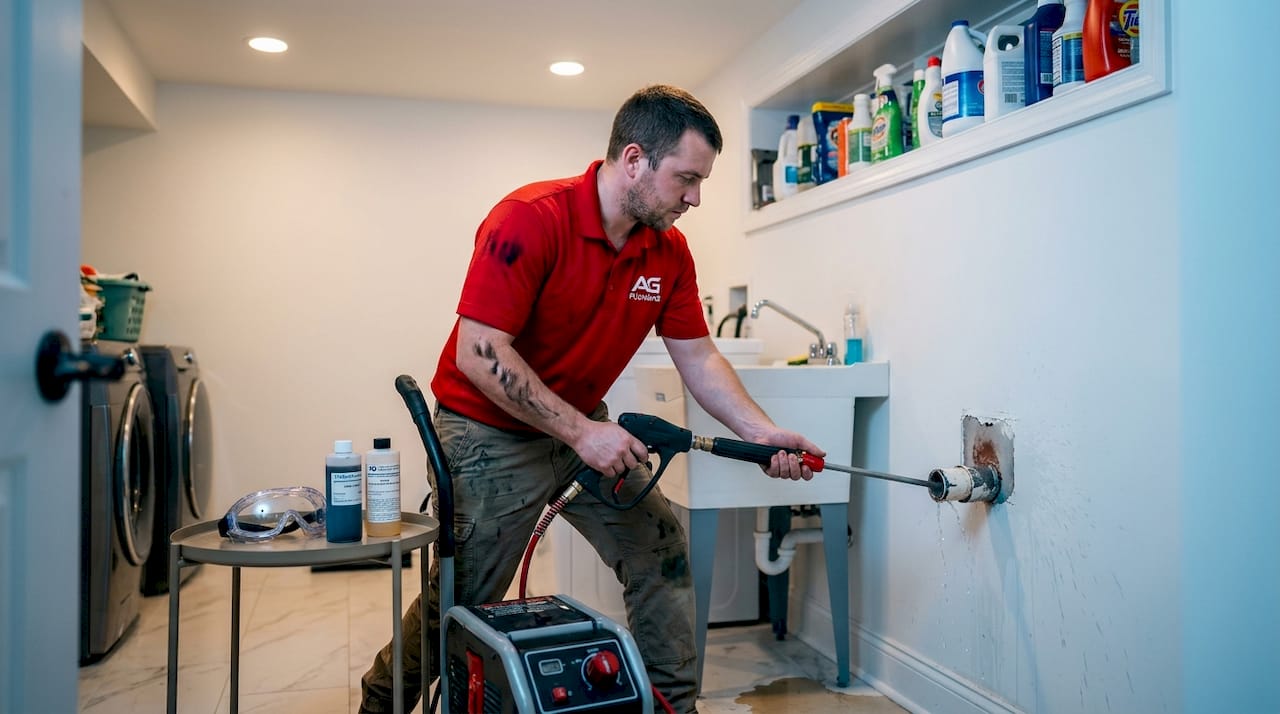
Hydro jetting uses high-pressure water streams to remove stubborn scale and restore water flow to near-original capacity. It is the method Ag-plumbing’s technicians use most often for severe buildup in residential and commercial systems, and it works without physically abrading the pipe interior. For a closer look at how this works, the hydro jetting water flow guide explains the mechanics in plain terms.
Chemical methods are more selective. They work well for calcium scale in newer PVC or copper pipes but can accelerate corrosion in aging cast iron systems. This is exactly why professional assessment matters before you choose a method.
When to call a professional vs. attempt DIY
Most store-bought descaling products address only light buildup in small fixture-level pipes. For mainline sewer pipes, supply lines, or any pipe that has not been serviced in years, professional tools are the right call. Here is a quick breakdown:
- DIY-appropriate: Descaling a single faucet aerator, cleaning a showerhead, treating a slow bathroom sink drain with an enzyme-based cleaner
- Professional-required: Mainline descaling, whole-house pipe treatment, any pipe showing signs of corrosion, cast iron systems, or lines serving multiple units in a rental property
Pro Tip: Before scheduling any descaling service, ask your plumber to run a camera inspection first. That 30-minute step tells you exactly where the buildup is and how severe it has become, so you pay for the right service, not the most expensive one.
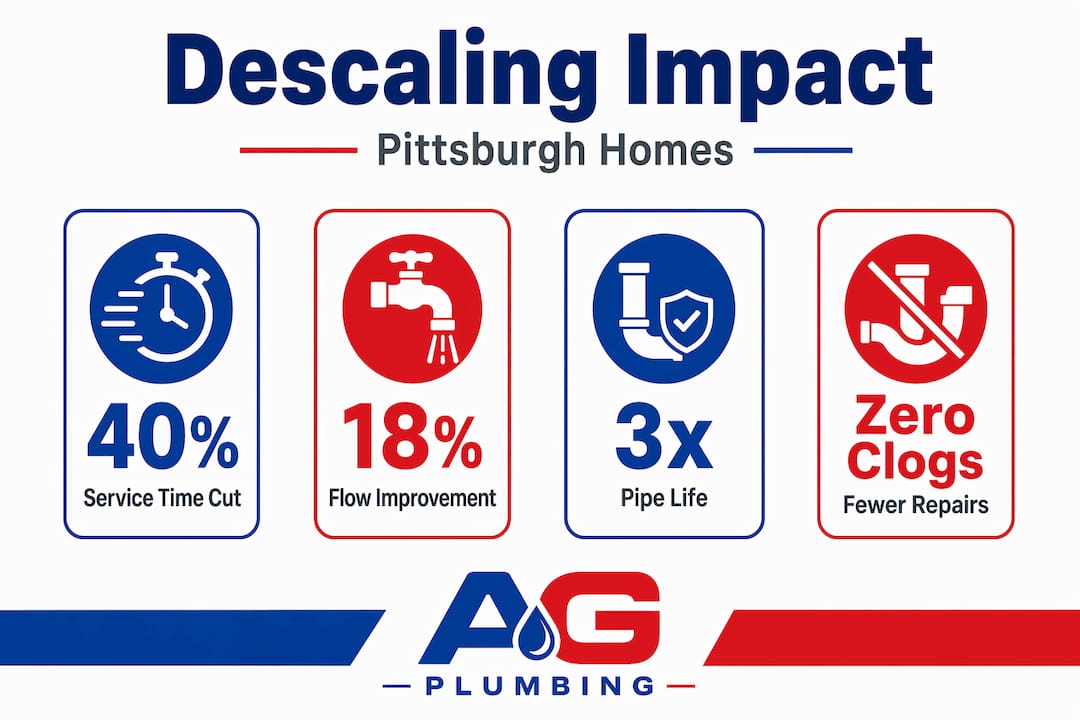
Professional descaling can reduce service time by 40% and improve flow efficiency by roughly 18% in heavily scaled systems. Considering that efficiency translates directly to water pressure and appliance performance in your home, the difference is noticeable from day one.
Benefits of regular descaling for homeowners and property managers
Getting on a descaling schedule is one of the highest-return maintenance habits a Pittsburgh homeowner can develop. Here is what consistent descaling actually delivers:
- Restored water pressure. Scale narrows the passage water travels through. Remove the scale and you restore the diameter, which means stronger pressure at every fixture in the house.
- Longer pipe lifespan. Descaling removes mineral buildup, grease, and rust, preventing blockages and extending the working life of pipes by years. Replacing a cast iron drain system in a two-story Pittsburgh home can cost thousands. Descaling costs a fraction of that.
- Fewer emergency calls. Blockages that develop slowly from scale buildup are the leading cause of the panicked midnight call to a plumber. Planned descaling prevents that scenario entirely. Proactive descaling is more cost-effective than reactive emergency repairs and the disruption that comes with them.
- Better energy efficiency. Scale-clogged pipes force water heaters and boilers to work harder to maintain output. Cleaner pipes mean your equipment runs at designed efficiency, which shows up as a lower gas or electric bill. The connection between plumbing efficiency and home energy costs is more direct than most homeowners realize.
- Healthier water quality. Rust, organic matter, and mineral deposits inside pipes can affect the taste and clarity of tap water. Descaling removes that contamination at the source.
For property managers overseeing multiple units, these benefits multiply. One descaling service across a building protects dozens of water users and reduces maintenance requests simultaneously. Shifting from reactive to proactive maintenance programs is the single biggest change that separates landlords who spend constantly on plumbing from those who do not.
How often to descale pipes in Pittsburgh homes
Descaling frequency is not one size fits all. Pittsburgh has specific factors that push the timeline shorter for many properties.
- Age of the building. Homes built before 1970 almost always have cast iron drain lines. These corrode faster and accumulate scale more aggressively than modern PVC or copper systems.
- Water hardness. Pittsburgh’s water supply sits in the moderately hard range, which means mineral deposits form steadily. Hard water areas typically need more frequent treatment than the national average.
- Pipe history. A system that has never been descaled needs it sooner and may require multiple sessions to fully restore flow.
- Number of occupants. More people using a plumbing system means more grease, soap, and mineral load cycling through the pipes every day.
Descaling every 1 to 2 years helps prevent severe clogs and expensive repairs, particularly in older homes. As a baseline, annual inspection with descaling every one to two years covers most Pittsburgh properties well. However, if you notice any of these signs, do not wait for the scheduled interval:
- Gurgling sounds from drains
- Slow drainage in multiple fixtures at once
- Recurring clogs despite regular cleaning
- Discolored water or a metallic taste
- Noticeably reduced water pressure across the house
Pairing descaling with a plumbing maintenance checklist helps you catch these signals early and act before minor buildup turns into a genuine repair bill.
My honest take on descaling for Pittsburgh homeowners
In my experience working with plumbing systems in Pittsburgh, the most expensive calls I see come from homeowners who waited too long. Not because they were careless, but because scale buildup is invisible. There is no drip, no stain, no alarm. The pipe just gets narrower and quieter until it fails completely.
What I have learned from years of servicing properties in this city is that older neighborhoods carry real risk. Cast iron systems from the 1940s and 1950s are everywhere here, and they need more attention than modern plastic plumbing. I have walked into basements where the entire lower drain stack was coated in a solid inch of calcium and rust. At that point, descaling becomes a multi-day job instead of a routine service call.
The homeowners who avoid those situations are the ones who treat descaling the same way they treat furnace maintenance. They schedule it, they do not skip it, and they work with a local plumber who knows the specific conditions of Pittsburgh plumbing. The relationship matters as much as the service. A technician who has seen your pipes before can spot changes year over year and catch deterioration before it becomes structural damage.
My practical advice: if you have not had your drains and supply lines inspected in the last two years, start there. A camera inspection is inexpensive and gives you an honest picture. From there, you will know exactly what you are working with.
— Maayan
Keep your Pittsburgh plumbing running at its best
If slow drains, reduced pressure, or aging cast iron pipes sound familiar, Ag-plumbing can help you get ahead of the problem before it gets expensive. With 30 years serving Pittsburgh homeowners and property managers, the team at AG Heating, Cooling & Plumbing has the tools and local knowledge to assess your system and recommend the right approach.
From camera inspections and hydro jetting to full plumbing repair services, Ag-plumbing offers the kind of maintenance-first approach that keeps emergency calls off your calendar. Whether you manage a single-family home or a multi-unit rental in the Pittsburgh area, the right time to address scale buildup is before it causes a failure. Visit AG Heating, Cooling & Plumbing to schedule a pipeline inspection or descaling service and find out exactly where your system stands today.
FAQ
What is pipeline descaling?
Pipeline descaling is the process of removing mineral deposits, rust, and grease buildup from the interior walls of pipes to restore normal water flow and prevent blockages. It applies to both drain lines and supply pipes in residential and commercial buildings.
Why pipeline descaling matters for older Pittsburgh homes
Pittsburgh has a high concentration of pre-1970 homes with cast iron pipes that corrode and accumulate scale faster than modern plumbing materials. Without regular descaling, these pipes can fail prematurely and require full replacement at significant cost.
How often should you descale residential pipes?
Annual or biennial sewer line cleaning is recommended for most homes, but older properties with cast iron pipes or moderate to hard water may benefit from annual service.
What are the main signs that pipes need descaling?
Slow drains in multiple fixtures, recurring clogs, gurgling pipes, discolored water, and noticeably weak water pressure are all signs that scale buildup has reached a level that requires professional attention.
Is hydro jetting safe for home plumbing pipes?
Hydro jetting is safe for most plumbing systems in good structural condition. A camera inspection before jetting confirms whether the pipe walls can handle the pressure, which is why Ag-plumbing recommends inspection before any high-pressure descaling service.
Recommended
- Why Pipe Sizing Matters for Your Pittsburgh Home – AG-Plumbing
- Pipe relining: Smart, cost-saving fix for Pittsburgh pipes – AG-Plumbing
- Advantages of updated plumbing for Pittsburgh homeowners – AG-Plumbing
- Choosing the best plumbing pipes for your Pittsburgh home – AG-Plumbing
