
TL;DR:
- Many Pittsburgh homes over 50 years old have outdated, corroded pipes needing replacement.
- Full repiping improves water quality, prevents damage, and can increase home value.
- Early signs include rusty water, leaks, low pressure, and unexplained bills.
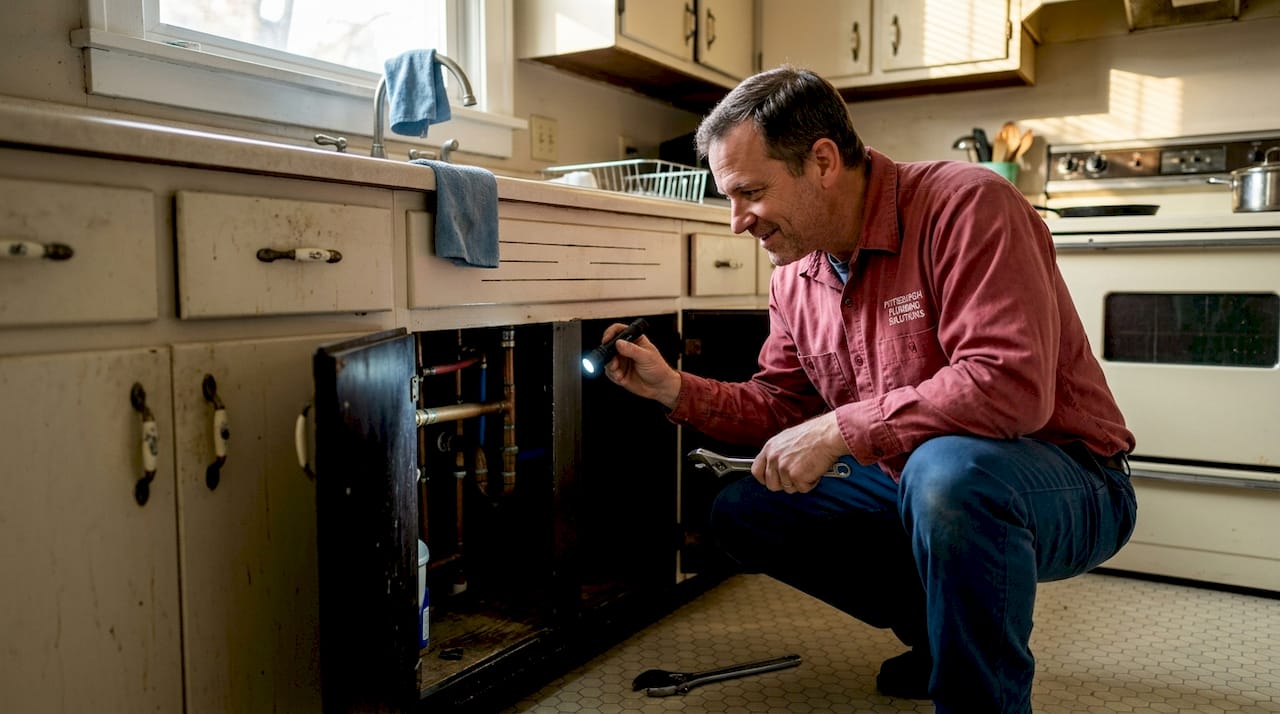
Older Pittsburgh homes carry a secret that most homeowners never suspect until something goes wrong. Behind the walls, pipes installed decades ago may be corroding, leaching contaminants, or quietly failing one small section at a time. A quick patch repair feels like the smart, budget-friendly move, but it often masks a deeper problem. If your home was built before the 1980s, the plumbing system itself may be the issue, not just a single leak. This guide walks you through the real warning signs, the risks of waiting, what a full repipe actually involves, and how to decide whether a repair or a complete solution is right for your home.
Table of Contents
- When is repiping necessary? Signs your home needs it
- The real risks of outdated or damaged pipes
- What does repiping involve? Process and materials explained
- Benefits of repiping: Water quality, safety, and savings
- Repair or full repipe? Making the right call for your home
- Our take: The hidden ROI of timely repiping in Pittsburgh
- Ready to repipe? Get trusted help in Pittsburgh
- Frequently asked questions
Key Takeaways
| Point | Details |
|---|---|
| Spot warning signs early | Rusty water, leaks, or low pressure often mean it’s time to consider whole-house repiping. |
| Modern pipes mean safer water | Upgrading to copper or PEX eliminates lead risks and boosts water quality for Pittsburgh families. |
| Upfront costs, long-term savings | Investing in repiping now prevents expensive damage and can raise your home’s value. |
| Know when to repair or replace | Repairs work for small issues, but repeated trouble in older systems often calls for a full repipe to solve the problem for good. |
When is repiping necessary? Signs your home needs it
Recognizing the problem early can save you from a much bigger headache later. Pittsburgh’s aging housing stock means many homes are still running on original galvanized steel or even lead pipes, both of which have well-documented failure timelines. Knowing what to look for, both visible and hidden, puts you in control before a small issue turns into a costly emergency.
The most obvious warning signs are the ones you can see and feel every day. Low water pressure, discolored water, frequent leaks, and old piping are strong indicators that your system is struggling. Rusty or brownish water coming from your tap is not just unpleasant. It signals that the inside of your pipes is breaking down and mixing into your water supply. Pinhole leaks, which are tiny perforations caused by corrosion, often appear in clusters once a pipe reaches a certain age.
Hidden signs are trickier to catch but just as serious. A sudden spike in your water bill without a clear explanation can point to a slow, invisible leak inside a wall. Mold patches near baseboards or under cabinets often trace back to moisture from a pipe that has been weeping for weeks. Declining water pressure throughout the house, not just at one fixture, suggests buildup or corrosion narrowing the pipe interior. These are the signs of plumbing problems that homeowners tend to dismiss until the damage is already done.
Lead pipes are a particular concern in Pittsburgh. The EPA confirms that lead in drinking water poses serious health risks, especially for children and pregnant women. There is no safe level of lead exposure, which makes identification and removal urgent, not optional.
Here are the most common warning signs to watch for:
- Rusty, brown, or yellow water from the tap
- Recurring leaks in multiple locations
- Noticeably low water pressure throughout the home
- Pipes that are 50 years old or older
- Unexplained increases in water bills
- Mold or moisture damage near walls or ceilings
- A metallic taste or smell in tap water
Pro Tip: Schedule an annual plumbing inspection to catch problems before they require an emergency repipe. A licensed plumber can spot early corrosion and pressure drops that are invisible to the untrained eye.
The real risks of outdated or damaged pipes
Spotting the warning signs is only half the battle. Understanding what is truly at risk is essential for making an informed decision about your home.
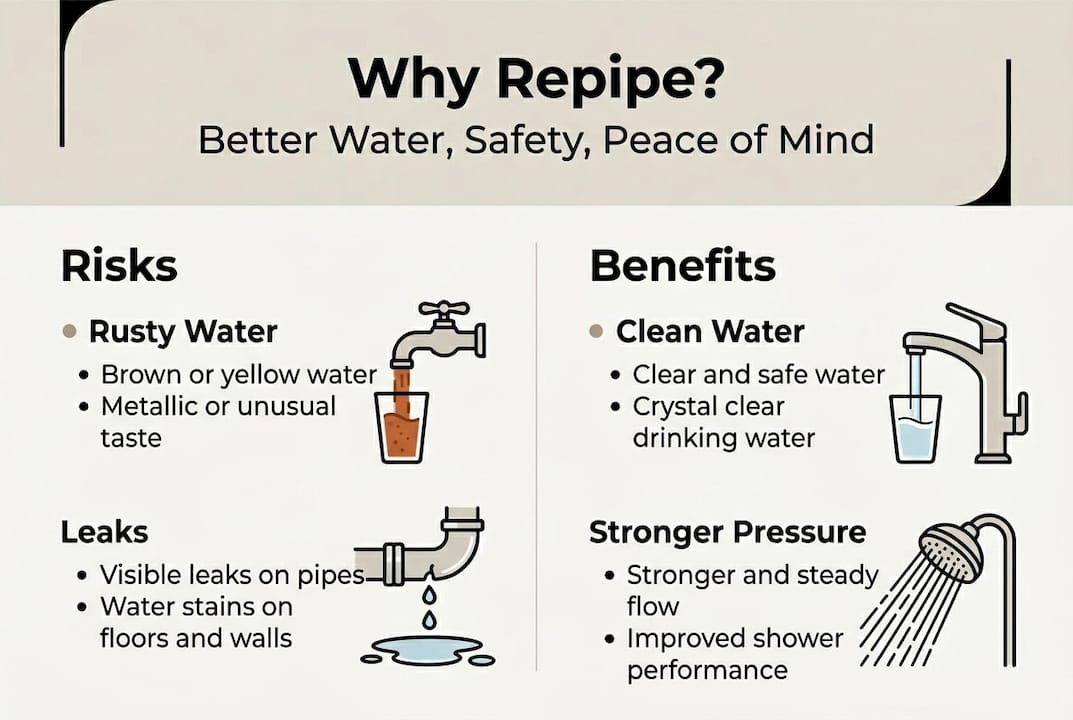
The health risk is real and immediate. Old pipes can leach contaminants like lead or rust directly into your drinking water, impacting the safety of every glass of water your family consumes. Galvanized pipes, once a standard choice, corrode from the inside out. That corrosion does not just restrict flow. It sheds particles into the water you cook with and bathe in.
Beyond health, the structural risks to your home are significant. A single pinhole leak ignored for six months can saturate insulation, rot wood framing, and create the warm, damp conditions that mold needs to thrive. Mold remediation alone can cost thousands of dollars, and that does not include repairing the structural damage underneath. The costs of inefficient plumbing extend well beyond the water bill.
“Every dollar spent on preventive repiping can save several times that amount in repairs, restoration, and medical bills.”
There is also a financial risk tied to your home’s market value. Buyers and their inspectors look closely at plumbing age and condition. A home with outdated galvanized or lead pipes can face lower offers, failed inspections, or requirements to repipe before closing. Some insurance providers charge higher premiums or limit coverage for homes with aging pipe systems.
Here is a quick comparison to frame the decision:
- Patch repair: Low upfront cost, addresses one failure point, does not prevent the next leak, may repeat every few years
- Full repipe: Higher upfront investment, addresses the entire system, eliminates recurring failures, improves water quality and home value
- Doing nothing: No immediate cost, highest long-term risk, potential for water damage, health exposure, and insurance complications
What does repiping involve? Process and materials explained
After recognizing the risks, let’s explore what a full home repipe actually entails so you know exactly what to expect.
The process follows a clear sequence. Here is how a professional repipe typically unfolds:
- Inspection and planning: A licensed plumber assesses your current system, identifies all pipe locations, and maps out the new installation route.
- Water shutoff: The main supply is turned off before any work begins.
- Old pipe removal: Sections of wall or ceiling may be opened to access and remove the existing pipes.
- New pipe installation: Fresh piping is run through the home, connecting to all fixtures, appliances, and supply points.
- Pressure testing: The new system is tested under pressure to confirm there are no leaks before walls are closed.
- Wall and fixture finishing: Drywall is patched, fixtures are reconnected, and the home is restored as closely as possible to its original state.
Most homes take two to four days, though larger or older homes can take longer. Expect some temporary water shutdowns during the project. Good coordination with your plumber can reduce disruption significantly. Reviewing the whole-house repipe process in advance helps you plan around the timeline.
The material you choose matters. Copper and PEX are now popular, durable alternatives for home repiping, each with distinct advantages.
| Material | Lifespan | Cost | Key advantages |
|---|---|---|---|
| Copper | 50 to 70 years | Higher | Proven durability, heat resistant, recyclable |
| PEX | 40 to 50 years | Lower | Flexible, freeze resistant, easy to install |
| Galvanized steel | 20 to 50 years | Moderate | Outdated, prone to rust and buildup |
For choosing pipe materials in Pittsburgh’s climate, PEX is often favored for its flexibility in cold temperatures, while copper remains the gold standard for longevity.
Benefits of repiping: Water quality, safety, and savings
Understanding the process, it’s clear that the real payoff is in the lasting benefits that a full repipe delivers to your home and family.
The most immediate benefit is cleaner water. Removing old corroded pipes eliminates the source of rust particles, sediment, and potential lead contamination. Families notice the difference quickly, better-tasting water, clearer color, and no metallic smell. That is not a minor comfort. It is a genuine health improvement.
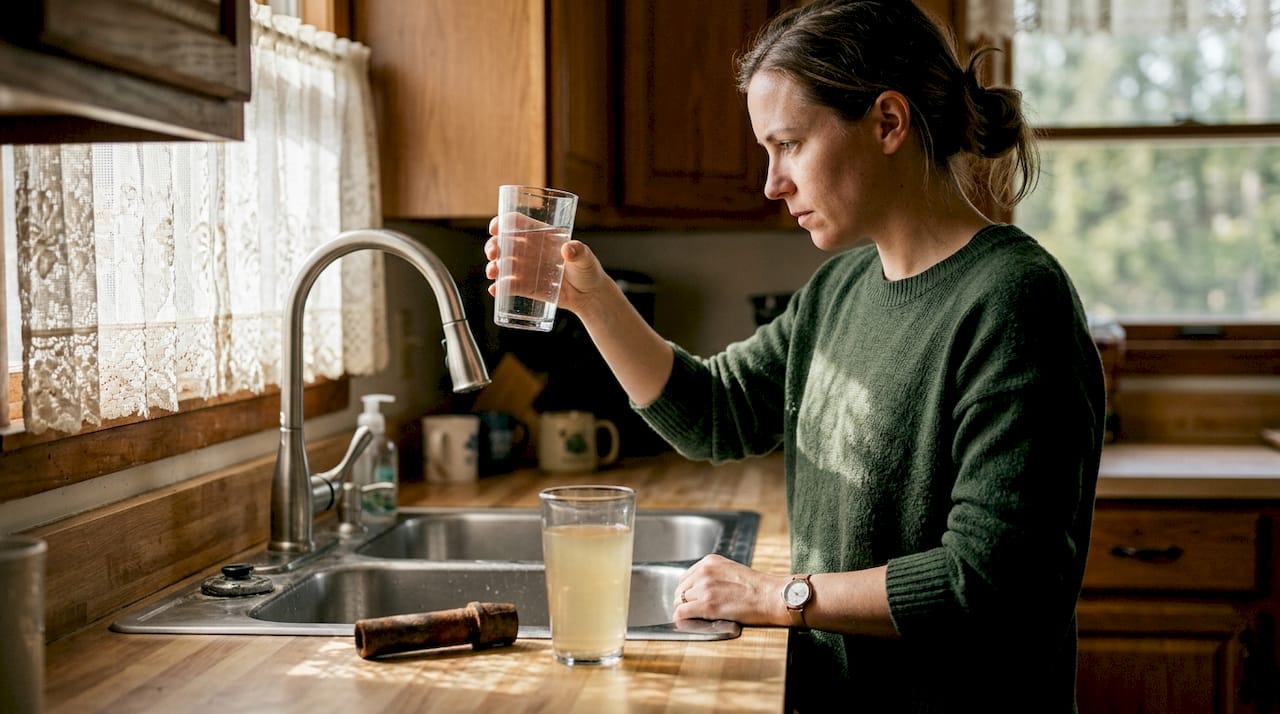
Reliable water pressure returns throughout the house. Showers feel stronger, appliances run more efficiently, and you stop scheduling plumbers for recurring leaks. Repiping reduces leak frequencies and water contamination, and can even lower insurance premiums in some cases. That combination of fewer repairs and lower insurance costs adds up faster than most homeowners expect.
Here is a snapshot of the financial picture:
| Scenario | Estimated cost |
|---|---|
| Emergency water damage repair | $3,000 to $10,000+ |
| Mold remediation | $2,000 to $6,000 |
| Full home repipe (average) | $4,000 to $15,000 |
| Potential home value increase | $5,000 to $20,000+ |
Repiping can also increase your home’s resale value. Updated plumbing is a strong selling point, and buyers pay attention to it. Pairing a repipe with other home improvements through remodeling and plumbing upgrades can maximize the return on your investment.
- Cleaner, lead-free drinking water
- Consistent water pressure at every fixture
- Reduced risk of water damage and mold
- Potential insurance savings
- Higher home resale value
- Peace of mind for years to come
Pro Tip: Plan to coordinate repiping with other renovations like a bathroom remodel or kitchen update. Opening walls for one project makes it far more cost-effective to run new pipes at the same time.
Repair or full repipe? Making the right call for your home
This brings us to the final, crucial decision: is a repair enough, or does your home need a complete solution?
Repairs make sense in specific situations. If the damage is isolated to one section, the rest of your pipes are in good condition, and the system is relatively modern, a targeted fix is reasonable. Budget constraints are also a real factor, and a repair buys time when a full repipe is not immediately possible.
But older homes with repeated leaks or multiple pipe materials generally benefit from full repiping. Patching one section of a failing galvanized system is like replacing one tire on a car where all four are worn down. The next failure is already forming somewhere else in the line.
Use this step-by-step process to guide your decision:
- Count your recent repairs. More than two leaks in the past three years is a red flag.
- Check your pipe age. Pipes older than 50 years are past their reliable service life.
- Test your water quality. Discoloration or a metallic taste points to internal corrosion.
- Assess your water pressure. Whole-house pressure loss suggests systemic blockage or deterioration.
- Get a professional inspection. A licensed plumber can confirm the scope of the problem and give you an honest recommendation.
For a broader look at what common plumbing repairs look like versus a full system replacement, a professional assessment is always the clearest path forward. You can also review whole house repiping advice to understand what experts recommend before making your final call.
Our take: The hidden ROI of timely repiping in Pittsburgh
After 30 years of working in Pittsburgh homes, we have seen a clear pattern. Homeowners who repipe proactively almost never regret it. Those who wait almost always do.
Conventional wisdom tends to frame repiping as a big, disruptive expense to avoid as long as possible. That framing ignores the compounding costs of delay. Water damage, mold, health exposure, and emergency callouts add up fast, often exceeding the cost of a full repipe within just a few years of postponing it.
What most Pittsburgh homeowners overlook is that common plumbing issues rarely stay small. A hairline crack in a corroded pipe does not heal itself. It widens. The mold that starts behind a cabinet spreads into the wall cavity. These are not hypothetical risks. They are the situations we are called into regularly, and they are almost always more expensive than the repipe that would have prevented them.
“An ounce of prevention now is worth thousands saved later for Pittsburgh families.”
Pro Tip: Even one small sign of trouble, a faint rust tint in the water or a single unexplained wet spot, is worth a professional consultation. The inspection itself is a small investment with a potentially large return.
Ready to repipe? Get trusted help in Pittsburgh
If anything in this guide sounded familiar, your home may be telling you something important. Aging pipes do not fix themselves, and the longer the problem sits, the more it costs to resolve.
At AG Heating, Cooling & Plumbing, our team brings 30 years of Pittsburgh plumbing experience to every job. We assess your system honestly, explain your options clearly, and complete the work with minimal disruption to your daily routine. Whether you need a targeted repair or a full repipe, our Pittsburgh plumbing repair services are built around your home’s specific needs. Explore our essential plumbing services to see how we can help you protect your home’s safety and value starting today.
Frequently asked questions
How do I know if my home needs to be repiped?
Common indicators include low water pressure or rusty water, along with frequent leaks or pipes that are more than 50 years old. If you are experiencing more than one of these signs, a professional inspection is the right next step.
Is repiping disruptive to daily life?
A whole-house repipe typically takes a few days and involves some temporary water shutdowns, but careful scheduling with your plumber keeps disruption manageable. Most families find it far less intrusive than they expected.
What is the best material for repiping in Pittsburgh?
Copper and PEX are both reliable options that offer durability and improved water quality. PEX is often preferred in Pittsburgh for its flexibility in cold temperatures, while copper is valued for its long track record.
Will repiping raise my home’s resale value?
Yes. Repiping can increase home value because buyers prioritize updated plumbing for safety and efficiency, which often translates into stronger offers and smoother inspections.
Can I just repair instead of repiping?
Repairs work well for isolated issues in otherwise sound systems, but older homes with repeated leaks or mixed pipe materials usually need a full repipe to truly resolve the problem.
Recommended
- Role of Plumbing in Health – Safeguarding Pittsburgh Homes – AG-Plumbing
- How to clean water lines: Pittsburgh homeowner guide – AG-Plumbing
- Common Plumbing Repair Issues and How to Fix Them – AG-Plumbing
- How plumbing improves energy efficiency and cuts costs – AG-Plumbing
